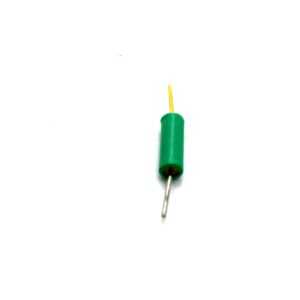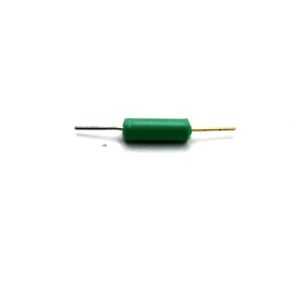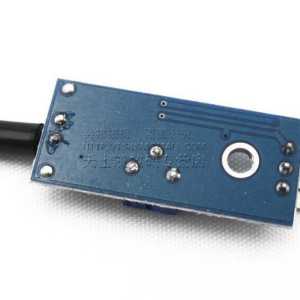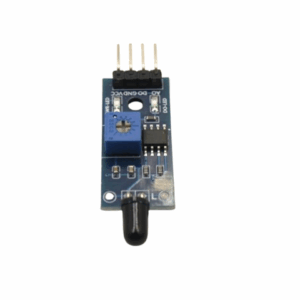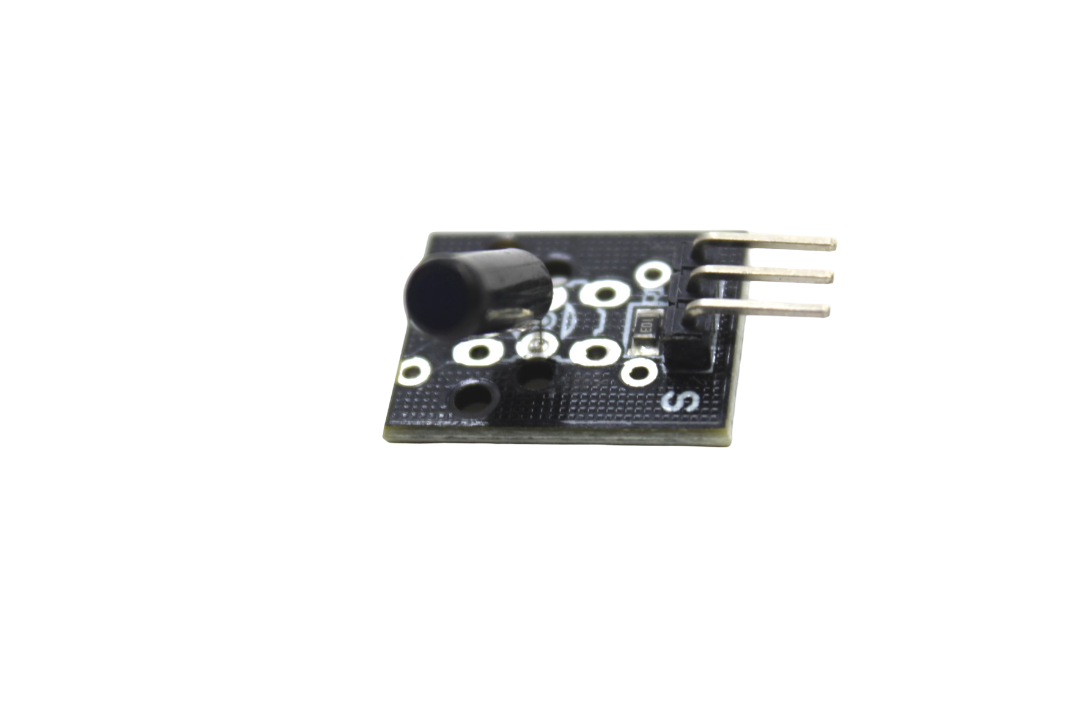
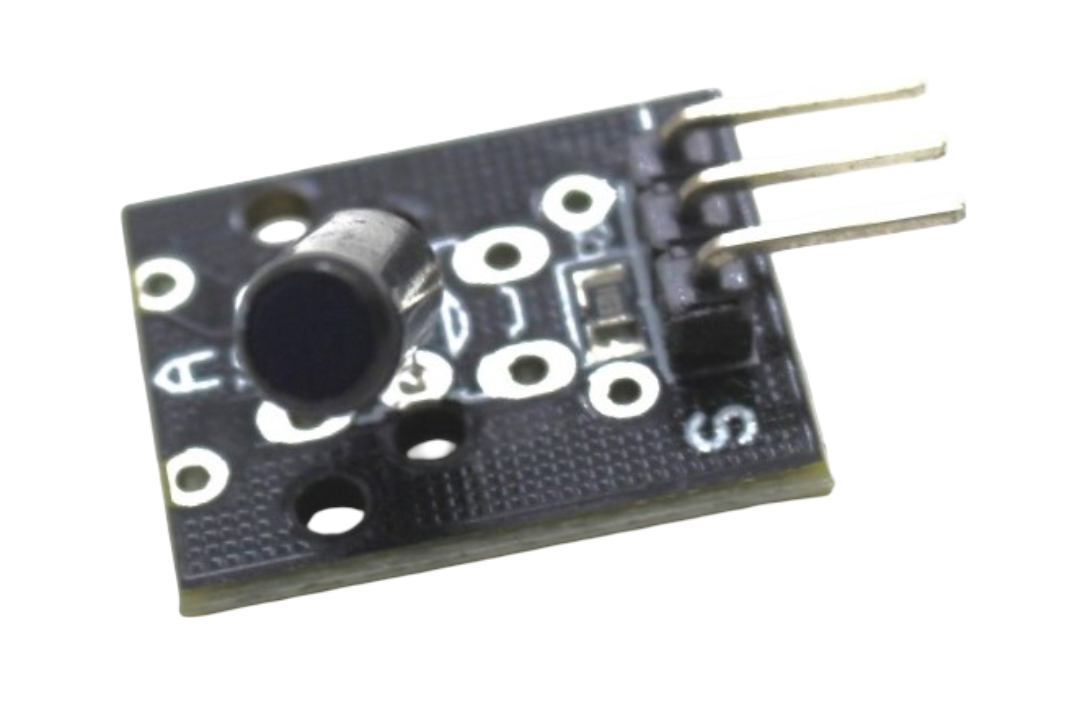
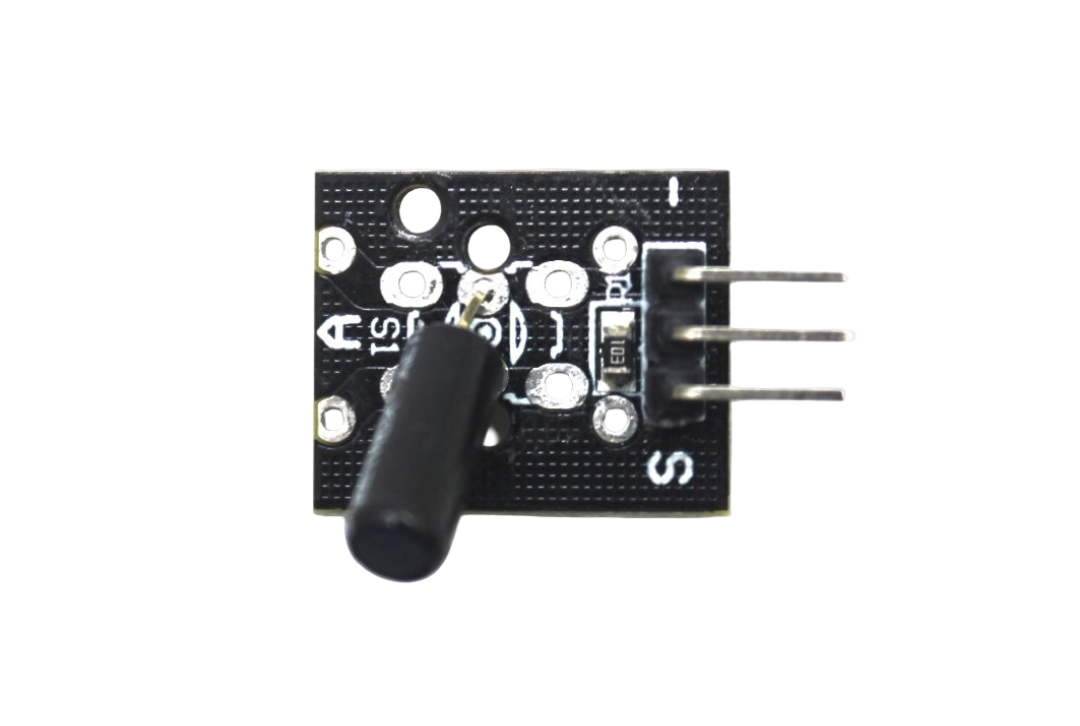
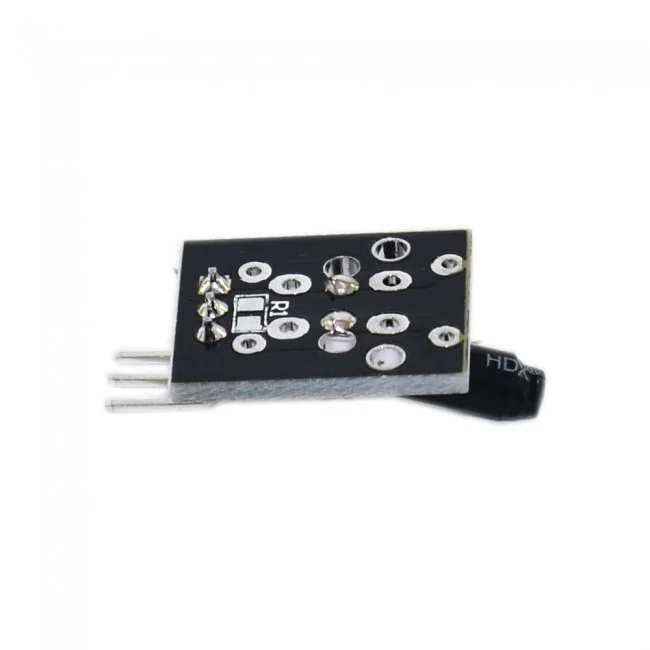
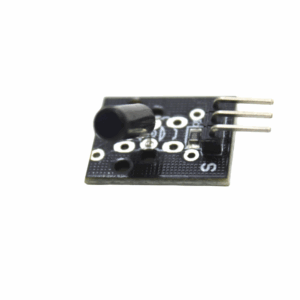
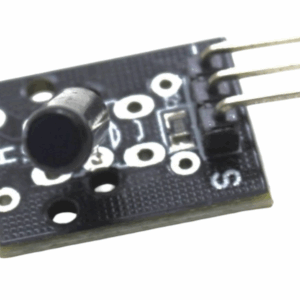
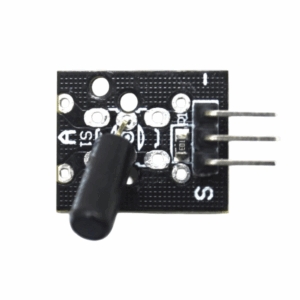

Vibration Switch Module:
This switch remains in an open (OFF) state when at rest. Upon encountering an external force, such as a touch or appropriate shaking force, or when subjected to sufficient centrifugal force (eccentric movement), the conductive pins momentarily conduct electricity, altering the electrical characteristics. Once the external force dissipates, the electrical properties revert to the open (OFF) state.
By default, the switch is in an OFF resting state, only transitioning to an ON status when triggered by an external force. It exhibits omnidirectional sensitivity, meaning it can be activated from any angle
Pin Connection:
-
Pin – ⇔ GND, connect to GND of the Arduino
-
Middle Pin ⇔ +5 v, connect to Arduino +5
-
Pin S ⇔ signal, connect to Arduino pin 10
Specifications:
| Model Type | Vibration Sensor Module |
|---|---|
| Operating Voltage (VDC) | 12 |
| Component Type | SW-18015P |
| Heater Current | 20mA |
Features:
-
No direction, any angle can trigger the work.
-
Sensitivity switches can be selected for the trigger sensitivity according to circuit requirements.
-
This switch is suitable for the trigger of the small current circuit.
Package Includes:
-
1 x Vibration Switch Module
Tutorial:
Vibration Switch Module Overview
The Vibration Switch Module features the SW-18015P mechanical sensor that stays open at rest and closes momentarily upon detecting vibration or centrifugal force. It’s designed for low-current circuits and quickly integrates with microcontrollers to add simple vibration-triggered switching functionality.
Key Features of Vibration Switch Module
- Omnidirectional SW-18015P sensor—activates from any angle of vibration
- User-selectable sensitivity switches to tailor trigger thresholds
- Operates up to 12 V with a 20 mA rated heating current for small-current applications
- Simple three-pin interface: GND, +5 V supply and signal output
- Compact PCB form factor for breadboard and custom PCB mounting
- Genuine component—fast shipping from Zbotic
Applications and Use Cases
- Vibration-triggered alarms in security or intrusion detection systems
- Monitoring excessive vibration in small motors and appliances
- Impact or drop detection in portable electronics projects
- Shake-based user input for Arduino-powered DIY gadgets
- Basic tremor sensing in hobbyist robotics and mechatronics
How to Use Vibration Switch Module
Connect GND to your controller’s ground, +5 V to its 5 V rail and the signal pin to a digital input (with pull-down). Select the desired sensitivity by bridging the onboard pads, then power up. When the module detects sufficient vibration, it outputs a brief HIGH pulse—monitor this in your firmware to trigger LEDs, buzzers or data logging events.
Why Buy from Zbotic?
- Genuine Products: All items sourced from authorized distributors
- Fast Shipping: Orders ship within 24 hours with tracking (non backordered products)
- Free Shipping: Free delivery on qualifying orders
- COD Available: Cash on Delivery, UPI, cards, net banking
- Technical Support: Expert help for setup and troubleshooting
- Easy Returns: Hassle-free replacement for defective products
Frequently Asked Questions
What voltage and current can the Vibration Switch Module handle?
The module is rated for a maximum supply voltage of 12 V and can switch currents up to 20 mA, making it safe for direct connection to most microcontroller I/O pins.
How do I adjust the sensitivity of the vibration switch?
The PCB includes multiple sensitivity pads—short the appropriate pad with solder or a jumper to select low, medium or high trigger thresholds based on your circuit requirements.
Can I use this module with an Arduino?
Yes. Wire GND to Arduino GND, +5 V to the 5 V pin and the signal output to any digital input. Enable an internal pull-down or add an external resistor, then read the pin state to detect vibration events.

Flex Sensor: Bending Detection for Gloves and Joints
Flex sensors are one of the most versatile components in the maker and robotics toolkit. Whether you are...
Read More →
EMG Muscle Sensor: MyoWare 2.0 and Prosthetic Control with Arduino
Electromyography (EMG) sensors detect the electrical signals produced by your muscles when they contract. This technology — once...
Read More →
Best Humidity Sensors for IoT Projects: DHT22 vs SHT31 vs HTU21D
Table of Contents Introduction Why Humidity Sensing Matters in India How Capacitive Humidity Sensors Work DHT22 (AM2302): Overview...
Read More →Technical Specifications
| SKU | AI2502 |
|---|---|
| Weight | 0.00338 kg |
| Availability | In Stock |
Applications & Use Cases
The Vibration Switch Module is a versatile vibration/tilt sensor and modules used across a wide range of applications including electronics projects, DIY builds, prototyping, and educational experiments.
Common use cases:
- Integrating into a custom electronics project
- Learning and experimenting with circuits
- Replacing or upgrading components in existing setups
This product is ideal for electronics enthusiasts, engineers, and students.
Technical Tip: Always verify voltage and current requirements before connecting to your circuit. Check datasheets for detailed specifications and pin configurations.
Shipping & Delivery
- Free shipping on orders above ₹999 across India
- Dispatched within 1-3 business days
- Expected delivery: 3-7 business days depending on location
- Secure packaging to ensure safe transit of electronic components