
GC9A01 Round TFT Display: 240×240 Circle Screen for Gauges
The GC9A01 round TFT display 240×240 is one of the most exciting small screens available for Indian hobbyists and makers today. With its 1.28-inch circular form factor and vibrant 65K colours, this tiny LCD module is perfect for building smartwatch faces, analog gauge dashboards, environmental monitors, and wearable devices. Unlike rectangular displays, the round shape makes your project look professional and polished right out of the box. In this comprehensive guide, we will cover everything you need to know — from wiring and library setup to drawing gauges and displaying sensor data on this beautiful circular screen.
What Is the GC9A01 Round TFT Display?
The GC9A01 is a circular IPS TFT LCD module driven by the GC9A01 controller IC. The display measures 1.28 inches diagonally with a resolution of 240×240 pixels in a perfectly round shape. It uses a 4-wire SPI interface, making it compatible with virtually every microcontroller — Arduino Uno, Arduino Nano, ESP8266, ESP32, STM32, and Raspberry Pi Pico.
What sets this display apart from standard rectangular modules is its circular active area. There are no unused corner pixels — the entire visible surface is round. This makes it the go-to choice for:
- Smartwatch and fitness tracker prototypes
- Analog-style gauge dashboards (speedometer, RPM meter, temperature gauge)
- Round clock faces with smooth sweep hands
- IoT sensor monitors with a premium look
- Wearable electronics projects
The display also includes a built-in backlight LED and typically comes with a breakout board that includes a 3.3V LDO regulator, so it can be powered directly from a 5V Arduino without a level shifter (though signal lines still need to be 3.3V logic — more on that below).
Key Specifications and Features
Before diving into the wiring, let’s understand what we are working with:
| Parameter | Value |
|---|---|
| Display Size | 1.28 inch (round/circular) |
| Resolution | 240 x 240 pixels |
| Controller IC | GC9A01 |
| Interface | 4-wire SPI |
| Colours | 65K (16-bit RGB) |
| Operating Voltage | 3.3V (logic), 3.3V–5V (power via onboard LDO) |
| Display Type | IPS TFT LCD |
| Viewing Angle | Wide angle (IPS panel) |
The IPS panel gives excellent colour accuracy and wide viewing angles — ideal for wearables that may be viewed from different angles throughout the day.
Wiring GC9A01 to Arduino and ESP32
The GC9A01 module typically exposes 7 pins: VCC, GND, SCL (clock), SDA (MOSI), RES (reset), DC (data/command), and CS (chip select). Some modules also have a BLK (backlight) pin.
Wiring to Arduino Uno / Nano (with 3.3V logic converter)
Arduino Uno runs at 5V logic, so you need a level shifter for the SPI lines:
- VCC → 3.3V pin
- GND → GND
- SCL → Level-shifted → Pin 13 (SCK)
- SDA → Level-shifted → Pin 11 (MOSI)
- RES → Level-shifted → Pin 8
- DC → Level-shifted → Pin 9
- CS → Level-shifted → Pin 10
- BLK → 3.3V (or leave floating for always-on backlight)
Wiring to ESP32 (3.3V native — no level shifter needed)
- VCC → 3.3V
- GND → GND
- SCL → GPIO 18 (VSPI SCK)
- SDA → GPIO 23 (VSPI MOSI)
- RES → GPIO 4
- DC → GPIO 2
- CS → GPIO 5
- BLK → GPIO 15 (for PWM dimming) or 3.3V
ESP32 is the recommended pairing for this display because of its fast SPI clock (up to 80 MHz), ample RAM for framebuffers, and Wi-Fi capability for IoT dashboards.
Libraries and Software Setup
The most popular library for the GC9A01 in the Arduino ecosystem is the TFT_eSPI library by Bodmer. It is highly optimised and supports DMA transfers, making animations butter-smooth on ESP32.
Step 1: Install TFT_eSPI
Open the Arduino IDE Library Manager (Sketch → Include Library → Manage Libraries) and search for TFT_eSPI by Bodmer. Install the latest version.
Step 2: Configure User_Setup.h
Navigate to the TFT_eSPI library folder (usually ~/Arduino/libraries/TFT_eSPI/) and open User_Setup.h. Make these changes:
// Uncomment GC9A01 driver
#define GC9A01_DRIVER

// Define pins (for ESP32)
#define TFT_MOSI 23
#define TFT_SCLK 18
#define TFT_CS   5
#define TFT_DC   2
#define TFT_RST  4

// Set SPI frequency
#define SPI_FREQUENCY  40000000
Step 3: Hello World Sketch
#include <TFT_eSPI.h>

TFT_eSPI tft = TFT_eSPI();

void setup() {
  tft.init();
  tft.setRotation(0);
  tft.fillScreen(TFT_BLACK);
  tft.setTextColor(TFT_WHITE, TFT_BLACK);
  tft.setTextSize(2);
  tft.drawString("Hello Zbotic!", 50, 110);
}

void loop() {}
Upload this sketch and you should see white text on a black circular screen. Congratulations — your GC9A01 is working!
Drawing Analog Gauges and Circular UI
The real magic of the GC9A01 is its ability to host beautiful analog gauge UIs. Here is how to draw a classic speedometer-style gauge:
Core Drawing Techniques
TFT_eSPI provides these key functions for circular gauge drawing:
tft.drawCircle(x, y, r, colour)— draw the outer ringtft.drawLine(x0, y0, x1, y1, colour)— draw the needletft.fillCircle(x, y, r, colour)— fill arcs or the needle pivottft.drawArc(x, y, r, ir, startAngle, endAngle, fg, bg)— TFT_eSPI v2.x arc function
Needle Gauge Code Snippet
#define CX 120  // Center X
#define CY 120  // Center Y
#define R  100  // Needle radius

void drawNeedle(float value, float minVal, float maxVal) {
  float angle = map(value, minVal, maxVal, -120, 120); // degrees
  float rad = angle * PI / 180.0;
  int x = CX + R * sin(rad);
  int y = CY - R * cos(rad);
  tft.drawLine(CX, CY, x, y, TFT_RED);
  tft.fillCircle(CX, CY, 8, TFT_WHITE); // pivot
}
For smooth animations, redraw the needle in the background colour before drawing the new position. This avoids flicker without a full screen clear.
Using the TFT_eSprite Sprite Buffer
For flicker-free animation, use a sprite (off-screen buffer):
TFT_eSprite spr = TFT_eSprite(&tft);

void setup() {
  tft.init();
  spr.createSprite(240, 240); // Full-screen sprite
}

void loop() {
  spr.fillSprite(TFT_BLACK);
  // Draw everything onto spr
  spr.drawCircle(120, 120, 110, TFT_WHITE);
  // drawNeedle onto spr...
  spr.pushSprite(0, 0); // Push to display
}
Sensor Data Display Projects
The GC9A01 pairs beautifully with sensors for real-world data visualization. Here are some popular Indian maker project ideas:
1. Temperature Gauge
Connect a DHT20 or LM35 sensor to ESP32, read the temperature, and display it as an animated arc gauge with a colour that shifts from blue (cold) to red (hot). The circular display makes it look like a genuine thermometer instrument.
2. Air Quality Monitor
Pair with an MQ-135 gas sensor. Display the AQI reading as a circular progress bar with zones: green (good), yellow (moderate), red (poor). Add a central numeric readout for exact PPM values.
3. Smartwatch Dashboard
With ESP32 and Wi-Fi, fetch time from an NTP server and display a classic watch face with hour, minute, and second hands drawn with trigonometry. Add date and a small battery indicator.
4. Compass / Heading Display
Connect an MPU6050 or HMC5883L compass module. Display the compass heading as a rotating needle on the round screen — perfect for robotics and drone navigation projects.

LM35 Temperature Sensors
Analog temperature sensor, ideal for displaying real-time temperature on your GC9A01 gauge. Simple to interface with Arduino or ESP32 analog pin.
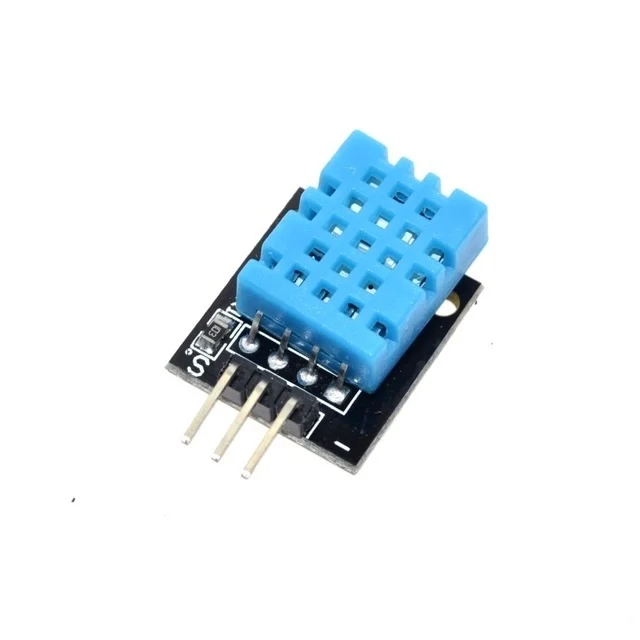
DHT11 Temperature & Humidity Sensor Module
Read both temperature and humidity to create a dual-gauge or split-screen dashboard on your round TFT display. Budget-friendly and widely supported.
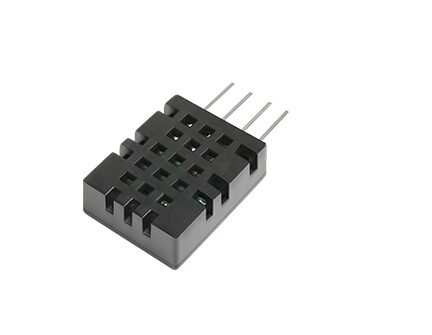
DHT20 SIP Temperature and Humidity Sensor
Upgraded DHT sensor with I2C interface and better accuracy. Great for weather station dashboards shown on the GC9A01 round display.
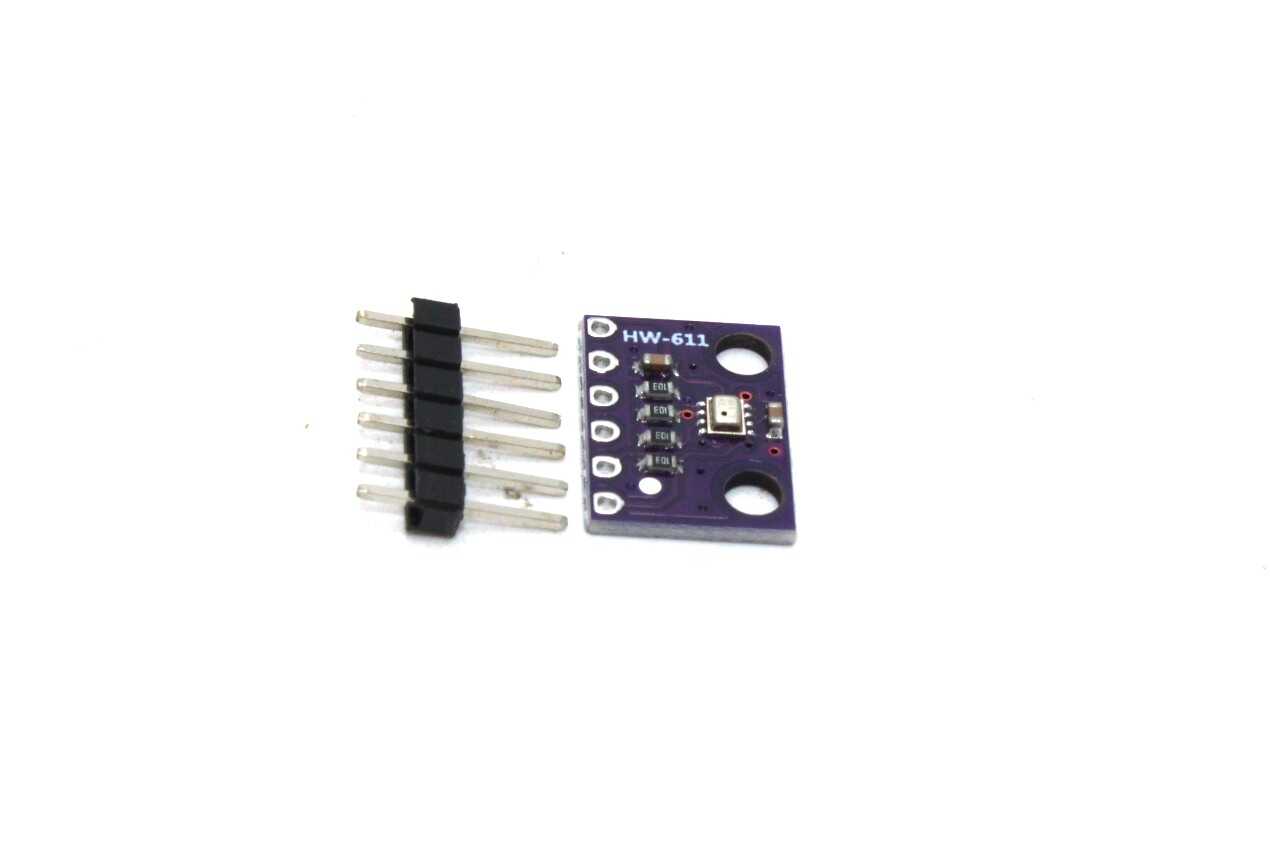
BMP280 Barometric Pressure & Altitude Sensor
Display altitude and pressure as gauge needles on the GC9A01. Perfect for weather station or altimeter projects with ESP32.
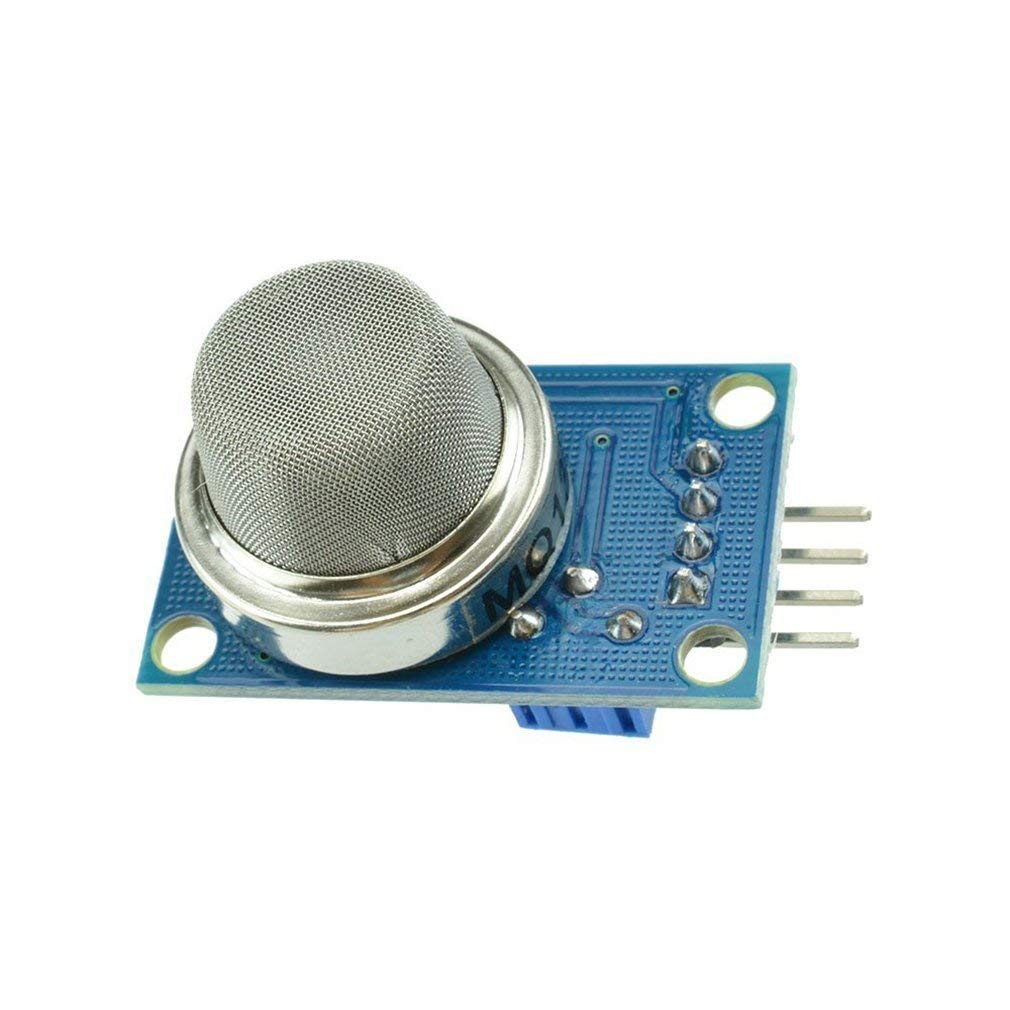
MQ-135 Air Quality / Gas Detector Sensor
Monitor indoor air quality and visualize the AQI as a coloured arc on the round GC9A01 display. Ideal for home air quality monitors.
Pro Tips for Best Results
- Use DMA on ESP32: Enable
#define USE_HSPI_PORTand DMA in TFT_eSPI for significantly faster display updates without blocking the CPU. - Keep SPI wires short: At 40 MHz SPI, even 20cm wires can cause signal integrity issues. Use twisted pairs or keep traces under 10cm.
- Anti-aliased fonts: TFT_eSPI supports smooth fonts loaded from SPIFFS/LittleFS. Use these for professional-looking numbers on gauge readouts.
- Colour mapping: Use
TFT_COLOR565(r,g,b)to convert standard RGB to the 16-bit format GC9A01 uses. - Backlight control: Connect the BLK pin to a PWM-capable GPIO for brightness control — essential for battery-powered wearables.
- Partial updates: Instead of full screen redraws, only redraw the needle region using
setViewport()to reduce flicker and save power.
Frequently Asked Questions
Q1: Can I use the GC9A01 display with Arduino Uno?
Yes, but you need a 3.3V logic level converter for the SPI lines since Arduino Uno operates at 5V. Without it, you risk damaging the display’s controller IC. ESP32 is a much better pairing since it is natively 3.3V and much faster.
Q2: Which library works best with GC9A01?
The TFT_eSPI library by Bodmer is the recommended choice. It is actively maintained, supports DMA on ESP32, and includes examples specifically for the GC9A01. The Adafruit GFX + GC9A01A library is an alternative for those already in the Adafruit ecosystem.
Q3: Can I display images (JPEG/BMP) on the GC9A01?
Yes. TFT_eSPI includes JPEG decoding support via the TJpg_Decoder library. For BMP images, you can convert them to C arrays using the LCD Image Converter tool and store them in program flash memory or SPIFFS.
Q4: What is the maximum SPI speed for GC9A01?
The GC9A01 controller supports up to 64 MHz SPI clock, but 40 MHz is a safe and reliable setting for most breakout boards with short wires. On ESP32, 80 MHz is possible with carefully laid PCB traces.
Q5: Is the GC9A01 display available in India?
Yes, the GC9A01 1.28-inch round TFT display is available from Zbotic.in along with compatible sensors and microcontroller modules for your display projects.
Ready to Build Your Round Display Project?
Shop sensors, microcontrollers, and display accessories at Zbotic.in — India’s trusted electronics components store for makers and hobbyists.






Add comment