
Understanding lithium battery safety guidelines in India is not optional — it is a responsibility that every maker, electronics hobbyist, drone pilot, and product developer must take seriously. Lithium chemistry batteries (Li-ion, LiPo, LiFePO4) store tremendous energy in a small package, and when mishandled, they can cause fires that are nearly impossible to extinguish with a standard dry-powder extinguisher. From the rooftop drone labs of Mumbai to the maker spaces in Hyderabad and Chennai, incidents from improperly charged or stored cells are far too common. This guide gives you practical, actionable lithium battery safety rules you can follow today.
Why Lithium Batteries Can Be Dangerous
Lithium-based cells operate on an electrochemical process that stores energy at very high density — roughly 150–300 Wh/kg for Li-ion and LiPo compared to just 30–40 Wh/kg for lead-acid. This energy density is what makes them so useful, and simultaneously what makes them hazardous when something goes wrong.
The primary failure mode is thermal runaway — a self-reinforcing cycle where heat increases the internal reaction rate, generating more heat, until the cell vents flammable electrolyte vapour and ignites. Triggers include:
- Overcharging: Driving a 3.7 V nominal cell above 4.25 V permanently damages the cathode and can cause electrolyte decomposition.
- Over-discharging: Dropping a Li-ion cell below 2.5 V causes copper dendrite growth that can create internal short circuits on the next charge cycle.
- Physical damage: Puncture, crushing, or bending a LiPo pouch damages the internal separator, leading to an immediate or delayed internal short circuit.
- High ambient temperature: Storing cells above 60°C accelerates electrolyte decomposition. Indian summers in cities like Jaisalmer or Nagpur regularly see car interiors exceeding 70°C — never leave batteries in a parked car.
- Counterfeit cells: Cheap unbranded 18650 cells (flooding the Indian online market at ₹50–80) often have no internal safety vent, no PTC element, and substandard separator material.
Safe Handling Practices
The vast majority of lithium battery incidents are caused by simple mishandling. Follow these rules every time you work with cells:
- Never short-circuit: Keep loose cells away from metal surfaces, coins, keys, and tools. A short across an 18650 cell can draw 20–30 A in milliseconds, instantly heating the cell. Use individual cell cases or cardboard sleeves for transport.
- Inspect before use: Reject any cell or pack with dents, bulging (LiPo puffing), torn wrapping, corrosion on terminals, or any smell of solvent. A puffed LiPo has already generated gas from internal reactions and is in a pre-failure state.
- Use the correct connectors: Never force mismatched connectors. XT30, XT60, JST-PH, and Deans T-plugs are not interchangeable. Forcing wrong-size connectors can damage the connector body and cause arcing.
- Wear eye protection when connecting high-capacity packs (3S+ LiPo) for the first time in a new circuit — unexpected short circuits are rare but possible.
- Mind the C-rating: A 1000 mAh LiPo rated 25C can theoretically discharge at 25 A. Exceeding the C-rating causes excessive heat and swelling.
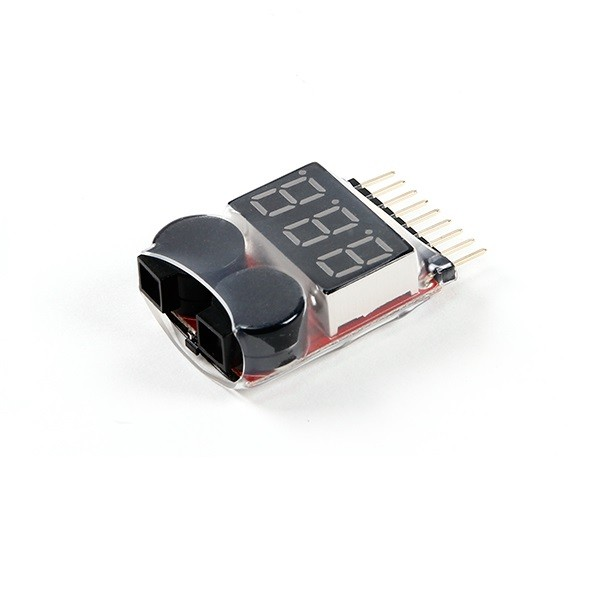
1-8S LiPo Battery Voltage Tester (Without Alarm)
A must-have safety tool for any LiPo user. Instantly displays per-cell and total pack voltage for 1S through 8S packs, helping you catch under-voltage cells before they cause damage or thermal runaway.
Charging Safety Rules
The charger is your first line of defence against lithium battery incidents. Poor charging practice is the leading cause of fires in the Indian maker and FPV community.
- Never charge unattended: Always be present or at least in the same building when charging LiPo or Li-ion packs. Charge fires typically escalate within 3–5 minutes of ignition.
- Use a balance charger for multi-cell LiPo packs: A balance charger monitors each cell individually and stops when any cell hits 4.20 V. Bulk chargers that only measure total pack voltage can overcharge individual cells in unbalanced packs.
- Set the correct cell count: Modern chargers like ISDT models auto-detect cell count, but always verify manually before pressing Start. Charging a 3S pack set to 4S will overcharge and may cause fire.
- Charge on a fireproof surface: Use a LiPo-safe charging bag, ceramic tile, or metal tray. Never charge on carpet, wooden furniture, or a car seat.
- Charge at 1C for longevity: A 2200 mAh pack should be charged at 2.2 A for maximum lifespan. Fast charging at 2C or higher increases heat and accelerates degradation.
- Do not charge below 0°C: Charging cold lithium cells causes lithium plating on the anode — an invisible form of damage that eventually leads to internal short circuits. In Indian hill stations during winter months, warm your pack to room temperature before charging.
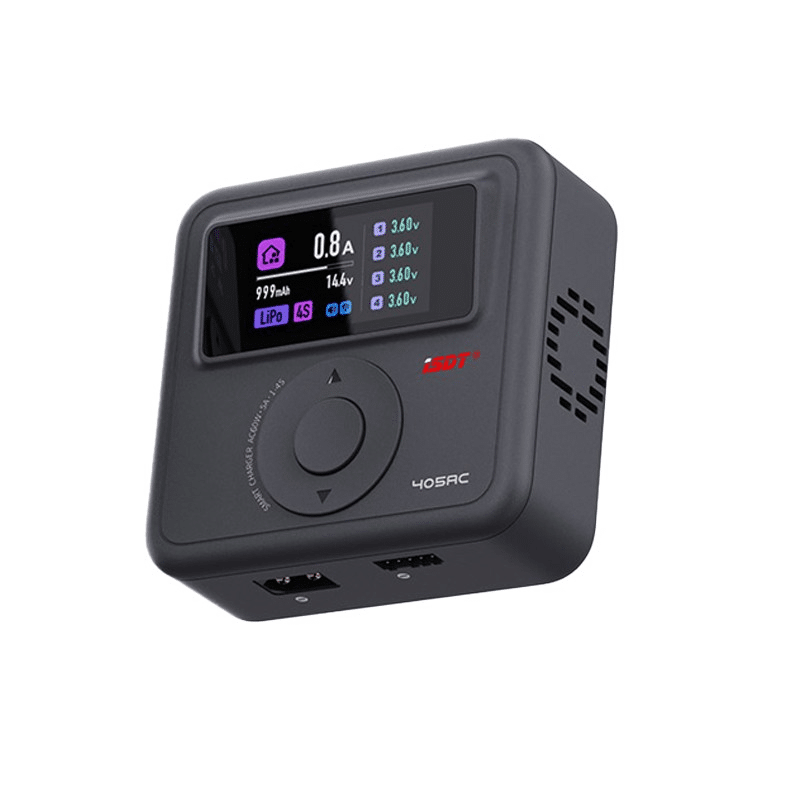
ISDT 405AC 60W AC GaN Smart Charger (1–4S LiPo/LiHv/LiFe)
A modern GaN-based charger with built-in balance charging, storage charge mode, and automatic cell count detection. Ideal for drone and RC pilots who need a safe, reliable daily charger with mains input.
Proper Storage Guidelines
How you store lithium cells between uses has an enormous impact on their lifespan and safety. Follow these storage guidelines consistently:
Voltage for Long-Term Storage
The ideal storage voltage for LiPo and Li-ion cells is 3.7–3.85 V per cell — approximately 50–60% state of charge. This minimises both calendar ageing (chemical degradation over time) and the risk of over-discharge if stored for months. Most quality chargers (ISDT, iCharger, Junsi) have a dedicated Storage mode that automatically charges or discharges to this voltage. Never store a fully charged LiPo for more than a week without use.
Temperature
Store between 15°C and 25°C. In Indian summers, a room with air conditioning is ideal. Avoid storage in direct sunlight, vehicles, or un-ventilated enclosures. Cold storage (refrigerator at 5–10°C) is acceptable for long-term archival of cells but bring them to room temperature and check voltage before use.
Physical Storage
- Store LiPo packs in a fireproof LiPo-safe bag or a metal ammunition box.
- Keep cells away from flammable materials — not in a drawer with paper or fabric.
- Separate damaged or puffed cells immediately and dispose of them; do not store them with healthy packs.

25cm LiPo Battery Strap Belt Reusable Cable Tie Wrap
Heavy-duty Velcro straps designed to secure LiPo packs on drones, RC cars, and robots without compressing the cells. Preventing physical deformation is a key safety practice for LiPo longevity.
Shipping Lithium Batteries in India
Shipping lithium batteries within India is regulated under the Hazardous Materials guidelines issued by the Civil Aviation Requirements (CAR) of the DGCA and India Post / courier company policies. Key rules as of 2026:
- Air freight: Lithium-ion cells exceeding 2.7 Wh or packs exceeding 100 Wh generally require IATA Class 9 hazardous goods declaration for air cargo. Passenger carry-on allows up to 100 Wh per battery; checked baggage rules vary by airline.
- State of charge for shipping: IATA recommends shipping Li-ion at no more than 30% state of charge (approximately 3.6 V per cell) to minimise thermal runaway risk during transit.
- Courier companies: BlueDart, Delhivery, and DTDC have specific rules for lithium battery shipments. Always declare the contents accurately — misrepresentation is a criminal offence and increases your liability.
- Packaging: Cells must be individually wrapped in non-conductive material (bubble wrap, foam), placed in a sturdy outer box with cushioning, and labelled with Lithium Battery handling labels (IATA labels 9A/9B).
- Surface transport: Ground shipments within India have fewer restrictions but the carrier must still be informed of lithium battery contents.
Safe Disposal
Old, damaged, or puffed lithium batteries must never be thrown in regular household waste. Lithium cells in landfills can cause fires and leach toxic heavy metals into groundwater. In India:
- Many electronics retailers (Croma, Reliance Digital) accept old batteries for recycling.
- Municipal e-waste collection drives (run periodically by BBMP in Bengaluru, MCGM in Mumbai, MCD in Delhi) accept lithium batteries.
- Before disposal, fully discharge cells to below 2.5 V by connecting a 12 V car bulb as a load, then immerse in a bucket of salt water for 2 weeks to fully neutralise charge before bin disposal as a last resort.
What to Do If a Battery Catches Fire
A lithium battery fire is a Class D fire (reactive metal) and behaves differently from ordinary fires:
- Do NOT use water to extinguish (risk of violent steam explosion and spreading the reaction). Exception: large volumes of water to cool the surrounding area and prevent spread can be used if the battery is already fully venting.
- Do NOT use CO₂ or dry powder extinguishers — they suppress oxygen but lithium fires self-generate oxygen through thermal decomposition.
- Use a Class D fire extinguisher (dry sand, dry graphite powder, or copper powder) if available. In a home/workshop, pour dry sand or kitty litter over the battery.
- Move the burning pack outdoors immediately if it can be done safely. Lithium fires produce hydrogen fluoride gas — toxic even in small concentrations in an enclosed room.
- Evacuate and call the fire department. Most municipal fire departments in Indian cities now have training on lithium battery incidents.
Frequently Asked Questions
Can I take a LiPo battery pack on a domestic flight within India?
Yes, batteries up to 100 Wh are permitted in carry-on baggage on domestic Indian flights (check with your specific airline, as policies can vary). Batteries between 100 Wh and 160 Wh require airline approval. Anything above 160 Wh is prohibited on passenger aircraft. Always carry batteries in carry-on, never in checked baggage — cargo holds are unmonitored for fire incidents.
How do I know if my LiPo battery is puffed/swollen?
A healthy LiPo pouch cell has flat sides. Puffing is visible as bulging or pillowing of the cell surface — even slight puffing (1–2 mm) indicates gas production has occurred inside the cell. Any puffed cell should be discharged to storage voltage immediately and disposed of safely. Do not puncture it or attempt to squeeze the gas out.
Is it safe to leave Li-ion batteries charging overnight?
With a quality charger that has automatic cutoff at 4.2 V/cell (most modern chargers), it is generally safe for Li-ion cells in devices (phones, laptops). For raw LiPo packs and RC batteries, it is strongly advised against — use a timer or smart plug to cut power after the estimated charge time completes. Never charge unattended LiPo packs in a room you are sleeping in.
What is the maximum temperature a lithium battery can safely reach during operation?
Most Li-ion and LiPo cells are rated for a maximum operating temperature of 60°C surface temperature. Above 60°C, electrolyte decomposition accelerates rapidly. Cells that regularly run hot (drone packs after aggressive flight, for example) degrade much faster. At 70°C+, thermal runaway risk becomes significant.
Can I repair a punctured LiPo pack?
No. A punctured LiPo pack has compromised the internal separator between anode and cathode. Even if no fire occurs immediately, internal short circuits can develop minutes or hours later. Isolate the punctured pack in sand outdoors, allow it to fully discharge over several days, and then dispose of it at an e-waste collection point.
Shop Safe, Quality Battery Components at Zbotic
Zbotic stocks voltage testers, balance chargers, BMS protection boards, LiPo straps, and charging modules — all from trusted brands. Fast shipping across India, with detailed product specifications to help you choose the right safety components for your project.




Add comment