
Battery-powered IoT devices live or die by one metric: how long do they last between charges or battery replacements? Whether you are deploying a remote weather station in a field, a soil-moisture monitor buried in a garden, or a wearable health gadget, every milliamp-hour counts. The good news is that most of the sensors you already own—temperature, humidity, motion, gas—are engineered with power-saving modes. Knowing how to enable those modes, and when to wake sensors back up, can stretch a 1,000 mAh cell from days to months.
This guide covers sensor power management from first principles to practical Arduino and ESP32 code, giving you the knowledge to build genuinely long-running embedded systems.
1. Why Sensor Power Consumption Matters
A typical Arduino Uno running at full speed draws around 50 mA. Add a DHT11 humidity sensor (2.5 mA active), an LM35 temperature sensor (60 µA), and an MQ-135 gas sensor heater (150 mA!) and your total jumps to over 200 mA. A standard 9V 500 mAh battery would last roughly 2.5 hours—useless for a remote installation.
The biggest power wasters in most sensor nodes are:
- Always-on heater elements (electrochemical gas sensors, MQ series)
- Continuous ADC polling at high sample rates
- Radio modules transmitting every second
- Microcontroller running at full clock speed between measurements
- Pull-up resistors on unused I2C/SPI lines
Addressing sensors specifically—without even touching the MCU or radio—can reduce system current by 60–80% in typical designs.
2. Understanding Sensor Power Modes
Sensor ICs generally offer two to four power states. The exact nomenclature differs per manufacturer, but the pattern is consistent:
| Mode | Typical Current | What Stays On |
|---|---|---|
| Active / Continuous | 500 µA – 200 mA | All circuits, heater, ADC |
| Forced / One-shot | 500 µA burst then sleeps | Measurement triggered on demand |
| Sleep / Standby | 0.1 – 5 µA | Register memory, I2C address |
| Power Off (hardware) | 0 µA | Nothing |
The BME280 barometric pressure sensor is a textbook example: in normal mode it draws 3.6 µA at 1 Hz sampling, but in forced mode you can command a single measurement and it returns to sleep automatically—dropping average current below 1 µA at one sample per minute. That is a 3,600× reduction in sensor current from continuous mode.
3. Hardware Enable/Disable: Cutting Power Completely
The cleanest way to zero out sensor power is to switch its VCC line using a GPIO-controlled MOSFET or a load switch IC. This is especially important for sensors that lack a proper sleep mode, such as the MQ-series gas sensors whose ceramic heater draws 150 mA continuously.
MOSFET Load Switch Circuit
Use a P-channel MOSFET (e.g., AO3401) with the gate driven by an NPN transistor or directly by a 3.3V-tolerant GPIO. When the GPIO goes LOW, the MOSFET turns on and powers the sensor. HIGH cuts power. A 10 kΩ gate pull-up resistor ensures the sensor stays off during MCU boot.
// Arduino example — P-channel MOSFET sensor power switch
#define SENSOR_PWR_PIN 4  // GPIO controls MOSFET gate

void setup() {
  pinMode(SENSOR_PWR_PIN, OUTPUT);
  digitalWrite(SENSOR_PWR_PIN, HIGH); // sensor OFF at boot
}

void loop() {
  digitalWrite(SENSOR_PWR_PIN, LOW);  // sensor ON
  delay(200);                         // warm-up time
  float temp = readSensor();
  digitalWrite(SENSOR_PWR_PIN, HIGH); // sensor OFF
  deepSleep(60000);                   // MCU sleeps 60 s
}
Dedicated Enable Pins
Many sensor breakout boards include an EN or SHDN pin. Pull this LOW to shut down all internal regulators. Check the datasheet—some EN pins are active-high, some active-low, and the logic levels may differ between 3.3V and 5V variants.
The LM35 temperature sensor does not have a shutdown pin, but at only 60 µA quiescent it is often acceptable to leave it powered. Contrast that with the MQ-135 gas sensor at 150 mA—hardware switching is mandatory for any battery application.
4. Software Sleep Commands and I2C/SPI Control
For sensors with I2C or SPI interfaces, sleep is typically triggered by writing to a configuration register. Here are the most common patterns used with Arduino libraries:
BME280 Forced Mode (I2C)
#include <Adafruit_BME280.h>
Adafruit_BME280 bme;

void setup() {
  bme.begin(0x76);
  // Set forced mode — one measurement then sleeps
  bme.setSampling(Adafruit_BME280::MODE_FORCED,
                  Adafruit_BME280::SAMPLING_X1,  // temp
                  Adafruit_BME280::SAMPLING_X1,  // pressure
                  Adafruit_BME280::SAMPLING_X1,  // humidity
                  Adafruit_BME280::FILTER_OFF);
}

void loop() {
  bme.takeForcedMeasurement(); // wakes, measures, sleeps
  Serial.println(bme.readTemperature());
  delay(30000); // wait 30 s before next measurement
}
DHT Sensors: No Hardware Sleep — Use Power Switching
The DHT11 and DHT22 do not expose a sleep register. Their 2.5 mA active current is modest but adds up over days. The best approach is hardware power switching via a GPIO + transistor, or simply sample infrequently (every 2 seconds minimum per DHT protocol) and accept the always-on current.
DS18B20 Parasite Power Mode
The DS18B20 supports parasite power where it draws energy from the data line, eliminating the VCC wire. More relevantly for power management, once a conversion is complete the sensor draws only 1 µA in idle. Issue Convert T (0x44) only when you need a reading, and the sensor returns to idle automatically.
5. Coordinating MCU Sleep with Sensor Sleep
Maximum battery life comes from sleeping both the sensor and the MCU simultaneously. The challenge is sequencing: you must wake the sensor, allow warm-up time, take the reading, send data, put the sensor to sleep, then put the MCU to sleep.
ESP32 Deep Sleep with Sensor Wake Sequence
#include <esp_sleep.h>
#include <Wire.h>
#include <Adafruit_BME280.h>

#define SLEEP_DURATION_US 60000000ULL // 60 seconds
#define SENSOR_WARMUP_MS  10

Adafruit_BME280 bme;

void setup() {
  Serial.begin(115200);
  Wire.begin();
  bme.begin(0x76);
  bme.setSampling(Adafruit_BME280::MODE_FORCED,
    Adafruit_BME280::SAMPLING_X1, Adafruit_BME280::SAMPLING_X1,
    Adafruit_BME280::SAMPLING_X1, Adafruit_BME280::FILTER_OFF);

  delay(SENSOR_WARMUP_MS);
  bme.takeForcedMeasurement();

  float t = bme.readTemperature();
  float h = bme.readHumidity();
  float p = bme.readPressure() / 100.0F;

  // TODO: transmit t, h, p via WiFi/LoRa

  esp_sleep_enable_timer_wakeup(SLEEP_DURATION_US);
  esp_deep_sleep_start(); // sensor already in sleep mode
}

void loop() {} // never reached
In deep sleep the ESP32 draws about 10 µA. Combined with a BME280 at 0.1 µA sleep, total system sleep current is approximately 10–15 µA. A 2,000 mAh LiPo would theoretically last over 15 years—in practice 1–3 years accounting for wake cycles and radio transmission.
6. Optimising Polling Intervals
Even with perfect sleep implementation, polling too frequently wastes power. Calculate the optimal interval by asking: how fast does my measured quantity change?
- Room temperature: Changes by <1°C per minute — sample every 60 s is more than sufficient
- Soil moisture: Changes by <1% per hour — sample every 15 minutes is fine
- Motion detection (PIR): Interrupt-driven is best — no polling at all
- CO2 concentration: Indoor air changes in 2–5 minutes — sample every 60 s is adequate
- Industrial vibration: May need 1 kHz sampling — battery life will be short regardless
A PIR motion sensor deserves special mention: instead of polling, configure it as a hardware interrupt. The sensor draws 50 µA standby and fires a rising edge when motion occurs. Your MCU can stay in deep sleep indefinitely, waking only on detected events—a massive saving versus any polling approach.
Adaptive Sampling
Advanced designs use adaptive sampling: if the reading is changing rapidly, increase frequency; if stable, reduce it. Implement this by comparing the latest reading to the previous one:
float lastTemp = NAN;
const float CHANGE_THRESHOLD = 0.5; // degrees C
uint32_t sleepDurationMs = 60000;   // default 60 s

if (!isnan(lastTemp) && abs(temp - lastTemp) > CHANGE_THRESHOLD) {
  sleepDurationMs = 10000; // rapid change: 10 s interval
} else {
  sleepDurationMs = 60000; // stable: 60 s interval
}
lastTemp = temp;
7. Real-World Power Budget Example
Let us design a garden soil and temperature monitor using an ESP32, DHT20 (I2C humidity+temp), capacitive soil moisture sensor, and LoRa radio, targeting 1-year runtime on a 3,000 mAh LiPo.
| Phase | Current | Duration | Energy (µAh) |
|---|---|---|---|
| ESP32 wake + boot | 40 mA | 200 ms | 2,222 |
| DHT20 measurement | 1.5 mA | 100 ms | 42 |
| Soil sensor read | 5 mA | 50 ms | 69 |
| LoRa TX | 120 mA | 100 ms | 3,333 |
| Deep sleep (15 min) | 12 µA | 900 s | 3,000 |
| Per cycle total | — | 15 min | 8,666 |
Cycles per day: 96. Daily consumption: 831,936 µAh = 832 mAh. Runtime: 3,000 mAh / 832 mAh = 3.6 days. Not quite a year yet—but if we extend the interval to 60 minutes, daily consumption drops to 208 mAh, giving 14.4 days. Add a small solar panel (100 mA at 5V in Indian sunlight, even 2 hours/day = 1,000 mAh harvested) and the system runs indefinitely.
8. Recommended Low-Power Sensors
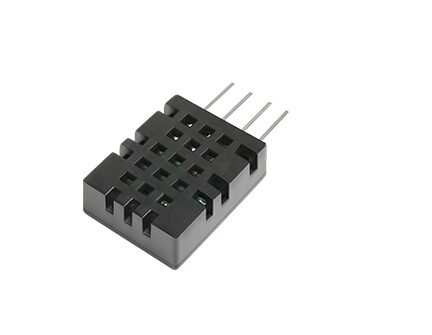
DHT20 SIP Packaged Temperature and Humidity Sensor
I2C interface with ultra-low standby current—ideal for battery-powered weather nodes. Supports software-triggered measurements.
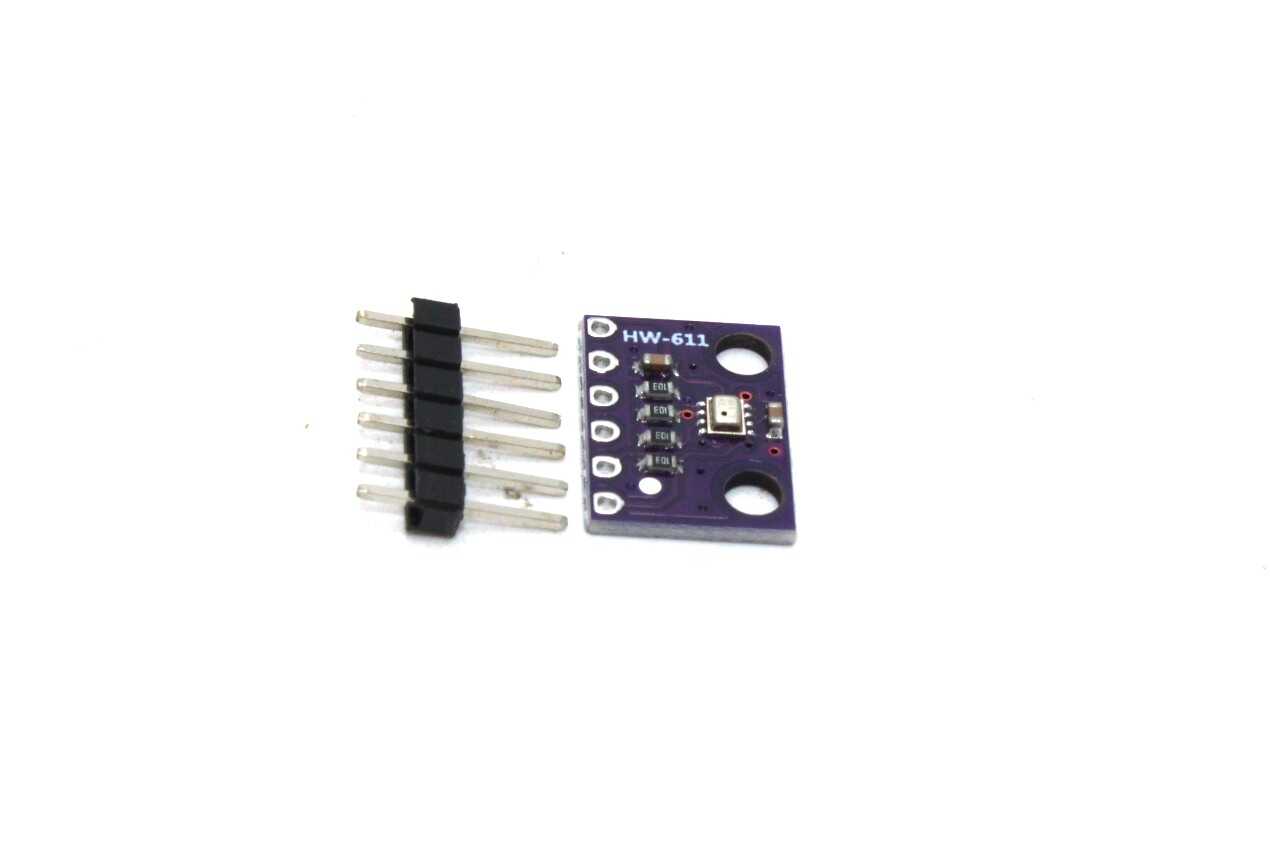
BMP280 Barometric Pressure and Altitude Sensor I2C/SPI
Forced mode delivers sub-1µA average current at one sample per minute—the gold standard for battery-powered pressure sensing.

DS18B20 Programmable Resolution Temperature Sensor
1-Wire protocol, parasite power capability, 1µA idle current. Lower resolution = faster conversion = less active-mode time.
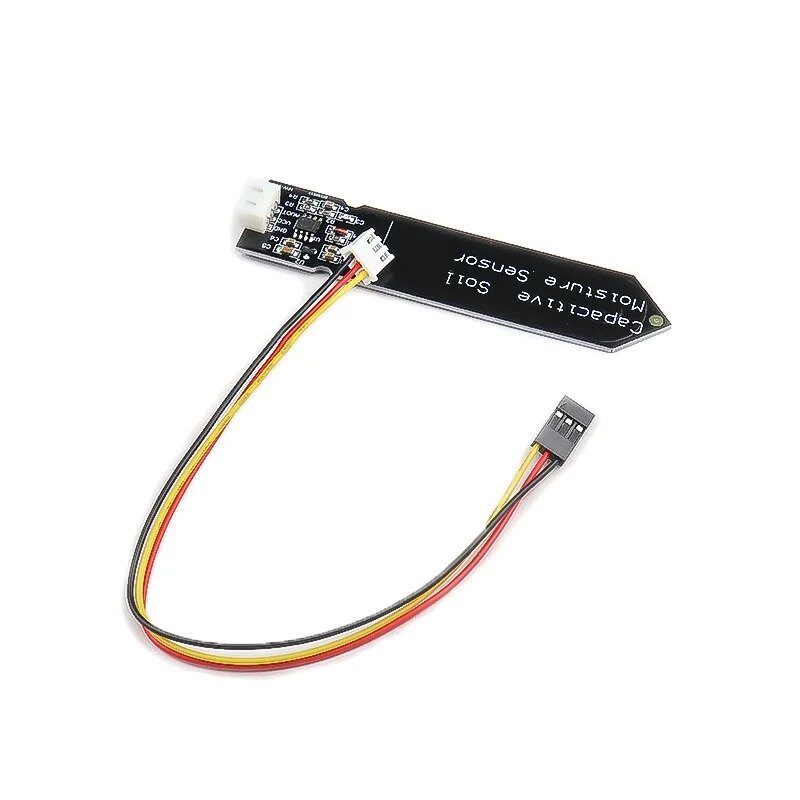
Capacitive Soil Moisture Sensor
No exposed electrodes means no corrosion. Power via GPIO-switched VCC for true zero sleep current in battery garden systems.
9. Frequently Asked Questions
Q: Can I power-cycle my sensor every reading without damaging it?
Yes, for most solid-state sensors (DHT, BMP, DS18B20, LM35). Electrochemical sensors like MQ-series should be warmed up for at least 30 seconds after power-on to stabilise their heating element, so very frequent power cycling can shorten their lifespan. In those cases, use longer intervals or keep the heater on if the application demands frequent readings.
Q: What is the difference between sleep mode and forced mode in the BME280?
In sleep mode the sensor retains its register configuration but does not perform measurements. In forced mode you command one measurement; the sensor wakes, converts, stores the result in output registers, then returns to sleep automatically. Forced mode is preferred because it gives you data on demand without re-initialising the sensor.
Q: Do pull-up resistors waste power when the I2C bus is idle?
Yes. Standard 4.7 kΩ pull-ups on a 3.3V bus draw 3.3/4700 ≈ 0.7 mA each when the line is low. If your sensor is in sleep mode and the lines are idle high, the pull-up draws no current. But during sleep you should also disable the I2C peripheral on the MCU to prevent any leakage through internal pull-downs or driver stages.
Q: How long should I wait after waking a sensor before taking a reading?
It depends on the sensor. DHT11/22: 1 second minimum from power-on. BME280 forced mode: 2 ms for temperature, 9 ms for all three parameters at oversampling 1x. LM35: essentially immediate (output settles in microseconds). DS18B20: 750 ms for 12-bit conversion, 94 ms for 9-bit. Always check the datasheet conversion time table.
Q: My sensor reads garbage after waking from sleep. What could cause this?
Common causes: (1) insufficient warm-up time after power-on, (2) I2C bus not properly re-initialised after MCU deep sleep (call Wire.begin() again), (3) sensor configuration registers lost if you used hardware power cycling (re-send configuration after each power-on), (4) floating analog input on ADC pins during MCU sleep pulling incorrect baseline.
10. Conclusion
Sensor power management is not a single technique but a layered strategy: choose sensors with hardware sleep modes, use forced/one-shot modes where available, hardware-switch sensors without sleep registers, coordinate MCU sleep with sensor sleep, and design your polling interval around how fast your measured quantity actually changes. Apply these principles together and it is realistic to achieve a 10×–100× improvement in battery runtime with no change to the physical hardware.
The sensors available at Zbotic—DHT20, BME280, DS18B20, capacitive soil sensors—all play nicely with low-power designs. Browse the full range and start building devices that truly last.
Browse our full range of sensors and modules at Zbotic. We stock DHT, BMP, DS18B20, PIR, soil moisture, and gas sensors—all shipped fast across India.




Add comment