
If you’re building or upgrading an e-bike, understanding ebike motor star delta winding configurations is one of the most critical—yet often overlooked—aspects of motor selection. The way copper wire is wound inside your hub motor determines whether you get explosive torque off the line, blistering top speed, or a balanced blend of both. This guide demystifies star (Y) and delta (Δ) winding for Indian e-bike enthusiasts and DIY EV builders.
What Is Motor Winding and Why Does It Matter?
A BLDC (Brushless DC) motor’s stator contains multiple coils of copper wire wound around iron cores called teeth. The arrangement and interconnection of these coils define the winding configuration. In the context of three-phase motors used in e-bikes, the two fundamental configurations are star (Y) and delta (Δ).
The winding configuration directly influences:
- Back EMF constant (Ke) – how much voltage the motor generates per unit of RPM
- Torque constant (Kt) – how much torque the motor produces per ampere of current
- Phase resistance and inductance – affecting efficiency at various loads
- Compatibility with controllers – determining optimal voltage and current settings
For Indian e-bike builders working with 24V, 36V, or 48V systems, selecting the correct winding type means the difference between a motor that strains on hills versus one that cruises effortlessly.
Star (Y) Winding: Torque Champion
In a star configuration, one end of each of the three phase windings is connected to a common neutral point. The other ends connect to the three-phase terminals (A, B, C). Think of it as three spokes meeting at a hub center point.
Electrical Characteristics
- Phase voltage = Line voltage / √3 – each coil sees less voltage
- Phase current = Line current – the same current flows through each coil
- Higher winding turns (more wire turns per slot)
- Higher impedance per phase
Performance Outcome
Star winding produces higher torque at lower speeds because the higher number of turns creates a stronger magnetic field per ampere. The motor draws more current at startup but delivers impressive pulling power—ideal for heavy cargo e-bikes, geared hub motors meant for climbing, or e-bikes starting from a standstill with a loaded rider.
The trade-off: star motors reach a lower maximum speed (RPM) for a given voltage. At high speeds, the back EMF rises quickly, limiting the motor’s top-end performance.
Typical use case in India: Hill climbing in Pune, Shimla, or any terrain with significant gradient. Cargo e-bikes and rickshaws prefer star winding motors.
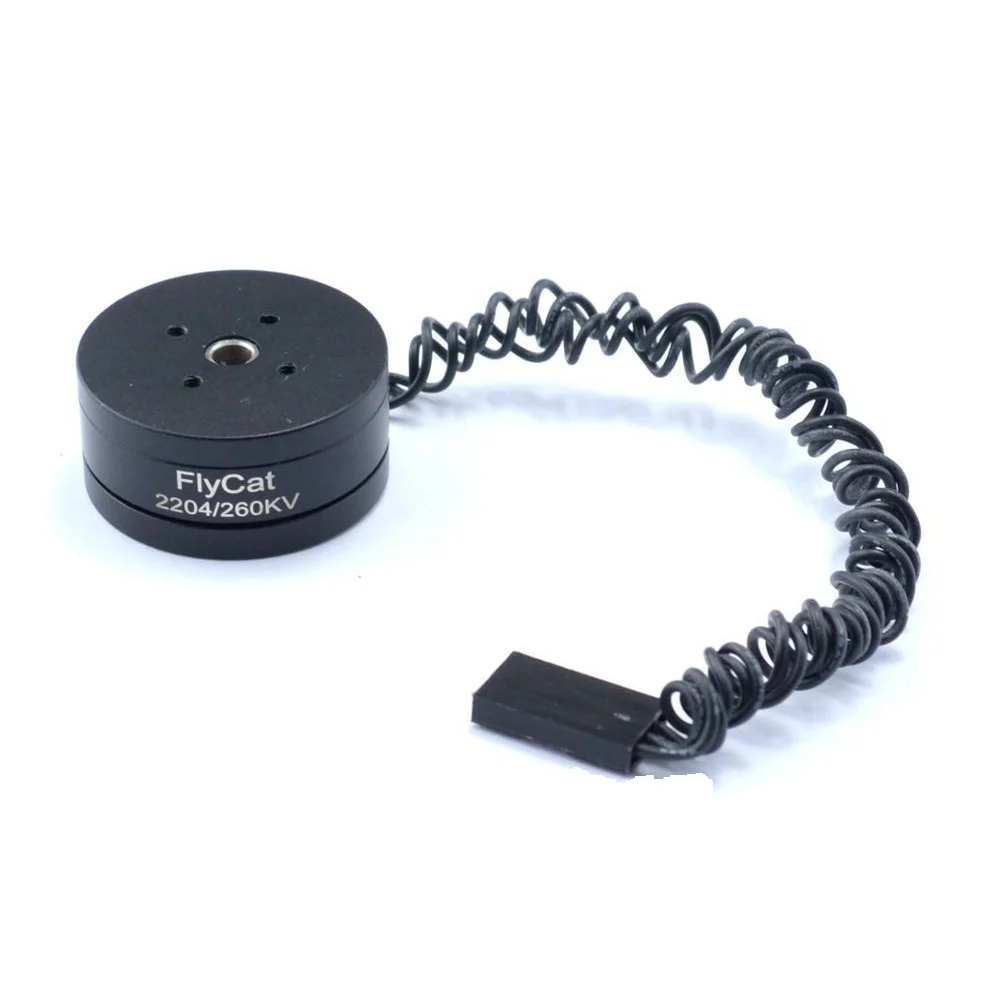
2204 260KV Brushless Gimbal Motor (30cm Cable)
A compact 2204 brushless motor with 260KV rating — ideal for learning winding configurations and building DIY BLDC drive systems. Great for prototyping star-wound motor assemblies.
Delta (Δ) Winding: Speed Specialist
In a delta configuration, the three phase windings are connected end-to-end in a triangular loop, with the three terminals tapped at the junctions. There is no neutral point.
Electrical Characteristics
- Phase voltage = Line voltage – each coil sees the full line voltage
- Phase current = Line current / √3 – current splits between coils
- Fewer turns per coil (thicker wire possible)
- Lower impedance per phase
Performance Outcome
Delta winding allows the motor to reach significantly higher RPM for the same supply voltage. The lower back EMF constant means the motor doesn’t hit its voltage limit as quickly. This translates to higher top speed—perfect for flat-road e-bikes, performance scooters, and speed-focused builds.
However, delta motors produce less torque per ampere. At low speeds or high loads, they draw more current for the same torque output, which can stress the controller and battery if not sized correctly.
Typical use case in India: Highway e-bikes, performance builds targeting 45+ km/h, and applications where top speed matters more than hill-climbing grunt.
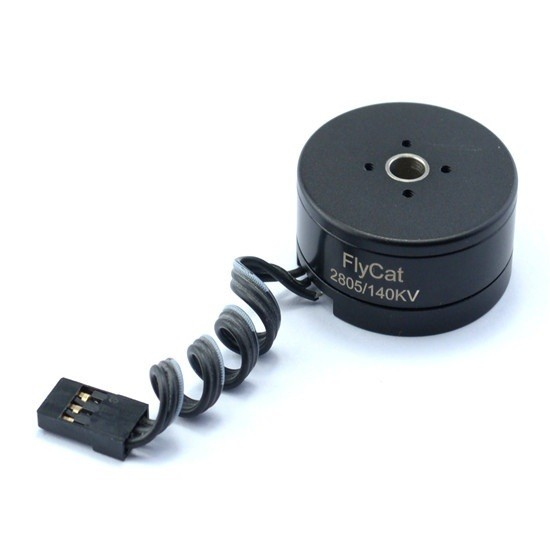
2805 140KV Gimbal Brushless Motor
Lower KV rating in a larger 2805 frame — demonstrates how winding configuration affects speed constants. Perfect for torque-focused motor experiments and low-speed drive systems.
Star vs Delta: Head-to-Head Comparison
| Parameter | Star (Y) | Delta (Δ) |
|---|---|---|
| Torque at Low Speed | ★★★★★ | ★★★ |
| Maximum Speed | ★★★ | ★★★★★ |
| Efficiency at Rated Load | ★★★★ | ★★★★ |
| Startup Current Draw | Lower | Higher |
| Phase Resistance | Higher | Lower |
| Hill Climbing | Excellent | Moderate |
| Circulating Currents | None | Possible (if unbalanced) |
KV Rating and Its Relationship to Winding
The KV rating of a brushless motor (RPM per Volt, no load) is directly determined by winding configuration and the number of turns. This relationship is crucial:
- Star winding: For the same physical motor, star winding gives a KV approximately 1/√3 (about 58%) of what delta would give
- Delta winding: Delta gives approximately √3 (about 1.73×) the KV of an equivalent star-wound motor
Example: A motor that runs at 200KV in star configuration would run at approximately 346KV in delta configuration—same motor, same battery, completely different performance character.
This is why manufacturers sometimes offer the same motor frame in different KV variants—they’re often just changing the winding configuration or number of turns per coil.
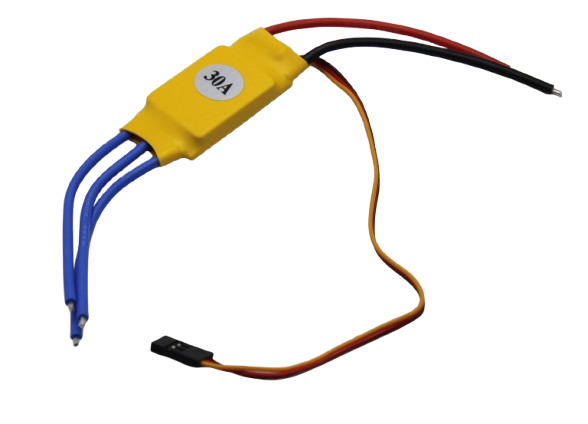
30A BLDC ESC Brushless Electronic Speed Controller
A versatile 30A BLDC ESC that works with both star and delta wound motors. Supports sensored and sensorless operation — essential for e-bike motor configuration testing.
Choosing the Right Winding for Your E-Bike
The ideal winding type depends on your terrain, payload, and speed goals. Here’s a practical decision framework for Indian riders:
Choose Star Winding If:
- You ride in hilly areas (Western Ghats, North Indian hill stations, urban inclines)
- Your e-bike carries loads above 100 kg (rider + cargo)
- You prioritize range over top speed (lower current draw at cruise means more efficient operation in the mid-speed range)
- You’re running a lower voltage pack (24V–36V) and need maximum torque extraction
- You use a geared hub motor (most already use star winding internally)
Choose Delta Winding If:
- You primarily ride on flat roads (Mumbai, Ahmedabad, Chennai coastal routes)
- You want to achieve 45–60 km/h without overshooting your controller’s voltage limits
- You’re running a high-voltage pack (48V–72V) with a direct-drive hub motor
- You want to minimise winding resistance losses at high-speed cruise (delta can be more efficient above 70% of max RPM)
Battery and Controller Sizing
Delta-wound motors demand more from the controller at low speeds. Always size your controller’s current rating at least 20% above the motor’s rated current for delta configurations. For 48V delta builds, ensure your controller can handle peaks of 45A+ safely. Star builds are more forgiving on controller current but demand higher voltage to reach equivalent speeds.
Can You Switch Between Star and Delta?
Yes—this is called a Star-Delta (Y-Δ) starter or switchover, and it’s used in industrial motors and, experimentally, in e-bikes. The concept: start in star mode for maximum torque, then switch to delta at speed for higher RPM efficiency.
For e-bikes, implementing an automatic star-delta switch requires:
- A motor with all six winding ends accessible (not pre-connected)
- A relay or MOSFET switching circuit triggered by speed or throttle position
- A controller that can handle the momentary current spike during switchover
Some commercial e-bike controllers (notably from Chinese OEMs like Votol and Fardriver) support star-delta switching as a built-in feature. For DIY builders, this remains an advanced project but offers the best of both worlds.
Practical tip: If rewinding a hub motor yourself, always document the original winding termination. Switching from star to delta on a rewound motor is possible by reconnecting the neutral-point wires to phase terminals, but it requires careful insulation and current derating.
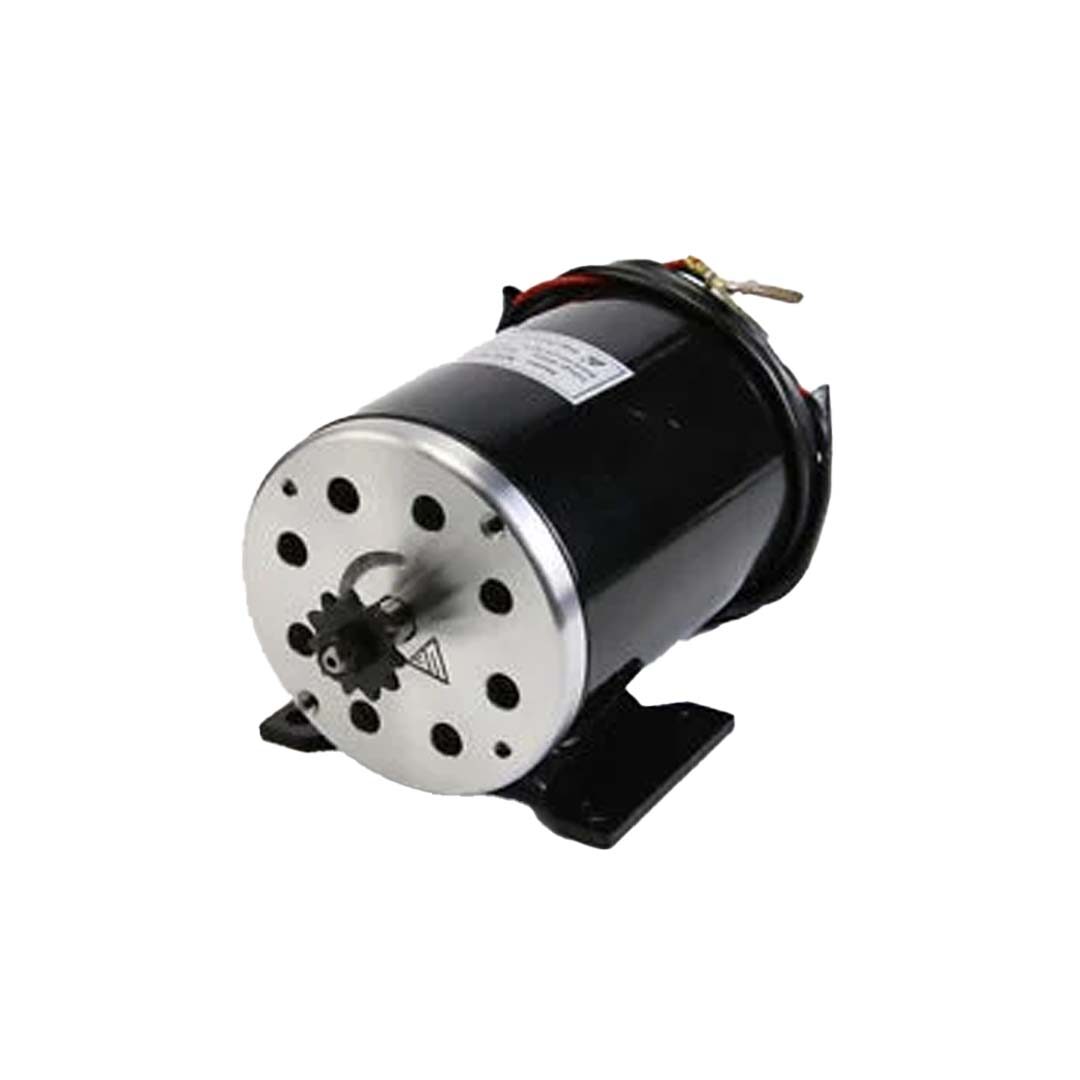
Ebike 500W 24V DC 2500 RPM Scooter Motor MY1020
A robust 500W brushed DC motor for e-bikes, scooters and go-karts. Great for building and testing complete e-bike drivetrains while understanding motor winding effects on performance.
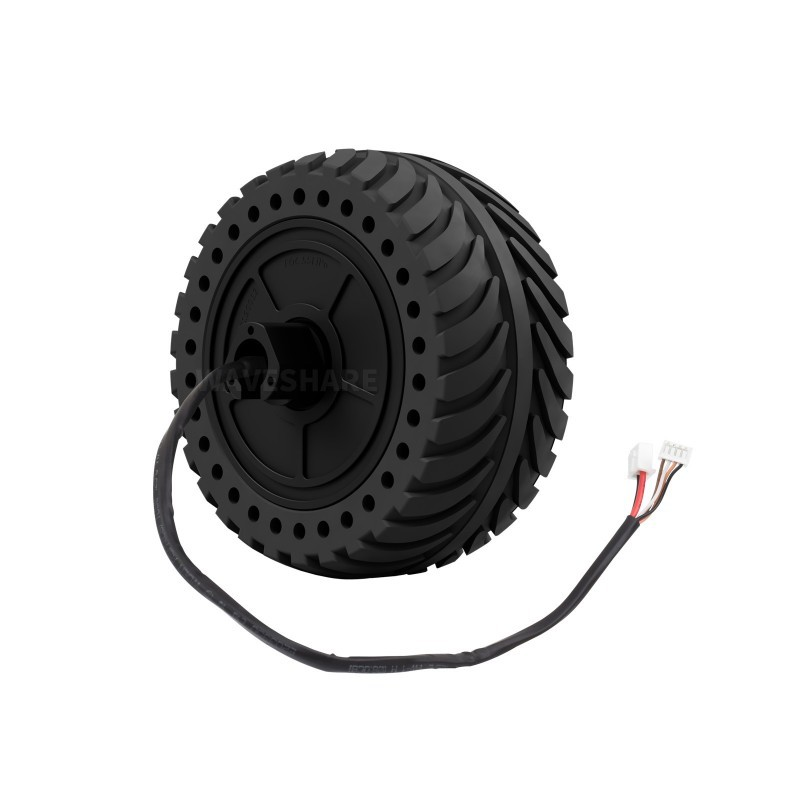
Waveshare DDSM115 Direct Drive Hub Motor
Low-speed, high-torque direct drive hub motor — exactly the kind of application where star winding configuration shines. Suitable for robotics and EV drive prototyping.
Frequently Asked Questions
Q: Can I tell if my hub motor is star or delta wound without opening it?
A: Yes. Measure phase-to-phase resistance with a multimeter across all three pairs (A-B, B-C, A-C). In a star motor, all three readings will be equal (2× one coil’s resistance). In a delta motor, all three readings will also be equal but measuring two parallel paths — typically about 2/3 the resistance you’d measure in star. Also, star motors have a visibly accessible neutral wire bundle inside the axle. Delta motors will have only the three phase wires.
Q: Is star winding always more efficient than delta?
A: Not always. Star winding is more efficient at low-to-mid speed loads. Delta winding can be more efficient at high speeds where copper losses dominate and the lower resistance of delta coils reduces heat. Efficiency depends on the operating point, not just winding type.
Q: My 48V 1000W hub motor feels weak on hills. Is rewinding to star the solution?
A: If your motor is already delta wound, yes — rewinding to star (or increasing turns) can dramatically improve torque. However, rewinding is skilled work. Check first if the weakness is actually from the motor or from a current-limited controller. Many stock controllers cap phase current at 20–25A. Upgrading the controller may solve the hill-climbing problem without touching the motor.
Q: Does star vs delta affect regenerative braking?
A: Yes. Star-wound motors generate higher back EMF at lower speeds, making regen more effective at lower velocities. Delta-wound motors need higher speed before regen kicks in meaningfully. For urban stop-and-go riding with frequent regen, star winding is preferable.
Q: Are there winding configurations between star and delta?
A: Yes — manufacturers use techniques like fractional-slot winding, varying turns per slot, and series-parallel coil arrangements to tune performance between these extremes. Some motors use a combination (e.g., series star for peak torque, parallel star for speed), which is distinct from Y-Δ switching.
Explore Zbotic’s full range of BLDC motors, ESCs, and EV components — everything you need to prototype, test, and ride. From 24V scooter motors to direct-drive hub motors, we’ve got the right parts for your build.



Add comment