
India is an agricultural nation where 60% of the population depends on farming for livelihood. Yet water wastage, soil degradation, post-harvest losses, and crop disease cost Indian farmers thousands of crores every year — problems that the right sensors and a basic microcontroller can meaningfully address.
Smart agriculture (also called precision farming or agri-IoT) uses sensors to monitor soil, climate, and crops in real time, enabling farmers to make data-driven decisions about irrigation, fertilisation, and pest control. The technology that was once only available to large agricultural corporations is now accessible to any student, engineer, or progressive farmer in India with a ₹500–5000 sensor kit and an Arduino or ESP32.
This buying guide covers the best sensors for every type of Indian smart agriculture project, with practical recommendations based on Indian climate conditions, cost constraints, and the most common crop types.
1. Why Smart Agriculture Matters in India
Indian agriculture faces specific challenges that sensor-based automation can directly address:
- Water scarcity: Over-irrigation is common because farmers cannot precisely know soil moisture content. Sensor-based irrigation can reduce water use by 30–50%.
- Climate extremes: Unpredictable monsoons, heat waves, and cold spells in different regions make environmental monitoring critical.
- Labour shortage: Automated sensing systems can monitor fields 24/7 without labour, particularly valuable for remote farms.
- Fertiliser overuse: Nitrogen and pH sensors can prevent costly over-fertilisation that damages soil health.
- Cold chain monitoring: Temperature and humidity sensors in cold storage prevent post-harvest losses worth ₹92,000 crore annually.
The Indian government’s Digital Agriculture Mission and PM-KISAN scheme have increased awareness and support for agri-tech. For engineering students in agricultural universities and polytechnics, smart agriculture projects are a highly relevant and fundable area of innovation.
2. Soil Moisture Sensors: The Core of Irrigation Automation
Soil moisture is the single most important parameter for irrigation automation. There are two types commonly available in India:
Resistive Soil Moisture Sensors
These use two exposed metal probes and measure electrical resistance between them (which decreases as soil moisture increases). They are very cheap (₹30–80) but have a critical flaw: they corrode rapidly in wet soil due to electrolysis. Typically they last only a few weeks to months in outdoor deployments.
Best for: Short-term experiments, indoor potted plants, classroom projects.
Not recommended for: Permanent outdoor farm deployment.
Capacitive Soil Moisture Sensors
Capacitive sensors measure the dielectric constant of the surrounding soil, which changes with moisture content. Because they use no exposed metal conductors (the entire sensor is coated), they do not corrode. They last years in outdoor conditions.
The capacitive sensor requires two-point calibration (dry air vs. submerged in water, or better yet in dry and wet soil of the type you are monitoring). After calibration, it gives reliable 0–100% moisture percentages.
Best for: All outdoor deployments — drip irrigation control, field monitoring, greenhouse soil management.
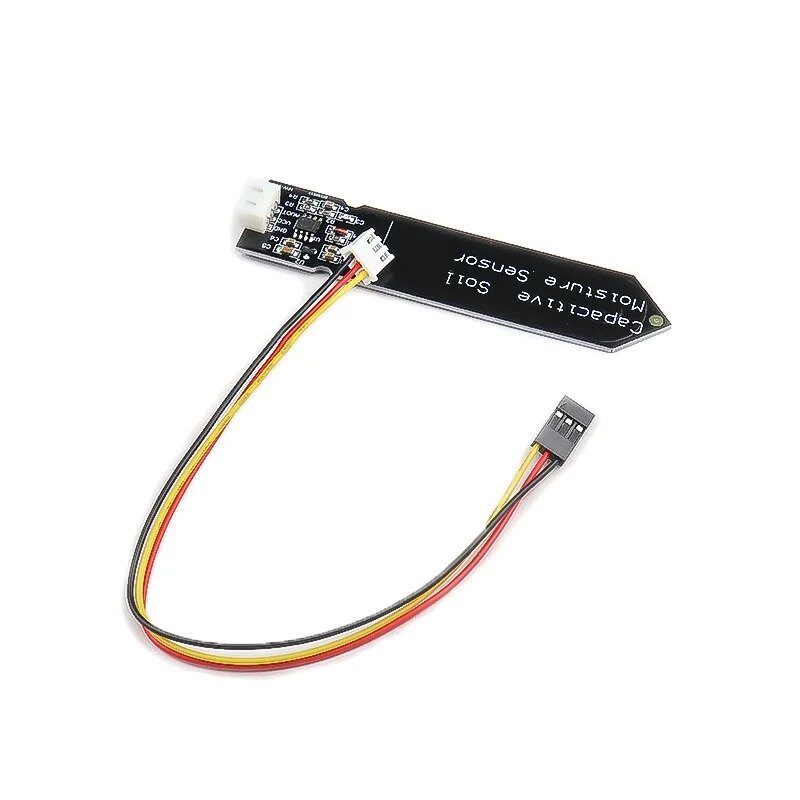
Capacitive Soil Moisture Sensor
The recommended choice for any outdoor smart agriculture project in India. Corrosion-resistant, works in all soil types, outputs analog voltage for direct Arduino/ESP32 ADC reading.
Soil Moisture + Relay Control Module
For simple pump automation without a microcontroller, the relay control module combines a resistive soil moisture sensor with a relay output that directly controls a pump. When soil is dry, the relay closes and the pump runs. No coding required — just set the threshold potentiometer.
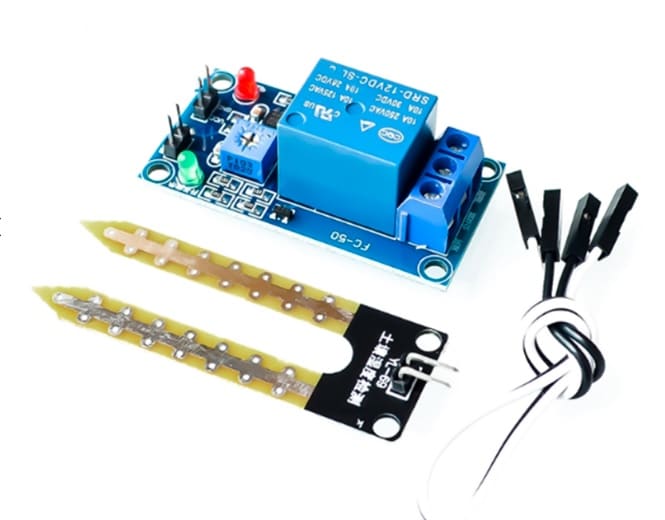
5V 12V Soil Moisture Sensor Relay Control Module
All-in-one automatic irrigation module — no microcontroller needed. Connect power, sensor, and pump, set the threshold dial, and your irrigation system is complete.
DIY Automatic Watering Kit
For home gardeners and potted plant automation, all-in-one DIY automatic watering kits include a soil sensor, pump, and control board in one package — ideal for balcony gardens and grow bags.
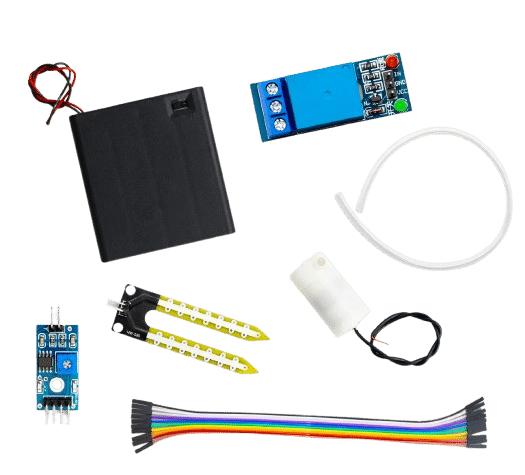
DIY Automatic Flower Watering Automatic Irrigation Module
Complete plug-and-play automatic watering kit with soil moisture detection, pump control, and USB power — perfect for home gardens, balcony farming, and educational projects.
3. Temperature and Humidity Sensors for Greenhouses
Temperature and humidity monitoring is essential for greenhouse management, polyhouse automation, cold storage monitoring, and crop disease prediction. India’s variable climate — from humid coastal areas to dry Deccan interiors to cold northern states — makes environmental monitoring particularly important.
DHT11 — Budget Option
The DHT11 measures 0–50°C (±2°C) and 20–90%RH (±5%RH). Its limitations make it suitable only for non-critical monitoring where ±2°C error is acceptable (general climate logging, alerts for extreme conditions).
DHT20 — Best Value for Greenhouses
The DHT20 offers ±0.5°C and ±3%RH accuracy, communicates over I2C (no timing-sensitive single-wire protocol), and costs marginally more than DHT11. For any serious greenhouse or polyhouse application in India, DHT20 is the right choice.
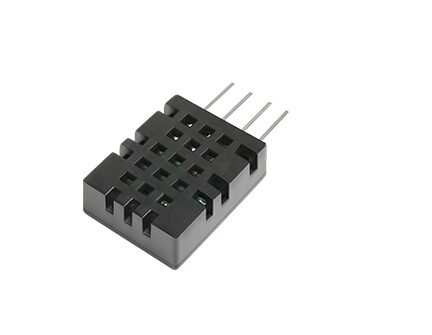
DHT20 SIP Packaged Temperature and Humidity Sensor
±0.5°C / ±3%RH accuracy with I2C interface — the ideal greenhouse climate sensor for Indian polyhouse and controlled environment agriculture projects.
BME280 — All-in-One Weather Station
The BME280 measures temperature (±0.5°C), humidity (±3%RH), and atmospheric pressure (±1 hPa) in a single module. The pressure reading enables altitude-compensated calculations and barometric trend analysis (falling pressure predicts rain — useful for open-field agriculture). It runs on 3.3V and communicates via I2C or SPI.
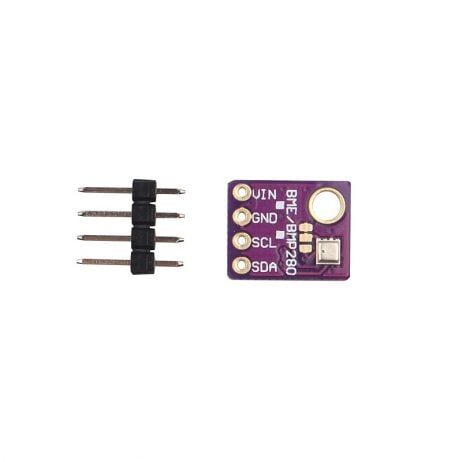
GY-BME280-5V Temperature and Humidity Sensor
5V-compatible BME280 module — measures temperature, humidity, AND barometric pressure. The pressure sensor enables rain prediction for outdoor smart agriculture deployments.
4. Soil Temperature Sensors
Soil temperature affects germination rates, root development, and nutrient uptake. Optimal soil temperature for most Indian crops is 25–35°C. Monitoring soil temperature is particularly important for winter crops (wheat, mustard) where soil may cool below optimal germination temperature.
The DS18B20 waterproof version is the standard choice. It is a digital 1-Wire sensor in a stainless-steel probe housing, rated to -55°C to +125°C, with ±0.5°C accuracy. The 1-Wire protocol allows you to connect multiple DS18B20 sensors on a single wire at different soil depths (5cm, 15cm, 30cm) to create a soil temperature profile.
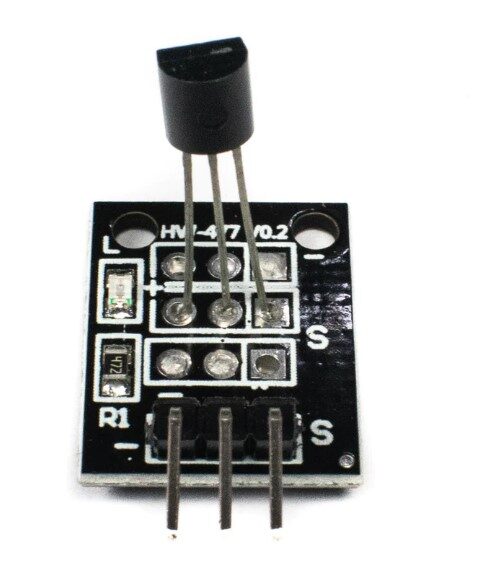
DS18B20 Temperature Sensor Module
Waterproof DS18B20 probe module ready for direct soil burial. 1-Wire digital interface — daisy-chain multiple sensors at different depths for complete soil temperature profiling.
5. Gas Sensors for Greenhouse and Storage Monitoring
Gas monitoring is underused in Indian agriculture despite being highly practical:
CO2 Monitoring for Greenhouses
Plants use CO2 for photosynthesis. In a sealed greenhouse, CO2 levels can drop to 200 ppm (below ambient 400 ppm) on sunny days, limiting growth. CO2 supplementation systems triggered by sensors have been shown to increase yields by 20–30% in controlled environments.
Ammonia Monitoring for Poultry and Livestock
Ammonia from animal waste is toxic above 25 ppm for poultry and harmful to workers. MQ135 can detect ammonia and trigger ventilation systems.
Ethylene Detection for Post-Harvest Storage
Fruits emit ethylene gas as they ripen. Monitoring ethylene in cold storage or transport containers enables intelligent ventilation that slows ripening and reduces post-harvest losses.
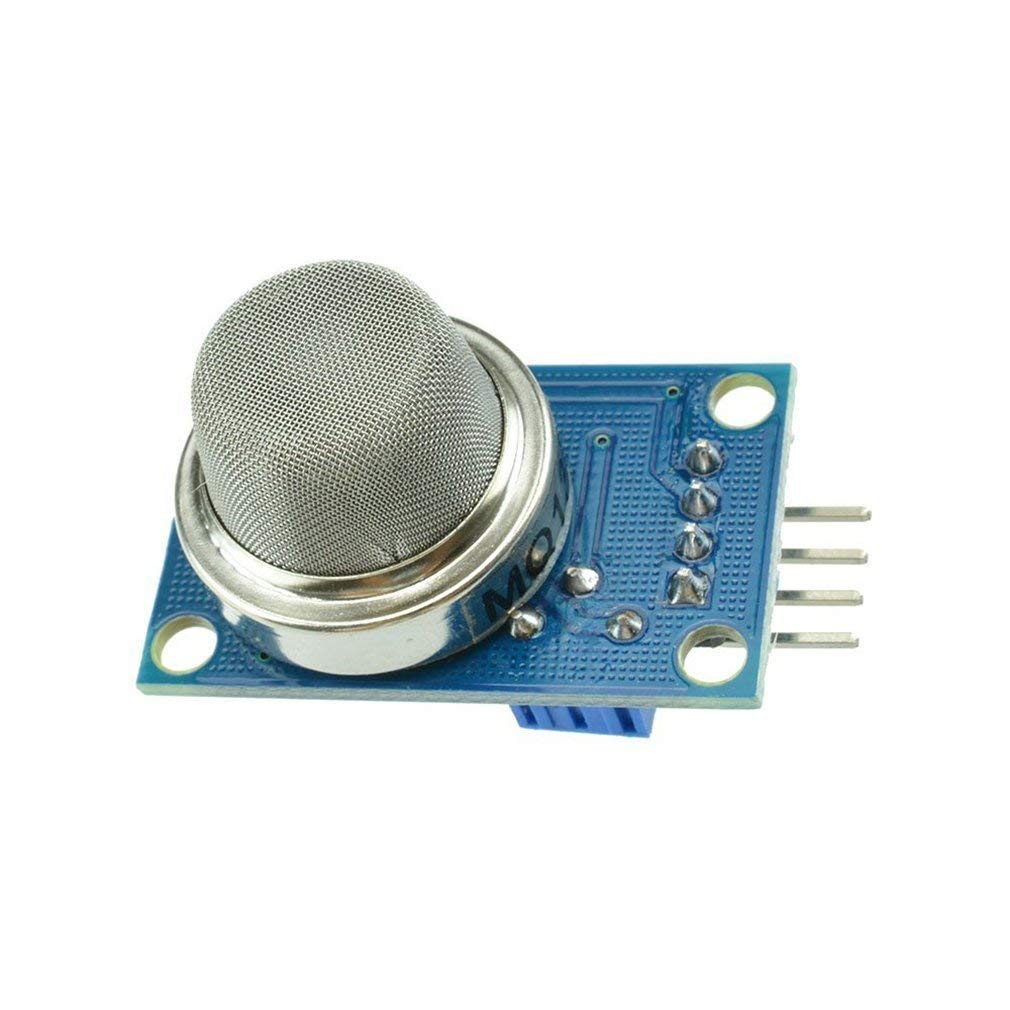
MQ 135 Air Quality/Gas Detector Sensor Module
Detects NH3 (ammonia), NOx, CO2, benzene, and other gases — ideal for poultry shed ventilation automation, greenhouse air quality monitoring, and cold storage gas alerts.
6. Weather Monitoring Sensors
A basic farm weather station with BMP280/BME280 provides temperature, humidity, and barometric pressure. Additional sensors that add value for Indian farmers:
- Rain sensor: Simple resistive rain detector to stop irrigation when it rains, preventing waterlogging and wasted water.
- Anemometer: Wind speed monitoring for sprinkler systems (stop sprinklers when wind exceeds 20 km/h to prevent drift).
- Light intensity (LDR/BH1750): Photoperiod monitoring for triggering supplemental lighting in greenhouses.
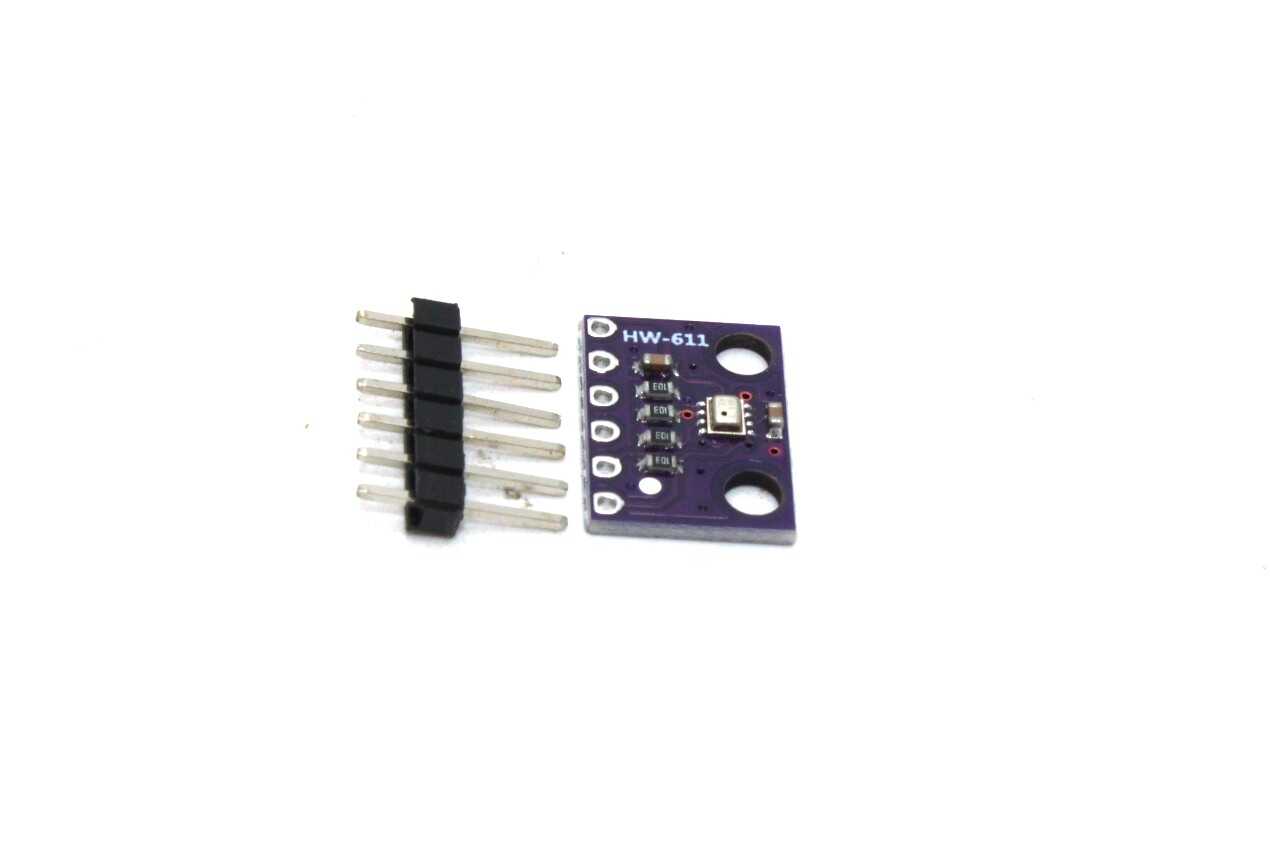
BMP280 Barometric Pressure and Altitude Sensor I2C/SPI Module
The foundation of any farm weather station — accurate barometric pressure enables rain prediction through pressure trend analysis. 3.3V module works directly with ESP8266/ESP32.
7. Water Quality and Level Sensors
Water quality is increasingly critical as groundwater in many Indian agricultural regions is contaminated with fluoride, arsenic, or excessive salinity (from sea intrusion in coastal states). Basic water quality parameters for smart agriculture:
- EC (Electrical Conductivity): Indicates total dissolved solids and salinity. High EC water damages crops and reduces yield.
- pH: Most crops grow best at pH 6.0–7.0. Monitoring irrigation water pH enables correction before application.
- Turbidity: For drip irrigation systems, high turbidity indicates suspended particles that will clog emitters.
- Water level (overhead tank/well): Ultrasonic sensors mounted above tanks provide non-contact water level monitoring — one of the most popular IoT projects in Indian agriculture.
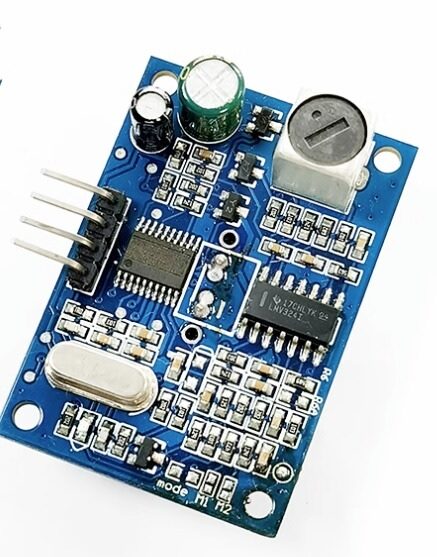
A86 JSN-SR04T Waterproof Ultrasonic Rangefinder Module Version 3.0
IP67-rated waterproof ultrasonic sensor — mount above overhead tanks or open wells for non-contact water level monitoring with automatic pump control.
8. Recommended Complete Sensor Kits by Project Type
Drip Irrigation Automation (Basic)
- Capacitive soil moisture sensor × 2
- DHT20 temperature and humidity sensor
- JSN-SR04T waterproof ultrasonic (tank level)
- ESP32 microcontroller (WiFi for remote monitoring)
- Estimated cost: ₹800–1,500
Greenhouse / Polyhouse Monitoring
- BME280 (temperature + humidity + pressure)
- Capacitive soil moisture × 4 (for multiple zones)
- DS18B20 waterproof (soil temperature)
- MQ135 (air quality / CO2 / ammonia)
- LDR or BH1750 (light intensity)
- ESP32 with OLED display
- Estimated cost: ₹2,500–4,000
Cold Storage / Post-Harvest Monitoring
- DHT20 × multiple (temperature/humidity in each compartment)
- DS18B20 (precise temperature at product level)
- MQ135 or MQ131 (gas monitoring for ethylene, ozone)
- GSM module (Airtel/Jio SIM for SMS alerts without internet)
- Estimated cost: ₹3,000–5,000
Weather Station for Open Fields
- BME280 (temperature + humidity + pressure)
- Rain sensor
- Solar panel + 18650 Li-ion + TP4056 charging module
- ESP8266 NodeMCU (low power, WiFi, Blynk/ThingSpeak integration)
- IP65 waterproof enclosure
- Estimated cost: ₹1,500–2,500
9. Choosing the Right Microcontroller
For Indian smart agriculture projects, three microcontrollers dominate:
- Arduino Uno/Nano: Best for learning and prototyping. No WiFi — use with GSM shield for remote monitoring. Runs 5V which suits most sensors directly.
- ESP8266 (NodeMCU): Built-in WiFi at Arduino price (~₹200). Perfect for Blynk/ThingSpeak dashboards. Low power modes for solar-powered field sensors. Most 3.3V sensors work directly.
- ESP32: WiFi + Bluetooth, dual-core, more GPIO pins, better ADC than ESP8266, built-in hall effect sensor. Best choice for complex multi-sensor agricultural systems. Use 3.3V sensors or include level shifters.
For remote farms without WiFi coverage, pair any microcontroller with a GSM/GPRS module (SIM800L) for 2G data connectivity — BSNL, Airtel, and Jio all have GSM coverage in most agricultural areas.
10. India-Specific Considerations for Agricultural Sensors
Monsoon and Humidity
During the monsoon, humidity frequently reaches 95–100% RH in many parts of India. Always use waterproof or conformal-coated sensor modules for outdoor deployments. The BME280 and DS18B20 waterproof probe are designed for this. Regular DHT11 modules will fail quickly in outdoor monsoon conditions.
Temperature Extremes
Rajasthan and Gujarat see temperatures above 45°C in summer. Most sensors are rated to 85°C, but electronic components (microcontrollers, capacitors) may need to be housed in ventilated, white-painted enclosures to avoid overheating. Solar radiation can raise enclosure temperatures by 20–30°C above ambient.
Power Reliability
Rural India has frequent power cuts. Design sensor systems around solar panels + 18650 batteries with proper charging circuits. ESP32 deep sleep mode can extend battery life to weeks on a single charge by waking only every 15–30 minutes for a reading.
Connectivity
Many farms do not have WiFi. Use GSM/GPRS for remote areas. In areas with Jio 4G, the ESP32 with a 4G dongle via USB OTG is increasingly practical. LoRa modules provide long-range (10+ km) sensor networks without SIM cards — excellent for large farms.
Dust and Insects
Open agricultural environments have dust, insects, and rodents. Enclose all electronics in IP65 boxes, use cable glands for wire entries, and apply conformal coating on PCBs. Check sensor probes regularly for insect nests or root intrusion.
FAQ: Smart Agriculture Sensors in India
What is the best soil moisture sensor for outdoor use in India?
The capacitive soil moisture sensor is the best choice for outdoor use in India. Unlike the cheaper resistive probes, capacitive sensors do not corrode in wet soil and last for years in outdoor conditions. They require one-time calibration (dry air vs. wet soil) but then give reliable percentage readings. For simple automation without a microcontroller, the soil moisture relay control module provides automatic pump switching without any coding.
How much does a complete smart irrigation sensor kit cost in India?
A basic soil moisture + temperature monitoring system with WiFi connectivity can be built for ₹800–1,500 using a capacitive soil sensor, DHT20, and ESP8266 NodeMCU. A more complete greenhouse monitoring system with multiple sensors, display, and mobile app integration costs ₹2,500–5,000. Commercial agricultural IoT systems cost ₹15,000–1,00,000+ but offer industrial-grade reliability, certified accuracy, and full technical support. For student projects and prototype farms, the DIY approach with Zbotic components delivers excellent results at a fraction of the commercial cost.
Can Arduino sensors withstand outdoor conditions during Indian monsoon?
With the right precautions, yes. Use sensors with waterproof housings (DS18B20 waterproof probe, JSN-SR04T ultrasonic). House all electronics in IP65-rated junction boxes available at any electrical shop. Seal all wire entry points with cable glands. Apply conformal spray coating (available from electronics shops) to PCBs. Use water-resistant connectors (XT60, Waterproof JST). Capacitive soil sensors have a coated probe that withstands soil burial and moisture well. Avoid leaving DHT11 or bare LM35 sensors exposed to rain.
Which microcontroller is best for a solar-powered farm sensor node in India?
The ESP32 is the best choice for solar-powered nodes. Its deep sleep current is about 10 µA — a 3000 mAh 18650 battery can theoretically power it for months in deep sleep waking every 15 minutes. Pair it with a small 5W solar panel and TP4056 charging module. Use Blynk, ThingSpeak, or MQTT to post readings to a free cloud dashboard. For farms without WiFi, use ESP32 with a SIM800L GSM module for 2G data (widely available on BSNL/Airtel/Jio networks in rural India).
What sensors do I need for a smart greenhouse project for my college project?
A well-rounded smart greenhouse college project should include: (1) DHT20 or BME280 for air temperature and humidity, (2) Capacitive soil moisture sensor for irrigation control, (3) DS18B20 waterproof probe for soil temperature, (4) MQ135 for air quality/CO2 monitoring, (5) LDR for light intensity monitoring. Add an ESP32 for WiFi connectivity, OLED display for local readings, and a Blynk dashboard for remote monitoring. This covers all major parameters, demonstrates multiple sensor types and communication protocols, and makes for a very strong college-level project submission.
Build Your Smart Agriculture Project Today
Smart agriculture is one of the most impactful applications of electronics in India today. Whether you are a student working on a college project, an engineer prototyping for the agri-tech market, or a farmer wanting to automate irrigation on your land — the sensors and components you need are available at Zbotic.
From capacitive soil sensors and waterproof temperature probes to gas sensors and barometric pressure modules, we stock everything for a complete smart farm sensor system.





Add comment