
Choosing the right IMU (Inertial Measurement Unit) sensor can make or break your robotics or drone project. With dozens of options available from beginner-friendly breakout boards to professional-grade modules, navigating the IMU landscape in India can be confusing. In this 2026 buyer’s guide, we compare the best IMU sensors available for Indian makers — covering specifications, use cases, price points, library support, and practical recommendations for both beginners and advanced builders.
What Is an IMU Sensor?
An Inertial Measurement Unit (IMU) is a sensor device that measures a body’s specific force, angular rate, and sometimes magnetic field. In practical terms, an IMU combines multiple sensor types into one compact package:
- 3-axis Gyroscope: Measures angular velocity (rotation rate) in °/s around X, Y, Z axes
- 3-axis Accelerometer: Measures linear acceleration (including gravity) in m/s² or g
- 3-axis Magnetometer (optional): Measures magnetic field strength in µT — provides compass heading
- Barometer (optional): Measures atmospheric pressure for altitude estimation
The combination of these sensors allows a microcontroller to estimate the complete 3D orientation (roll, pitch, yaw) and motion state of any object — which is exactly what a drone flight controller, robot, or stabilized camera needs.
IMUs are classified by DOF (Degrees of Freedom):
- 6-DOF: 3-axis gyro + 3-axis accelerometer
- 9-DOF: 6-DOF + 3-axis magnetometer
- 10-DOF: 9-DOF + barometric pressure sensor
Types of IMU Sensors
Before comparing specific products, it helps to understand the two main IMU categories you’ll encounter:
Raw IMU (Data-Only)
These sensors output raw gyroscope and accelerometer data. The host microcontroller must run sensor fusion algorithms (complementary filter, Kalman filter, Madgwick filter) to compute orientation angles. Examples: MPU-6050, MPU-9250, ICM-42688, LSM6DSO.
Pros: Cheaper, more flexible, full control over fusion algorithm
Cons: Requires significant programming effort, CPU load on the host
AHRS (Attitude and Heading Reference System) IMU
These sensors have onboard processing that computes and outputs orientation quaternions or Euler angles (roll, pitch, yaw) directly. The host simply reads the angle. Examples: BNO055, CMPS14, VN-100.
Pros: Easy to use, host CPU offloaded, accurate output
Cons: More expensive, less control over fusion parameters
Key Specifications to Compare
When comparing IMU modules, focus on these parameters:
| Specification | What It Means | Why It Matters |
|---|---|---|
| Gyro range (°/s) | Max detectable rotation speed | Drones need ±2000°/s; robots often ±250°/s |
| Gyro noise density | RMS noise per Hz bandwidth | Lower = cleaner signal, less filtering needed |
| Max sample rate | How fast data updates | High-speed FC needs 8–32kHz |
| Interface | I2C or SPI | SPI is faster; I2C is simpler |
| Supply voltage | 3.3V or 5V tolerance | Some need level shifter with Arduino 5V |
| Library support | Arduino/MicroPython libraries available | Critical for beginners |
| Vibration robustness | Anti-aliasing features | Essential near high-speed motors |
1. MPU-6050 — Best Budget IMU for Beginners
The InvenSense MPU-6050 remains the most popular IMU for Indian makers in 2026. Sold on the GY-521 breakout board, it provides excellent performance at an unbeatable price.
Specifications
- 6-DOF: 3-axis gyro + 3-axis accelerometer
- Gyro range: ±250/500/1000/2000°/s (configurable)
- Accel range: ±2/4/8/16g (configurable)
- Interface: I2C (up to 400kHz), Auxiliary I2C master
- Max gyro sample rate: 8kHz internal, 1kHz output
- Onboard DMP (Digital Motion Processor) for quaternion output
- Supply voltage: 3.3V (GY-521 board has 5V regulator)
- Price in India: ₹80–150 (GY-521 breakout)
Pros
- Huge community support and documentation
- Excellent library support (MPU6050, I2Cdevlib, Jeff Rowberg’s library)
- Onboard DMP reduces microcontroller CPU load
- Very affordable
Cons
- I2C only (slower than SPI for high-frequency flight controllers)
- Older design — noise performance below modern chips
- DMP is undocumented/closed source
Best For
Arduino learners, self-balancing robots, DIY gimbals, school/college projects, basic drone builds with Multiwii/KK2 flight controllers.
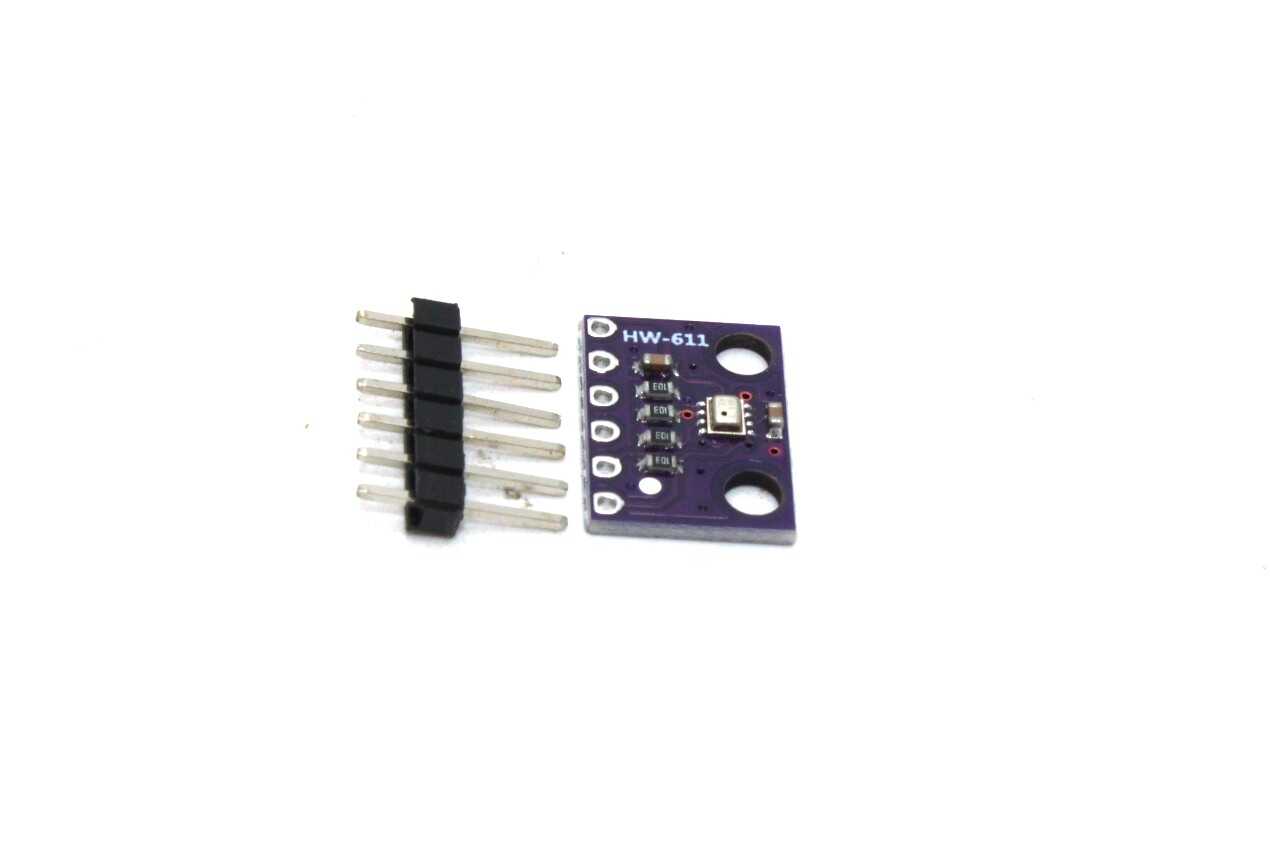
BMP280 Barometric Pressure & Altitude Sensor
Pair with any IMU to add barometric altitude sensing — essential for altitude-hold drone modes. I2C interface works alongside MPU-6050 on the same bus.
2. MPU-9250 — Best 9-DOF IMU for DIY Drones
The InvenSense MPU-9250 (on GY-91 or GY-6500 breakout boards) adds an AK8963 3-axis magnetometer to the proven MPU-6050 platform, enabling full 9-DOF AHRS with compass heading.
Specifications
- 9-DOF: 3-axis gyro + 3-axis accelerometer + 3-axis magnetometer (AK8963)
- Gyro range: ±250/500/1000/2000°/s
- Accel range: ±2/4/8/16g
- Magnetometer: ±4800µT (16-bit)
- Interface: I2C + SPI (up to 1MHz)
- Supply voltage: 3.3V (breakout boards usually include regulator)
- Price in India: ₹250–450 (GY-91 breakout)
Best For
GPS drones requiring compass heading, autonomous robots needing absolute orientation, AHRS projects with Madgwick filter, UAV autopilot development.
Watch Out For
The MPU-9250 has some fake/cloned chips in the market — always buy from reputable sources. Genuine chips have consistent magnetometer output; clones often have poor magnetometer performance. Use the whoAmI register check (should return 0x71 for genuine MPU-9250).
3. BNO055 — Best Plug-and-Play IMU (AHRS)
Bosch’s BNO055 is the go-to choice when you want orientation angles without writing sensor fusion code. It combines a 3-axis gyroscope, 3-axis accelerometer, and 3-axis magnetometer with a dedicated ARM Cortex-M0 processor that runs the Bosch fusion algorithm onboard.
Specifications
- 9-DOF with onboard ARM Cortex-M0 fusion processor
- Outputs: Euler angles (roll/pitch/yaw), quaternions, linear acceleration, gravity vector
- Gyro range: ±125/250/500/1000/2000°/s
- Accel range: ±2/4/8/16g
- Interface: I2C (400kHz) + UART
- Auto-calibration for all three sensors
- Supply voltage: 3.3V (Adafruit BNO055 breakout includes 5V regulator)
- Price in India: ₹400–700 (breakout board)
Pros
- No sensor fusion code needed — just read roll/pitch/yaw directly
- Auto-calibration is excellent (especially for magnetometer)
- Adafruit provides excellent library with great documentation
- Linear acceleration and gravity vectors available directly
Cons
- Higher cost than MPU-6050
- Fusion algorithm is closed-box (Bosch proprietary)
- Max gyro sample rate limited to 2kHz (not suitable for high-speed flight controllers)
- Not ideal for racing drones
Best For
Robotic arms, wearable motion capture, augmented reality projects, beginners who want accurate angles without complex math, camera stabilizers.
4. ICM-42688-P — Best High-Performance IMU for Racing Drones
The TDK InvenSense ICM-42688-P is the current industry standard for high-performance drone flight controllers in 2026. It features ultra-low noise, 32kHz internal sample rate, and advanced signal processing that significantly improves flight smoothness compared to older chips.
Specifications
- 6-DOF: 3-axis gyro + 3-axis accelerometer
- Gyro noise density: 0.0028°/s/√Hz (vs MPU-6050’s 0.005°/s/√Hz)
- Gyro range: ±15.6/31.25/62.5/125/250/500/1000/2000°/s
- Internal sample rate: 32kHz gyro, 32kHz accel
- Interface: SPI (up to 24MHz) + I2C
- APEX motion processing: tap detection, wake-on-motion, pedometer
- Anti-aliasing filter: programmable low-pass filter
- Price in India: Typically found on F4/F7 flight controllers (not as standalone modules)
Best For
FPV racing drones, freestyle drones, BetaFlight flight controllers, any application needing >4kHz loop rates with low gyro noise.
5. LSM6DSO — Best for STM32 Projects
STMicroelectronics’ LSM6DSO is a 6-DOF IMU with always-on low-power operation and advanced machine learning core features. Used extensively in STM32-based projects and the ST Discovery/Nucleo board ecosystems.
Specifications
- 6-DOF: 3-axis gyro + 3-axis accelerometer
- Gyro range: ±125/250/500/1000/2000°/s
- Accel range: ±2/4/8/16g
- Max sample rate: 6.66kHz (gyro + accel)
- Machine learning core: 4 decision trees onboard for activity recognition
- Interface: SPI + I2C
- Price in India: ₹300–500 on breakout boards
Best For
STM32 microcontroller projects, gesture recognition, activity classification, wearables with low-power requirements, projects using the ST ecosystem.
6. BMI088 — Best for Industrial & Agricultural Drone Applications
Bosch’s BMI088 is specifically engineered for drones that operate near high-vibration motors. Its synchronized gyroscope and accelerometer minimize cross-sensitivity and aliasing artifacts — a major problem with standard IMUs on large agricultural drone platforms.
Specifications
- 6-DOF: 3-axis gyro + 3-axis accelerometer
- Gyro range: ±125/250/500/1000/2000°/s
- Accel range: ±3/6/12/24g
- Noise spectral density: 0.014°/s/√Hz (gyro)
- Interface: SPI + I2C
- Used in Pixhawk 4, Holybro Durandal
- Price in India: ₹600–1200 on breakout boards
Best For
Agricultural spraying drones, heavy-lift platforms, professional autopilot systems where motor vibration is a significant concern.
Full Comparison Table
| IMU | DOF | Gyro Noise | Max Rate | Interface | India Price | Best For |
|---|---|---|---|---|---|---|
| MPU-6050 | 6 | 0.005°/s/√Hz | 1kHz out | I2C | ₹80–150 | Beginners, robots |
| MPU-9250 | 9 | 0.01°/s/√Hz | 8kHz | I2C+SPI | ₹250–450 | GPS drones |
| BNO055 | 9+fusion | 0.014°/s/√Hz | 2kHz | I2C+UART | ₹400–700 | Robotics, no fusion code |
| ICM-42688 | 6 | 0.0028°/s/√Hz | 32kHz | SPI+I2C | On FC: ₹2500+ | Racing/FPV drones |
| LSM6DSO | 6 | 0.004°/s/√Hz | 6.66kHz | SPI+I2C | ₹300–500 | STM32, wearables |
| BMI088 | 6 | 0.014°/s/√Hz | 2kHz | SPI+I2C | ₹600–1200 | Agri drones, vibration |
Which IMU Should You Choose?
Here is a simple decision guide based on your project type:
Get the MPU-6050 (GY-521). It’s the cheapest, has the most tutorials online, and the best library support for Arduino. You will not outgrow it for your first 5–10 projects.
MPU-6050 is perfect. Use the complementary filter or Kalman filter with the accelerometer. Many open-source balancing robot projects are built on the MPU-6050.
Get the BNO055. Read roll, pitch, yaw directly. Use the Adafruit library. Perfect for robotic arms, camera gimbals, and any project where simplicity matters more than cost.
Choose MPU-9250 for the magnetometer. Use ArduPilot or iNav firmware which already supports it. The compass heading is essential for stable GPS hold and waypoint navigation.
Don’t pick the IMU separately — buy an F4 or F7 flight controller with ICM-42688-P onboard. BetaFlight’s Gyroflow filtering is optimized for this chip. Standalone IMU boards with ICM-42688 are rare.
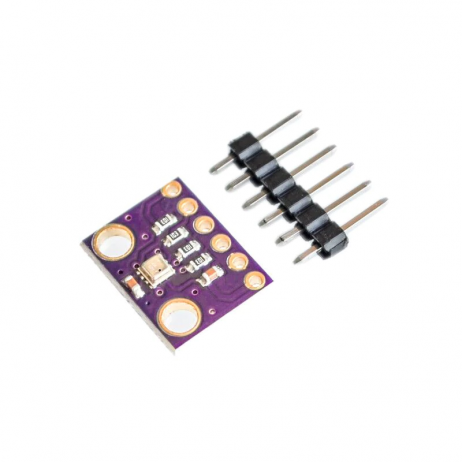
GY-BME280 Precision Altimeter Atmospheric Pressure Sensor
Add altitude hold to your IMU setup — the BME280 provides barometric altitude, temperature, and humidity on a single I2C module.

20A Range Current Sensor Module ACS712
Monitor motor current alongside your IMU data for complete drone telemetry — detect overloaded motors and correlate with attitude changes.
Frequently Asked Questions
Yes — most modern IMU chips operate at 3.3V. The MPU-6050 on GY-521 breakout has a 3.3V regulator and level shifter for 5V compatibility. For ESP32 at 3.3V, connect directly (do NOT use the 5V pin on GY-521). Other chips like BME280, LSM6DSO, ICM-42688 are natively 3.3V.
Place the magnetometer as far as possible from power wires, motors, and ESCs — these create strong magnetic fields that saturate the sensor. Many GPS+compass modules in ArduPilot drones have the magnetometer mounted on top of the GPS mast, far from the flight controller. Always do a full 3D calibration (figure-8 calibration dance) before flight.
The MPU-6050 is universally recommended for self-balancing robots. It provides fast gyro + accelerometer data for the PID balance controller, has excellent Arduino library support, and costs under ₹150. Hundreds of open-source self-balancing robot projects on GitHub use the MPU-6050 — you can copy and adapt the code directly.
For high-performance drone applications, newer chips (ICM-42688-P) are significantly better. But for educational projects, Arduino experiments, self-balancing robots, and DIY gimbals, the MPU-6050 is still perfectly good. Its massive community support and tutorial base makes it the best starting point for anyone new to IMU sensors.
On I2C, you can connect up to 2 MPU-6050 sensors (address 0x68 and 0x69 via AD0 pin). For more sensors, use an I2C multiplexer like the TCA9548A which supports up to 8 I2C devices on one bus. On SPI, you can connect as many sensors as you have chip-select (CS) pins available.
Conclusion
In 2026, Indian makers have access to an excellent range of IMU sensors at every price point. Here is the quick summary:
- ₹80–150: MPU-6050 — the best value, perfect for beginners and most DIY projects
- ₹250–450: MPU-9250 — when you need compass heading for GPS drones
- ₹400–700: BNO055 — when you want accurate angles without programming fusion algorithms
- ₹600–1200: BMI088 — when motor vibration is your primary concern
- On FC ₹2500+: ICM-42688-P — for serious FPV racing performance
Don’t overthink the choice — start with the MPU-6050 for your first project. You will learn the fundamentals of gyroscope and accelerometer integration that apply to all other IMU chips. As your projects advance in complexity and performance requirements, you can upgrade to more capable sensors.
The most important thing is to start building, calibrating, and learning through hands-on experience. Every great drone builder and robotics engineer started with a basic IMU tutorial and a USB cable plugged into their Arduino.
Shop IMU Sensors & Robotics Components at Zbotic
India’s favourite electronics store for makers — MPU-6050, BNO055, BMP280, load cells, and hundreds of other sensors delivered fast across India.


Add comment