
Laser engravers have gone from industrial-only tools to affordable desktop machines that Indian hobbyists, small businesses, and makers can own and use at home. Whether you want to personalise gifts, cut acrylic for your product line, or add professional-grade detail to woodwork, a laser engraver can transform your workflow — if you choose the right type.
This guide cuts through the jargon to help you pick the perfect machine for your needs and budget, with specific advice for Indian buyers: import duties, voltage considerations, vendor support, and material sourcing.
1. Diode vs CO2: The Core Difference
All consumer laser engravers use one of two laser technologies. Your choice between them determines what materials you can work with, how much you will spend, and how much space the machine needs.
| Feature | Diode Laser | CO2 Laser |
|---|---|---|
| Wavelength | ~400-450 nm (blue/violet) | 10,600 nm (infrared) |
| Price (India) | ₹8,000 – ₹60,000 | ₹40,000 – ₹3,00,000+ |
| Size | Compact / open frame | Large enclosed cabinet |
| Best for | Wood, leather, dark plastics | Acrylic, thick wood, fabric |
| Cuts acrylic? | Poor (reflects the beam) | Excellent |
| Maintenance | Minimal | Mirror alignment, tube replacement |
| Setup complexity | Low — beginner friendly | Moderate — needs alignment |
The short version: start with a diode laser unless you specifically need to cut clear acrylic or thick fabric. It will handle 80% of hobbyist and small-business use cases at a fraction of the cost.
2. Diode Laser Deep Dive
Diode lasers use semiconductor chips — the same technology as a powerful laser pointer, but multiplied and focused. Modern diode modules from brands like xTool, Sculpfun, Atomstack, and Neje pack 5W to 40W of optical power into compact, open-frame machines that assemble in under an hour.
Advantages of Diode Lasers
- Price: Entry-level diode machines start around ₹8,000-₹15,000 in India (Sculpfun S6, Neje E30). Mid-range models (10-20W) run ₹20,000-₹45,000.
- Compact footprint: Most open-frame models fold flat for storage — ideal for Indian homes where workshop space is at a premium.
- Easy assembly: Most ship as flat-pack kits with step-by-step instructions. Expect 1-3 hours assembly time.
- Low maintenance: No mirrors to align, no glass tubes to replace. Clean the lens occasionally and you are done.
- Electricity efficiency: A 10W optical diode machine typically draws only 40-60W from the wall — no need for dedicated circuits.
Limitations of Diode Lasers
- Cannot cleanly cut or engrave transparent/translucent acrylic (the blue beam passes through it).
- Cannot engrave bare metals without a special marking spray (like Cermark or cheap DIY versions using black paint).
- Open-frame design means you must use protective eyewear rated for the specific wavelength (OD 6+ at 450 nm).
- Cutting thick materials (beyond 6mm wood) requires multiple slow passes compared to CO2 machines of similar stated wattage.
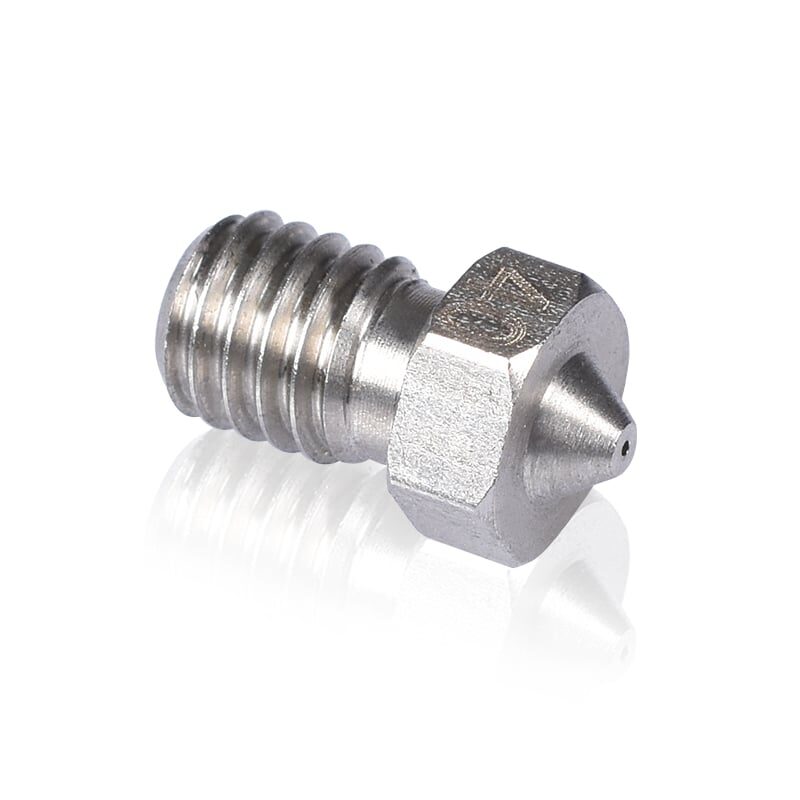
3D Printers Stainless Steel Nozzle 0.4mm
Upgrade your 3D printer alongside your laser engraver setup. A quality stainless steel nozzle ensures clean filament flow for 3D printed jigs and fixtures used in laser engraving workflows.
3. CO2 Laser Deep Dive
CO2 lasers generate light by exciting carbon dioxide gas in a sealed glass (or metal) tube with high-voltage electricity. The 10,600 nm wavelength is absorbed by organic materials and many plastics far more efficiently than diode wavelengths, giving CO2 lasers their famous ability to cut acrylic with polished, glass-like edges.
When CO2 Makes Sense
- Acrylic signage and product fabrication: CO2 cuts 3mm acrylic in a single fast pass. The edge is fire-polished — no sanding needed. This is the bread-and-butter of Indian laser job shops.
- Thick wood: A 60W CO2 machine can cut 15mm plywood reliably. Diode machines of the same claimed wattage may struggle past 8mm.
- Fabric and leather: The longer wavelength seals edges as it cuts, preventing fraying — critical for fashion and automotive upholstery work.
- High-volume production: CO2 machines are built for duty cycles — they handle hour-after-hour operation better than entry-level diode modules.
CO2 Drawbacks for Indian Buyers
- Price: A reliable 40W K40 clone starts at ₹40,000-₹60,000. A proper 60W machine from a known brand is ₹1,20,000+.
- Size and weight: Most CO2 machines weigh 30-80 kg and need a dedicated table. Moving them is a two-person job.
- Water cooling: Glass tube machines need a water chiller or pump reservoir to keep the tube cool. In Indian summers (40°C+), you may need an active chiller (additional ₹8,000-₹20,000).
- Tube replacement: Glass CO2 tubes last 1,000-2,000 hours. Replacement tubes (40W: ₹3,000-₹6,000) are available in India but require recalibration after swapping.
- Import and service: Most CO2 machines are imported. Check if the seller offers local service support before buying.
4. Understanding Power: Optical vs Input Watts
This is the single biggest source of confusion — and dishonest marketing — in the laser engraver space.
Optical power (actual cutting power) is what matters. It is the power delivered by the laser beam to your material. A machine with 10W optical power genuinely cuts and engraves at 10W.
Input power is how much electricity the machine draws from the wall. Due to inefficiency, a machine with 10W optical power may draw 60-80W from the outlet.
Some sellers — especially on Amazon.in and Flipkart — advertise machines as 40W or 60W when referring to input power, while the actual optical power is only 5-10W. Always check the spec sheet carefully. Legitimate brands (xTool, Sculpfun, Atomstack) clearly state optical output power.
Power Reference Guide
- 1-5W optical (diode): Engraving only. Good for light wood, paper, dark leather. Not suitable for cutting.
- 5-10W optical (diode): Light cutting of 2-3mm plywood, MDF. Good all-rounder for hobbyists.
- 10-20W optical (diode): Cuts 5-6mm wood, leather. Faster engraving speeds. Recommended for small business use.
- 20-40W optical (diode): High-end diode machines. Approaches CO2 quality on compatible materials.
- 40W CO2: Entry-level commercial. Cuts 3mm acrylic cleanly, 8mm wood, fabric. Good for sign shops.
- 60-100W CO2: Professional range. 15mm wood, 5mm acrylic in one pass. For production workshops.
5. What Can Each Type Cut and Engrave?
| Material | Diode | CO2 |
|---|---|---|
| Plywood / MDF (up to 6mm) | Excellent | Excellent |
| Plywood (6-20mm) | Slow / multi-pass | Excellent |
| Leather | Good | Excellent |
| Clear Acrylic | Poor | Excellent |
| Coloured Acrylic | Limited (dark colours only) | Excellent |
| Fabric / Cotton | Possible with care | Excellent |
| Anodized Aluminium | Good | Good |
| Bare Steel / Copper | Needs marking spray | Needs marking spray |
| Glass (engraving) | Difficult | Good |
Materials to NEVER laser: PVC/vinyl (releases chlorine gas), polycarbonate (burns rather than cuts), ABS (toxic fumes), galvanised metal (zinc oxide fumes). These rules apply to both diode and CO2 machines.
6. India-Specific Buying Considerations
Voltage and Power Supply
India runs on 220-240V, 50Hz — the same as Europe. Most laser engravers ship with universal power supplies that handle 100-240V automatically. Verify before purchase, particularly for CO2 machines with separate power supply units.
Import Duty and GST
Laser engravers imported from China attract basic customs duty (typically 7.5-10%) plus GST (18% for most electronics). Machines priced in USD convert at live rates. Factor in ₹5,000-₹20,000 extra for import costs on direct imports. Buying from Indian resellers includes all taxes with no customs surprise.
After-Sales Support
This is where Indian buyers often get burned. Look for sellers with local phone/WhatsApp support, spare parts availability (lens, protective glass, air-assist nozzles), and Indian warranty service (not just send back to China).
7. Budget Tiers and Recommended Machines
Under ₹15,000 — Entry Level Diode
Best for: Wood photo engraving, paper cutting, craft projects. Machines like the Sculpfun S6 or Neje E30 (5-7W optical) fit here. Expect slower speeds and limited cutting depth.
₹15,000-₹40,000 — Mid-Range Diode
Best for: Small business engraving, personalised gifts, leather work, MDF cutting. Look for 10-20W optical output machines. These offer air-assist nozzles for cleaner cuts and faster engraving speeds.
₹40,000-₹80,000 — High-End Diode or Entry CO2
Diode: xTool S1 (40W optical) — enclosed, near-CO2 performance on compatible materials. CO2: K40 clone (40W) — opens the door to acrylic but requires maintenance knowledge.
₹80,000+ — Professional CO2
Best for: Production shops, laser cutting services, sign shops. Machines from OMTech, Thunder Laser, or local Indian brands offer 60-150W with proper enclosures, auto-focus, and industrial-grade reliability.
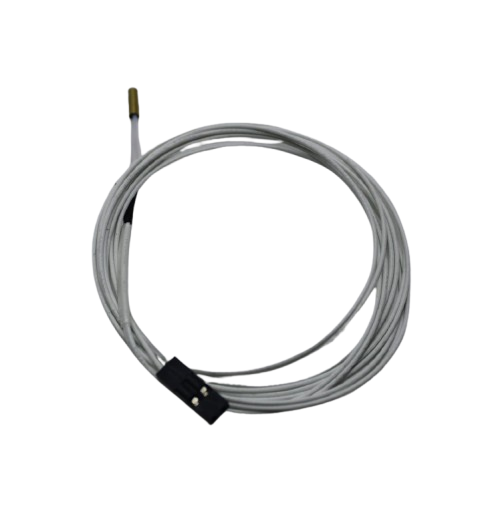
100k NTC Thermistor With Copper Tip for MK8 Extruder
Many laser engravers share hotend components with 3D printers. This precision thermistor is useful for DIY laser engraver builds and machine modifications requiring temperature monitoring.
8. Software and Workflow
LightBurn (Recommended)
LightBurn (~$60 USD one-time, works with virtually all consumer laser engravers) is the industry standard. It handles design, path optimisation, speed/power settings, and machine control in one package. A free 30-day trial is available.
LaserGRBL (Free)
Open-source, Windows-only alternative. Good for beginners and basic GRBL-based machines. Less powerful than LightBurn but costs nothing.
Workflow Overview
- Create or import your design (SVG, PNG, DXF, BMP)
- Set material-appropriate speed and power settings
- Run a framing pass (traces the bounding box with laser off) to verify positioning
- Run a low-power test on a scrap piece
- Execute the final job
9. Safety: Non-Negotiable Rules
- Eye protection: Always wear wavelength-specific laser safety glasses. For diode (450nm), you need OD6+ glasses rated for that wavelength. Regular sunglasses offer zero protection.
- Never leave unattended: Even a brief power fluctuation can ignite dry wood. Stay in the room during every job.
- Fire extinguisher: Keep a CO2 or dry-powder fire extinguisher within arm’s reach at all times.
- Ventilation: All laser cutting produces toxic fumes. Route exhaust outside or use a HEPA + activated carbon filter.
- Know your materials: Burning PVC releases chlorine gas — a single job can make a room uninhabitable.
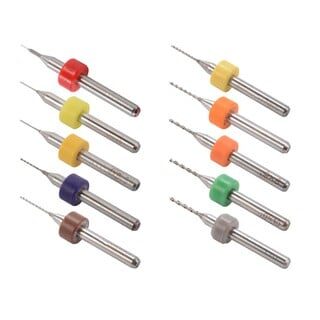
0.1-1.0mm Mixed 3D Printer Nozzle Cleaning Drill Bit Kit (10 Pcs)
These precision drill bits clean laser engraver air-assist nozzle tips and 3D printer nozzles — a must-have for any maker workshop.
Frequently Asked Questions
Which is better for a beginner in India — diode or CO2 laser engraver?
For most Indian beginners, a diode laser is the better starting point. It is affordable (starting under ₹15,000), easy to assemble, requires minimal maintenance, and works well on wood, leather, and dark-coloured materials. Only choose a CO2 machine from the start if you specifically need to cut acrylic for your business.
Can a laser engraver work on stainless steel in India?
Consumer diode and CO2 lasers cannot directly engrave bare stainless steel. You need to apply a metal marking spray (Cermark or an inexpensive black paint substitute) to the surface, engrave through it, then wipe off the unburned spray. Fibre lasers can mark bare metal directly, but they cost ₹2,00,000+.
How much does it cost to run a laser engraver in India?
A 10W optical diode machine draws roughly 60-80W from the wall. At ₹8 per kWh (average Indian rate), running it for 4 hours a day costs about ₹2-₹2.50 per day. CO2 machines draw 200-500W, so 4 hours daily works out to ₹6-₹16 per day. The main consumable cost is the laser tube for CO2 machines (₹3,000-₹6,000 every 1,000-2,000 hours).
Is a laser engraver business profitable in India?
Yes — personalised laser-engraved gifts, corporate awards, leather accessories, and signage are in strong demand across India. A ₹25,000 mid-range diode machine can recoup its cost in 20-30 orders at typical personalisation pricing. Gift shops, stationery stores, and event planners are natural first customers.
What wood works best for laser engraving in India?
Locally available MDF (Medium Density Fibreboard) and Baltic birch plywood give the cleanest laser results at the lowest cost. Teak, sheesham, and other Indian hardwoods engrave beautifully but are harder to cut through. Avoid plywoods with synthetic glue — the glue creates excessive smoke and charring. Craft-grade plywood from art supply stores is best.
Ready to Start Your Laser Journey?
Whether you are a hobbyist looking to personalise gifts or an entrepreneur building a laser cutting business, Zbotic stocks the accessories, consumables, and tools that makers across India trust. Explore our full range of 3D printing and CNC accessories.

Add comment