
How to Build a 7-Inch Long Range FPV Drone (India Parts Guide 2026)
The 7-inch long range FPV drone sits in a sweet spot that few other builds can match. It is big enough to carry efficient, high-thrust propellers that sip battery power, yet small enough to stay nimble in the air. Indian FPV pilots have increasingly turned to 7-inch builds because they offer flight times of 20–40 minutes — far beyond the 4–6 minutes of a typical 5-inch freestyle quad — while still delivering the first-person-view thrill that makes FPV so addictive. Whether you want to explore open farmland in Maharashtra, survey rice paddies in West Bengal, or simply fly long cruising missions over open terrain, a 7-inch long range build is the answer.
This guide covers every aspect of a 7-inch long range FPV build: frame choice, motor and propeller selection, electronics stack, battery choice, video system, radio link, and flight controller tuning — all sourced from parts available in India. Read on and you will have everything you need to take to the skies.
1. Why Choose a 7-Inch Long Range Build?
The 7-inch platform has a unique aerodynamic advantage. Larger propellers move more air per rotation, which translates into higher efficiency (grams of thrust per watt). A typical 7-inch setup running 2306 or 2506 motors with HQ 7×4×3 propellers can hover at roughly 200–280W, compared to 350–450W for a 5-inch quad at the same all-up weight. That efficiency difference is why flight times triple.
For Indian pilots, this platform makes especially good sense. Rural India has vast open spaces where long range exploration is rewarding. Agricultural fields, coastal shores, river valleys, and forested foothills are all natural destinations for a 7-inch cruiser. The platform also pairs well with digital HD video systems for cinematic results, or with analog systems for low-latency real-time flying.
The typical 7-inch long range build weighs 500–750 grams all-up (including battery), which places it in DGCA’s Green category (under 250g for a nano; 250g–2kg for small). You will need to register and get a UIN if the AUW exceeds 250g, so plan accordingly.
2. Complete Parts List
Here is a recommended parts list for an Indian 7-inch long range build in 2026. Prices are approximate and may vary.
| Component | Recommended Option | Approx. Price (INR) |
|---|---|---|
| Frame | 7-inch stretched X or true-X carbon fiber frame (215–220mm motor-to-motor) | ₹2,500–4,500 |
| Motors (x4) | 2306 / 2506 1700–1900KV brushless motors | ₹3,200–6,000 |
| Propellers (x4+) | HQ Prop 7×4×3 or 7×3.5×3 tri-blade | ₹400–800 |
| ESC | 4-in-1 35A–45A 2–6S BLHeli_32 or AM32 | ₹2,200–4,500 |
| Flight Controller | F7 or F4 FC with GPS UART and BlackBox | ₹2,000–4,000 |
| Battery | 4S 2200–3000mAh or 6S 1500–2200mAh Li-Ion/LiPo | ₹2,500–5,000 |
| FPV Camera | 1/3″ CMOS analog or digital HD camera | ₹600–4,000 |
| Video Transmitter | 25–200mW VTX with SmartAudio | ₹800–2,000 |
| Receiver | ExpressLRS (ELRS) 2.4GHz or TBS Crossfire | ₹600–2,500 |
| GPS Module | M8N or M10 GPS with compass | ₹800–1,800 |
| Power Distribution | PDB or integrated in 4-in-1 ESC | ₹0–800 |
| Goggles/Monitor | Box goggles or fatshark-style headset | ₹2,500–18,000 |
3. Choosing the Right Frame
The frame is the backbone of any FPV build. For a 7-inch long range platform, you want a frame with the following characteristics:
- Motor-to-motor distance: 210–225mm for true 7-inch propeller clearance.
- Carbon fiber thickness: 4–5mm bottom plate, 2–3mm top plate, 4mm arms for arm rigidity.
- Stretched X or True X layout: Stretched X gives slightly better efficiency and stability for cruising; True X gives more agile handling. Either works well.
- Stack mounting: 20×20mm or 30×30mm stacks are common. Confirm before buying ESC and FC.
- Weight: Aim for under 150g bare frame.
- Bottom battery mount: A low centre of gravity improves stability. Many 7-inch frames include a bottom battery tray.
For surveillance or mapping missions, a more purpose-built frame with a larger payload bay can be useful. The EFT 6120 Multifunction Surveillance Drone Frame is worth considering if you need a hexacopter-style platform for redundancy and payload capacity.
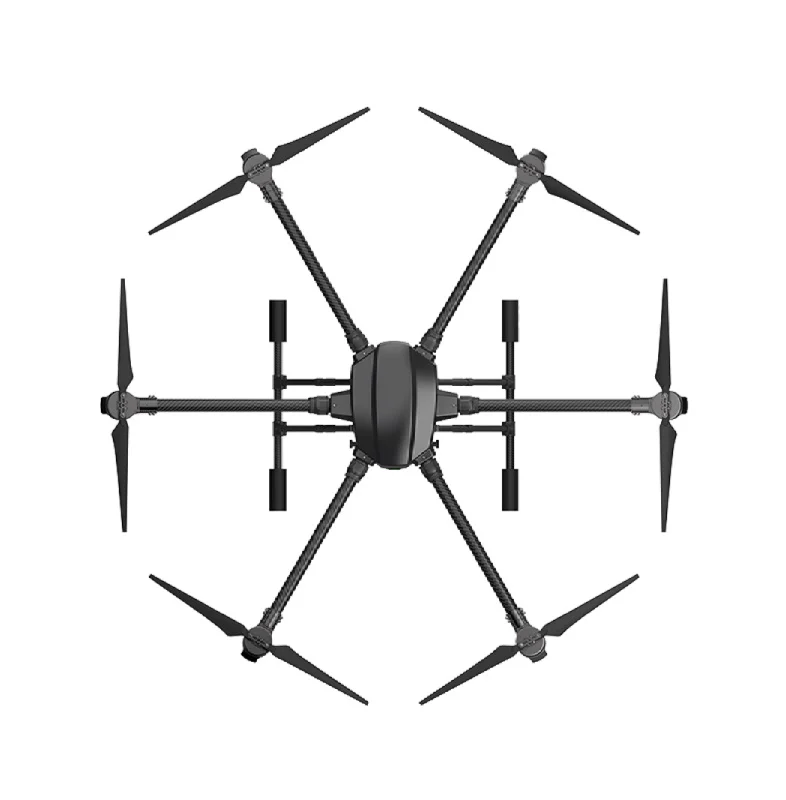
EFT 6120 Multifunction Surveillance Drone Frame
A heavy-duty surveillance drone frame suitable for long range, payload, and multi-mission deployments. Six arms give redundancy for critical operations.
4. Motors and Propellers
Motor selection is critical for long range efficiency. The goal is to find a motor-prop combination that delivers hover thrust at the lowest possible throttle percentage — ideally 30–40% throttle for hover.
Motor KV and Size
For 4S operation, use 1700–1900KV motors in the 2306–2507 stator size. For 6S operation, drop to 1300–1500KV with larger 2507–2806 stators. 6S offers better efficiency because the controller runs at lower current for the same power output, reducing I²R losses.
Propeller Choice
Tri-blade propellers strike a good balance between efficiency and responsiveness for long range builds. HQ Prop 7×3.5×3 and 7×4×3 are the most popular choices globally. In India, carbon fiber propellers in 1045 and similar sizes are also widely used.
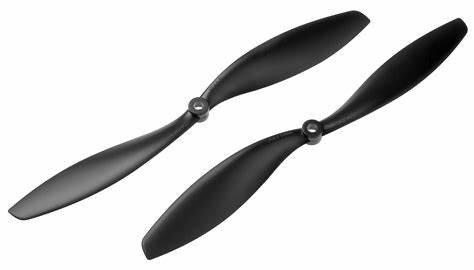
1045 Carbon Fiber Propeller CW&CCW (Set)
High-quality carbon fiber propellers with low vibration signature. Ideal for efficient long range cruising with 2306–2506 motors.
5. ESC and Flight Controller Stack
The ESC and flight controller are the brain and muscle of your build. For a 7-inch long range drone, you have two main stack options:
Option A: All-in-one FC+ESC (AIO)
A single board containing FC and 4-in-1 ESC. Saves weight and simplifies wiring. Great for builds where weight is critical. Downside: if the ESC burns, you lose the FC too.
Option B: Separate FC + 4-in-1 ESC
More modular, easier to repair. Mount the ESC at the bottom of the stack, FC on top. Use a 30×30mm stack for larger builds where you need extra UARTs for GPS and VTX control.

35A V2.1 2-5S 4-in-1 Brushless ESC for RC Drone FPV Racing
Compact 4-in-1 ESC rated at 35A continuous per channel. Supports BLHeli_S / AM32 firmware. Works with 2S–5S batteries for a 7-inch build.
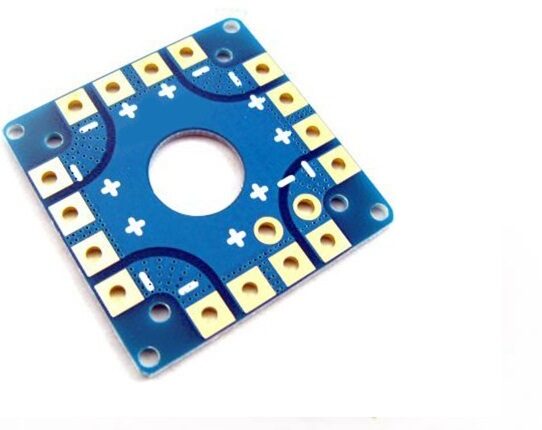
100A Multirotor ESC Power Distribution Battery Board For Quadcopter
Heavy duty PDB rated at 100A continuous. Integrates power distribution for multi-rotor builds with capacitor pads to suppress voltage spikes.
6. Battery Selection
Battery choice defines your flight time more than any other single component. For long range, you have two main chemistries to consider:
LiPo (Lithium Polymer)
Standard for FPV. High discharge rate (65–120C), lighter per cell, but lower energy density (around 200Wh/kg). A 4S 2200mAh LiPo weighs about 185–220g and gives 20–25 minutes on a 7-inch build.
Li-Ion (Lithium Ion)
Higher energy density (~250Wh/kg), more capacity per gram, but lower discharge rate (10–20C max). A 4S 3000mAh Li-Ion pack weighs about 220–250g and can give 35–45 minutes. The Molicel P42A and Samsung 40T cells are popular choices for DIY packs.
For most Indian pilots starting out, a quality 4S LiPo in the 2200–2500mAh range is the easiest and safest choice. Keep the battery secured with straps and always check for puffy cells after charging.
7. Video System (FPV Camera and VTX)
The FPV video system is what makes it first-person-view flying. For long range, the tradeoffs are different from freestyle:
- Latency matters less: At long range you are not reacting to obstacles at high speed, so digital HD systems are perfectly suitable.
- Range matters more: Analog with a good VTX and receiver antenna gives 2–5km range easily. Digital systems vary.
- Power consumption: Keep VTX power consumption low to extend battery life.

1/3″ CMOS 700TVL Mini FPV Camera 2.1mm Lens PAL/NTSC
Lightweight analog FPV camera with a wide dynamic range for outdoor flying. PAL/NTSC switchable for compatibility with any video transmitter.
8. Radio Link and Receiver
For long range FPV in India, ExpressLRS (ELRS) at 2.4GHz has become the de-facto standard. It offers:
- Up to 10+ km range with the right antenna setup
- Open source firmware, free forever
- Sub-5ms latency at 500Hz packet rate
- Compact nano receivers under 1.5g
TBS Crossfire (900MHz) is another option with even greater range (50+ km theoretical) but requires a licensed 900MHz transmitter module. For most Indian pilots flying within visual line of sight as required by DGCA, 2.4GHz ELRS is more than sufficient and avoids any frequency licensing concerns.
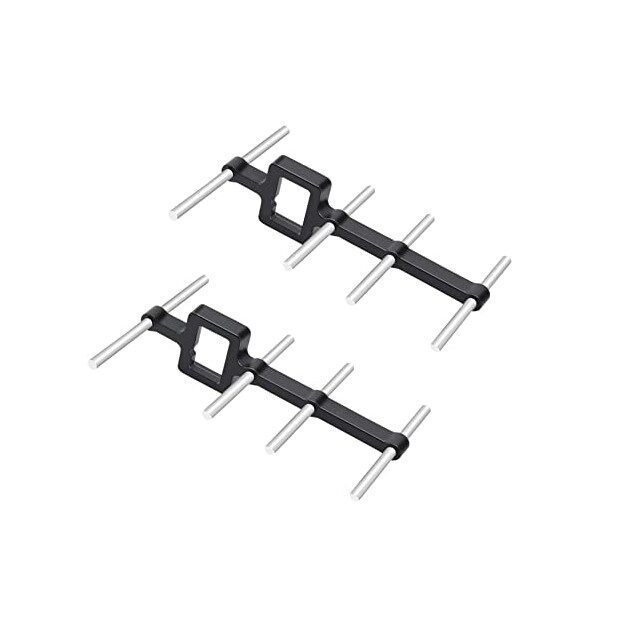
2.4GHz Yagi-UDA Drone Signal Booster
Directional Yagi antenna booster for 2.4GHz radio links. Significantly extends range of ELRS or FrSky based radio systems for long range FPV flights.
9. Adding GPS for Long Range Safety
A GPS module is essential on any long range build. It enables:
- Return to Home (RTH): If you lose signal, the drone flies back to the launch point automatically.
- Position Hold: Hover in place without constant stick input — great for photography.
- Speed and Distance OSD: Know exactly how far you are and how fast you are flying via your goggles.
- Speed limit enforcement: Some Betaflight versions allow GPS speed limits to prevent exceeding legal thresholds.
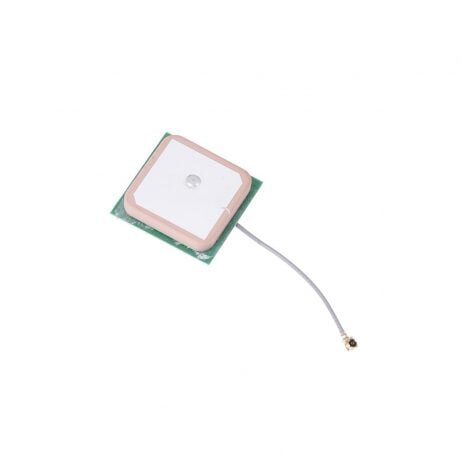
25x25x8mm 28dB High Gain Ceramic Active GPS Antenna for NEO-6M/7M/8M
High-gain active GPS antenna compatible with NEO-6M, NEO-7M, and NEO-8M GPS modules. 28dB gain ensures fast satellite lock even in challenging environments.
10. Wiring and Assembly
Neat wiring is not just about aesthetics — it reduces interference, prevents shorts, and makes troubleshooting much easier. Follow this sequence:
- Frame assembly: Attach arms to the main plate. Do not fully tighten screws until the final assembly is complete.
- Motor installation: Mount motors on arms with M3 screws. Route motor wires through the arm channels.
- ESC mounting: Secure the 4-in-1 ESC on the bottom stack plate using M3 nylon standoffs or direct screws with vibration-dampening pads.
- Motor-to-ESC wiring: Solder the three motor phase wires to the ESC pads. Motor direction is set in Betaflight — no need to swap wires physically any more.
- Battery lead: Solder an XT60 female connector to the ESC’s battery input pads. Use 12–14AWG silicone wire. Add a 1000μF 35V capacitor across the battery leads near the ESC to suppress voltage spikes.
- FC mounting: Place the FC on top of the ESC using 30×30 or 20×20 standoffs. Connect the ESC–FC signal harness.
- Camera and VTX: Connect camera video to FC or directly to VTX. Run VTX power from a filtered 5V or from the battery through a BEC.
- Receiver: Connect ELRS receiver to a spare UART on the FC using CRSF protocol (full duplex — TX to RX, RX to TX).
- GPS: Connect the GPS module to a UART configured for GPS in Betaflight. Mount the GPS mast on the rear of the frame, away from the VTX antenna.
11. Betaflight Configuration
Once assembled, plug the FC into your PC and open Betaflight Configurator. Key settings for a 7-inch long range build:
Ports
- UART1 or UART2: Serial RX (ELRS/CRSF)
- UART3 or UART4: GPS
- UART5 or UART6: VTX SmartAudio (if supported)
Receiver
Set Serial Receiver Provider to CRSF. Bind your ELRS receiver to your transmitter before connecting to Betaflight.
Modes
Set up at least: Arm, Angle (for beginners), Horizon or Acro, and GPS Rescue (Return to Home). Map these to switches on your transmitter.
PID Tuning
Start with Betaflight’s default presets for a 7-inch build. The defaults are good enough for the first few flights. After flying, use the Blackbox log to identify resonance frequencies and add notch filters if needed.
OSD
Enable the following OSD elements: Battery voltage, Battery current (if you have a current sensor), GPS coordinates, GPS satellites, Speed (km/h), Distance from home, Flight time, RSSI/LQ.
12. DGCA Regulations in India
Before flying, understand India’s drone regulations:
- Registration: Any drone over 250g AUW must be registered on the Digital Sky platform (digitalsky.dgca.gov.in) to get a UIN (Unique Identification Number).
- Remote Pilot Certificate (RPC): Required for small (250g–2kg) and above categories if flown beyond the owner’s private premises.
- No Fly Zones: Check the AirSewa app or Digital Sky map before every flight. Do not fly within 5km of airports, within controlled airspace, or in restricted zones without permission.
- Night flying: Not permitted without specific permission.
- Visual Line of Sight (VLOS): Always keep the drone visible — this is a legal requirement in India.
The DGCA’s Digital Sky platform has significantly streamlined the process. Registration can be completed online and typically takes 2–5 working days.
Frequently Asked Questions
Popular choices include the Diatone Roma F7, iFlight Chimera7, and locally available carbon fiber stretch-X frames. Look for 5mm arm thickness and a proper bottom battery tray for CG balance.
With a 4S 2500mAh LiPo and efficient tune, expect 20–28 minutes. With Li-Ion cells and a light build, 35–45 minutes is achievable.
GPS is strongly recommended for any long range build. Return-to-Home (RTH) is a critical safety net if you lose signal or the battery gets critically low at distance.
ELRS on 2.4GHz is within the ISM band and is generally legal for hobbyist use in India. Avoid the 900MHz (868/915MHz) band as those frequencies are regulated by WPC in India.
A complete build including frame, motors, ESC, FC, battery, camera, VTX, and receiver typically costs ₹15,000–₹30,000 depending on component choices. Adding quality goggles adds another ₹5,000–₹20,000.
If the voltage (cell count) matches, yes. However, 5-inch LiPos are usually 1300–1800mAh which gives shorter flight times on a 7-inch. You will get better results with a 2200–3000mAh pack.
Ready to Build Your 7-Inch Long Range FPV Drone?
Zbotic stocks drone frames, ESCs, motors, propellers, GPS modules, FPV cameras, and all the electronics you need for a 7-inch long range build. All products are shipped across India with fast delivery.







Add comment