
Table of Contents
- Why Agricultural Sensors Matter for Indian Farmers
- EC (Electrical Conductivity) Sensors
- pH Sensors for Soil and Water
- NPK Soil Nutrient Sensors
- Soil Moisture Sensors
- Soil Temperature Sensors
- Sensor Comparison Table
- Building a Complete Farm Monitoring System
- Connectivity: LoRa, GSM, Wi-Fi for Remote Farms
- Government Schemes and Subsidies
- Buying Tips for India
- FAQ
Why Agricultural Sensors Matter for Indian Farmers
India has over 140 million farm holdings, yet only about 40% of agricultural land is under assured irrigation. Water misuse, over-fertilization, and guesswork-based farming result in lower yields, higher input costs, and soil degradation. Agricultural sensors — particularly EC sensors, pH sensors, and NPK soil sensors — are transforming how Indian farmers understand their soil and make decisions.
Precision agriculture, or krishi ka vigyan in spirit, is no longer limited to large corporate farms. With sensor modules available from ₹300 to ₹15,000, even small and medium farmers can deploy soil health monitoring at the field level. Government initiatives like the Soil Health Card Scheme and PM Krishi Sinchai Yojana are pushing digital tools and smart irrigation — making this the right time to understand what these sensors do and which ones suit your needs.
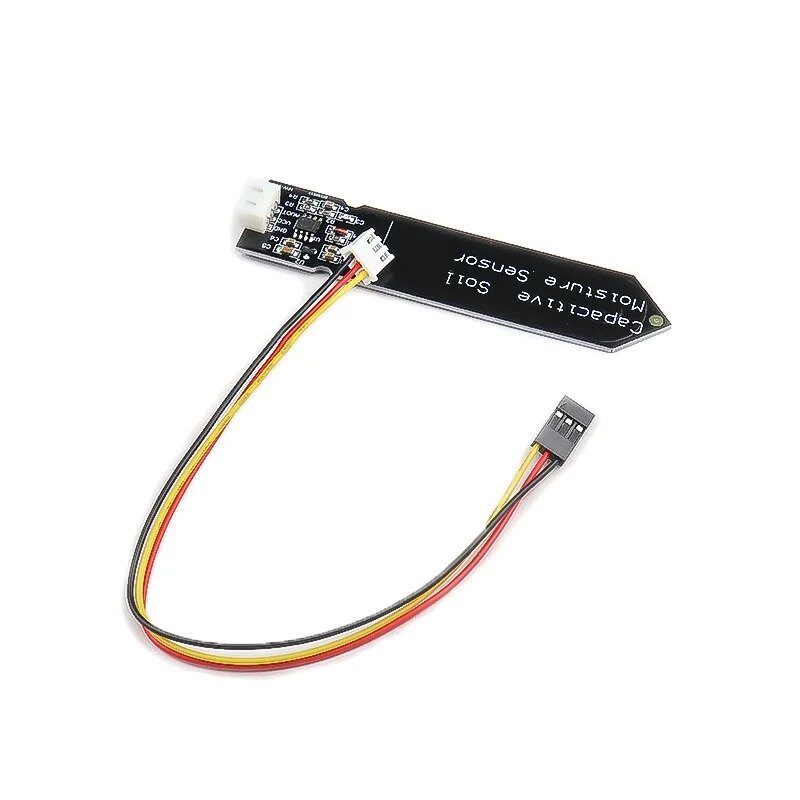
Capacitive Soil Moisture Sensor
Non-corrosive capacitive design — no oxidation problems that plague resistive probes in Indian soils. Works with both Arduino and ESP32 for smart drip irrigation.
EC (Electrical Conductivity) Sensors
What EC Measures
Electrical Conductivity (EC) measures the ability of soil water or a nutrient solution to conduct electricity, expressed in dS/m (decisiemens per metre) or mS/cm. EC is a proxy for the total dissolved salts (TDS) in the soil solution, which directly relates to the concentration of plant-available nutrients.
- EC < 0.5 dS/m: Very low fertility or excessively leached soil — likely deficient in nutrients
- EC 0.5–1.5 dS/m: Optimal for most Indian food crops (wheat, rice, vegetables)
- EC 1.5–3.0 dS/m: Marginal — salt-tolerant crops (cotton, sugarcane) may be fine
- EC > 4.0 dS/m: Saline soil — reduced yield for most crops, remediation needed
Types of EC Sensors
2-Electrode Sensors: Inexpensive (₹300–₹1,500). The two metal prongs pass a small AC current through soil and measure resistance. Problem: electrode polarization over time and corrosion in Indian saline soils reduces accuracy and lifespan.
4-Electrode Sensors (Wenner Array): Use two outer electrodes for current injection and two inner electrodes for voltage measurement. Eliminates electrode polarization effects. Better accuracy and longevity. Cost: ₹2,000–₹12,000.
Inductive / Toroidal Sensors: No metal-soil contact at all. Two toroids measure conductivity through electromagnetic induction. Best for highly saline or chemically aggressive soils. Cost: ₹8,000–₹50,000 (mostly imported).
EC for Hydroponic and Fertigation Use
In hydroponics — a growing sector in urban India — EC monitoring is absolutely critical. Nutrients are delivered directly in water, so EC is the primary indicator of nutrient concentration. Most vegetable crops thrive at EC 1.5–2.5 mS/cm in NFT or DWC systems. ESP32-based EC controllers with peristaltic pumps automate nutrient dosing.
pH Sensors for Soil and Water
Why pH Is the Master Variable
Soil pH determines nutrient availability more than almost any other parameter. At the wrong pH, even well-fertilized soil locks up nutrients into plant-unavailable forms. For example:
- Iron (Fe) and Manganese (Mn) become toxic at pH < 5.5 (acidic red soils of Assam and Kerala)
- Phosphorus availability peaks at pH 6.0–7.0 — Indian black soils (Vertisols) often sit at pH 7.5–8.5, causing phosphorus fixation
- Legume Rhizobium nodulation is impaired at pH < 6.0
Target pH for most Indian crops: 6.0–7.0. Acidic soils need lime (calcium carbonate); alkaline soils need gypsum or elemental sulphur.
Types of pH Sensors
Glass Electrode pH Probes: The standard. A glass membrane develops a voltage proportional to hydrogen ion activity. Paired with a reference electrode (Ag/AgCl). Cost: ₹500–₹3,000 for hobbyist grades; ₹8,000–₹25,000 for industrial online pH sensors.
ISFET (Ion-Sensitive Field-Effect Transistor) Sensors: Solid-state, no glass membrane. Better durability, faster response. Used in modern portable soil testers. Higher initial cost but longer service life.
Interfacing pH Sensors with Arduino
Most analog pH probes require a signal conditioning board (pH meter module) that converts the ±414 mV electrode signal to a 0–5V range for Arduino’s ADC. The popular PH-4502C module costs around ₹250–₹500. Calibrate using pH 4.0 and pH 7.0 buffer solutions.
// Basic pH reading (PH-4502C module)
float readPH() {
  int rawADC = analogRead(A0);
  float voltage = rawADC * (5.0 / 1023.0);
  // Calibrate: voltage at pH 7 = 2.5V (adjust offset below)
  float pH = 7.0 + ((2.5 - voltage) / 0.18);
  return pH;
}
NPK Soil Nutrient Sensors
Understanding N, P, K in Indian Soils
Nitrogen (N): Most widely deficient nutrient in Indian soils. Drives vegetative growth. Available in nitrate (NO₃⁻) and ammonium (NH₄⁺) forms. Highly mobile — leaches with rainfall.
Phosphorus (P): Second most deficient. Critical for root development and flowering. In alkaline Indian soils, fixation as calcium phosphate reduces availability.
Potassium (K): Indian soils are generally not deficient in K, but intensive cropping (sugarcane, banana, potato) can deplete it rapidly. K improves drought tolerance and disease resistance.
How NPK Sensors Work
Modern solid-state NPK sensors use the spectral reflectance method — measuring how soil reflects near-infrared and specific visible wavelengths. Different nutrient concentrations alter the soil’s optical signature. Alternatively, ion-selective electrodes (ISE) for each nutrient ion provide direct electrochemical measurement.
Typical NPK sensor outputs via RS-485 / Modbus RTU protocol, making them suitable for integration with PLC systems or ESP32 with a MAX485 module. Output range: 0–1999 mg/kg for each nutrient.
Accuracy Limitations
It is important to be realistic: consumer-grade NPK sensors costing ₹3,000–₹15,000 have typical accuracy of ±2% of reading or ±50 mg/kg, whichever is greater. For precision nutrient management decisions, always validate against a certified soil lab test at the start of each season. Use the sensor for trend monitoring and relative comparisons between field zones.
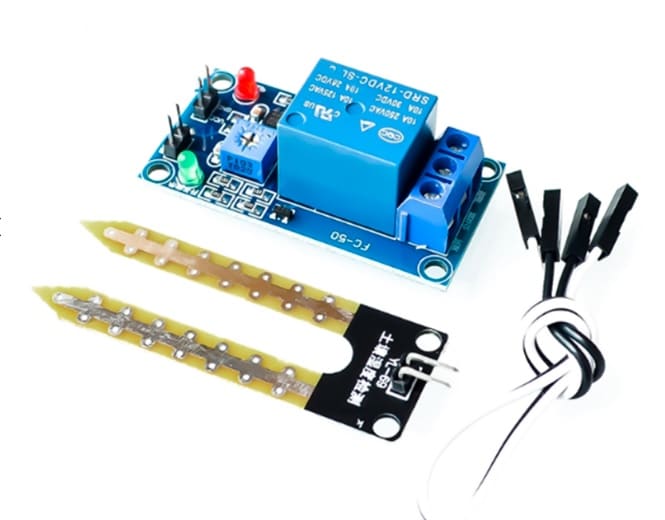
5V 12V Soil Moisture Sensor Relay Control Module
Combines soil moisture sensing with a built-in relay to drive irrigation pumps or solenoid valves directly. Perfect for automated drip irrigation in vegetable farms and home gardens.
Soil Moisture Sensors
Soil moisture is the most frequently monitored parameter in smart irrigation. Two main technologies compete:
Resistive Soil Moisture Sensors
Two conductive probes measure soil resistance, which decreases as moisture increases. Very affordable (₹50–₹150). Major drawback: the electrodes corrode within weeks to months in Indian soils, especially in acidic or saline conditions. Only suitable for short-duration experiments.
Capacitive Soil Moisture Sensors
Measure the dielectric permittivity of soil using a capacitance circuit embedded in a PCB probe. No metal exposed to soil — the PCB coating is the only interface. No corrosion, stable readings over months to years. Zbotic’s Capacitive Soil Moisture Sensor is a popular choice among Indian makers. Cost: ₹200–₹600 for hobbyist grade; ₹1,500–₹8,000 for industrial grades with IP68 rating.
Tensiometers
Measure the suction (matric potential) the plant roots must exert to extract water. More directly related to plant-available water than volumetric moisture. Common in Maharashtra grape and pomegranate orchards under pressurised drip systems.
Soil Temperature Sensors
Soil temperature affects seed germination, root growth rate, microbial activity (which drives nitrogen mineralisation), and pathogen development. In northern India, cold soil in December–January delays wheat germination; in central India’s black cotton soils, heat in summer reduces soil biological activity.
The DS18B20 is the go-to sensor for soil temperature measurement among Indian hobbyists and researchers. It is a waterproof probe-type sensor with 1-Wire digital interface, ±0.5°C accuracy from −10°C to +85°C, and low cost (₹80–₹200). Up to 127 DS18B20 sensors can share a single microcontroller GPIO pin using the 1-Wire bus — ideal for mapping soil temperature across a large field using a single cable run.
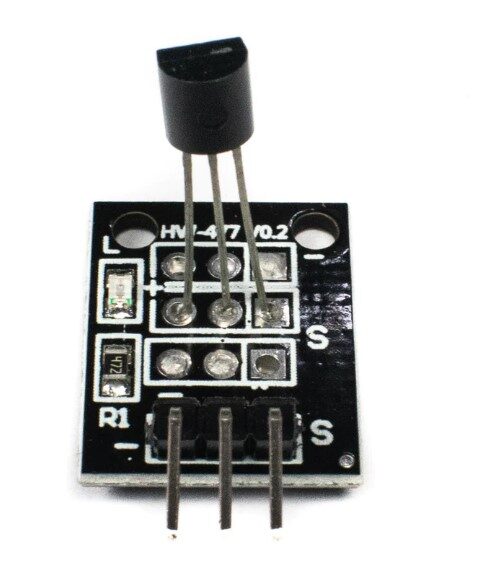
DS18B20 Temperature Sensor Module
Waterproof stainless-steel probe — push it directly into soil for accurate, stable soil temperature readings. 1-Wire interface makes multi-point field mapping easy with a single Arduino or ESP32.
Sensor Comparison Table
| Sensor Type | Parameter | Entry Cost (₹) | Interface | Lifespan |
|---|---|---|---|---|
| Capacitive Moisture | Volumetric Water Content | 200 | Analog 0–3V | 2–5 years |
| EC (2-electrode) | Soil Salinity / TDS | 500 | Analog / RS-485 | 1–2 years |
| pH (glass electrode) | Soil / Water pH | 600 | Analog (pH board) | 1–3 years |
| NPK Sensor | N, P, K concentration | 4,000 | RS-485 Modbus | 3–5 years |
| DS18B20 Waterproof | Soil Temperature | 150 | 1-Wire digital | 5–10 years |
| EC+pH+Temp (combo) | 3-in-1 soil profile | 8,000 | RS-485 Modbus | 3–5 years |
Building a Complete Farm Monitoring System
A practical agricultural sensor system for India typically has three layers:
Layer 1: Sensors in the Field
Deploy soil moisture (capacitive), temperature (DS18B20), EC, and optionally NPK sensors at representative points in each field block. Spacing depends on soil variability — typically one monitoring point per 0.5–2 hectares for small farms.
Layer 2: Local Gateway (Edge Node)
An ESP32 or ESP8266 node collects data from all sensors via analog, 1-Wire, and RS-485 (using a MAX485 transceiver module). The node calculates running averages, applies threshold checks (e.g., moisture below 30% → trigger pump), and logs data to SD card as backup.
Layer 3: Cloud Dashboard
Data is uploaded via Wi-Fi (if available in the field), GSM (SIM800L module + SIM card from Jio/BSNL), or LoRa (SX1276 module + community LoRaWAN gateway) to a cloud platform like Ubidots, Blynk, or ThingSpeak. Dashboard shows real-time graphs, triggers SMS/WhatsApp alerts, and logs historical data for seasonal analysis.
Connectivity for Remote Farms
Wi-Fi (ESP8266 / ESP32)
Range: 50–100 m. Only viable if there is a Wi-Fi access point near the field, typically from a farmhouse router. Low cost, fast data transfer.
GSM/GPRS (SIM800L, SIM7600)
Works wherever there is 2G/4G mobile coverage — which in India extends to most rural areas thanks to Jio’s network expansion. SIM800L modules cost ₹300–₹500. Data cost is negligible with Jio IoT SIMs. Ideal for standalone nodes far from farmhouses.
LoRa / LoRaWAN
Long-range, low-power radio (up to 5–15 km in rural terrain with no obstacles). A single LoRa gateway can cover an entire large farm with many sensor nodes. LoRaWAN community networks (The Things Network) are growing in Indian cities. Best for large farms (100+ acres) with many sensor nodes.
Government Schemes and Subsidies
Indian farmers can access several schemes to offset the cost of agricultural sensors and precision farming equipment:
- PM Krishi Sinchai Yojana (PMKSY): Subsidizes drip and sprinkler systems, which pair naturally with soil moisture sensors for optimized irrigation
- Soil Health Card Scheme: Provides free soil testing and recommendations — use as a baseline to calibrate your NPK sensors
- RKVY (Rashtriya Krishi Vikas Yojana): State agriculture departments disburse grants for farm mechanization and technology adoption under RKVY
- NABARD Agri-Tech Loans: Low-interest loans for sensor-based irrigation systems
- Digital Agriculture Mission (2021): Promotes IoT, AI, and remote sensing in Indian agriculture with funding for pilot projects
Buying Tips for India
- Start with moisture + temperature: These two sensors give 80% of the actionable data for irrigation decisions at the lowest cost
- Buy capacitive, not resistive moisture sensors: Resistive probes corrode in months — a false economy
- For EC/pH/NPK, choose RS-485 Modbus output: Easier to multiplex multiple sensors on a single wire pair across a field
- Check IP rating: Any sensor buried in soil needs at least IP67 — IP68 if it will be submerged during monsoon flooding
- Validate with soil lab: Do one lab test per season and use it to calibrate your sensors — especially pH and NPK
- Beware of counterfeit sensors from grey-market listings: Buy from reputable Indian electronics stores like Zbotic that source from verified suppliers
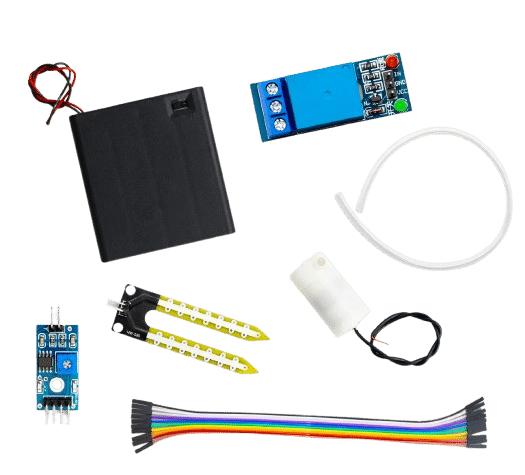
DIY Automatic Irrigation Module with Soil Moisture Detection
All-in-one watering automation module with built-in moisture sensing and pump control. Great starter kit to experience agricultural automation before scaling to full farm systems.
Frequently Asked Questions
What is the best soil sensor for Indian farmers on a tight budget?
Start with a capacitive soil moisture sensor (₹200–₹300) and a DS18B20 waterproof temperature probe (₹150–₹200). These two, connected to a ₹350 ESP8266 module and a ₹300 SIM800L GSM board, give you a fully functional remote soil monitor for under ₹1,200 total in components.
Can I use a pH sensor for both soil and irrigation water testing?
Yes, the same glass-electrode pH probe works for both applications. Rinse the probe with distilled water between soil and water measurements. For continuous in-line irrigation monitoring, use a flow-through pH sensor cell rather than dipping a portable probe.
How often should I take NPK readings?
For field crops like wheat and rice, take NPK readings at sowing, vegetative stage, and just before top-dressing. For hydroponics, monitor nutrient solution EC (as a proxy for overall nutrient level) daily and do a full NPK test weekly.
Do agricultural sensors work in black cotton (Vertisol) soils?
Yes, but with some considerations. Black cotton soils have very high clay content and shrink-swell behaviour — ensure sensors are firmly anchored after each monsoon to prevent loosening. High pH (7.5–8.5) in these soils means phosphorus fertilisation needs careful management based on P sensor readings.
What voltage supply do RS-485 NPK sensors typically need?
Most RS-485 agricultural sensors are rated for 12V DC supply, though some 7–30V wide-range units are available. They draw 20–60 mA, making a 12V 1A power bank or solar-charged lead-acid battery ideal for field nodes.
How accurate are low-cost NPK sensors compared to lab tests?
Consumer-grade NPK sensors provide indicative readings with ±2% FS (full-scale) typical accuracy. Laboratory ICP-OES analysis provides much higher accuracy (±0.5%). Use sensors for trend detection and relative comparisons; use lab analysis for absolute values and official crop advisories.
Conclusion
The market for agricultural sensors in India has matured significantly, with affordable EC sensors, pH sensors, and NPK soil sensors now accessible to farmers at all scales. Whether you are a hobby grower with a rooftop hydroponics unit, a progressive farmer managing 50 acres of drip-irrigated vegetables, or an agri-tech startup building a precision farming platform, the sensor ecosystem is ready to support you.
Begin with the fundamentals — soil moisture and temperature — and add EC, pH, and NPK sensors as your confidence and budget grow. Pair them with affordable ESP32 or Raspberry Pi gateways, and connect to cloud dashboards for real-time monitoring. Your soil will start talking to you, and better yields will follow.




Add comment