
Choosing the best ESP32 development boards in 2026 can be genuinely confusing. Espressif’s ESP32 family has expanded enormously — from the original WROOM and WROVER modules to the newer S3, C3, C6, and H2 variants. Each targets different use cases, memory configurations, and price points. This buying guide cuts through the confusion and helps Indian makers, students, and engineers pick the right ESP32 board for their specific project.
ESP32 Family Overview: Which Chip is Which?
The term “ESP32” is used loosely to refer to an entire family of chips from Espressif Systems. Understanding the differences is essential before buying:
- ESP32 (original): Dual-core Xtensa LX6, 240MHz, Wi-Fi 802.11 b/g/n + Bluetooth 4.2/BLE 5.0. The workhorse chip used in WROOM and WROVER modules. Still the most popular in 2026.
- ESP32-S2: Single-core Xtensa LX7, 240MHz, Wi-Fi only (no Bluetooth), USB OTG. Niche use for USB device applications.
- ESP32-S3: Dual-core Xtensa LX7, 240MHz, Wi-Fi + Bluetooth 5/BLE, AI/ML acceleration (vector instructions), USB OTG, more GPIO. The premium choice for AI-at-edge and display projects.
- ESP32-C3: Single-core RISC-V, 160MHz, Wi-Fi + Bluetooth 5/BLE. Compact, ultra-low cost, ideal for simple IoT nodes.
- ESP32-C6: Single-core RISC-V, 160MHz, Wi-Fi 6 (802.11ax) + Bluetooth 5/BLE + Zigbee + Thread. Cutting-edge connectivity for smart home hubs.
- ESP32-H2: RISC-V, Zigbee + Thread + BLE only, no Wi-Fi. For mesh networking and Matter devices.
For most beginners and intermediate projects in India in 2026, the original ESP32 (WROOM/WROVER) or the ESP32-S3 will be the right choice. Let’s dig into each.
ESP32-WROOM Development Boards
The ESP32-WROOM-32 module is a shielded module containing an ESP32-D0WDQ6 chip, 4MB flash, PCB antenna, and RF circuitry in a compact 18×25.5mm metal-shielded package. It’s the most widely available and lowest-cost ESP32 module globally.
Development boards based on WROOM (like NodeMCU-32S, DevKitC, etc.) typically feature:
- 38 or 30 GPIO pins broken out
- USB-to-Serial bridge (CP2102, CH340, or CH9102)
- 3.3V LDO regulator, reset button, boot button
- 4MB flash (some variants: 8MB or 16MB)
- No PSRAM
Best for: Wi-Fi/BLE IoT projects, home automation, MQTT clients, Modbus gateways, data logging, learning and education.
Not ideal for: Large images/graphics buffers, camera applications, complex web servers with many concurrent users.
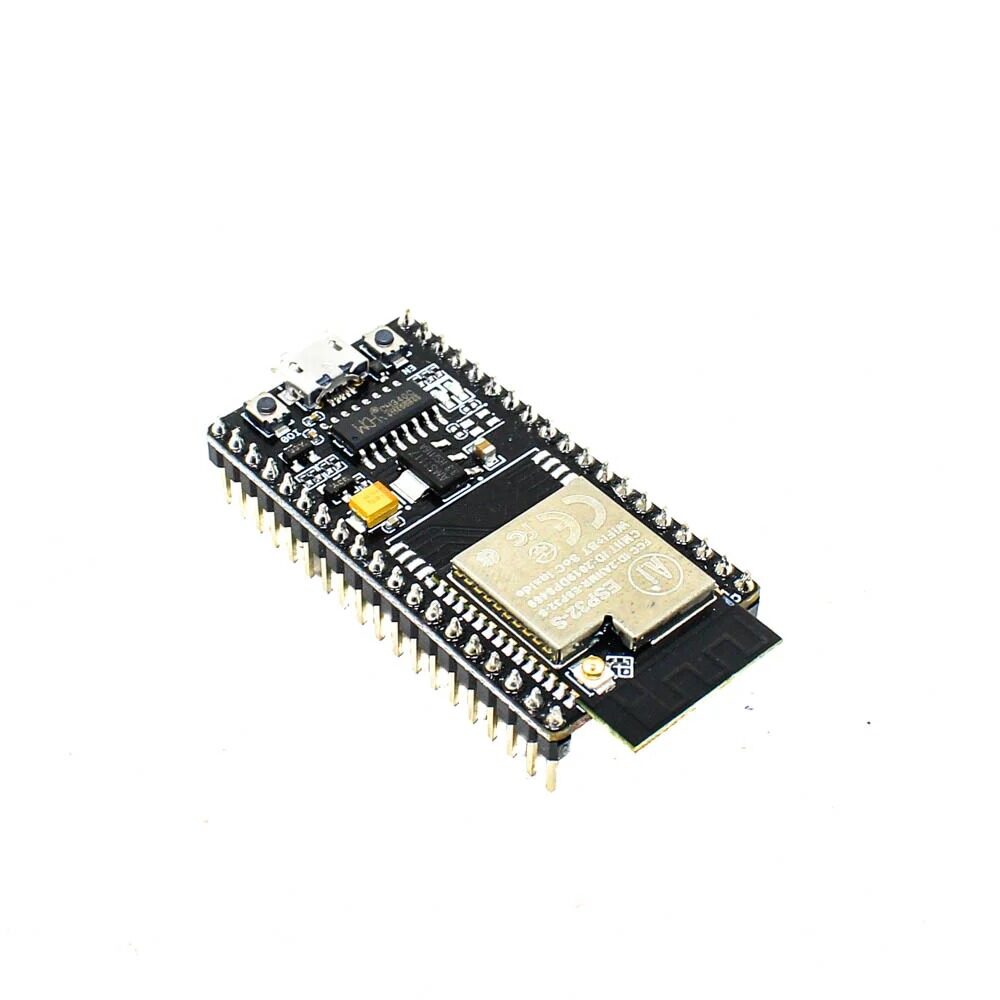
Ai Thinker NodeMCU-32S ESP32 Development Board – IPEX Version
Excellent WROOM-based development board with an IPEX antenna connector — attach an external antenna for improved range in buildings or metal enclosures.
ESP32-WROVER Development Boards
The ESP32-WROVER module is physically similar to WROOM but includes an additional 4MB (or 8MB) PSRAM chip on board. PSRAM is pseudo-static RAM — external SPI RAM that’s mapped into the ESP32’s address space, increasing the available heap significantly.
Why does PSRAM matter? The ESP32’s internal SRAM is only about 520KB, of which ~300KB is typically available to your application. With 4MB PSRAM, you can:
- Buffer full JPEG frames from an OV2640 camera (needed for streaming)
- Load large web pages or JSON payloads
- Run LVGL (UI framework) with large screen buffers
- Process audio data
- Run more complex TensorFlow Lite models
Best for: Camera applications (ESP32-CAM uses WROVER’s PSRAM architecture), display projects, audio processing, complex web servers.
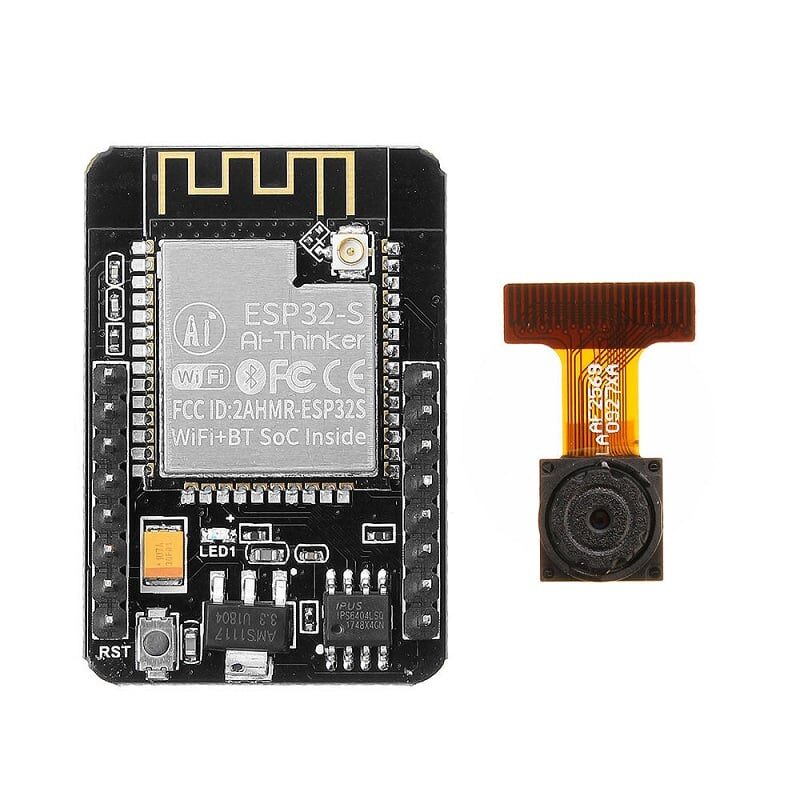
Ai Thinker ESP32-CAM Development Board with AF2569 Camera Module
The ESP32-CAM uses the WROVER module’s PSRAM to buffer camera frames — the most popular ESP32 board for surveillance, face recognition, and computer vision projects in India.
ESP32-S3 Development Boards
The ESP32-S3 is Espressif’s premium dual-core chip and represents a major leap over the original ESP32. Key improvements:
- Xtensa LX7 cores (vs LX6 in original) — ~40% faster per clock
- Vector instructions for AI/ML workloads — 10x faster neural network inference
- USB OTG + USB Serial/JTAG — no separate USB-to-Serial chip needed on development boards
- More GPIO: Up to 45 programmable GPIOs vs 34 on original ESP32
- Up to 16MB Octal PSRAM and 16MB flash support
- Bluetooth 5.0 LE with improved range
- Wi-Fi 802.11 b/g/n (same as original ESP32 — no Wi-Fi 6 on S3)
ESP32-S3 boards are ideal for AI edge inference, TFT/AMOLED display projects, audio applications, and any project that needs more GPIO or processing power. They cost a bit more than WROOM boards but are worth it for demanding applications.
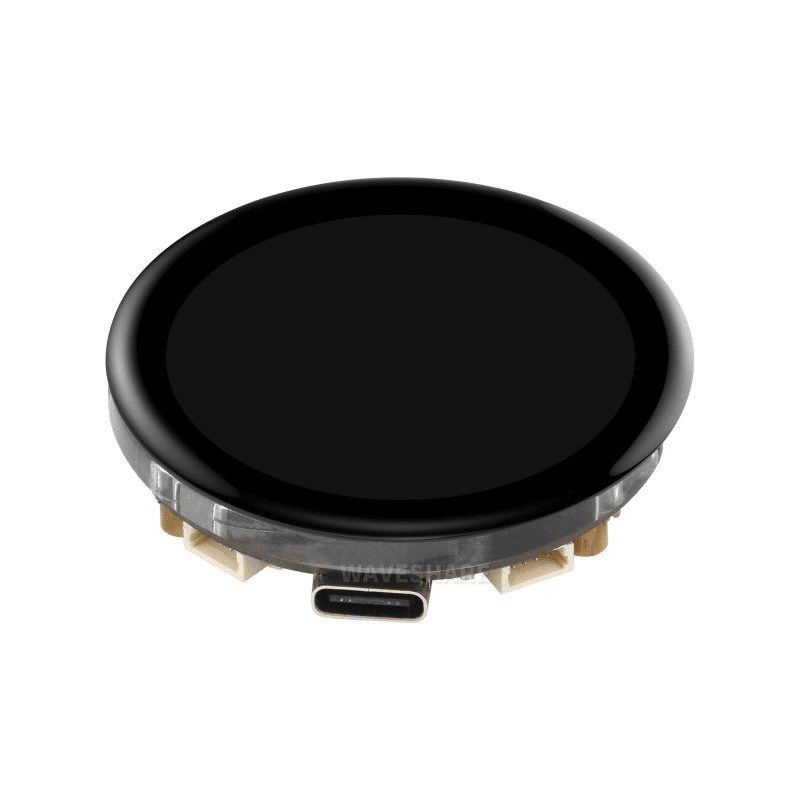
Waveshare ESP32-S3 1.43inch AMOLED Display Development Board (466×466)
A stunning round AMOLED display development board powered by ESP32-S3 — ideal for smartwatch prototypes, instrument displays, and wearable IoT devices.
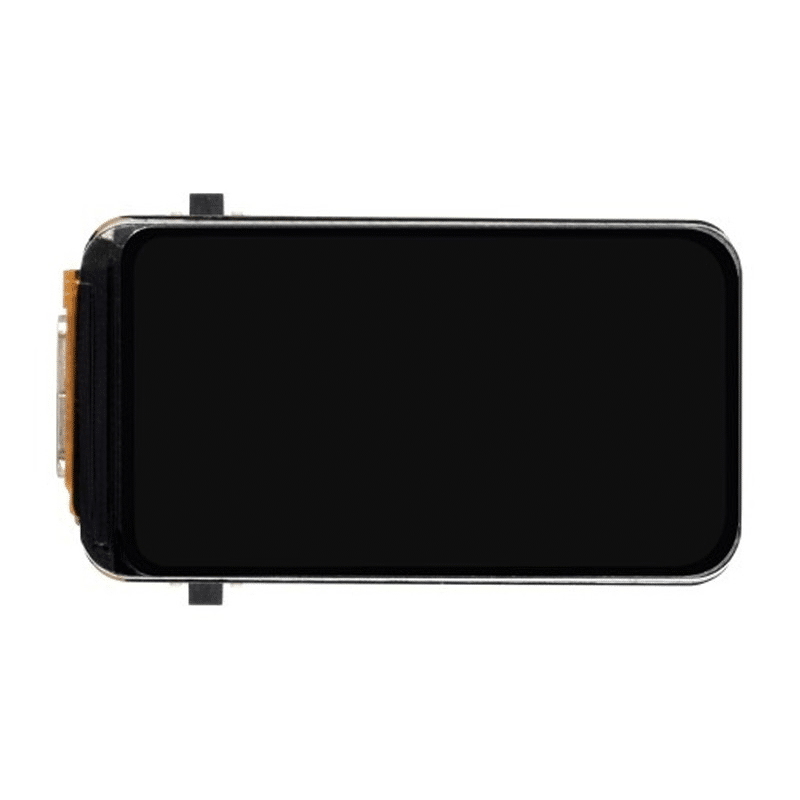
Waveshare ESP32-S3 1.47inch 172×320 LCD Display Development Board
Compact ESP32-S3 board with a 262K color LCD display — great for wearables, IoT dashboards, and portable sensor displays at a budget-friendly price point.
ESP32-C3 — The Compact Budget Option
The ESP32-C3 uses a RISC-V core instead of Xtensa. With a single core at 160MHz, it’s less powerful than the dual-core ESP32, but it’s smaller, cheaper, and still supports both Wi-Fi and BLE. Great for simple sensor nodes, smart plugs, and low-cost IoT endpoints where cost and size matter more than raw performance.
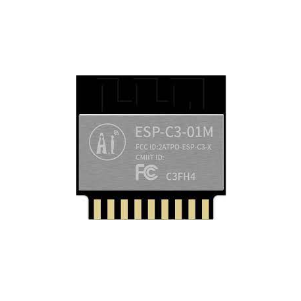
Ai Thinker ESP32-C3-01M Wi-Fi + BLE Module
Ultra-compact ESP32-C3 module in a stamp-hole form factor — perfect for embedding in custom PCBs where a full development board is too large.
Head-to-Head Comparison Table
| Feature | ESP32-WROOM | ESP32-WROVER | ESP32-S3 | ESP32-C3 |
|---|---|---|---|---|
| CPU | Dual LX6 240MHz | Dual LX6 240MHz | Dual LX7 240MHz | Single RISC-V 160MHz |
| PSRAM | None | 4MB/8MB | Up to 16MB (Octal) | None |
| Flash | 4MB (typ.) | 4MB/16MB | 4–16MB | 4MB |
| Wi-Fi | 802.11 b/g/n | 802.11 b/g/n | 802.11 b/g/n | 802.11 b/g/n |
| Bluetooth | BT 4.2 + BLE 5 | BT 4.2 + BLE 5 | BLE 5.0 only | BLE 5.0 only |
| USB OTG | No | No | Yes | No (JTAG only) |
| AI Acceleration | No | No | Yes (vector) | No |
| Approx. Price (India) | ₹200–350 | ₹300–600 | ₹400–1200 | ₹150–250 |
Which Board Should You Buy?
Here’s a practical decision guide for Indian buyers in 2026:
- First ESP32 / general learning: ESP32-WROOM DevKit (NodeMCU-32S or similar) — cheapest, most tutorials available, great community support.
- Camera / face detection / image processing: ESP32-WROVER or ESP32-CAM — PSRAM is essential for image buffering.
- TFT/AMOLED display projects / smartwatch / HMI: ESP32-S3 board with integrated display.
- AI/ML inference at the edge: ESP32-S3 — vector instructions provide significant TFLite speedup.
- Mass production / custom PCB / cost-sensitive product: ESP32-C3 module.
- Industrial IoT gateway: ESP32-WROOM with IPEX antenna for better range in factories.
Frequently Asked Questions
Is ESP32-S3 backward compatible with ESP32 code?
Mostly yes. Arduino-ESP32 core 2.x and 3.x support both. Libraries using Xtensa-specific assembly won’t work, but most Arduino libraries written in C++ are compatible. Check the ESP-IDF migration guides if you use IDF directly. GPIO and peripheral numbers differ, so pin assignments must be updated.
Which ESP32 board is best for Tasmota / ESPHome?
For Tasmota and ESPHome, the original ESP32-WROOM DevKit is the safest choice — both firmware projects have excellent support for the classic ESP32. ESP32-S3 support has improved significantly but some sensor/peripheral drivers are still more stable on classic ESP32.
Can I run MicroPython on all ESP32 boards?
Yes. Official MicroPython builds exist for ESP32, ESP32-S3, and ESP32-C3. The ESP32-S3 build from MicroPython 1.22+ supports PSRAM and USB CDC. For classroom and prototyping purposes, MicroPython is an excellent way to get started on any ESP32 board.
What’s the difference between ESP32-WROOM-32D and ESP32-WROOM-32E?
Both use the ESP32-D0WD chip. The -32D has an embedded PCB antenna, while the -32E uses an improved PCB antenna design with slightly better RF performance. The -32UE adds an IPEX/U.FL connector for an external antenna. For production use, choose -32E or -32UE for better and more consistent RF performance.
Find Your Perfect ESP32 Board at Zbotic
Zbotic.in stocks all major ESP32 variants — from basic WROOM DevKits to ESP32-S3 AMOLED display boards and compact C3 modules. All boards are sourced from reputable manufacturers and shipped fast across India.


Add comment