
18650 Fake vs Genuine Battery: How to Identify & Test
The 18650 genuine vs fake battery identify problem has become one of the biggest headaches for hobbyists and makers across India. Whether you are building a DIY power bank, an e-bike battery pack, a flashlight, or a portable lab supply, the 18650 lithium-ion cell is the go-to choice. But the market — especially on budget platforms and local shops — is flooded with counterfeit cells that exaggerate capacity by 2× to 5×. A cell labelled “9800 mAh” at ₹80 is almost certainly fake. This guide will teach you exactly how to spot and test fake 18650 batteries so you never waste money or put your projects at risk again.
Why Fake 18650 Cells Are Dangerous
Fake 18650 batteries are not just a waste of money — they are a fire and explosion risk. Counterfeit cells typically use salvaged or recycled chemistries with no proper BMS protection. Here is what can go wrong:
- Thermal runaway: Low-quality separators can fail, causing a short that rapidly heats the cell. Lithium fires burn at over 1000 °C and cannot be extinguished with water.
- Capacity fraud: A cell labelled 9800 mAh may only deliver 800–1200 mAh. Your drone, flashlight, or power tool loses performance instantly.
- No protection circuit: Genuine cells from brands like Samsung, LG, Panasonic, and Sony have built-in safety vents and quality separators. Fakes skip all of this.
- Inconsistent output voltage: Fakes sag heavily under load, delivering unstable power to sensitive electronics like Arduino, Raspberry Pi, or FPV gear.
The cost difference between a genuine Samsung 25R (approx. ₹400–500) and a fake “9800 mAh” cell (₹70–150) seems attractive until your power bank catches fire mid-charge.
Visual Inspection: First Line of Defence
Before doing any electrical test, inspect the cell with your eyes. Most fakes fail at this stage if you know what to look for.
Check the Capacity Rating
Real-world 18650 chemistry maxes out around 3500–3600 mAh for consumer cells (Panasonic NCR18650G). If a cell claims more than 4000 mAh, it is fake. Full stop. No current chemistry can achieve 6000, 8000, or 9800 mAh in an 18650 form factor.
Look at the Wrapping
Genuine cells (Samsung INR18650-25R, LG HG2, etc.) have crisp, evenly applied heat-shrink wrappers. Fakes often show:
- Wrinkles, bubbles, or uneven overlap at the bottom
- Slightly blurry or off-centre printing
- Wrong font or colour shade compared to the brand’s official spec sheet
- Missing country of origin, model code, or UL/CE markings
Inspect the Top Button (Positive Terminal)
Genuine cells have a clearly defined raised positive button — usually 5–6 mm in diameter — with a sharp edge. Fakes sometimes have a flatter, wider, or irregularly shaped button.
Bottom Negative Terminal
The negative terminal (flat end) should be smooth and centred. On many fakes, you will see a small pin-hole or raised dimple in the centre — a sign the cell was re-wrapped from a used or lower-grade chemistry.
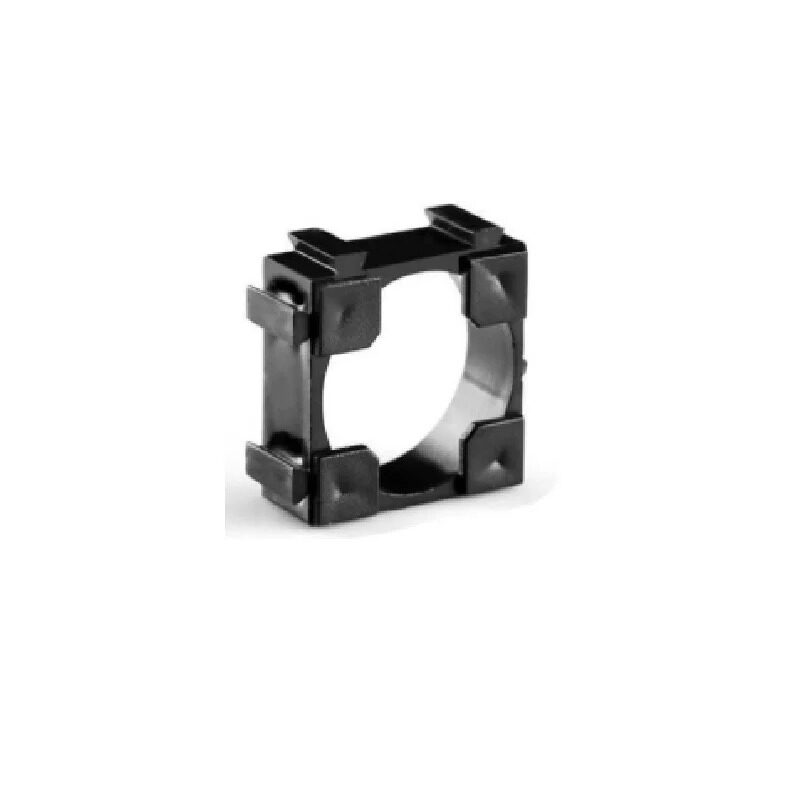
1 x 18650 Battery Holder with 18.4MM Bore Diameter – Pack of 4
Sturdy holder for testing and mounting single 18650 cells in your DIY projects. 18.4 mm bore fits standard cells correctly — fakes with bloated diameter will not fit properly, an instant red flag.
Weight Test: The Quickest Filter
This is the single fastest test you can do without any instruments. Genuine 18650 cells weigh between 42 g and 50 g depending on the specific model and chemistry. Most major cells:
- Samsung INR18650-25R: 45 g
- LG INR18650-HG2: 46 g
- Panasonic NCR18650B: 48.5 g
- Sony US18650VTC5: 47 g
Fake cells, especially the wildly inflated capacity ones, often weigh under 35 g — sometimes as low as 20–22 g. They are hollow or filled with sand/iron powder to simulate weight. Pick one up. If it feels noticeably light, you have your answer before you even grab a multimeter. Use a kitchen scale accurate to 1 g for a definitive reading.
Voltage Test With a Multimeter
A standard 18650 lithium-ion cell has a nominal voltage of 3.6–3.7 V. Charged to full, it should read 4.18–4.22 V. Discharged, it should read no lower than 2.5 V (the cutoff). Here is what to check:
Resting Voltage After Charge
Charge the cell with a quality charger, then let it rest for 30 minutes. Measure voltage across the terminals. A genuine cell will read 4.18–4.22 V. If you see exactly 4.20 V and the cell is only one week old, that is a good sign. If you see 4.25 V or higher, the protection is bypassed — dangerous.
Loaded Voltage Drop
Apply a known load — for example a 1Ω resistor (giving roughly 4 A draw) or a 10W flashlight. The voltage should not sag below 3.5 V under that load for a fresh genuine cell. Fakes often drop to 3.0 V or less immediately, revealing their poor internal construction.
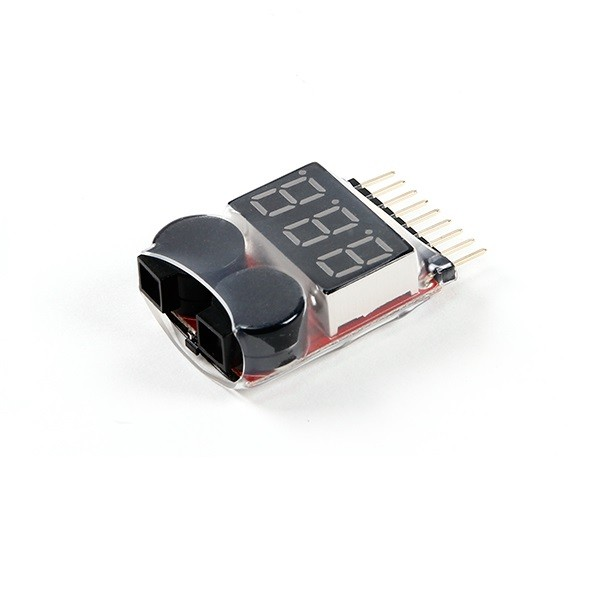
1-8S Lipo Battery Voltage Tester Without Alarm
A handy voltage checker for quick cell-level voltage reads. While designed for LiPo packs, it reads individual cell voltage accurately — great for fast screening of 18650 cells in series packs.
Capacity Test: The Only Real Truth
Visual checks and voltage tests are filters, but only a proper capacity discharge test tells you what a cell can actually deliver. You need either a dedicated battery analyser or an Arduino-based tester. Here is the manual method:
- Fully charge the cell to 4.2 V using a CC/CV charger.
- Apply a constant load — most tester circuits use 1 A discharge through a power resistor with a heatsink.
- Record time until the cell voltage reaches the cutoff of 3.0 V (or 2.5 V for some chemistries).
- Calculate capacity: Capacity (mAh) = Current (A) × Time (hours) × 1000
Example: If a cell lasts 2.5 hours at 1 A discharge, its capacity is 2500 mAh — not the 9800 mAh printed on the wrapper.
Online tools exist to build simple Arduino capacity testers. The key components are an Arduino Nano, a power MOSFET as load switch, a 1–2Ω power resistor, and a voltage divider for ADC reading. We will cover this in detail in our dedicated Arduino battery tester article.
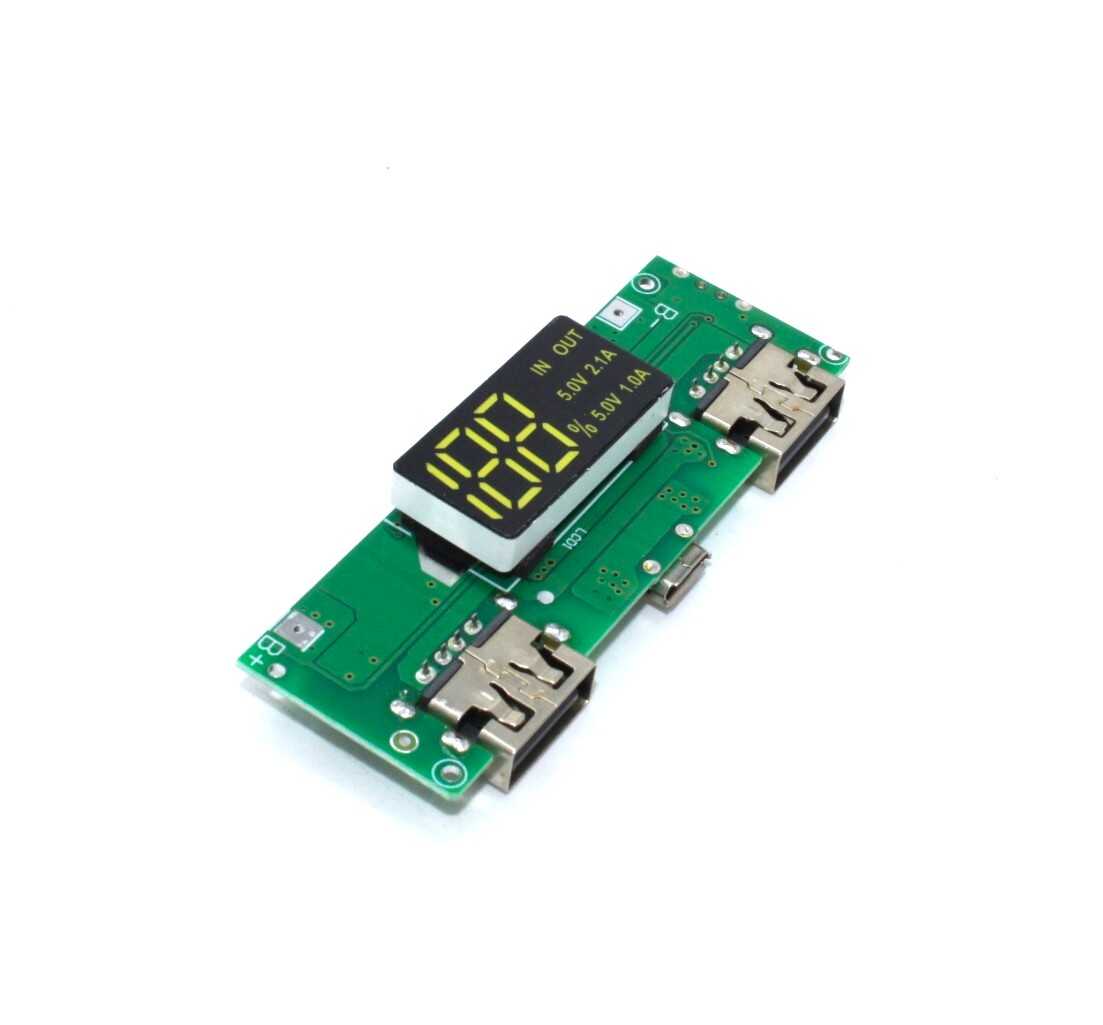
18650 5V 1A/2A Lithium Battery Charging Module with Dual USB Output
A complete charge + boost module for 18650 cells. Use it to charge cells before capacity testing. The digital display shows real-time charge percentage — handy for monitoring the top-off process before discharge tests.
Internal Resistance: Advanced Check
Internal resistance (IR) is one of the most telling indicators of a cell’s health and quality. Genuine high-drain 18650 cells have very low IR:
- Samsung 25R (2500 mAh, 20 A): ~18–22 mΩ
- LG HG2 (3000 mAh, 20 A): ~20–25 mΩ
- Panasonic NCR18650B (3400 mAh, 6.8 A): ~50–70 mΩ (higher IR, but it is a low-drain cell)
Fake cells almost always show IR above 150–300 mΩ. At 300 mΩ, a 4 A load will waste 4.8 W purely as heat inside the cell — which is how cheap fakes catch fire.
You need a battery analyser like the ISDT chargers or a dedicated IR tester to measure this accurately. The AC impedance method (1 kHz) is the industry standard. Multimeters with a resistance mode will not give accurate results for low values.

ISDT A4 Air Smart Battery Charger with Bluetooth
Professional-grade smart charger for Li-Ion, LiFePO4, NiMH, and NiCd cells. Reports internal resistance per cell via Bluetooth app — the most reliable way to catch fake 18650 cells before they damage your projects.
Trusted Brands & Where to Buy in India
The safest way to avoid counterfeits is to buy from reputable sources. Here are the verified genuine brands and what to expect:
| Brand / Model | Capacity | Max Continuous Discharge | Best Use |
|---|---|---|---|
| Samsung INR18650-25R | 2500 mAh | 20 A | Power tools, FPV drones |
| LG INR18650-HG2 | 3000 mAh | 20 A | E-bikes, high-drain packs |
| Panasonic NCR18650B | 3400 mAh | 6.8 A | Flashlights, power banks |
| Sony US18650VTC6 | 3000 mAh | 15 A | Balanced drain projects |
Where to buy in India: Buy only from established electronics distributors or stores with clear brand authorisation. Avoid marketplace listings where the seller has fewer than 50 reviews, cells priced under ₹200, or cells claiming over 4000 mAh capacity. Zbotic.in stocks genuine 18650 accessories and charging modules tested for compatibility with genuine cells.

1S 18650 Li-Ion BMS Charger Protection Board for 3.7V
Always pair genuine 18650 cells with a quality BMS protection board. This 1S board handles overcharge, over-discharge, and short-circuit protection — essential safeguards for any 18650-based project.
Frequently Asked Questions
Can an 18650 battery really have 9800 mAh capacity?
No. The maximum capacity of any commercially available 18650 cell as of 2025 is around 3500–3600 mAh. Any cell claiming 6000, 8000, or 9800 mAh is 100% counterfeit. The physical size of an 18650 (18 mm × 65 mm) limits how much electrode material can fit inside, setting an absolute ceiling on capacity.
What is the safest way to test an 18650 cell without expensive equipment?
Start with the weight test (genuine cells weigh 42–50 g), then check voltage after a full charge (should read 4.18–4.22 V). Next do a simple load test — connect a 1 A load and time how long the cell lasts before dropping to 3.0 V. This gives you a real-world capacity figure without any dedicated equipment. A kitchen scale and a basic multimeter are all you need for the first two tests.
Are protected 18650 cells always genuine?
Not necessarily. A fake cell can have a protection PCB glued to its bottom — which makes it slightly longer (around 70 mm vs 65 mm) but does not guarantee the cell inside is genuine. Always combine the protection status check with weight, voltage, and capacity tests for a complete picture.
Why do fake 18650 batteries get so hot during charging?
Fake cells have very high internal resistance (often 200–500 mΩ vs 20–50 mΩ for genuine cells). When current flows through this resistance, heat is generated as I²R power dissipation inside the cell itself. This is what causes fakes to get dangerously hot during charging and, in worst cases, triggers thermal runaway.
Which 18650 brand is best for Indian hobbyist projects?
For most DIY projects in India, the Samsung INR18650-25R or LG HG2 offer the best balance of capacity, discharge rate, and availability from genuine sources. For lower-drain applications like power banks and flashlights, the Panasonic NCR18650B at 3400 mAh is an excellent choice. Always verify the cell with the tests described in this article regardless of brand claims.
Build Safer Battery Projects with Zbotic
From genuine 18650 holders and BMS protection boards to professional ISDT smart chargers and capacity testers — Zbotic stocks everything Indian makers need for safe, reliable battery builds.




Add comment