
The 3D printing industry in India is growing fast. From product designers in Bengaluru needing rapid prototypes, to teachers in Pune printing lab models, to filmmakers in Mumbai building props — the demand for on-demand 3D printing services is real and accelerating. India’s manufacturing push under initiatives like Make in India and Production Linked Incentive (PLI) schemes is creating a wave of product development activity that feeds directly into demand for fast, affordable prototyping.
Starting a 3D printing business in India in 2026 is one of the most accessible manufacturing businesses you can launch from home with a modest initial investment. But like any business, success depends on choosing the right model, pricing correctly, marketing effectively, and understanding the operational realities.
This guide covers everything from choosing your first printer and business model, to GST registration, pricing strategy, finding clients, and scaling up. Whether you are a student, a professional changing careers, or an existing business adding a service, this is your complete roadmap.
The 3D Printing Market Opportunity in India
The global 3D printing market was valued at over $20 billion in 2025 and is projected to exceed $50 billion by 2030. India, while behind the US and Europe in adoption, is catching up rapidly. Key demand drivers in the Indian market include:
- Product Design and Prototyping: Startups and MSMEs developing physical products need rapid prototyping services. Traditional injection moulding has weeks of lead time and high tooling costs. 3D printing delivers prototypes in 24–48 hours for a fraction of the cost.
- Education: Engineering colleges, IITs, and schools are increasingly equipping labs with 3D printers and ordering custom models. Educational models for biology, geography, architecture, and engineering are in high demand.
- Healthcare: Prosthetics, orthotics, surgical planning models, and dental guides are growing applications. Some require specific certifications but non-medical models and prosthetics aid devices are accessible to small businesses.
- Architecture and Interior Design: Architects order scale models. Interior designers order custom fixtures, handles, and decorative elements.
- Film and Theatre: Props, costumes, and set pieces. Mumbai and Hyderabad film industries are significant customers.
- Retail and E-commerce: Custom products — nameplates, jewellery, phone cases, figurines, corporate gifts.
There is also a growing segment of B2C custom product demand driven by social media. Platforms like Instagram have made custom 3D printed miniatures, personalised gifts, and cosplay props mainstream.
Business Models: Which Is Right for You?
There are four primary business models for a 3D printing business in India. Understanding which suits your situation before investing is critical.
1. On-Demand Printing Service (Job Work)
Clients send you STL files (or you help them create designs), you print and deliver. This is the simplest model to start with. No design skills required initially. Revenue depends on print volume and turnaround speed.
Best for: Beginners with limited capital. Home-based startup. Focus on B2B clients (prototypers, engineers, architects).
Revenue: ₹20,000–₹1,50,000/month depending on printer capacity and client base.
2. Custom Products E-Commerce
Design and sell your own 3D printed products — gifts, home decor, stationery, nameplates, figurines. Sell via your own website, Amazon, Flipkart, Meesho, Etsy, or Instagram.
Best for: Creative individuals who enjoy product design. Slower to scale but higher margins on unique products.
Revenue: ₹15,000–₹80,000/month from online channels. Can scale with viral products.
3. Educational and Institutional Supplier
Target schools, colleges, museums, and government institutions. Sell printed educational kits, lab models, and custom classroom materials. Usually involves tendering and longer sales cycles but provides stable, repeatable revenue.
Best for: Those with connections in the education sector or experience in institutional sales.
4. Specialized Niche (Medical, Dental, Jewellery, Aerospace)
High-value, high-skill segment. Requires advanced printers (SLA/DLP for dental and jewellery, SLS for engineering), specialized materials, and sometimes regulatory compliance. High margins but high barriers to entry.
Best for: Those with domain expertise (e.g., a dental technician adding 3D printing).
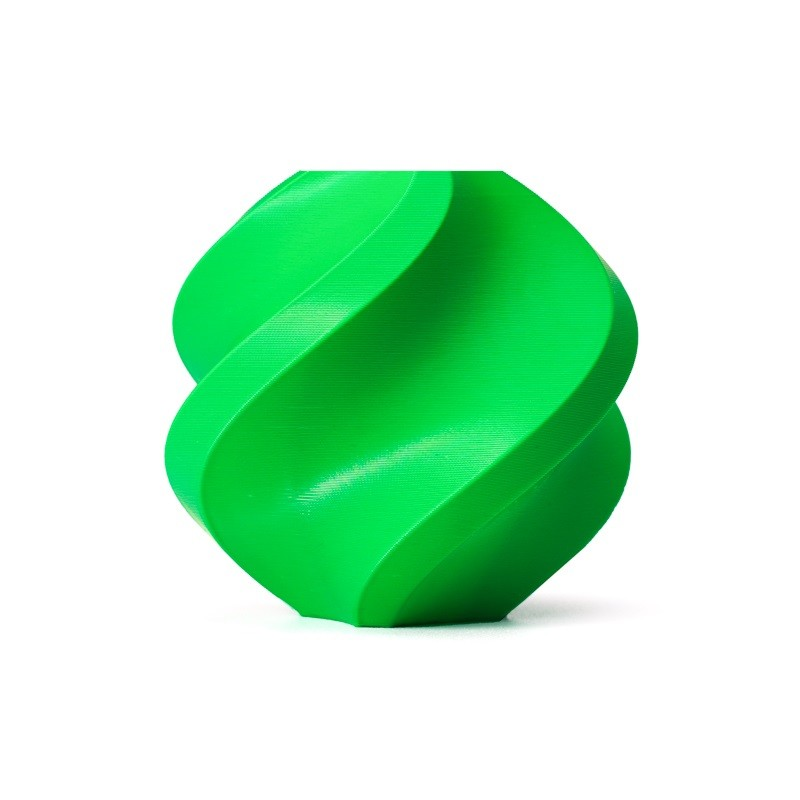
Bambu Lab ABS 3D Printer Filament – Bambu Green 1.75mm with Reusable Spool
Bambu Lab ABS offers consistent material properties and excellent finish — ideal for prototype and functional parts that professional clients expect to be production-quality.
Initial Investment and Equipment
Minimum Viable Setup (FDM Service Bureau)
| Item | Recommended | Cost (Approx.) |
|---|---|---|
| Primary FDM printer | Bambu Lab P1S or Creality K1 Max | ₹60,000–₹90,000 |
| Secondary FDM printer | Ender 3 V3 KE or similar | ₹18,000–₹25,000 |
| Initial filament stock | 5kg PLA, 2kg PETG, 1kg ABS | ₹8,000–₹12,000 |
| Post-processing tools | Sander, spray paint, heat gun, snips | ₹3,000–₹5,000 |
| Laptop for slicing | Any modern laptop (8GB RAM) | Existing or ₹35,000+ |
| Packaging materials | Bubble wrap, boxes, labels | ₹2,000–₹3,000 |
| Website (basic) | WordPress + hosting + domain | ₹3,000–₹5,000/year |
| GST registration | DIY: free; CA-assisted: ₹2,000–₹3,000 | ₹0–₹3,000 |
| Total Minimum | ₹95,000–₹1,40,000 |
This is a home-based setup. You can start printing client jobs within days of receiving your printer. The second printer is important as a backup — if your primary printer goes down for repair, you can still fulfil orders and maintain client trust.
Choosing Your First Commercial Printer
For a commercial FDM service bureau, you need a printer that balances speed, reliability, and print quality. Consumer-grade printers (open-frame Enders) can work but require significant time investment in calibration and maintenance. For a business, that time has a cost.
Recommended Printers for Commercial Use in India (2026)
Bambu Lab P1S: The most capable enclosed FDM printer under ₹90,000. Automatic calibration, 500mm/s speeds, multi-material AMS support, and Bambu’s excellent software. It significantly reduces the skill needed to consistently produce good prints. The enclosure allows ABS/ASA printing without babysitting. Ideal for a high-quality prototyping service.
Bambu Lab A1 Mini: Lower cost (~₹45,000), still high speed, no enclosure but excellent for PLA/PETG production. Good as a second/third printer for volume. Multi-material combo adds the AMS Lite for colour printing.
Creality K1 Max: Large build volume (300×300×300mm), enclosed, fast. Good for large prototype printing. Less software polish than Bambu but competitive on price.
Avoid for commercial use: Open-frame unenclosed printers as primary production machines. They require constant attention and are affected by drafts, dust, and ambient temperature changes — all of which hurt commercial print consistency.
Materials: What to Stock
A commercial 3D printing service should stock at minimum:
- PLA (multiple colours): 80% of orders will be PLA. Stock black, white, grey, and 2–3 common colours. Total: 5–8kg.
- PETG (black and natural): Functional mechanical parts. 1–2kg.
- ABS or ASA (black): For clients who need heat-resistant parts. 1kg.
- Flexible (TPU): Phone cases, gaskets, grips. 500g–1kg.
Buy premium filament for client jobs. Cheap unbranded filament produces inconsistent results that create reprints, wasted time, and unhappy clients. The cost of premium vs budget filament is minor compared to the labour cost of a reprint. Budget ₹1,200–₹1,800/kg for commercial-use PLA and PETG.
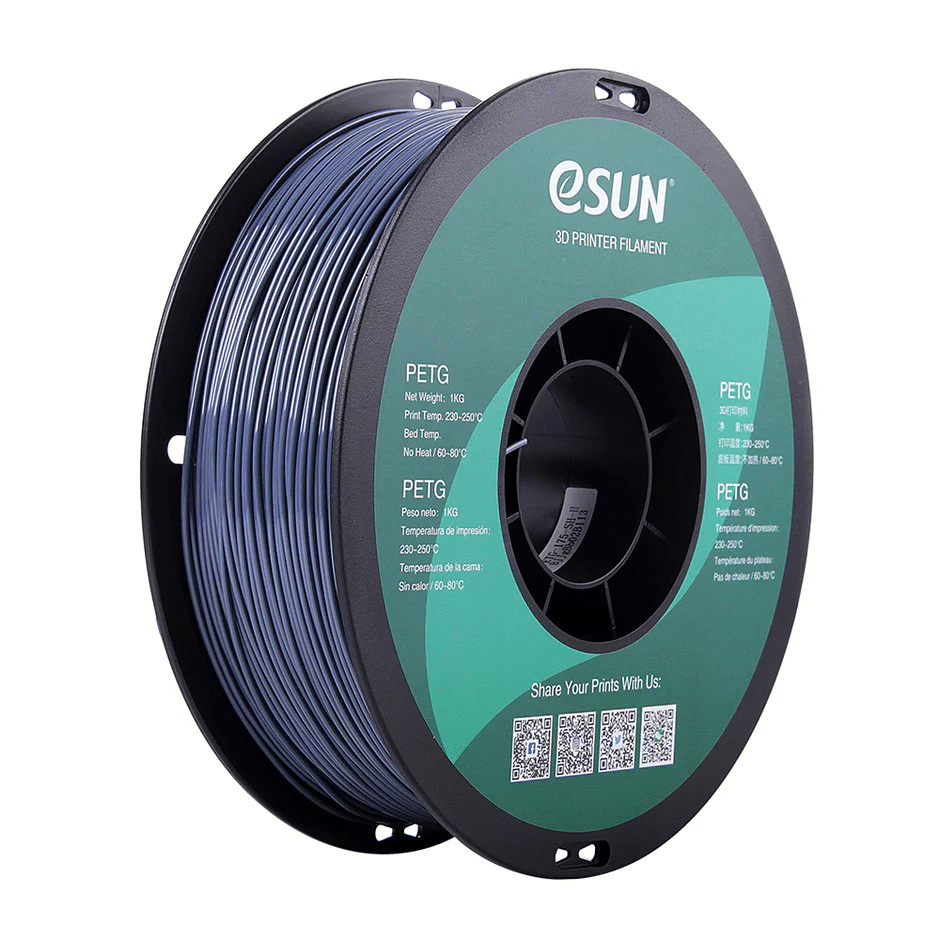
eSUN PETG 1.75mm 3D Printing Filament 1kg – Grey
eSUN PETG is a reliable commercial-grade choice for functional parts and mechanical prototypes — consistent diameter and excellent layer adhesion mean fewer failed prints for your clients.
Pricing Your 3D Printing Services
Pricing is where most new 3D printing businesses make critical errors — either underpricing and struggling financially, or overpricing and losing clients. Here is a structured approach:
Cost-Based Pricing Formula
Every quote should cover:
- Material cost: (Filament cost per gram × grams used) × 1.3 (waste factor)
- Machine time cost: (Printer hourly cost) × print time in hours
- Labour cost: Setup, monitoring, post-processing, packing, communication
- Overhead: Electricity, internet, software, packaging materials
- Profit margin: Minimum 30–40% on total cost
Printer Hourly Cost Calculation
Divide your printer purchase cost by its expected useful life in hours:
- Printer cost: ₹80,000
- Expected life: 5,000 hours (conservative for commercial use)
- Depreciation per hour: ₹16/hour
- Add electricity: roughly ₹5–8/hour at 0.4–0.5 kWh
- Total machine cost: ~₹21–24/hour
Market Rate Benchmarks (India, 2026)
| Service Type | Typical Pricing |
|---|---|
| FDM printing (PLA, standard quality) | ₹3–₹6 per gram of finished weight |
| FDM printing (PETG/ABS, functional) | ₹5–₹9 per gram |
| High-detail/fine layer (0.1mm) | +50–80% premium over standard |
| Post-processing (sanding, painting) | ₹200–₹1,500 depending on complexity |
| Design service (if you offer CAD) | ₹500–₹3,000 per design hour |
| Rush order (24-hour turnaround) | +30–50% rush premium |
Minimum order: Set a minimum order value of ₹300–₹500 to avoid losing money on tiny prints (setup time, communication, packing). Many service bureaus have ₹500 minimums.
Legal Setup: GST, Registration, and Compliance
Business Structure
For a home-based startup, a sole proprietorship is the simplest and cheapest structure. You operate under your own name or a trade name. No formal registration required to start trading — just a GST number if your turnover will exceed ₹20 lakh/year (₹10 lakh in special category states). As you scale, consider converting to a Private Limited Company for credibility, liability protection, and easier bank loans.
GST Registration
3D printing services fall under job work (HSN 9988) for custom printing services, and under goods supply (HSN 3926 or appropriate chapter) for finished product sales. The GST rate is typically 18% on services and 12–18% on goods depending on classification.
Voluntary GST registration (even below ₹20 lakh threshold) is advisable for a B2B business because:
- Corporate clients often require a GSTIN for input tax credit
- You can claim input tax credit on your printer, filament, and electricity purchases
- It signals professionalism and legitimacy
Register online at gst.gov.in. The process takes 3–7 working days if all documents are in order.
Required Documents for GST Registration
- PAN card
- Aadhaar card
- Bank account statement or cancelled cheque
- Electricity bill (for place of business proof)
- Rent agreement (if business address is different from residence)
- Passport-size photograph
Bank Account
Open a dedicated current account for your business. Keep business and personal finances completely separate from day one. This makes tax filing far simpler and looks professional on invoices. Most banks offer zero-fee current accounts for new businesses.
Finding Your First Clients
Week 1–2: Warm Network
Start with people you know. Post on WhatsApp groups, LinkedIn, and Facebook. Share photos of prints. Offer 1–3 free/discounted prints to connections in relevant industries (architecture, engineering, product design). These early samples generate referrals.
Month 1–3: Local B2B Outreach
- Engineering colleges and IITs/NITs: Visit campus design clubs, contact lab heads. Offer printing services for student projects. Students become repeat clients and referral sources.
- MSME clusters: Industrial areas have manufacturers who need prototypes. Visit in person, bring samples of your work.
- Architects and interior designers: LinkedIn outreach with a portfolio. Architects regularly need scale models.
- Hospitals and clinics: For anatomical models, prosthetic components (non-medical grade).
Online Channels
- 3DHubs / Treatstock: International platforms for 3D printing service providers. You can receive international orders paid in USD.
- Upwork / Fiverr: List 3D printing and design services. Good for building a portfolio early.
- Instagram: Share print time-lapses, before/after photos, client work. Reels of interesting prints regularly go viral in maker communities.
- IndiaMART: List your service here. Many MSMEs find vendors through IndiaMART.
Marketing Your Business Online
A 3D printing business has one of the best content marketing setups available — you make visually compelling objects. Use this to your advantage.
Website
Your website should have: a clear service page (what you print, materials, turnaround, pricing), a portfolio gallery, a quote request form, and your contact/WhatsApp number prominently displayed. Use WordPress with WooCommerce if you want to take online orders. A basic site can be live in a week using a premium theme.
Google Business Profile
Create and verify a Google Business Profile for your service. When someone in your city searches “3D printing service [city name]”, a verified GBP listing with photos and reviews can appear at the top of local results. This is free and delivers high-intent local clients.
Social Media
- Instagram: Post Reels and Stories consistently. Film time-lapses of prints. Show before/after of complex prints. Tag relevant hashtags: #3dprinting #3dprintingindia #makersofinstagram #3dprintingservice
- LinkedIn: For B2B clients — engineers, architects, product designers. Write about your capabilities and post client case studies.
- YouTube: Print tour videos, how-to content, client project reveals. Builds long-term SEO traffic and authority.
Running Efficient Print Operations
File Management
Create a systematic folder structure for client files: one folder per client, sub-folders per project, containing STL, slicer project file, and any reference images. Losing a file or using the wrong version of a design is a fast way to make an expensive mistake.
Print Queue Management
Use a simple spreadsheet or a Trello board to track orders: client name, due date, material, print time estimate, status. Review the queue each morning. Start overnight prints before bed — night-time printing is free machine time.
Quality Control
Photograph every print before packing. This protects you against claims of damage during shipping. For complex or expensive prints, photograph at different stages. Keep a box of reference prints — small calibration cubes, XYZ test pieces — and compare monthly to detect printer drift.
Printer Maintenance Schedule
- Weekly: Bed level check, nozzle cold pull, clean print surface
- Monthly: Lubricate Z-axis lead screws, check belt tension, inspect PTFE tube
- Every 200–300 hours: Replace PTFE tube (Creality/clone printers); check nozzle for wear
- Every 500 hours: Consider nozzle replacement; check all electrical connectors
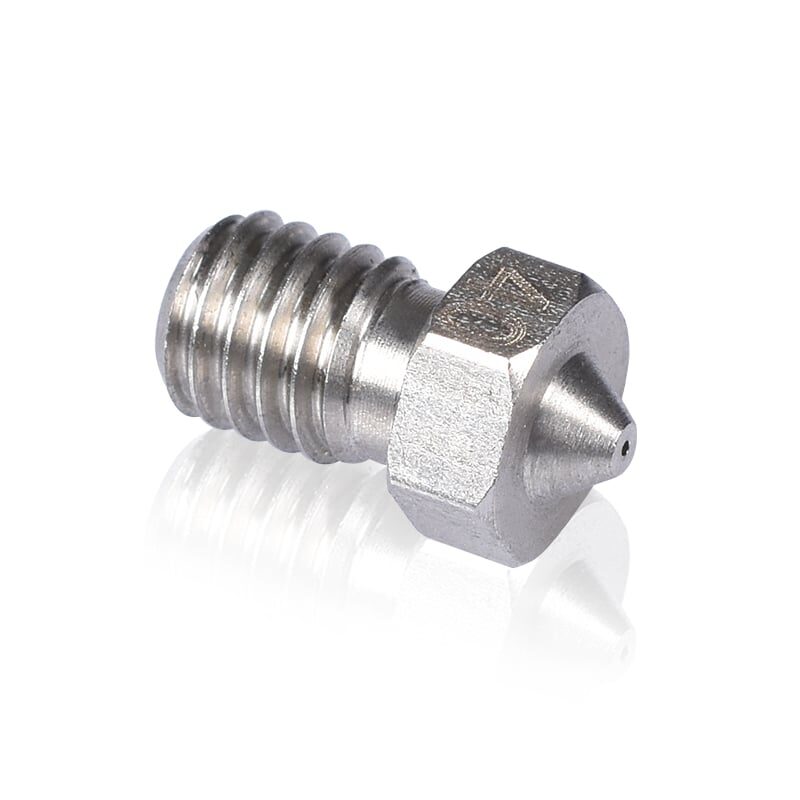
3D Printers Stainless Steel Nozzle 0.4mm
Keep spare nozzles in stock for commercial operations — a worn nozzle causes quality issues mid-project. Swap it instantly rather than losing a client print.
Scaling Up: From Home to Studio
When to Add a Printer
Add a second production printer when your first is running 16+ hours per day consistently and you are turning down orders. Do not add printers speculatively — let demand pull your capacity expansion. A second printer also provides redundancy when the first needs maintenance.
Hiring and Delegation
The first hire for most 3D printing businesses is a part-time assistant who handles: packing and shipping, print monitoring, and basic post-processing (support removal, sanding). This frees the founder for client acquisition and design work — the higher-value activities.
Adding SLA/Resin Printing
Once your FDM business is profitable and cash-flowing, consider adding a resin (SLA/DLP) printer. Resin prints at 0.025–0.05mm layer heights, producing detail that FDM cannot match. This opens dental, jewellery, and high-detail figurine markets with significantly higher margins (₹15–₹40/mL of resin vs ₹1.5–₹2/g of PLA).
Revenue Milestones
- Month 3: ₹20,000–₹30,000/month from early clients
- Month 6: ₹40,000–₹70,000/month with 2–3 regular B2B accounts
- Year 1: ₹80,000–₹1,50,000/month with 2 printers and multiple channels
- Year 2–3: ₹2–₹5 lakh/month with a team, 4–6 printers, and niche specialization
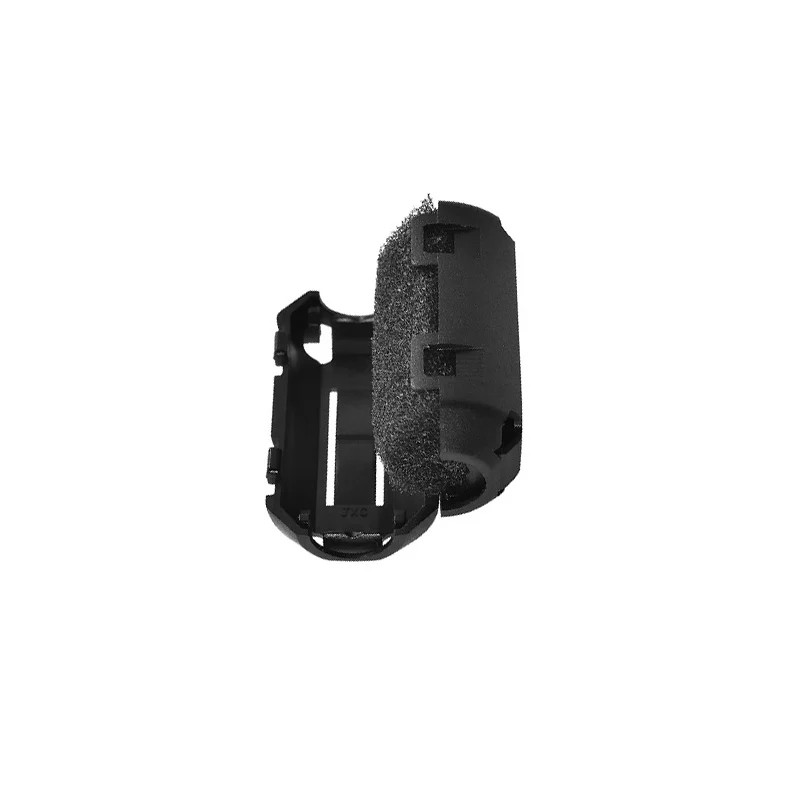
ABS PLA PETG 1.75mm Filament Filter Cleaner – Dust Removal for Ender 3 / CR-10 / Prusa
A filament dust filter is essential in a commercial printing environment. Dust contamination causes nozzle clogs and mid-print failures that lose client orders.
Frequently Asked Questions
How much can you realistically earn from a 3D printing business in India?
A single-printer home-based setup realistically earns ₹15,000–₹50,000 per month in the first year, depending on how aggressively you pursue clients. With two printers and a B2B client base, ₹60,000–₹1,50,000/month is achievable by year two. The ceiling rises significantly if you add design services, move into specialty niches, or scale to 5+ printers with staff.
Do I need 3D CAD skills to start a 3D printing service?
Not initially. Most clients will provide their own STL files — especially B2B clients like engineers and designers who already work in CAD. However, offering basic design services (Fusion 360 or Tinkercad) adds significant revenue per client and makes you a more complete solution. Consider learning CAD alongside starting the printing business. Fusion 360 is free for personal/startup use and has excellent tutorials on YouTube.
What is the GST rate for 3D printing services in India?
Job work services (you print from a client-supplied file) are classified under SAC 9988 at 18% GST in most cases. Sale of manufactured 3D printed goods falls under the relevant HSN code for that product type — typically 12–18% depending on the product. Consult a local CA for your specific services to get the exact classification. The key distinction tax authorities look for: are you providing a service (job work) or selling goods?
Can I run a 3D printing business from a residential flat in India?
Yes, for most configurations. FDM printers are quiet enough that neighbours are generally not bothered. However, check your local municipal rules and housing society bylaws. Some societies restrict commercial activity in residential buildings. Using your home address for GST registration is legally permitted. As you scale to 5+ printers, noise, power draw, and ventilation requirements may necessitate a dedicated commercial space.
How long does it take to make back the initial investment?
At ₹1,00,000 initial investment and ₹30,000/month gross revenue (conservative year-one estimate), operating costs of roughly ₹10,000–₹15,000/month leave ₹15,000–₹20,000 net. Payback period: 5–7 months. At ₹60,000/month gross (year two), payback of a second printer investment is even faster. 3D printing businesses have short payback periods relative to most manufacturing setups.
Which Indian cities have the most demand for 3D printing services?
Bengaluru, Pune, Hyderabad, and Chennai have the highest density of startups, engineering firms, and design agencies — all strong B2B clients. Mumbai has significant demand from the film and advertising industries, plus fashion and jewellery prototyping. Delhi-NCR has large corporate and MSME demand. However, smaller tier-2 cities (Coimbatore, Nagpur, Ahmedabad, Surat) have less competition and growing manufacturing demand — making them attractive for a less crowded market entry.
Stock Up for Your 3D Printing Business
Zbotic supplies filaments, nozzles, hotends, bed adhesives, and all the consumables you need to run a professional 3D printing service in India. Fast shipping, quality brands, and maker-focused support.





Add comment