
Every time solder melts under a hot iron tip, a plume of hazardous smoke rises from the flux. Without a soldering fume extractor, that smoke goes directly into your lungs. For electronics hobbyists, students, and repair technicians in India who solder regularly, this is a serious occupational health risk — and one that is very easily solved with the right equipment. This guide covers everything you need to know about choosing and using a soldering fume extractor in India.
What Is Solder Fume and Why Is It Dangerous?
Solder fume is not simply steam or harmless smoke. When flux burns — particularly rosin-based flux used in most solder wire — it releases a complex mixture of colophony (abietic acid derivatives), aldehydes, volatile organic compounds (VOCs), and fine particulate matter. Long-term exposure to solder fume has been linked to:
- Occupational asthma: Rosin flux fume is one of the leading causes of occupational asthma in electronics workers. Once sensitised, even tiny amounts of flux fume can trigger an attack.
- Chronic bronchitis and respiratory irritation: Fine particles (PM2.5) from solder fume penetrate deep into the lungs.
- Headaches and nausea: Common with short-term heavy exposure, especially in poorly ventilated rooms.
- Eye and throat irritation: The fine particulate settles on mucous membranes during soldering sessions.
Lead-free solder (SAC alloys like 96.5Sn/3Ag/0.5Cu) requires higher temperatures (217–220°C melting point vs ~183°C for leaded solder), which means flux burns more aggressively and produces more fume per joint. This is an important consideration for Indian workshops transitioning to RoHS-compliant solder.
Types of Soldering Fume Extractors
Benchtop Fan Extractors
The most common type for hobbyists. A fan draws air through a filter cartridge and exhausts clean air. Models range from small desktop units (adequate for occasional use) to high-CFM benchtop extractors with multiple filter stages. Noise levels vary significantly — look for units with brushless fans if you work in a shared space.
Arm-Mounted Extractors
Professional-grade units with a flexible articulated arm that positions the intake nozzle directly at the solder joint — typically 10 to 15 cm from the tip of your iron. The arm allows precise capture of fume at the source before it disperses into room air. These are the gold standard for high-volume soldering in repair shops.
Fume Extraction Stations (Integrated)
Some soldering stations include built-in fume extraction with a port for a fume arm. These reduce cable clutter and are convenient for dedicated workstations.
Simple USB Fan Extractors
Very inexpensive units powered via USB. These move air but typically use minimal filtration. They reduce fume concentration around your face but do not truly capture and filter particulates. Acceptable for very occasional use; not adequate for regular soldering.
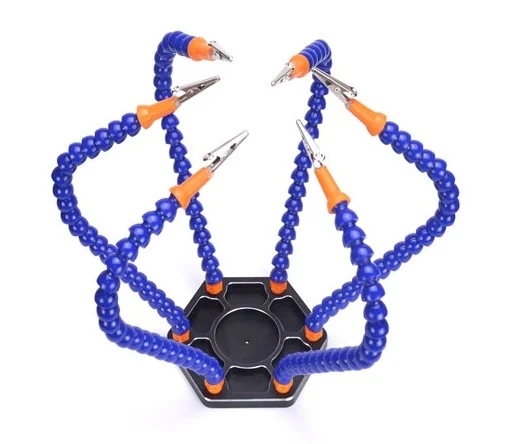
6 Flexible Arms Soldering Station With Swiveling Alligator Clip
Six adjustable flexible arms with alligator clips hold your PCB, components, and even your fume extractor nozzle in position — ideal for setting up a complete ESD-safe and fume-safe soldering station.
Filter Types: Activated Carbon vs HEPA vs Combined
Activated Carbon Filters
Activated carbon (also called activated charcoal) is the primary weapon against chemical vapours and VOCs in solder fume. The enormous surface area of activated carbon (up to 1,500 m² per gram) adsorbs organic molecules from the air stream. Carbon filters are essential for capturing the colophony and aldehyde components of flux fume.
Carbon filters do not capture fine particles — they let particulate matter pass through. Relying on carbon-only filtration means fine PM2.5 particles still enter the room air.
HEPA Filters
High-Efficiency Particulate Air (HEPA) filters capture 99.97% of particles 0.3 µm and larger. They are excellent at capturing the fine particulate component of solder fume. However, HEPA filters do not adsorb chemical vapours — VOCs and organic acids pass straight through.
Combined (HEPA + Carbon) Filters
The best fume extractors use both stages: a pre-filter catches large particles, a HEPA stage captures fine particulates, and an activated carbon stage adsorbs VOCs and odours. This combination provides comprehensive protection against all components of solder fume.
When evaluating filters, look for the carbon weight (more carbon = longer life and better VOC adsorption) and the HEPA certification grade (H13 is the professional standard).
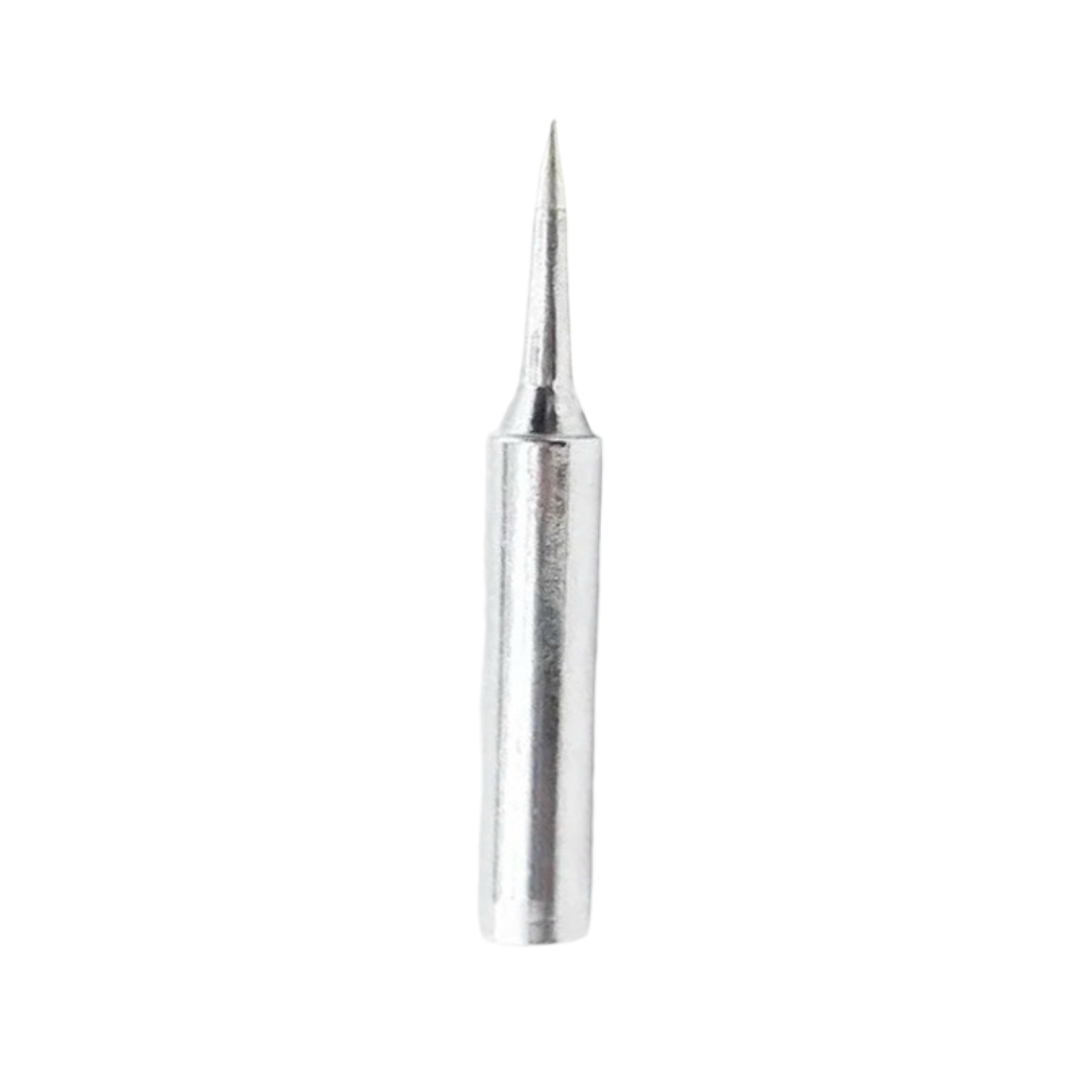
BAKON Soldering Iron Tip 900M-T-I
A well-maintained soldering iron tip reduces flux splatter and excess fume generation. Keeping your tip properly tinned means cleaner joints and less smoke — your fume extractor will thank you too.
Key Specifications to Compare
Airflow Rate (CFM or m³/h)
Airflow determines how quickly the extractor captures fume at the source. For benchtop use, aim for at least 50 CFM (85 m³/h). Professional arm-style units typically deliver 100–200 CFM at the nozzle tip. More airflow is generally better, provided the fan noise is tolerable.
Noise Level (dB)
Cheap extractors can be surprisingly loud — 55 to 65 dB is common in budget units. If you spend long hours soldering, look for units below 50 dB or ones with variable speed control so you can reduce fan speed when doing casual work.
Filter Life
Activated carbon filters typically last 6–12 months for a hobbyist doing a few hours per week. HEPA filters last 1–2 years. Always check filter replacement costs before buying — some budget units have proprietary filters that cost more than the extractor itself to replace.
Power Supply
In India, ensure your extractor is rated for 220–240V AC. Most Chinese imports are compatible, but verify. USB-powered units need a good quality 2A+ USB charger to deliver rated airflow.
Indian Context: Workshop Setup Tips
Indian workshops and home labs often face unique challenges that affect fume management:
- Monsoon humidity: High humidity accelerates activated carbon filter saturation. In coastal cities like Mumbai, Chennai, and Kochi, expect to replace carbon filters more frequently during monsoon months (June–September).
- Power fluctuations: Use a surge protector with your fume extractor, especially if you are in an area with frequent voltage spikes. Some inexpensive extractors have minimal internal protection.
- Space constraints: Many Indian workshops are compact. Compact benchtop units or models that can mount to the back of a monitor arm are ideal for small spaces.
- Dual use: A good activated carbon fume extractor placed near the workbench also helps with general VOC exposure from solvent cleaners like IPA, flux removers, and conformal coating sprays.
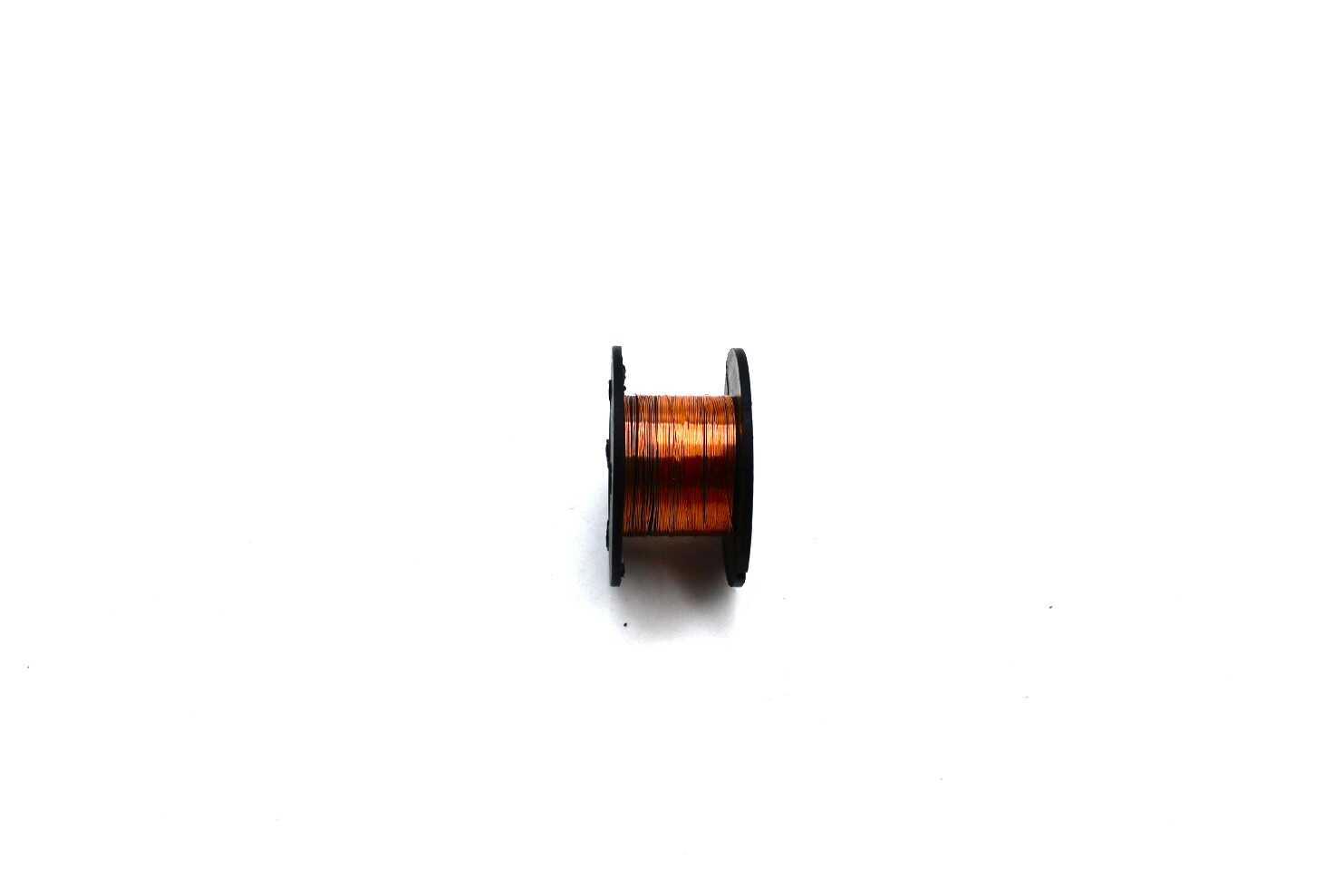
0.1MM Copper Soldering Solder PPA Enamelled Repair Reel Wire
Fine 0.1mm enamelled repair wire for delicate PCB work. Working with fine wire at high temperatures on small solder joints produces concentrated fume — exactly the scenario where a fume extractor adds the most value.
DIY Fume Extractor vs Commercial Unit
Building a DIY fume extractor with a 12V DC fan, an activated carbon filter, and a project box is a popular project in the Indian maker community. It is a legitimate option — many hobbyists have built effective extractors for ₹300–600 in parts. However, there are trade-offs:
| Factor | DIY Build | Commercial Unit |
|---|---|---|
| Cost | ₹300–800 | ₹800–5,000+ |
| Filter quality | Variable (depends on parts) | Standardised, tested |
| Airflow control | Manual (PWM controller needed) | Built-in variable speed |
| Noise | Depends on fan choice | Optimised enclosure |
| Build time | 2–4 hours | Zero |
If you enjoy making tools as much as using them, a DIY fume extractor is a great weekend project. For those who want reliable protection without the build time, a commercial unit is worth the investment.
Maintenance and Filter Replacement
Even the best fume extractor becomes useless with a clogged or saturated filter. Here is a simple maintenance routine:
- Pre-filter: Inspect monthly. Clean or replace when visibly grey with particulate. A simple foam pre-filter can often be washed and reused.
- HEPA filter: Replace every 12–18 months for a hobbyist using the extractor 5–10 hours per week. Do not wash HEPA filters — this destroys the fibre structure.
- Activated carbon filter: Replace when you notice solder fume smell passing through, or every 6–12 months. Weighing the carbon filter before and after use can help you gauge saturation.
- Fan and blades: Wipe down with a dry cloth every 3 months. A buildup of particulate on fan blades reduces airflow efficiency.
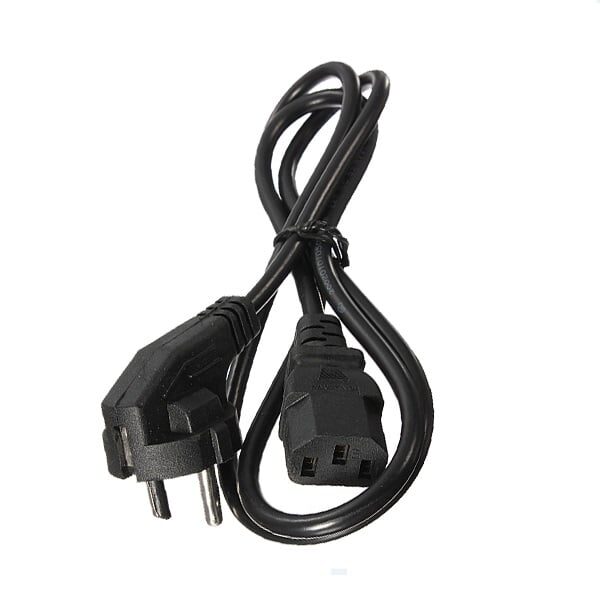
1.2M AC 10A 250V Power Supply Adapter Cord Cable EU Plug
A quality AC power cord for powering your bench equipment. Use a surge protector strip to safely power your fume extractor, soldering station, and other bench tools from a single outlet.
Frequently Asked Questions
Is soldering with a window open enough instead of a fume extractor?
Opening a window helps with ventilation but is not a substitute for a fume extractor. Airflow from a window is unpredictable — on a still day it provides little benefit. A fume extractor captures fume at the source, before it disperses into room air or reaches your face.
Do I need a fume extractor for no-clean flux solder?
Yes. “No-clean” refers to the fact that residue does not need to be cleaned off the PCB — it does not mean the flux does not produce harmful fume. No-clean flux fumes contain the same colophony derivatives and VOCs as standard flux. Always use extraction.
Can I use a regular table fan as a fume extractor?
A fan blows fume away from your face but disperses it into room air where it settles on surfaces and is re-inhaled. A fume extractor captures and filters the fume. A regular fan is not a substitute.
What is the best position for the fume extractor nozzle?
Position the intake 10–15 cm from your soldering point, slightly to the side and below your face. The goal is to capture the rising fume plume before it reaches eye level, without the airflow disturbing your soldering flame or delicate components.
Are fume extractors useful for hot-air rework and reflow?
Yes, and even more important. Hot air at 250–380°C burns flux much more aggressively than a soldering iron tip at 330°C. Hot-air rework sessions produce significantly more fume volume. Position the extractor nozzle close to the work area during rework.
How do I know when the carbon filter is exhausted?
The clearest sign is when you can smell solder fume even with the extractor running. Some extractors have filter saturation indicators. Alternatively, weigh the carbon filter — when it has gained about 20–30% of its dry weight in adsorbed material, it is approaching saturation.
Protect Your Health — Start Soldering Smarter
A soldering fume extractor is one of the most important safety investments you can make for your workshop. The cost is minimal compared to the long-term health consequences of unprotected flux fume exposure. Browse Zbotic’s full range of soldering equipment and workbench accessories to build a safe, efficient soldering station.






Add comment