
When it comes to selecting a lithium battery for solar storage, electric vehicles, or long-term DIY power systems, the LiFePO4 battery India buying guide is becoming increasingly relevant. LiFePO4 (Lithium Iron Phosphate) has earned its reputation as the safest and longest-lasting lithium chemistry available today. Unlike conventional NMC or NCA lithium-ion cells, LiFePO4 cells do not catch fire, last thousands of cycles, and tolerate deep discharge far better — making them ideal for Indian conditions where reliable, long-term energy storage matters.
Table of Contents
- What Is LiFePO4 Chemistry?
- Key Advantages of LiFePO4 Batteries
- LiFePO4 vs Li-Ion vs Lead-Acid: Full Comparison
- Understanding LiFePO4 Cycle Life
- Best Use Cases for Indian Hobbyists
- BMS Requirements for LiFePO4
- Choosing the Right Charger
- LiFePO4 Buying Guide for India
- FAQ
What Is LiFePO4 Chemistry?
LiFePO4 stands for Lithium Iron Phosphate — referring to the cathode material used in these cells. Unlike NMC (Nickel Manganese Cobalt) or NCA (Nickel Cobalt Aluminium) cells, the iron-phosphate bond in the cathode is extremely stable. This gives LiFePO4 its defining characteristic: exceptional thermal and chemical stability.
Typical LiFePO4 cell parameters:
- Nominal voltage: 3.2 V per cell (vs 3.6–3.7 V for NMC/NCA)
- Full charge voltage: 3.65 V per cell
- Minimum discharge voltage: 2.5 V per cell
- Energy density: 90–160 Wh/kg (lower than NMC at 150–220 Wh/kg)
- Operating temperature range: -20°C to +60°C
- Thermal runaway threshold: ~270°C (vs ~150°C for NMC) — dramatically safer
Common cell formats include cylindrical (32650, 26650, 18650-size LFP), prismatic, and pouch cells. The most common DIY format in India is the 32650 cylindrical cell (32 mm × 65 mm) or pre-assembled prismatic cells used in solar storage packs.
Key Advantages of LiFePO4 Batteries
1. Exceptional Safety
LiFePO4 cells do not enter thermal runaway under normal failure conditions. If a cell is over-charged, short-circuited, or physically punctured, it may vent gas and swell, but it will not catch fire or explode the way NMC or NCA cells can. This makes LiFePO4 the preferred chemistry for home solar installations, indoor UPS systems, and e-rickshaws in India where safety regulations and monitoring may be minimal.
2. Extraordinary Cycle Life
Quality LiFePO4 cells are rated for 2,000–4,000 charge-discharge cycles before capacity drops to 80% of original. At one cycle per day, that is 5–10 years of service life. By comparison, most NMC 18650 cells offer 300–500 cycles at the same 80% threshold. For solar storage where the battery cycles daily, LiFePO4 pays for its higher initial cost within 2–3 years.
3. Flat Discharge Curve
LiFePO4 maintains a very flat voltage profile from ~95% down to ~10% state of charge. The voltage stays near 3.2–3.3 V for most of the discharge, then drops sharply. This means your system voltage is extremely stable, reducing the complexity of DC-DC regulation. NMC cells slope gradually from 4.2 V to 3.0 V, making state-of-charge estimation harder.
4. No Memory Effect
Like all lithium chemistries, LiFePO4 has no memory effect. You can partial-charge or partial-discharge without any long-term capacity penalty, unlike old NiCd batteries.
5. Wide Temperature Tolerance
LiFePO4 performs better than NMC at both high temperatures (important in Indian summer heat) and low temperatures. Capacity loss at high temperatures is minimal compared to NMC cells, which degrade significantly above 40°C.
6. No Cobalt Content
LiFePO4 uses iron and phosphate — abundant, cheap materials — instead of cobalt, which is expensive, ethically problematic, and subject to supply chain volatility. This contributes to lower long-term pricing and environmental sustainability.
LiFePO4 vs Li-Ion vs Lead-Acid: Full Comparison
| Parameter | LiFePO4 | NMC Li-Ion | Lead-Acid |
|---|---|---|---|
| Nominal voltage | 3.2 V/cell | 3.6–3.7 V/cell | 2.0 V/cell |
| Energy density | 90–160 Wh/kg | 150–220 Wh/kg | 30–50 Wh/kg |
| Cycle life (80%) | 2,000–4,000 | 300–500 | 200–500 |
| Safety | Excellent | Moderate | Good (but heavy acid) |
| Weight | Light | Lightest | Very heavy |
| Initial cost | High | Medium-High | Low |
| Long-term cost/Wh | Lowest | Medium | High (frequent replacement) |
Understanding LiFePO4 Cycle Life
“2,000–4,000 cycles” sounds impressive, but what does it mean practically? A cycle is one full charge + full discharge of the battery’s usable capacity.
Factors Affecting Actual Cycle Life
- Depth of Discharge (DoD): Cycling to 100% DoD reduces cycle life. Cycling to only 80% DoD (never fully discharging) can push life to 4,000+ cycles. Most solar storage designers target 80% DoD as the usable range.
- Temperature: Chronic operation above 45°C degrades LiFePO4 faster. In Indian summers, ensure adequate ventilation for battery enclosures.
- Charge rate: Charging at 0.5C or slower maximises cycle life. High C-rate charging (above 1C) generates heat and accelerates degradation.
- BMS quality: A poorly calibrated BMS that allows even occasional over-charge (above 3.65 V/cell) will dramatically reduce cycle life despite the chemistry’s inherent robustness.
Best Use Cases for Indian Hobbyists
Solar Home Storage
Replacing a lead-acid battery bank with LiFePO4 is the most economically justified use case in India. A 100 Ah 12 V LiFePO4 pack (4S configuration, four 3.2 V cells in series) replaces a 150–200 Ah lead-acid bank since LiFePO4 can be discharged to 80% vs lead-acid’s recommended 50% max DoD. With daily cycling, the payback period over lead-acid is typically 3–4 years, after which the LiFePO4 continues operating for another 5–7 years at minimal cost.
E-Rickshaw and E-Bike Conversion
LiFePO4 is popular for Indian e-rickshaw conversion kits. The flat voltage curve means consistent motor torque throughout discharge, and the superior thermal stability matters when the battery sits in direct sun all day.
DIY UPS for Electronics
A 4S 10 Ah LiFePO4 pack with a BMS makes an excellent UPS for routers, Raspberry Pis, and small servers. The stable 12.8 V output matches standard lead-acid UPS input voltages. Cycle life in UPS service (infrequent discharge during power cuts) can exceed 10 years.
Portable Power Stations
A 4S or 8S LiFePO4 pack with an inverter is the safest way to build a portable power station for camping or field work. No fire risk, no toxic fumes, and 2,000+ cycles make it a long-term investment.
BMS Requirements for LiFePO4
LiFePO4 requires a BMS calibrated for its specific voltage thresholds — not the same as NMC/NCA BMS boards:
- Over-charge protection voltage: 3.65 V per cell (NOT 4.2 V)
- Over-discharge cutoff: 2.5 V per cell
- Balance charging: Passive balancing sufficient; active balancing is beneficial for large packs
- Temperature protection: Look for BMS with NTC thermistor input
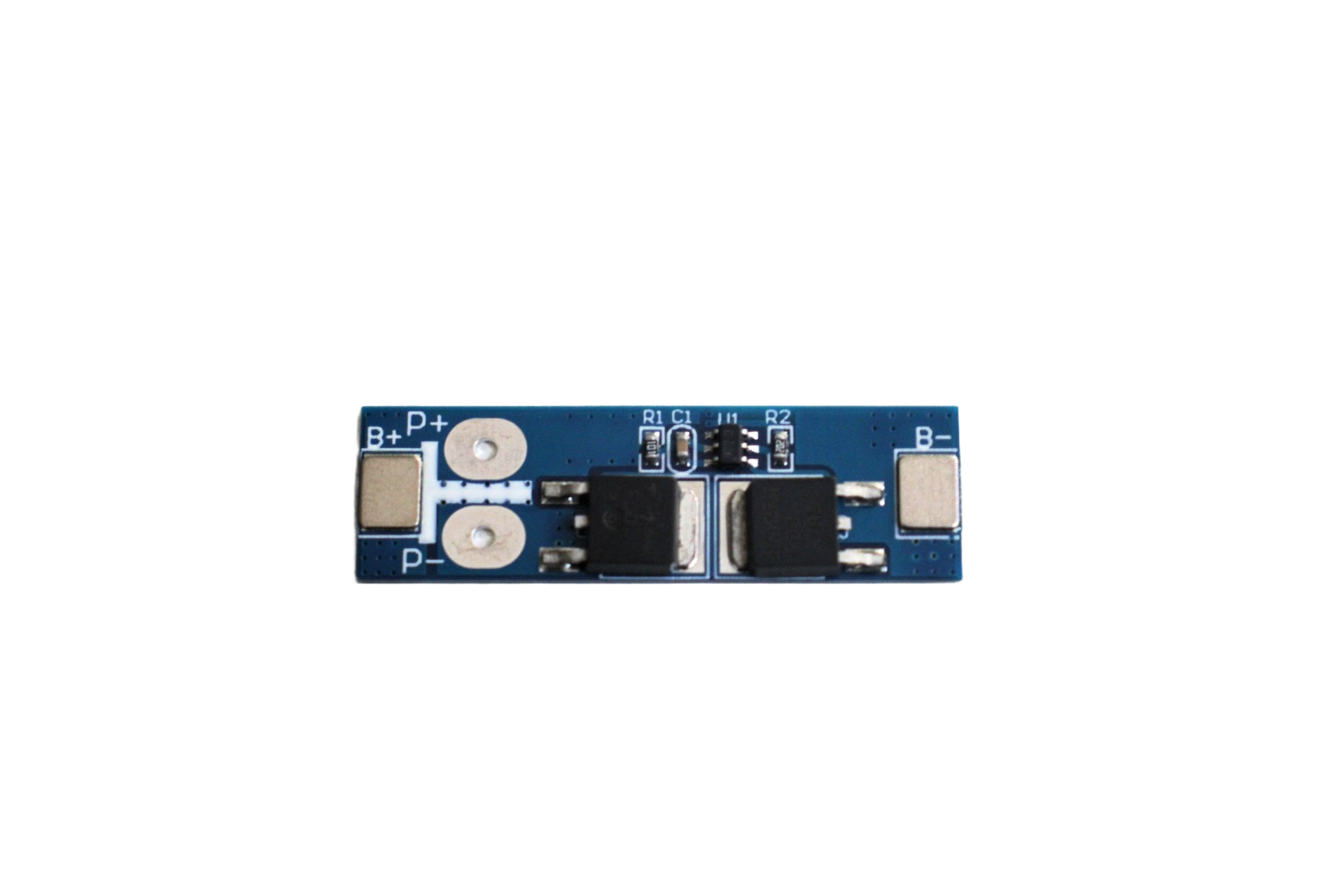
1S 12A 3.6V BMS Battery Protection Board for Li-Ion Cell
Compact 1S BMS board for single 3.6–3.7V Li-Ion or LiFePO4 cells. Supports up to 12A discharge current with over-charge, over-discharge, and short-circuit protection. Great for small LFP cell projects.
Choosing the Right Charger
This is critical: you MUST use a LiFePO4-compatible charger. A standard Li-Ion charger set to 4.2 V/cell will over-charge LiFePO4 cells (correct is 3.65 V/cell), causing irreversible damage.
Key charger specifications for LiFePO4:
- Charge voltage: 3.65 V per cell (14.6 V for 4S, 29.2 V for 8S)
- Charge algorithm: CC/CV (constant current then constant voltage)
- Temperature monitoring: preferred but not mandatory for small packs

ISDT A4 Air Smart Battery Charger – Supports LiFePO4
Multi-chemistry smart charger with explicit LiFePO4 chemistry support. Set the correct per-cell voltage and let it charge safely. Bluetooth app monitoring included. Supports 1–6S LiFePO4 packs — ideal for DIY solar and e-bike packs.
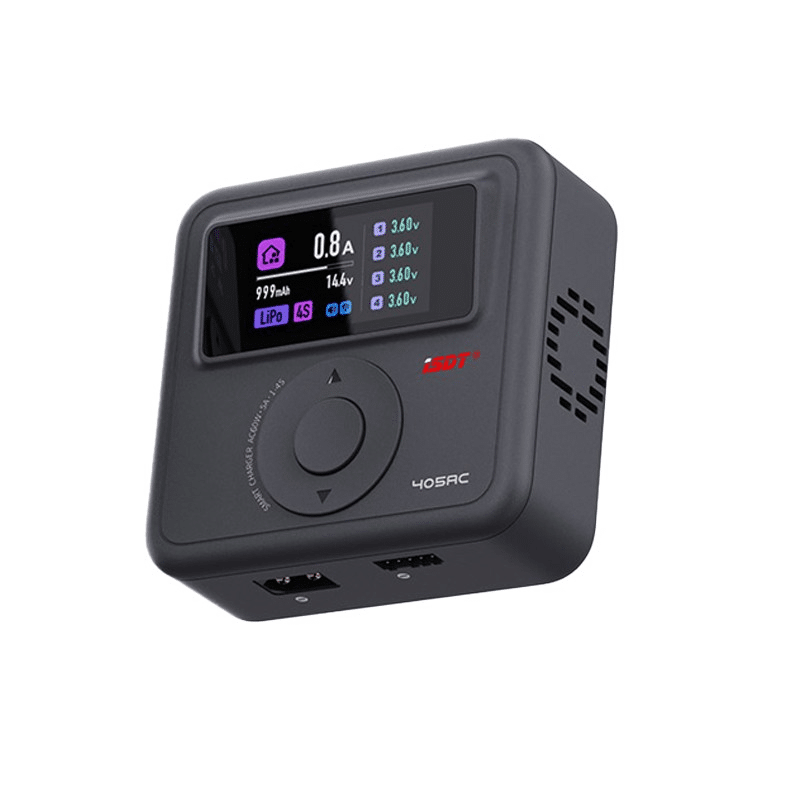
ISDT 405AC 60W GaN Smart Charger – 1–4S LiPo/LiFe
Compact GaN-powered 60W AC charger supporting LiFe (LiFePO4) chemistry up to 4S. Plug directly into mains — no DC power supply needed. Perfect for charging 12.8V LiFePO4 packs used in solar storage and UPS applications.
LiFePO4 Buying Guide for India
Cell vs Complete Pack
- Individual cells (EVE, CATL, CALB, Lishen brands): More cost-effective for large packs. Requires spot welding/bolting, BMS selection, and enclosure fabrication. Skill level: intermediate to advanced.
- Pre-assembled packs (12 V 50 Ah, 100 Ah etc.): Ready to use with built-in BMS. Higher per-Wh cost but minimal assembly. Skill level: beginner.
Voltage Configuration Guide
- 4S (12.8 V nominal): Replaces 12 V lead-acid. Common for solar storage, home UPS, e-bikes (low power)
- 8S (25.6 V nominal): Replaces 24 V systems. Larger solar installations, e-rickshaws
- 16S (51.2 V nominal): Replaces 48 V systems. High-power e-bikes, telecom tower backup
Red Flags When Buying in India
- Capacity claims without test data or datasheet
- “Grade A” claims without verifiable source (EVE, CATL, CALB have public datasheets)
- No BMS included in pre-assembled packs
- Charge voltage listed as 4.2 V (that is Li-Ion, not LiFePO4)
- Extremely cheap pricing (genuine 100 Ah LFP cells cost ₹8,000–15,000 per cell for Grade A)
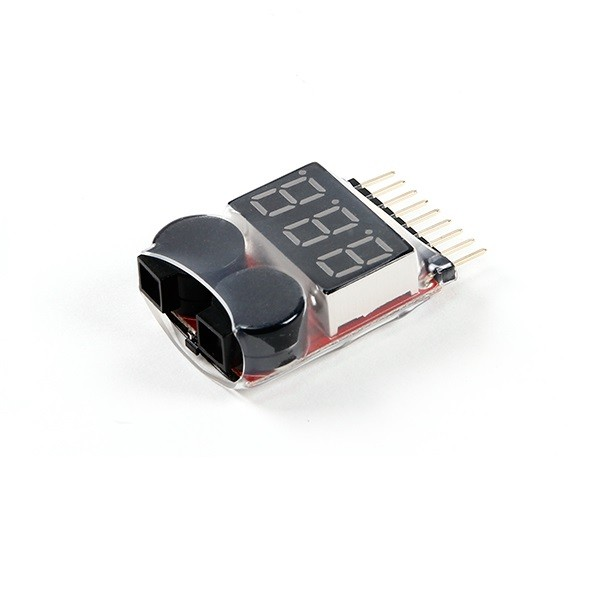
1–8S Battery Voltage Tester (Works with LiFePO4)
Quick cell-balance checker compatible with LiFePO4 packs. Plug into the balance lead of your 1–8S LFP pack to instantly verify per-cell voltage balance after assembly or during maintenance.
Frequently Asked Questions
Is LiFePO4 worth the extra cost over lead-acid in India?
For applications with daily cycling (solar storage, daily-use e-bikes), yes — clearly worth it. The TCO (total cost of ownership) over 10 years is lower because LiFePO4 rarely needs replacement. For infrequent use (emergency backup, rarely discharged), lead-acid may still be more economical upfront.
Can I charge LiFePO4 cells with a solar charge controller?
Yes, but only if your solar charge controller has an explicit LiFePO4 / LFP charging profile (14.4–14.6 V bulk for 4S, not 14.4 V lead-acid profile). Many modern MPPT controllers from EPSolar, Victron, and others include LFP presets. Never use the “sealed lead-acid” preset for LFP.
What is the self-discharge rate of LiFePO4?
LiFePO4 self-discharges at approximately 2–3% per month at room temperature — far better than lead-acid (5–15% per month). A fully charged LFP pack stored for 3 months will still have 90%+ capacity when you need it.
Can LiFePO4 replace UPS lead-acid batteries directly?
With caveats. The nominal voltage of a 4S LFP pack (12.8 V) is close to 12 V lead-acid. However, the charging voltage profile differs. Some UPS chargers will under-charge LFP (not reaching 14.6 V bulk). You may need to recalibrate the UPS charger voltage or add a dedicated LFP charge management stage.
Do LiFePO4 batteries require a BMS?
Always yes for multi-cell packs. Even though LiFePO4 is inherently safer, cells in a multi-cell pack will drift in voltage over time. Without a BMS providing balancing and cutoff, one cell will eventually over-discharge or over-charge during pack charge/discharge cycles, causing irreversible damage.
Build Your LiFePO4 Power System
Zbotic stocks BMS boards, smart chargers, voltage testers, and battery holders to support your LiFePO4 projects. Whether you are building a solar backup system or an e-bike pack, find all the components you need with fast India-wide delivery.





Add comment