
LED Matrix Display: MAX7219 8×8 with Arduino Scrolling Text
The LED matrix MAX7219 8×8 scrolling Arduino combination is one of the most eye-catching display setups you can build for under ₹200. Whether you want a scrolling name badge, a score display for a game, or a dynamic signboard for a science fair project, the MAX7219-driven 8×8 LED matrix delivers stunning results with minimal wiring. This tutorial covers everything from hardware setup to advanced animations, helping Indian students and hobbyists create impressive display projects step by step.
What Is the MAX7219 LED Driver?
The MAX7219 is a serial interface LED display driver from Maxim Integrated (now part of Analog Devices). It can drive up to 64 individual LEDs — exactly an 8×8 matrix — using just 3 wires from your microcontroller: DIN (data), CLK (clock), and CS/LOAD (chip select). This SPI-compatible interface makes it far simpler than driving individual LEDs with shift registers.
Key features that make MAX7219 popular:
- Controls 64 LEDs with just 3 GPIO pins via SPI
- Built-in brightness control via a single resistor (RSET) or software intensity register (0–15 levels)
- Daisy-chainable: connect multiple modules in series without additional Arduino pins
- Scan limit register lets you use fewer rows for segmented displays
- On-chip BCD decoder for 7-segment displays (bypassed in dot-matrix mode)
- Supply voltage: 4–5.5V, compatible with 5V Arduino and most 3.3V MCUs with level shifting
The pre-assembled 8×8 LED matrix modules you find online have the MAX7219 chip soldered directly to a PCB along with the LED matrix, decoupling capacitors, and the RSET resistor (typically 10kΩ for ~40mA per segment). All you need to do is wire 5 pins and start coding.
8×8 LED Matrix Module Hardware Overview
The standard MAX7219 8×8 module has two 5-pin connectors (in and out) for daisy-chaining:
| Pin Label | Description | Arduino Connection |
|---|---|---|
| VCC | Power supply 5V | 5V |
| GND | Ground | GND |
| DIN | Serial Data In | Pin 11 (MOSI) |
| CS | Chip Select (active LOW) | Pin 10 |
| CLK | Clock | Pin 13 (SCK) |
The module is available in single (1 matrix = 8×8 pixels) or quad form (4 matrices = 32×8 pixels). The quad module is the most popular for scrolling text because you get enough width to display full characters without feeling cramped.
Wiring MAX7219 to Arduino
For an Arduino Uno or Nano, the wiring is very simple. Use the hardware SPI pins for best performance, or any 3 digital pins in software SPI mode (slightly slower but flexible).
Hardware SPI (recommended, faster):
- VCC → 5V
- GND → GND
- DIN → Pin 11
- CS → Pin 10
- CLK → Pin 13
If you are using an ESP32, use the VSPI pins: DIN → GPIO23 (MOSI), CLK → GPIO18 (SCK), CS → GPIO5 (or any free pin). Power the module from the 5V pin of your development board.
Power note: One 8×8 MAX7219 module at full brightness draws about 330mA. For 4 chained modules, current demand can exceed 1A. Use an external 5V supply rather than drawing from the Arduino’s USB power when running multiple modules at high brightness.
Library Setup: MD_Parola and MD_MAX72XX
Two excellent libraries exist for the MAX7219:
- MD_MAX72XX by majicDesigns — low-level driver for the chip, font management, pixel control
- MD_Parola by majicDesigns — high-level text effects built on top of MD_MAX72XX
Install both from the Arduino Library Manager: search for “MD_Parola” and install it along with its dependency MD_MAX72XX.
The key constructor parameter is the hardware type. Most cheap Chinese modules sold in India use the FC16 hardware type. If your display shows mirrored or rotated output, change to GENERIC or PAROLA. The correct type for your module is usually written in the library’s hardware reference table.
#include <MD_Parola.h>
#include <MD_MAX72xx.h>
#include <SPI.h>

// Hardware type: FC16 for most Indian market modules
#define HARDWARE_TYPE MD_MAX72XX::FC16_HW
#define MAX_DEVICES 4    // Number of 8x8 modules chained
#define CS_PIN 10

MD_Parola P = MD_Parola(HARDWARE_TYPE, CS_PIN, MAX_DEVICES);
Scrolling Text Code
Here is a complete sketch for scrolling text across 4 chained 8×8 matrices:
#include <MD_Parola.h>
#include <MD_MAX72xx.h>
#include <SPI.h>

#define HARDWARE_TYPE MD_MAX72XX::FC16_HW
#define MAX_DEVICES 4
#define CS_PIN 10

MD_Parola P = MD_Parola(HARDWARE_TYPE, CS_PIN, MAX_DEVICES);

void setup() {
  P.begin();
  P.setIntensity(5);          // Brightness 0-15
  P.displayClear();
}

void loop() {
  // Scroll left with 60ms speed
  P.displayScroll("Zbotic.in - Electronics for Makers!",
                  PA_LEFT, PA_SCROLL_LEFT, 60);

  while (!P.displayAnimate()) {
    // Wait for animation to complete
  }
  delay(500);
}
Alternating two messages with different effects:
#include <MD_Parola.h>
#include <MD_MAX72xx.h>
#include <SPI.h>

#define HARDWARE_TYPE MD_MAX72XX::FC16_HW
#define MAX_DEVICES 4
#define CS_PIN 10

MD_Parola P = MD_Parola(HARDWARE_TYPE, CS_PIN, MAX_DEVICES);

const char *msg[] = { "NAMASTE!", "INDIA ROCKS" };
uint8_t current = 0;

void setup() {
  P.begin();
  P.setIntensity(6);
  P.displayText(msg[current], PA_CENTER, 100,
                2000, PA_FADE, PA_FADE);
}

void loop() {
  if (P.displayAnimate()) {
    current = (current + 1) % 2;
    P.setTextBuffer(msg[current]);
    P.displayReset();
  }
}
Available text effects in MD_Parola include: PA_SCROLL_LEFT, PA_SCROLL_RIGHT, PA_SCROLL_UP, PA_SCROLL_DOWN, PA_FADE, PA_GROW_UP, PA_WIPE, PA_BLINDS, and more — over 20 effects in total.
Custom Animations and Sprites
Beyond text, you can display 8×8 pixel graphics. The MD_MAX72XX library lets you set individual pixels or load sprite arrays:
#include <MD_MAX72xx.h>
#include <SPI.h>

#define HARDWARE_TYPE MD_MAX72XX::FC16_HW
#define MAX_DEVICES 1
#define CS_PIN 10

MD_MAX72XX mx = MD_MAX72XX(HARDWARE_TYPE, CS_PIN, MAX_DEVICES);

// Smiley face - each byte = one row of 8 pixels
const uint8_t smiley[8] PROGMEM = {
  0b00111100,  // Row 0
  0b01000010,  // Row 1
  0b10100101,  // Row 2
  0b10000001,  // Row 3
  0b10100101,  // Row 4
  0b10011001,  // Row 5
  0b01000010,  // Row 6
  0b00111100   // Row 7
};

void setup() {
  mx.begin();
  mx.control(MD_MAX72XX::INTENSITY, 5);
  mx.control(MD_MAX72XX::UPDATE, MD_MAX72XX::OFF);
  for (int r = 0; r < 8; r++) {
    mx.setRow(0, r, pgm_read_byte(&smiley[r]));
  }
  mx.control(MD_MAX72XX::UPDATE, MD_MAX72XX::ON);
}

void loop() {}
Design your pixel art at gurgleapps.com/tools/matrix or similar online tools, then paste the generated byte array into your sketch.
Chaining Multiple Modules
The beauty of MAX7219 is daisy-chaining. Connect DOUT of module 1 to DIN of module 2, and share VCC, GND, CS, and CLK across all modules. The Arduino only needs 3 signal wires regardless of how many modules you have in the chain.
Change only the MAX_DEVICES constant in your code to match the number of physically connected modules. MD_Parola automatically handles the correct bit-shifting across all modules in the chain.
For a professional scrolling sign with 8 modules (64×8 pixels), set MAX_DEVICES 8 and you have a 512-LED display running on just 3 Arduino pins. Text scrolling at this width looks very smooth and is often used for college project demonstrations.
Project Ideas for Indian Makers
- Name badge for tech events: Battery-powered scrolling name tag using Arduino Nano + MAX7219 — great for Maker Faires and college hackathons
- Railway station display replica: Show train name, platform, and arrival time scrolling across chained matrices
- Cricket scoreboard: Live score updates via Bluetooth from phone to scrolling LED display
- Shop signage: “OPEN / CLOSED” scrolling sign powered by USB — far cheaper than commercial signboards
- Air quality alert display: Combine with MQ-135 sensor and scroll AQI level and warning message
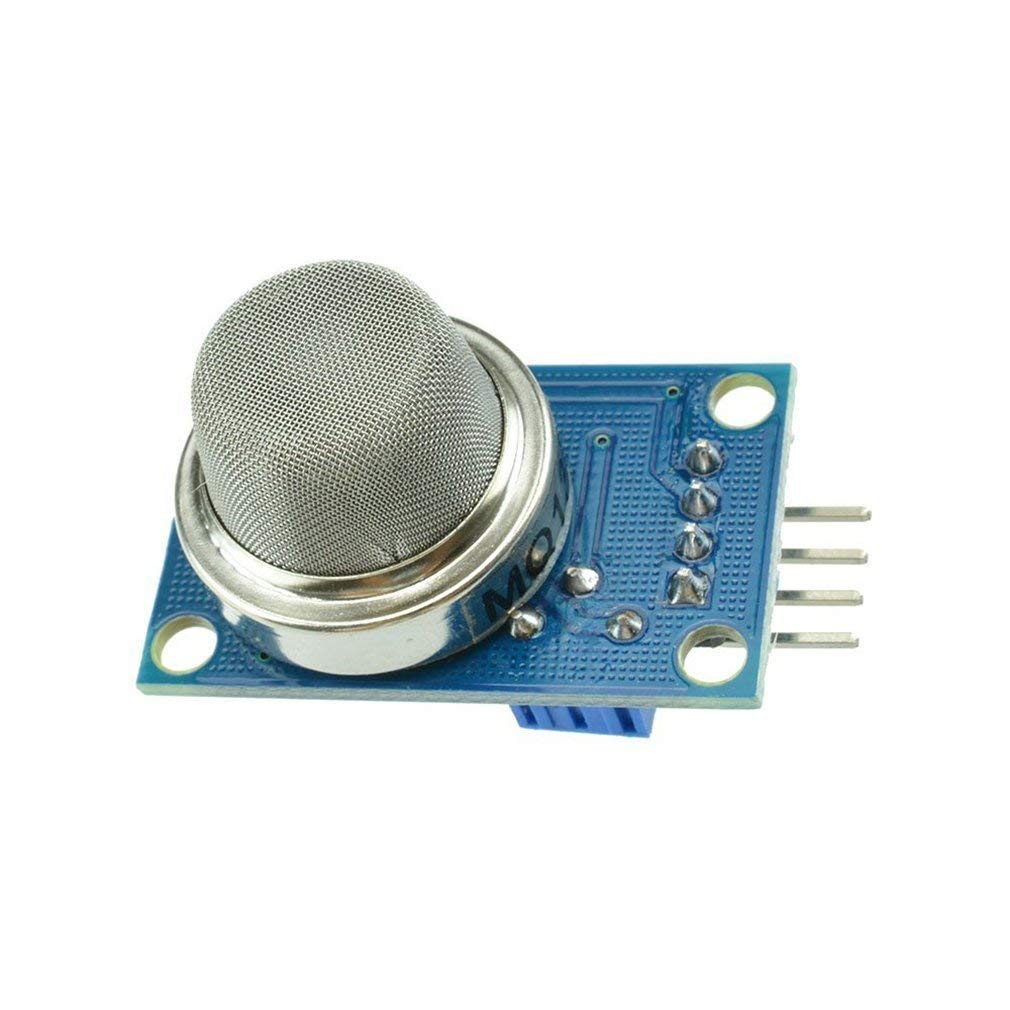
MQ-135 Air Quality / Gas Detector Sensor Module
Pair this gas sensor with a MAX7219 LED matrix to build a scrolling air quality alert display — ideal for school science projects.
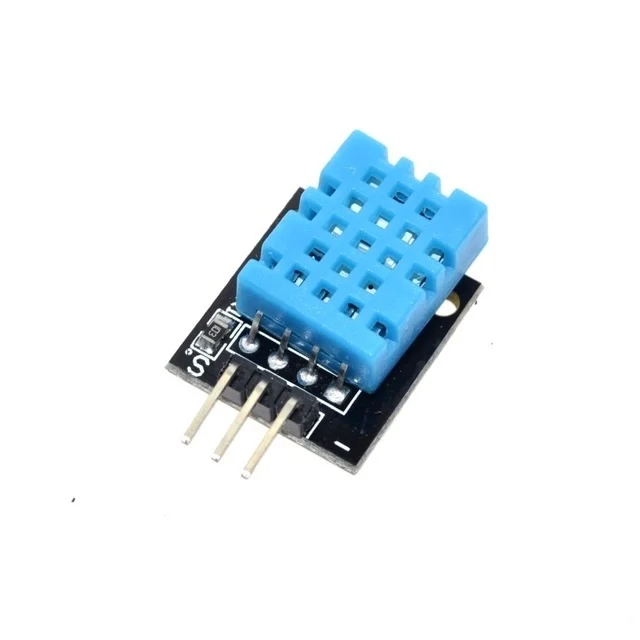
DHT11 Temperature and Humidity Sensor Module
Add live temperature and humidity scrolling to your LED matrix project — a classic combo for weather display boards.

20A Range Current Sensor Module ACS712
Monitor power consumption and scroll live current readings on your MAX7219 matrix — perfect for energy monitoring projects.

LM35 Temperature Sensors
Simple analog temperature sensor — read the voltage, calculate temperature, and scroll it across your LED matrix in real time.
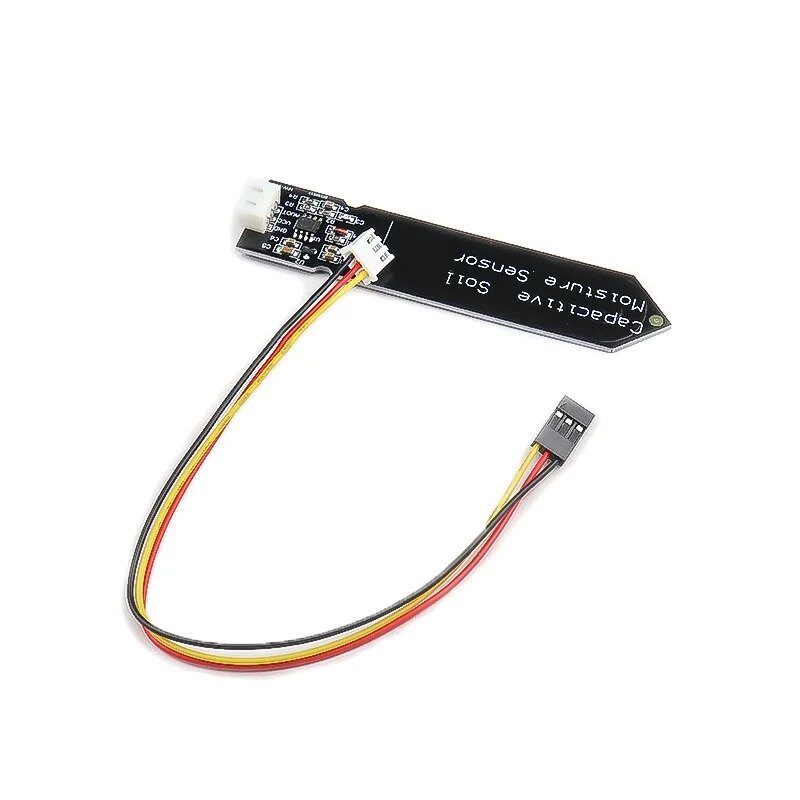
Capacitive Soil Moisture Sensor
Display live soil moisture percentage on a scrolling LED matrix — a great addition to any Arduino garden automation project.
FAQ
Q1: My LED matrix shows scrambled or mirrored output — how do I fix it?
Change the hardware type in the constructor. Try switching between MD_MAX72XX::FC16_HW, MD_MAX72XX::GENERIC_HW, and MD_MAX72XX::PAROLA_HW until the output is correct. FC16 works for the vast majority of modules sold in India.
Q2: How do I scroll text received from Serial/Bluetooth?
Store incoming serial characters into a char array buffer, then pass that buffer to P.displayScroll(). Use Serial.readStringUntil('n') to grab a full line, convert with .toCharArray(), and update the Parola text buffer via P.setTextBuffer().
Q3: Can I use MAX7219 with ESP8266 or ESP32?
Yes. Use the same library. For ESP8266, use GPIO13 (MOSI), GPIO14 (CLK), and any pin for CS. For ESP32, use the VSPI or HSPI pins. Make sure to power the module from the 5V Vin pin, not the 3.3V pin, for proper LED brightness.
Q4: What is the difference between 4-in-1 and single MAX7219 modules?
A 4-in-1 module has 4 daisy-chained 8×8 matrices on a single PCB (32×8 pixels total). It is much more convenient than chaining 4 separate boards. Set MAX_DEVICES 4 for 4-in-1 and MAX_DEVICES 1 for single modules.
Q5: Why is my scrolling text very slow even with low delay values?
Check if you are using delay() inside the loop instead of the non-blocking displayAnimate() return value. MD_Parola is designed to be used without delay() — call P.displayAnimate() repeatedly in your loop and let it return true only when animation is complete.
Start Your LED Matrix Project Today
MAX7219 8×8 LED matrix modules combined with Arduino offer one of the best visual impact per rupee ratios in hobby electronics. Chain four modules together for scrolling text, add a sensor, and you have a complete display system for under ₹500.
Find display modules and compatible sensors at Zbotic.in — India’s trusted source for maker components.





Add comment