
Table of Contents
- Introduction: The Battery Decision That Defines Your Solar System
- Lead Acid Batteries: The Proven Workhorse
- Lithium Batteries: The Modern Contender
- Head-to-Head Comparison
- What Makes Sense in India
- Monitoring Your Solar Battery Bank
- Our Recommendation by Use Case
- Frequently Asked Questions
When building a solar energy storage system, the most consequential decision you will make is choosing between lead acid vs lithium battery for your solar project. This single choice affects your upfront cost, system performance, maintenance burden, available capacity, lifespan, and total cost of ownership over many years. For Indian makers, hobbyists, and off-grid enthusiasts, the answer is not always obvious — both technologies have genuine strengths and genuine weaknesses that depend heavily on your specific situation. This comprehensive comparison gives you everything you need to make the right call.
Introduction: The Battery Decision That Defines Your Solar System
India’s solar revolution is well underway. From rooftop installations in cities like Pune and Jaipur to off-grid systems powering villages in Rajasthan and rural Maharashtra, solar panels are becoming mainstream. But a solar panel alone is only half the story. Without energy storage, you have power only when the sun shines. The battery bank is the heart of any off-grid or hybrid solar system.
For decades, lead acid batteries dominated this space — they were affordable, widely available, and well understood. Then lithium iron phosphate (LiFePO4) batteries arrived, offering dramatically better performance at a historically high price. That price gap has been closing rapidly. Today in 2024, making the right choice requires understanding what each technology truly offers — not marketing claims, but real-world numbers that matter for Indian conditions.
Lead Acid Batteries: The Proven Workhorse
Lead acid batteries have been powering the world since 1859. They are electrochemical cells based on lead dioxide (positive plate), sponge lead (negative plate), and sulfuric acid electrolyte. For solar applications, the relevant variants are:
- Flooded Lead Acid (FLA): The traditional wet cell battery. Requires regular distilled water top-ups and good ventilation (hydrogen gas is produced during charging). Cheapest upfront cost. Common in rural Indian solar setups.
- Sealed Lead Acid (SLA) / VRLA: Valve-regulated, maintenance-free. Two subtypes: AGM (Absorbent Glass Mat) and Gel. AGM handles moderate cycling well. Gel batteries are better for slow deep discharge but sensitive to high charge rates.
Typical specifications for a 12V 100Ah lead acid solar battery:
- Usable capacity: 50Ah (50% Depth of Discharge limit to preserve life)
- Cycle life at 50% DoD: 300–500 cycles
- Weight: 25–30 kg
- Charge efficiency: 80–85%
- Self-discharge: 5–15% per month
- Price (India): ₹5,000–₹8,000
The critical constraint with lead acid is the DoD limit. Discharging below 50% significantly shortens cycle life. This means a 100Ah rated lead acid battery only gives you 50Ah of usable energy in practice — making the effective cost per usable Wh much higher than the sticker price suggests.
Lithium Batteries: The Modern Contender
When people say “lithium battery” in the solar context, they almost always mean LiFePO4 (lithium iron phosphate), not the lithium cobalt oxide chemistry found in phone and laptop batteries. LiFePO4 is thermally stable, does not burn or explode under abuse, and is specifically designed for deep-cycle applications.
Typical specifications for a 12V 100Ah LiFePO4 solar battery:
- Usable capacity: 80–100Ah (80–100% Depth of Discharge safely)
- Cycle life at 80% DoD: 2,000–5,000 cycles
- Weight: 10–13 kg
- Charge efficiency: 98–99%
- Self-discharge: less than 3% per month
- Price (India): ₹18,000–₹30,000
The headline advantage is cycle life. A quality LiFePO4 battery rated for 3,000 cycles at 80% DoD, used daily in a solar system, lasts over 8 years. A lead acid battery at 400 cycles needs replacement every 1–2 years in a daily cycling solar application.
For hobbyist builds using 18650 Li-ion cells (not LiFePO4), the chemistry is different — higher energy density but fewer cycles (300–500). For serious solar storage, LiFePO4 is the lithium technology to use.
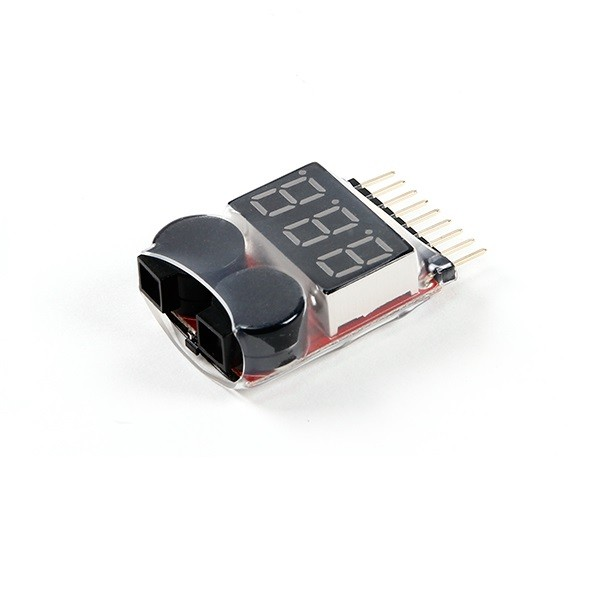
1-8S Lipo Battery Voltage Tester without Alarm
Monitor your solar battery bank cell voltages with this 1-8S tester. Essential for checking cell balance in lithium packs and catching failing cells early.
Head-to-Head Comparison
Cost: Upfront vs Lifetime
This is where the analysis gets interesting. A 100Ah lead acid battery costs roughly ₹6,000 but needs replacement every 1–2 years in daily solar use — that’s ₹6,000 every 18 months, or ₹4,000 per year. Over 8 years, you spend ₹32,000 on lead acid replacements (plus disposal costs).
A 100Ah LiFePO4 battery costs ₹22,000 upfront but lasts the full 8 years without replacement. Total cost: ₹22,000. The lithium battery is actually 30% cheaper over its lifetime in a daily-cycling application. This calculation changes if you are only cycling the battery a few times per week or the system sits unused for months.
Performance in Extreme Temperatures
India’s climate ranges from sub-zero Himalayan winters to 48°C desert summers. Lead acid batteries perform reasonably well across a wide temperature range (although capacity drops in cold). LiFePO4 cells do NOT like to be charged below 0°C — doing so permanently damages the cells through lithium plating. For installations in cold regions, you need a BMS with low-temperature charge cutoff. In hot climates (above 45°C), both chemistries degrade faster, but lithium handles heat better than lead acid.
Charge Speed
LiFePO4 accepts charge at 1C (100A for a 100Ah battery) without damage, allowing fast recharge on sunny days. Lead acid should not exceed 0.1–0.2C charge rate without shortening life significantly. This means lithium can capture more solar energy on partially cloudy days and recharge fully before sunset — lead acid may not complete a charge cycle on overcast days.
Self-Discharge and Long-Term Storage
Lead acid batteries self-discharge at 5–15% per month and must be kept on a maintenance charge (trickle charge) during storage. LiFePO4 loses less than 3% per month and can sit unused for several months without damage. For seasonal solar setups or backup systems that sit idle for months, lithium is far more forgiving.

25cm Lipo Battery Strap Belt Reusable Cable Tie Wrap
Secure your battery cells in a solar bank with these durable reusable straps. Keeps cells firmly bundled and prevents mechanical damage during transport or vibration.
What Makes Sense in India
Several factors are specific to the Indian market that influence this decision:
Grid availability: In urban areas with reliable grid power, the solar system may only cycle shallowly (30–40% DoD) and rarely. In this case, lead acid performs reasonably well and the cost advantage of lithium is reduced. For off-grid rural installations where the battery cycles deeply every day, lithium is clearly better economics.
Local service and warranty: Lead acid batteries are serviced by any local battery shop or auto electrician. LiFePO4 batteries require understanding the BMS and cell voltage balancing — skills that are growing in availability but still limited in tier-2 and tier-3 cities. Factor in your ability to troubleshoot before choosing.
Import and local manufacturing: Many LiFePO4 batteries sold in India are assembled from Chinese cells. Quality varies enormously. Always verify the BMS specifications, rated cycle life, and warranty terms. Stick to brands with Indian support or build your own pack from verifiable cells.
Duty cycle and load type: For lighting, fans, and phone charging (light, continuous loads), both chemistries work. For inverter-based loads like refrigerators, water pumps, or computers (high surge currents), lithium’s low internal resistance is a significant advantage — less voltage sag under load means better appliance performance.
Monitoring Your Solar Battery Bank
Regardless of which chemistry you choose, monitoring is essential for long battery life. At minimum, you should track terminal voltage at rest (state of charge indicator). For lithium packs, a cell-level voltage monitor that shows individual cell voltages is important to catch imbalanced cells before they damage the pack.
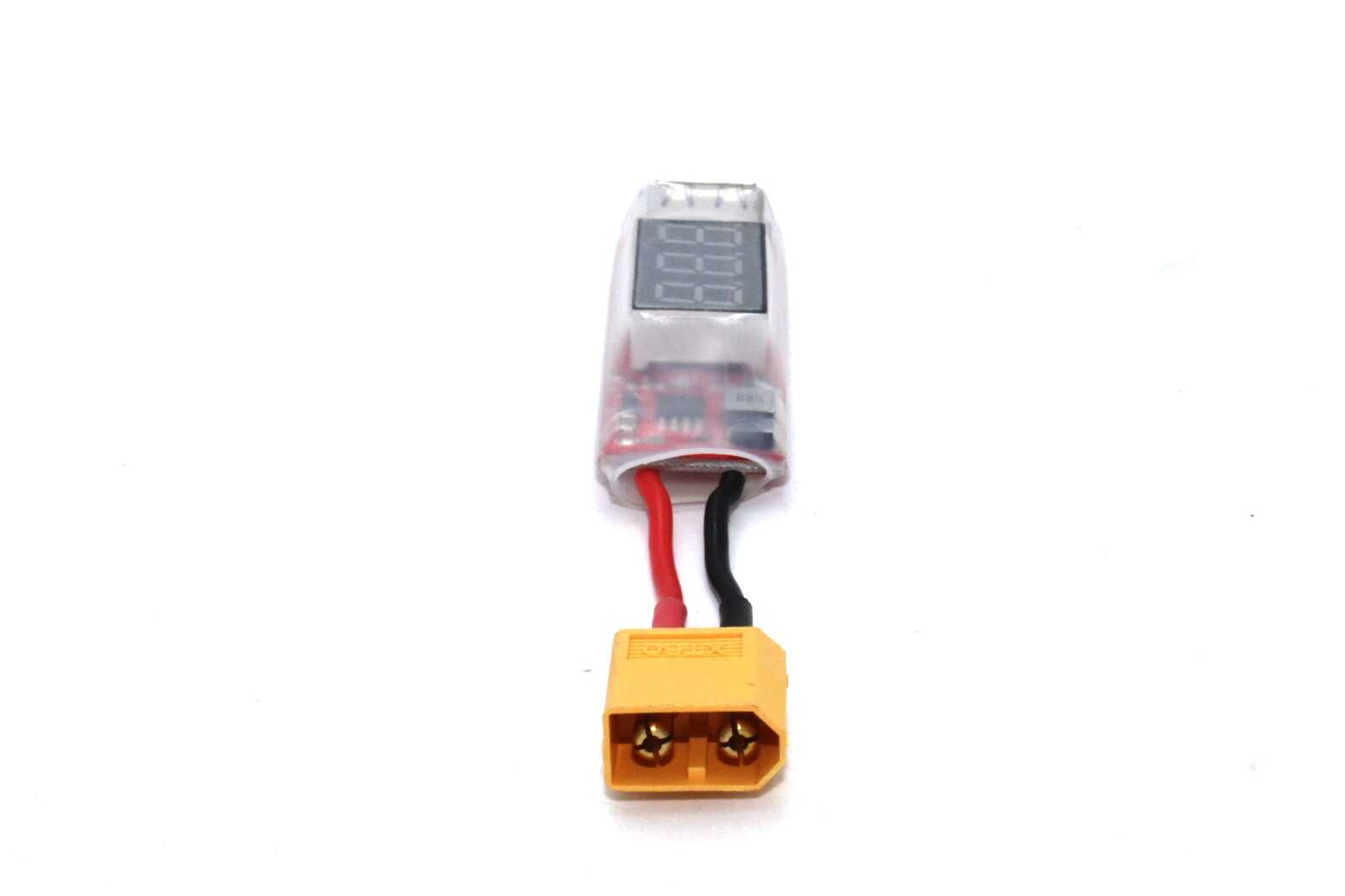
2S-6S Lipo Battery with XT60 Plug to USB Cellphone Charger Adapter with Voltage Display
Use your lithium solar battery pack to charge phones and devices via USB, with a built-in voltage display to monitor pack health at a glance.
Our Recommendation by Use Case
Choose Lead Acid if:
- Budget is severely constrained and you can maintain and replace batteries periodically
- You have access to reliable local service for flooded batteries
- The system cycles only 2-3 times per week (partial cycle applications)
- You are in a location where temperature never goes below 0°C and you want simplicity
Choose Lithium (LiFePO4) if:
- The system cycles daily — off-grid homes, remote stations, agricultural pumps
- Weight matters — rooftop, portable, or boat/RV installations
- You want minimal maintenance over a 5–10 year horizon
- You need fast charging to capture maximum solar energy each day
- You are building a DIY pack with 18650 cells (use a good BMS)
For most Indian off-grid solar makers in 2024, LiFePO4 is now the recommended choice. The lifetime cost advantage is real, performance is dramatically better, and the technology is mature enough to be reliable. Lead acid remains valid for low-budget, low-cycle applications.
Frequently Asked Questions
Can I mix lead acid and lithium batteries in the same solar bank?
No, you should never mix different battery chemistries or even different battery brands or ages in the same bank. They have different voltages, charge profiles, and internal resistances. Mixing causes the stronger battery to overcharge the weaker one, leading to premature failure and potential safety hazards.
What is the correct charge voltage for LiFePO4 vs lead acid in a solar charge controller?
LiFePO4: Bulk/absorption at 14.4–14.6V (12V system), float at 13.6V. Lead acid AGM: Bulk at 14.4–14.8V, float at 13.6–13.8V. Many modern MPPT solar charge controllers have a dedicated LiFePO4 preset. Always configure your controller correctly — wrong voltage settings are the single biggest cause of early battery failure.
How many 18650 cells do I need to replace a 12V 100Ah lead acid battery?
A 12V 100Ah lithium pack uses 4 cells in series (3.2V nominal LiFePO4, or 3.7V for Li-ion) and multiple parallel strings. For 100Ah at 12V using 3000mAh 18650 cells: you need 4S × 34P = 136 cells. This is why most makers buy pre-built LiFePO4 prismatic cells for solar applications rather than using 18650 cells.
How do I safely dispose of old lead acid batteries in India?
Lead acid batteries are covered under India’s Battery (Management and Handling) Rules. Any authorised battery retailer is obligated to accept old batteries for recycling — many will also give a small exchange value. Never dump lead acid batteries in open land or water; lead is highly toxic to soil and groundwater.
Can lithium batteries work with an existing lead acid solar inverter?
Yes, with caveats. You need to reconfigure the inverter’s charge and low-voltage cutoff settings for LiFePO4 chemistry. Some older inverters do not allow sufficient flexibility in voltage settings and may overcharge or under-protect lithium banks. Check your inverter’s manual before switching.
Make the Right Battery Choice for Your Solar Project
The lead acid vs lithium decision for solar projects ultimately comes down to your budget horizon, usage pattern, and maintenance appetite. For most Indian off-grid solar applications, LiFePO4 wins on economics when you count the full lifetime cost. For light-cycling, budget-constrained applications, lead acid is still a valid choice. Whatever you choose, shop for quality components — batteries, BMS boards, chargers, and monitoring tools — at Zbotic.in and build a solar system that powers your projects reliably for years.





Add comment