
FPV Drone LiPo Battery Maintenance: Storage and Longevity Guide
Your LiPo batteries are quite possibly the most expensive consumable in your FPV drone hobby. A quality 4S 1500mAh FPV pack costs ₹2,500–5,000, and if you are flying seriously you might have six to twelve packs in your bag. Treat them poorly and you will be replacing them every three to four months. Treat them right and the same packs can last two to three years with hundreds of cycles without significant capacity degradation.
This guide covers everything — proper charging procedures, storage voltage, temperature management in India’s challenging climate, physical inspection routines, parallel charging safety, and what to do when a pack starts to go bad. Whether you are a weekend freestyle pilot in Bengaluru or a professional FPV cinematographer running multiple packs daily, this information will save you real money and, importantly, keep you safe.
1. Understanding LiPo Chemistry: Why They Fail
Lithium Polymer batteries fail in two main ways: capacity degradation (the pack holds less charge over time) and internal resistance increase (the pack cannot deliver current as quickly, causing voltage sag under load). Both are driven by the same underlying mechanisms:
Lithium Plating
When charged too fast or at too low a temperature, metallic lithium deposits form on the anode rather than intercalating into the graphite structure. These deposits are irreversible and reduce capacity while increasing resistance. They can also cause internal short circuits — a fire risk.
Electrolyte Degradation
The liquid electrolyte inside a LiPo degrades over time, especially at high temperatures. This is why batteries stored in hot cars or charged immediately after landing (when they are still hot) age faster. The electrolyte breakdown produces gases — this is what causes puffing/swelling.
SEI Layer Growth
A Solid Electrolyte Interphase (SEI) layer naturally forms on the anode during the first few cycles. This layer is actually protective — it prevents further electrolyte decomposition. But under thermal stress, over-charge, or deep discharge, the SEI layer continues growing, increasing internal resistance.
Key Takeaway
The three enemies of LiPo longevity are: heat, overcharge/over-discharge, and high current stress. Everything in this guide is aimed at minimising these three factors.
2. Charging LiPo Batteries the Right Way
2.1 Always Use a Balance Charger
Never charge a LiPo pack without using balance charging mode, especially for packs with more than one cell. Individual cells in a pack will drift apart in voltage over time. Without balance charging, one cell may reach 4.2V (maximum) while another is still at 3.8V, resulting in an overall voltage that seems fine but with one overcharged cell that will degrade faster and create a fire risk.
2.2 Charge at 1C (Standard) or Maximum 2C (Emergency)
The C-rating in charging context refers to the fraction of the battery’s capacity used as charge current. A 1500mAh pack charged at 1C receives 1.5A of charge current — this is the standard, safest rate. At 1C, a typical FPV LiPo charges in about 60 minutes and generates minimal heat.
Charging at 2C (3A for a 1500mAh pack) is faster but accelerates lithium plating and heat generation. Reserve it for when you absolutely need a quick top-up at an event. Never charge at higher than 2C unless your pack’s label specifically states it is a high-charge-rate pack (some competition packs are rated for 5C charging).
2.3 Never Leave Charging Batteries Unattended
This is the most important safety rule. LiPo thermal runaway can start within seconds and reach catastrophically dangerous temperatures within minutes. Always charge in a LiPo-safe charging bag or fireproof ceramic container. Never charge indoors in living spaces without a safety container. Never charge overnight or while sleeping.
2.4 Never Charge a Warm Pack
After a flight, especially an aggressive one, LiPo packs can reach 50–60°C. Wait until the pack returns to ambient temperature (typically 20–30 minutes) before charging. Charging a warm pack accelerates SEI layer growth and electrolyte degradation significantly.
2.5 Maximum Cell Voltage
The absolute maximum voltage for a standard LiPo cell is 4.20V. HV (High Voltage) LiPo cells can charge to 4.35V — never charge a standard cell to HV voltage. Exceeding the maximum voltage even briefly causes immediate and permanent cathode degradation.
Many experienced pilots charge to only 4.15V per cell to extend pack life — this sacrifices roughly 5% of capacity but can dramatically extend the number of cycles before significant capacity loss.
Charging Voltage Reference
| Pack | Min Safe V | Storage V | Charge Max V | HV Charge Max |
|---|---|---|---|---|
| 1S | 3.0V | 3.8V | 4.2V | 4.35V |
| 2S | 6.0V | 7.6V | 8.4V | 8.7V |
| 3S | 9.0V | 11.4V | 12.6V | 13.05V |
| 4S | 12.0V | 15.2V | 16.8V | 17.4V |
| 6S | 18.0V | 22.8V | 25.2V | 26.1V |
3. Storage Voltage: The Most Important Rule
If there is one single practice that will most extend the life of your LiPo batteries, it is storing them at the correct storage voltage. The ideal storage voltage is 3.80–3.85V per cell. This is the point at which electrochemical stress on both the anode and cathode is minimised.
What Happens When You Store at Full Charge (4.2V)?
Storing a fully charged LiPo at 4.2V per cell causes the cathode (positive electrode) to remain in a highly oxidised state. Over weeks and months, this leads to:
- Cathode material dissolution into the electrolyte
- Accelerated SEI layer growth
- Capacity loss at a rate 3–5x faster than proper storage
What Happens When You Store Fully Discharged (Below 3.0V)?
Copper current collector corrosion begins below approximately 3.0V per cell. Once a cell has gone below 2.5V for any significant time, copper dissolution can create internal short-circuit paths that are dangerous. Never leave a pack in a discharged state for more than 24 hours.
The Storage Discharge Routine
After any flying session, if you will not fly again within 24 hours, discharge your packs to storage voltage. Most quality balance chargers (iCharger, ISDT, SkyRC) have a dedicated Storage function that will charge or discharge to 3.85V automatically. Set it and forget it.
If your charger lacks a storage function, discharge on your drone by hovering at 50% throttle until the voltage alarm activates (typically set to 3.7V/cell), then bring the pack down to 3.8V manually before storing.
Long-Term Storage (Over 1 Month)
For packs stored over a month (like during the monsoon season when flying is limited), check voltage every 3–4 weeks and top up or discharge to storage voltage as needed. LiPo cells self-discharge at roughly 1–3% per month at room temperature. In hot Indian summers (40°C+ storage), self-discharge accelerates — check more frequently.
4. Temperature Management for Indian Climates
India’s diverse climate presents unique challenges for LiPo management that European or North American guides rarely address.
4.1 Summer Flying (35–48°C Ambient)
In peak Indian summer, ambient temperatures in Rajasthan, Gujarat, and parts of Maharashtra and Andhra Pradesh routinely exceed 45°C. At these temperatures:
- LiPo packs already start the flight at an elevated temperature
- Internal resistance is temporarily lower (packs feel punchier), but thermal runaway risk is higher
- Never leave packs in a hot car — temperatures inside a parked car in Indian summer can exceed 70–80°C, which will permanently damage and potentially cause a fire
- Keep packs in a cooler bag with an ice pack during the drive to your flying site
- Reduce your pack count per session — flying 8 packs back-to-back on a 45°C day will overheat your packs
4.2 Charging in Hot Weather
Reduce charge rate to 0.5C on days above 38°C ambient. The pack will already be warm, and a full 1C charge adds significant additional heat. Charge in the shade or indoors with a fan.
4.3 Monsoon Season
High humidity in monsoon does not directly harm LiPo cells (they are sealed), but it does cause corrosion on connectors and balance lead contacts. After every monsoon flying session, dry your packs with a cloth and check balance connector pins for oxidation. Apply a thin coat of contact cleaner spray to connector pins.
4.4 Cold Weather (North India, High Altitude)
At temperatures below 10°C (parts of North India in December-January), LiPo internal resistance increases dramatically. Warm your packs in an inside jacket pocket before flying. Never charge a cold LiPo — wait until it has warmed to at least 15°C.
5. Physical Inspection: What to Look For
A regular visual inspection takes 2 minutes and can prevent a fire or crash. Check your packs before and after every flying session:
5.1 Swelling / Puffing
The most common visible sign of a degrading LiPo is swelling (also called puffing). A pack that has grown noticeably thicker than when new is generating internal gases from electrolyte decomposition. Mild puffing (less than 10% increase in thickness) may still be flyable but should be monitored closely. Significant puffing — when the pack feels noticeably squishy or balloon-like — means retire immediately. Never puncture or compress a swollen pack.
5.2 Wrinkles in the Outer Packaging
Wrinkles in the shrink-wrap or pouch indicate the internal structure has shifted. This can indicate internal short circuit risk. Retire the pack.
5.3 Balance Lead and Connector Condition
Check balance lead pins for bent or oxidised contacts. A loose balance connector during charging can cause inaccurate cell readings and overcharge one cell. Check XT60/XT30 connectors for heat discolouration (blackening) which indicates high-resistance connections — clean or replace.
5.4 Internal Resistance Check
Good quality chargers measure internal resistance (IR) per cell. Track this over time. New quality FPV packs have IR of 3–8 mΩ per cell. When IR consistently exceeds 25–30 mΩ per cell, the pack’s performance has degraded significantly. Retire when cells are inconsistent (one cell at 8 mΩ, another at 35 mΩ) as this indicates the pack is unbalanced internally.
6. Parallel Charging: Benefits and Risks
Parallel charging boards allow you to charge multiple packs simultaneously from a single charger. This saves time dramatically — instead of four separate charges of 45 minutes each, you charge all four in one 90-minute session. However, it carries risks that must be managed:
Golden Rules of Parallel Charging
- Only parallel charge packs of the same cell count (2S with 2S, 4S with 4S). Connecting different cell count packs in parallel will create an instant short circuit.
- Only parallel charge packs within 0.1V per cell of each other. Connect a 3.5V/cell pack to a 4.1V/cell pack and you will get a dangerous equalisation current spike. Always check voltage and equalise manually if needed before connecting.
- Never leave a parallel charge board unattended. The risks are multiplied — if one pack fails, it can take out others.
- Use a quality parallel board with proper fusing. Cheap parallel boards without individual fuses on each parallel port are a fire hazard.
- Set charge rate for the combined capacity. If charging four 1500mAh packs in parallel at 1C, set your charger to 6A (4 × 1.5A).
7. Flying Practices That Preserve Your Packs
How you fly has as much impact on battery longevity as how you store and charge:
7.1 Voltage Cutoff Settings
Set your flight controller’s low-voltage warning at 3.5V per cell and failsafe at 3.3V per cell. Landing when the alarm sounds (not after one more punch-out) prevents deep discharge that permanently damages cells. In Betaflight, configure the low-voltage LED/buzzer; in ArduPilot, use the battery failsafe parameters.
7.2 Avoid Full-Throttle Punchouts on Cold Packs
The first 30 seconds of each flight should be gentle — hover and light flying to warm up the cells. Immediate full-throttle on a cold pack (especially in winter) causes severe voltage sag that stresses cells. This is called a warm-up lap in racing.
7.3 Monitor Voltage During Flight
Use an OSD (On-Screen Display) with live voltage readout in your FPV goggles. Watching per-cell voltage during flight — not just total voltage — allows you to spot a failing cell before it damages the pack or causes a mid-flight failure.
7.4 Do Not Fly to Zero
Aim to land with at least 3.6–3.7V per cell. Consistently landing at 3.5V or lower significantly shortens pack life, even if you do not technically over-discharge. The marginal extra flight time is not worth the reduced lifespan.

35A V2.1 2-5S 4-in-1 Brushless ESC for FPV Racing
Compact 4-in-1 ESC that supports 2S to 5S LiPo packs. Efficient FETs reduce heat and motor current peaks, which means less stress on your LiPo batteries during aggressive flying.
8. Over-Discharge Recovery and When to Retire Packs
8.1 Recovering a Pack Below 3.0V Per Cell
If a pack has been left discharged and drops below 3.0V per cell, most balance chargers will refuse to charge it for safety. Many pilots use the “Ni-MH trick” — set the charger to NiMH mode and trickle charge at 0.1A for 10–15 minutes to bring the voltage above 3.0V, then switch back to LiPo balance charge mode. This works but should only be done once — a pack that has gone below 3.0V has sustained damage and should be tested carefully before trusting in flight.
Warning: Never attempt recovery of a pack below 2.0V. At this point, copper dendrite growth has likely occurred and the pack is an internal short-circuit risk.
8.2 When to Retire a Pack
Retire a LiPo pack immediately if any of the following are true:
- Visible swelling that has increased significantly from previous check
- Any cell shows physical damage, puncture, or electrolyte leakage
- Pack becomes very hot (over 60°C) during routine charging or flying
- Capacity has dropped below 80% of rated capacity
- Any cell’s internal resistance is consistently above 30 mΩ
- Cell voltage divergence during flight exceeds 0.3V between cells
9. Safe LiPo Disposal in India
Disposing of LiPo batteries is unfortunately not straightforward in India, as dedicated e-waste recycling infrastructure for drone batteries is limited. Here is the responsible approach:
- Fully discharge the pack: Submerge in a bucket of salt water (1 cup salt per litre) and leave for 2 weeks. The salt water gradually discharges the pack to near-zero and prevents any fire risk.
- Verify discharge: Check with a multimeter — if under 0.5V, it is safe to dispose.
- Puncture and dispose: Once fully discharged, puncture the pouch in a well-ventilated outdoor area to release any remaining pressure, then wrap in paper towel and place in a plastic bag.
- E-waste centres: Contact your city’s Municipal Corporation for authorised e-waste collection centres. Major cities like Mumbai, Delhi, Bengaluru, Pune, and Hyderabad have registered e-waste handlers under CPCB’s E-Waste Management Rules.
Never throw LiPo batteries in regular household waste or burn them. They contain toxic fluorine compounds and heavy metals that are hazardous to soil and groundwater.
10. Recommended Products
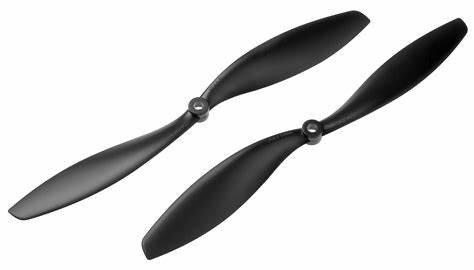
1045 Carbon Fiber Propeller CW&CCW (Pair)
Lightweight carbon fiber 10×4.5 props. Efficient props reduce motor current draw, directly reducing the stress on your LiPo batteries and extending flight time per pack.
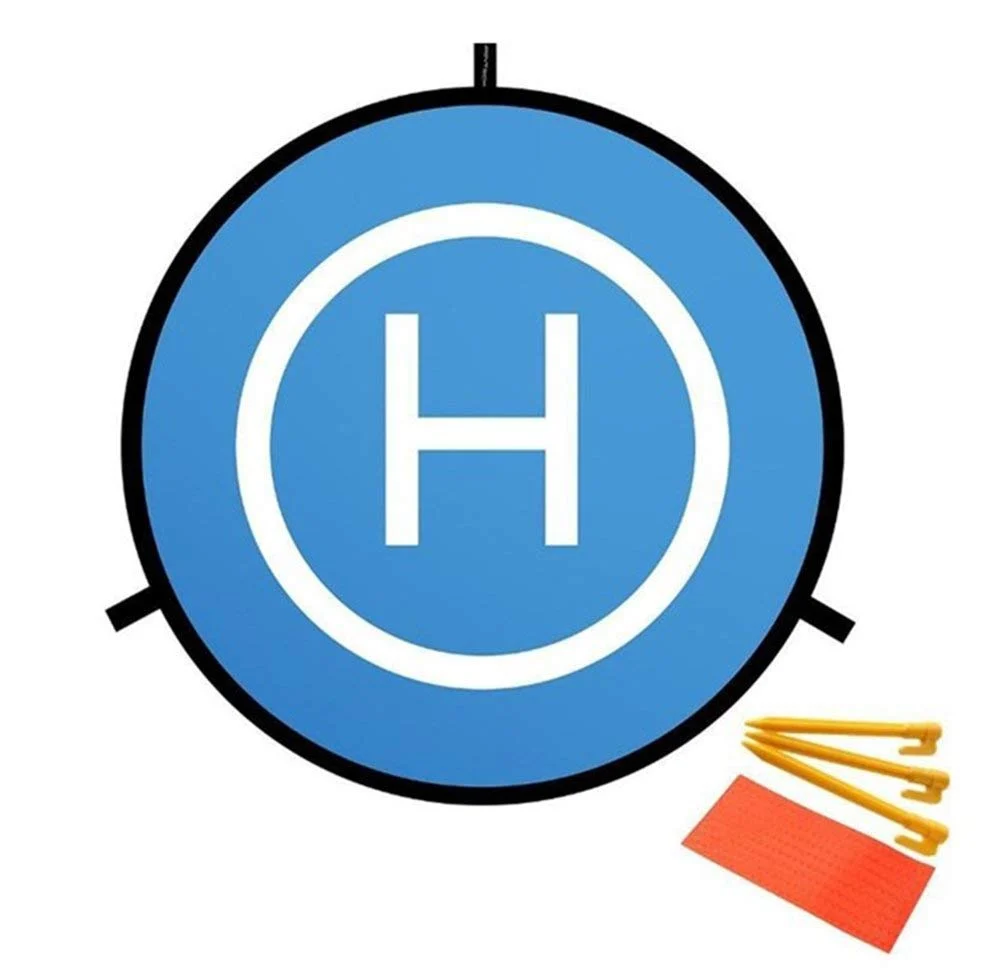
110cm Fast-fold Landing Pad / Helipad for RC Drone
A clean landing surface prevents dust, pebbles, and debris from contacting your LiPo battery’s connector and balance leads — a simple accessory that prevents connector damage.
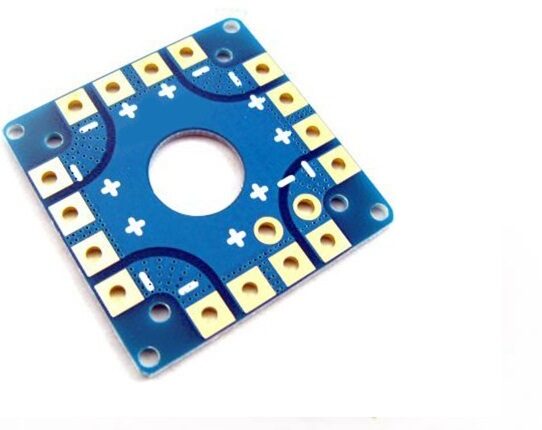
100A Multirotor ESC Power Distribution Battery Board
Clean PDB with low-resistance traces reduces voltage drop from the LiPo to your ESCs. Less resistance means lower heat in the power path, which reduces the peak current stress on your battery.
11. Frequently Asked Questions
Q: How many cycles should a good FPV LiPo last?
A: A quality FPV LiPo from brands like GNB, CNHL, or Tattu, properly maintained, should deliver 200–400 cycles before capacity drops below 80% of rated. Packs that are consistently over-discharged, stored at full voltage, or flown hard in heat may last only 50–100 cycles.
Q: Is it safe to fly a slightly puffed LiPo?
A: Minor puffing (pack is still rigid, just slightly thicker) is common and often considered acceptable by experienced pilots for freestyle use. However, a puffed pack has degraded and should be monitored with IR measurements. Any significant puffing — pack feels soft or squishy — is a retirement trigger. Never fly a puffed pack in a racing context where full-throttle is sustained, as the heat generated can accelerate the situation.
Q: Can I store LiPo batteries in the fridge in Indian summer?
A: Fridge storage (5–10°C) is technically beneficial for long-term storage (it dramatically slows the self-discharge and degradation rate). However, condensation when removing from the fridge is a real risk. If you use fridge storage, allow 30–45 minutes at room temperature before charging or flying to avoid moisture condensation on contacts. Use airtight bags to prevent moisture ingress during fridge storage.
Q: My 6S pack has one cell that charges to 4.25V even after balance charging. What does this mean?
A: A cell consistently overcharging during balance charging indicates a faulty balance charger circuit or a damaged cell with changed capacity. The charger is trying to balance the cells based on voltage but one cell has a much lower capacity and reaches 4.2V sooner. Verify with a separate balance checker. Retire the pack — an overcharged cell is a fire risk.
Q: What is the difference between LiPo and Li-Ion for drones?
A: LiPo (Lithium Polymer) batteries offer high discharge rates (typically 25–100C) suitable for FPV racing but have lower energy density. Li-Ion (21700/18650 cells) have higher energy density (longer flight times) but lower discharge rates (5–15C) — suitable for long-range or cine drones. FPV racing and aggressive freestyle uses LiPo; endurance and long-range builds increasingly use Li-Ion.
Q: Is it safe to transport LiPo batteries on Indian domestic flights?
A: DGCA and most Indian carriers permit LiPo batteries up to 100Wh in cabin baggage without prior approval, and 100–160Wh with airline approval (limit of 2 per passenger). Batteries over 160Wh are prohibited in cabin baggage. They must be individually protected against short circuits. Check-in hold baggage restrictions are stricter. Always check with your specific airline before travel.
Keep Your Drone Flying Longer
Zbotic stocks FPV components, ESCs, power distribution boards, and accessories to keep your builds running at their best. Fast shipping across India — get your parts delivered in 2–5 days.







Add comment