
Your drone’s battery is the most critical — and most often misunderstood — component in any build. Choose wrong and you either crash from power sag at a critical moment, or you lug around extra weight for negligible extra capacity. Choose right and your drone flies longer, faster, or both, while staying safe in your hands and your home.
In India, drone builders face a specific challenge: genuine, high-quality LiPo and Li-Ion cells from reputable brands are harder to source domestically than in the US or Europe. Pricing can be two to three times the international rate due to import duties, and counterfeit cells (particularly sub-standard 18650s and relabelled LiPos) are common. This guide helps you make sense of the options and buy confidently for 2026.
Battery Chemistry Basics
All consumer drone batteries use lithium-based chemistry. Within that, there are several variants worth knowing:
- LiPo (Lithium Polymer): Flat, pouch-format cells with a polymer electrolyte. Dominant in FPV racing and hobby drones. High power density, moderate energy density.
- LiHV (Lithium High Voltage): A variant of LiPo that charges to 4.35 V per cell instead of the standard 4.2 V, giving ~5–8% more energy per charge. Common in modern FPV builds.
- Li-Ion (Lithium Ion): Cylindrical cells (18650, 21700, 26650 formats) with liquid electrolyte. Higher energy density than LiPo but lower maximum discharge rate. Dominant in long-range and endurance builds.
- LiFe (Lithium Iron Phosphate): Very safe, very stable chemistry used in some receiver batteries and ground vehicles. Lower energy density — rare in aerial drones.
For 99% of Indian drone builders, the relevant choice is LiPo vs Li-Ion, and that choice depends entirely on what kind of flying you do.
LiPo Batteries Explained
LiPo is the default battery technology for multirotor drones because it can deliver very high discharge currents in a compact, flat package. A racing drone motor pulling 30 A at peak demands a battery that won’t voltage-sag under that load — and LiPo delivers.
LiPo Cell Specifications
- Nominal voltage: 3.7 V per cell
- Fully charged: 4.2 V per cell (4.35 V for LiHV)
- Minimum safe voltage: 3.5 V per cell (never discharge below 3.3 V)
- Storage voltage: 3.8–3.85 V per cell (for storage longer than a few days)
LiPo Advantages
- Very high discharge rates (30C–120C in quality packs)
- Compact, low-profile packaging
- Wide range of capacities and cell counts available
- Compatible with standard LiPo chargers
- Relatively inexpensive for entry-level packs
LiPo Disadvantages
- Lower energy density than Li-Ion (180–220 Wh/kg vs 250–280 Wh/kg)
- Shorter cycle life (150–300 cycles for quality packs)
- Fire risk if punctured, overcharged, or over-discharged
- Must be stored at storage voltage — neglected full LiPo degrades rapidly
- Sensitive to cold temperatures (capacity drops below 15°C)
Li-Ion Batteries Explained
Li-Ion cells in cylindrical formats (most commonly 18650 — 18mm diameter, 65mm long — and the newer 21700 format) are the batteries that power your mobile phone, laptop, and electric vehicle. For drones, they are assembled into custom packs matched to the required voltage and capacity.
Li-Ion Cell Specifications
- Nominal voltage: 3.6–3.7 V per cell
- Fully charged: 4.2 V per cell
- Minimum safe voltage: 2.5–3.0 V per cell (much lower than LiPo)
- Typical capacity: 3000–5000 mAh per 21700 cell
Li-Ion Advantages
- Higher energy density — 20–30% more capacity per gram vs LiPo
- Much longer cycle life (500–1,500 cycles for quality cells)
- More stable chemistry — safer than LiPo under abuse
- Better cold temperature performance
- Popular cells (Samsung 40T, Molicel P42A, Sony VTC6) are widely available and well-tested
Li-Ion Disadvantages
- Lower peak discharge rate (typically 10–30A per cell vs 50–100A+ for LiPo)
- Heavier per watt of power delivered at high discharge rates
- Requires custom pack assembly (welding or spot-welding nickel strips) — not beginner-friendly
- Cylindrical form factor makes pack integration harder than flat LiPo
LiPo vs Li-Ion: Head-to-Head
| Property | LiPo | LiHV | Li-Ion (21700) |
|---|---|---|---|
| Energy Density | ~200 Wh/kg | ~210 Wh/kg | ~260 Wh/kg |
| Max C Rating | 30C–120C | 30C–100C | 5C–15C |
| Cycle Life | 150–300 | 150–250 | 500–1,500 |
| Safety | Moderate | Moderate | Higher |
| Cold Performance | Poor (<15°C) | Poor (<15°C) | Good |
| Indian Availability | Good | Moderate | Cells available, packs less so |
| Best For | Racing, FPV freestyle | Racing, performance | Long range, endurance, photography |
Understanding Cell Count (1S to 12S)
Drone batteries are rated by the number of cells in series, denoted by a number followed by S. Each cell adds ~3.7 V nominal voltage:
- 1S (3.7 V): Nano/micro whoops, tiny brushless builds under 65mm
- 2S (7.4 V): Small brushless builds, 75–100mm class
- 3S (11.1 V): Beginner quad builds, older 250mm class racers
- 4S (14.8 V): The current standard for 5-inch FPV quads and most hobby multicopters
- 6S (22.2 V): High-performance 5-inch and all larger builds. More efficient at same power output, lower current draw
- 10S–12S (37–44 V): Agricultural and professional large multirotor platforms
Higher voltage (more cells in series) at the same power output means lower current draw. Lower current means less copper loss in wires and ESC FETs, resulting in higher efficiency. This is why agricultural drones (requiring hours of endurance) often use 10S or 12S systems.
C Rating: What It Actually Means
C rating is the discharge rate multiplier. A 1C discharge of a 1,000 mAh battery = 1,000 mA (1A) continuous. A 50C discharge of the same pack = 50A continuous.
The formula: Maximum safe continuous current (A) = Capacity (Ah) × C rating
Example: 1,500 mAh 4S 80C pack → 1.5 × 80 = 120 A maximum continuous. This is enough for four motors drawing 30 A each at peak.
The C Rating Marketing Problem
Here is the honest truth about C ratings: they are largely marketing fiction. There is no standardised test for C ratings. A battery claiming 100C rarely delivers that sustainably without significant voltage sag and heat. The actual useful discharge rate of most consumer LiPo packs is 30–50% of the stated C rating.
What to actually look at:
- Internal resistance (mΩ): A freshly charged quality pack should measure 3–8 mΩ per cell. Higher IR = more voltage sag and heat.
- Voltage sag under load: Check community discharge tests (Rotor Riot, Joshua Bardwell YouTube). A 30C pack with low IR often outperforms a 100C pack with high IR.
- Brand reputation: Tattu R-Line, Cnhl Black, GNB, and Dinogy have well-documented real-world performance that C-rating labels alone cannot convey.
How to Choose the Right Battery for Your Drone
For FPV Racing / Freestyle (4S, 5-inch)
- Capacity: 1300–1550 mAh for tight racing, 1800–2200 mAh for freestyle
- C rating: 80–120C stated (actual ~40–60C usable)
- Weight: 150–200 g
- Chemistry: LiHV preferred for 5–8% more energy per charge
- Connector: XT60
For Long Range (4S–6S)
- Capacity: 3000–5000 mAh
- C rating: 35–50C (cruise current is low — high C not needed)
- Chemistry: Li-Ion packs if maximum endurance is priority; 35C LiPo if decent power is needed
- Connector: XT60 or XT90 for higher-capacity packs
For Photography Drones / Autonomous Platforms
- Capacity: 4000–10,000 mAh depending on platform size
- Voltage: Match to your motor and ESC specification (6S–12S for larger platforms)
- Connector: XT90 or AS150 for high-capacity packs
For Agricultural Drones (EFT E410P, E416P)
Agricultural drones like the EFT 10L and 16L frames operate on high-voltage batteries (typically 6S 12,000–22,000 mAh or multi-pack parallel configurations). They use purpose-built agricultural drone battery packs with smart BMS, balance leads, and ruggedised connectors designed for field use.
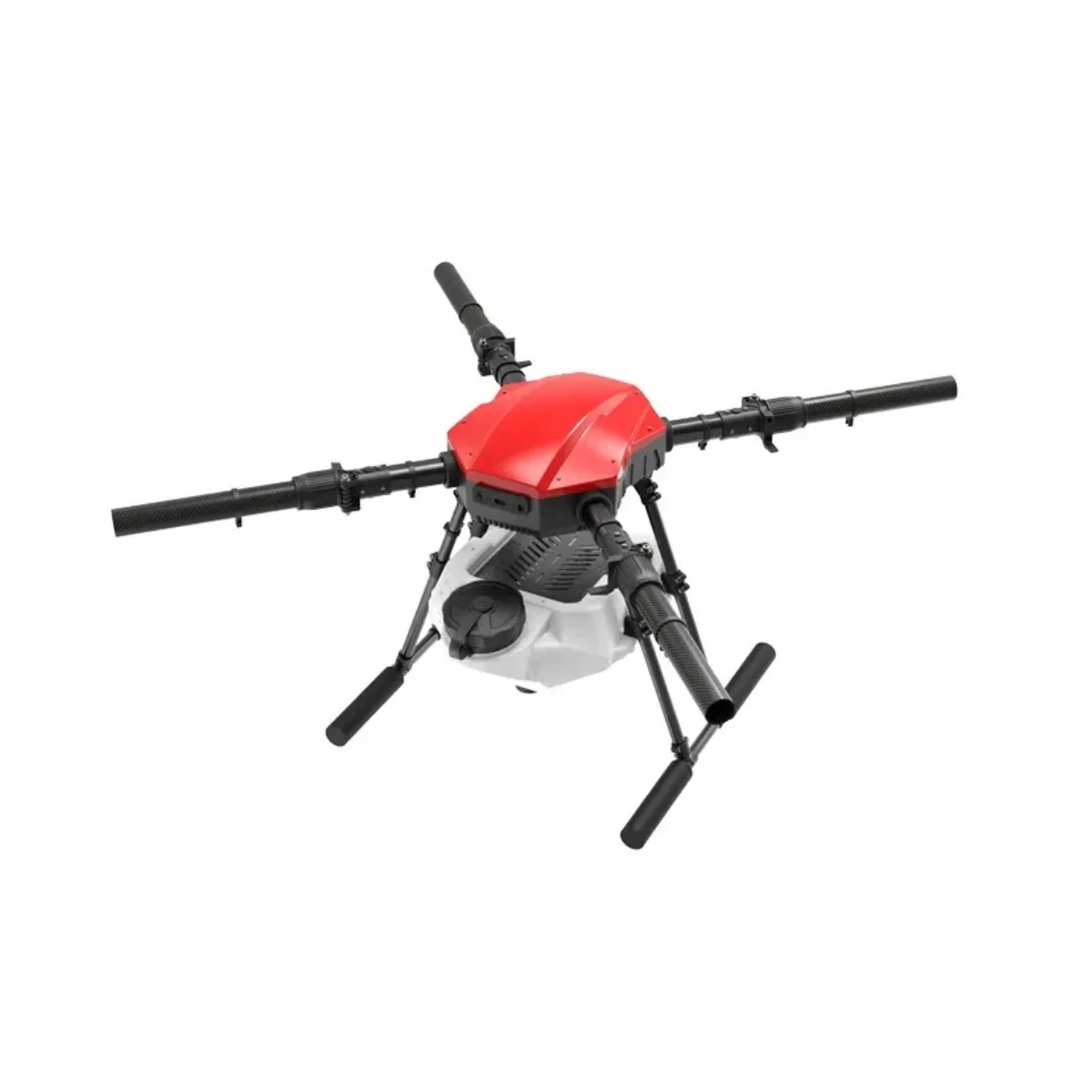
EFT E410P 10L 4 Axis Agricultural Drone Frame
A professional 10-litre agricultural sprayer frame designed for heavy-duty field operations. Pairs with large-capacity 6S batteries and high-power motors like the Hobbywing X6/X9 series for extended spraying missions.
View on Zbotic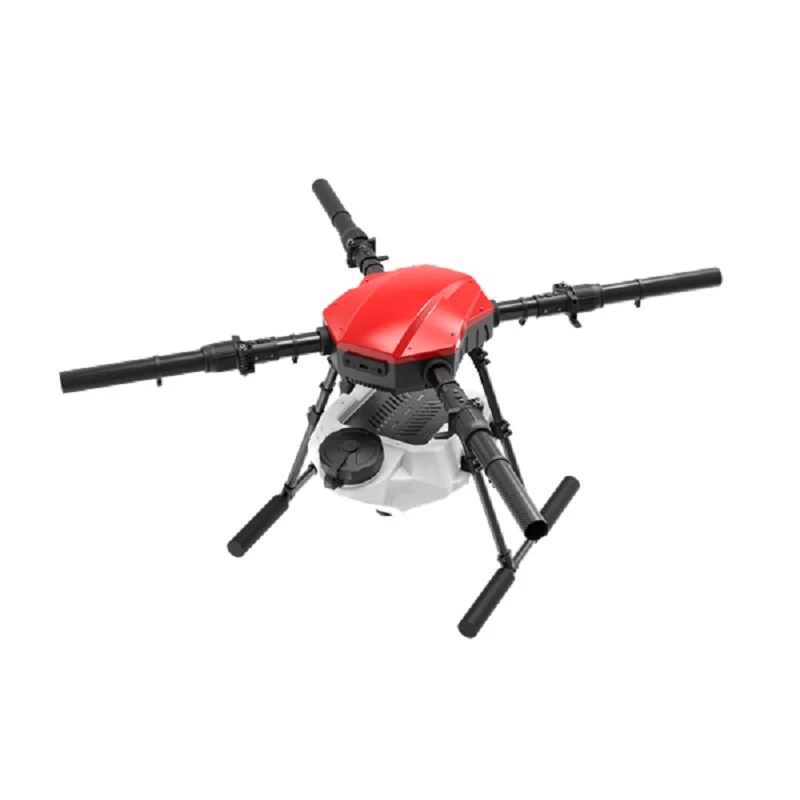
EFT E416P 16L 4 Axis Agricultural Drone Frame
A larger 16-litre capacity agricultural sprayer platform for heavy-duty precision agriculture applications. This frame class uses high-capacity, high-voltage battery systems for sustained field missions across Indian farmland.
View on ZboticBest Brands Available in India
LiPo Brands
| Brand | Tier | Best Known For | India Availability |
|---|---|---|---|
| Tattu R-Line | Premium | Racing, consistency | Import, ₹2,500–₹4,500 |
| GNB (Gaoneng) | Mid-High | Value, high C rating | Import, ₹1,800–₹3,500 |
| CNHL Black | Mid | Budget-performance balance | Import, ₹1,500–₹2,800 |
| Dinogy | Mid | Longevity, freestyle | Limited import |
| Turnigy / Zippy | Budget | Affordable, widely available | HobbyKing India |
Li-Ion Cells for Custom Packs
- Samsung INR21700-40T: 4,000 mAh, 35A continuous — the benchmark for drone Li-Ion packs
- Molicel P42A: 4,200 mAh, 45A continuous — higher discharge, preferred for powerful long-range builds
- Sony VTC6 (18650): 3,000 mAh, 30A — older standard but still competitive and available
In India, genuine 21700 cells are available through electronics importers and some Flipkart/Amazon listings — but verify authenticity. Many listings claim Samsung or LG cells but sell counterfeits with sub-standard real capacity.
LiPo Safety: Essential Rules for Indian Homes
LiPo batteries are genuinely dangerous if mishandled. Thermal runaway — where a compromised LiPo generates heat, which accelerates further reaction, which generates more heat in a runaway cycle — can produce temperatures over 500°C and sustained fire. In a typical Indian apartment building, this is catastrophic.
Follow these rules without exception:
- Never charge unattended. Always be in the room when LiPos are charging. Most LiPo fires happen during charging.
- Use a LiPo-safe bag or metal container. A purpose-built LiPo safe bag (available for ₹300–₹700) significantly contains a fire. A metal biscuit tin works in a pinch.
- Never charge below 3.5 V/cell or above 4.2 V/cell (4.35 V/cell for LiHV). A quality balance charger enforces these limits automatically.
- Store at storage voltage (3.8–3.85 V/cell). If you will not use a pack for more than 48–72 hours, storage-charge it. Full charge degrades cells over time; deep discharge is equally damaging.
- Inspect before every use. Puffed (swollen) LiPos have internal gas build-up from degradation. Do not fly a puffed LiPo. Dispose of it properly (fully discharge into a salt-water bucket, then recycle).
- Never charge in direct sunlight or in a hot car. Indian summers push ambient temperatures above 40°C — this accelerates chemical reactions inside the cells significantly during charging.
- Use a quality balance charger. A cheap AC charger with no balancing feature cannot detect individual cell voltage imbalances. Even a ₹1,500 ISDT or HTRC balance charger is a worthwhile investment.
Care and Maintenance for Maximum Lifespan
Indian drone builders often find LiPo packs degrade faster than international benchmarks suggest. The main culprits:
- Heat during storage: Storing fully charged packs in a hot room (35–40°C+ in summer) is one of the fastest ways to kill LiPos. Store in an air-conditioned room or at least in the coolest part of the house.
- Over-discharging in flight: Flying until the drone starts twitching or the battery alarm triggers is over-discharging. Set flight controller battery warnings at 3.6–3.7 V/cell and land at the first alarm.
- Unbalanced cells: Always balance-charge. Packs where cells are drifting apart in voltage should be balanced more frequently — large cell voltage deltas accelerate degradation.
- Incorrect charge rate: Charge at 1C unless in a hurry. A 2,200 mAh pack should charge at 2.2 A for 1C. High-speed charging (3–5C) is possible with quality packs but increases heat and reduces cycle life.
A well-maintained quality LiPo should give 200+ charge cycles before significant capacity loss. Poorly maintained packs from the same batch may last only 50–80 cycles.
Recommended Products from Zbotic
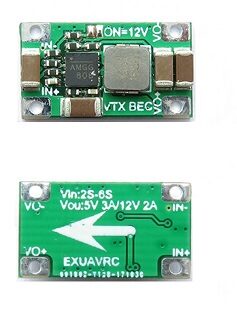
2-6S 5V 5A BEC For Quadcopter Drone
A 5V/5A switching BEC that powers your flight controller, receiver, and accessories from the main LiPo pack. Essential for builds where the ESC does not include a built-in BEC — prevents brownout crashes on high-draw systems.
View on Zbotic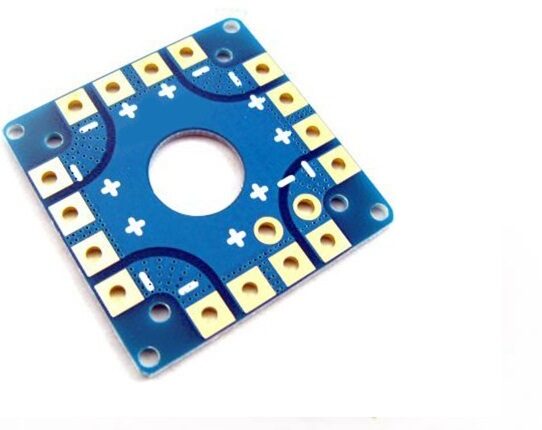
100A Multirotor ESC Power Distribution Battery Board For Quadcopter
A 100A-rated power distribution board that cleanly routes LiPo power to all four ESCs. Built-in filtering capacitors help reduce voltage spikes that can damage ESC FETs, especially important on high-discharge 4S and 6S systems.
View on Zbotic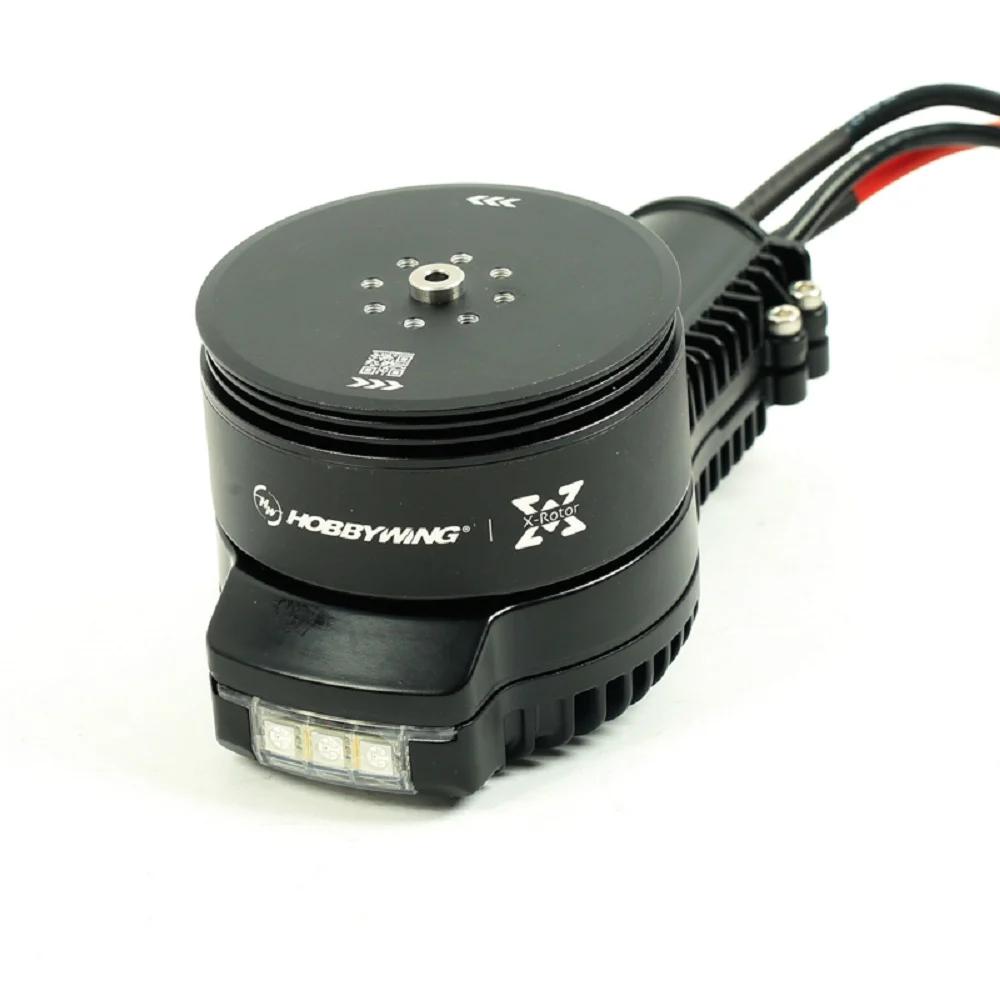
Hobbywing X6 Plus Motor CCW
A high-efficiency motor for large-format professional drones. Hobbywing X6 motors are the industry standard for agricultural and long-endurance multirotor platforms. Pairs with large-capacity battery packs for extended mission times.
View on Zbotic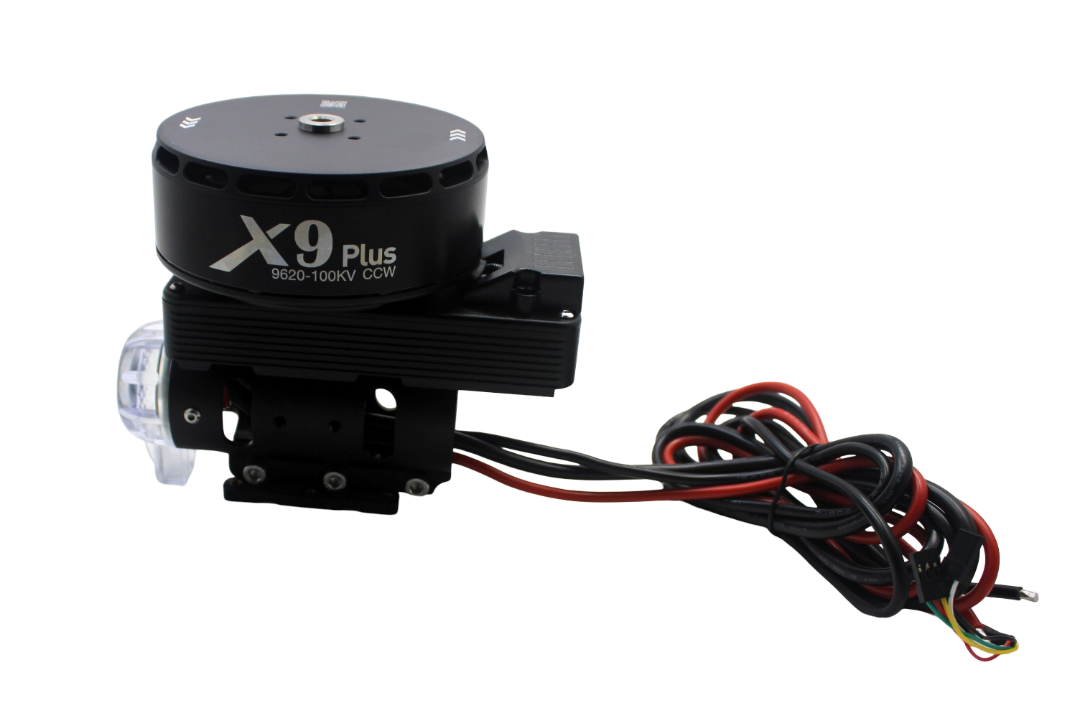
Hobbywing X9 Plus Motor CCW
The premium X9 Plus motor from Hobbywing — designed for heavy agricultural and professional drone platforms. High efficiency at low KV maximises flight time per battery charge. Works with 6S–12S high-capacity LiPo systems.
View on ZboticFrequently Asked Questions
A 4S 1500 mAh LiHV pack from a reputable brand (GNB, CNHL, Tattu) is the standard for 5-inch freestyle builds in 2026. Expect 5–8 minutes of aggressive flying. For more flight time, step up to 4S 1800–2200 mAh at the cost of slightly reduced agility due to extra weight.
No. Laptop batteries and power banks have internal BMS circuits that limit discharge rate and cannot be discharged quickly enough for drone motors. They will sag severely under load, causing brownout and crashes. Always use purpose-built drone LiPo or Li-Ion packs.
Store at storage voltage (3.8–3.85 V/cell) in a fireproof LiPo bag inside an air-conditioned room or cool cupboard. During peak summer (March–June), ambient temperatures above 38°C accelerate self-discharge and degradation. Consider using a small insulated container with a cooling pack inside if AC storage is not available.
No. A puffed LiPo has internal gas produced by electrolyte decomposition. This is a sign of cell damage. Do not charge, do not fly. Fully discharge it (into a salt water bucket or use a LiPo discharger), then wrap it in newspaper, place in a sealed metal container, and take it to an e-waste recycling centre. Do not put it in regular household waste.
Importing from AliExpress gives access to the widest range at the best prices, but shipping for batteries is increasingly restricted (lithium battery air freight has strict IATA regulations). Many shipments get held at customs. Domestic sourcing from trusted Indian drone suppliers ensures you get genuine product, proper labelling for flight, and no customs complications — worth the modest price premium for peace of mind.
XT60 is standard for packs up to ~60A continuous. For larger agricultural drones drawing 100A+, use XT90 or AS150 connectors. AS150 has an anti-spark feature that prevents the destructive arc that can damage ESC capacitors when plugging in a large charged pack. Never use Deans/T-plug for drone applications — they are undersized for the currents involved.
Conclusion
The best drone battery is the one properly matched to your use case. For FPV racing and freestyle, a 4S LiHV from a reputable brand gives the power and punch you need. For long-range and endurance builds, Li-Ion packs (or lower-C LiPo) offer the energy density to stay aloft for 30–60 minutes. For professional agricultural platforms, high-voltage, high-capacity packs from specialist suppliers are the only viable option.
In India, prioritise verified sourcing from trusted suppliers. The short-term saving from a counterfeit or sub-standard pack is not worth the risk of mid-flight failure or, worse, a LiPo fire. Treat your batteries with the respect they deserve — proper charging, storage, and inspection — and they will serve you reliably through hundreds of flights.
Looking for drone power systems, ESCs, BECs, and PDBs? Zbotic stocks genuine components with domestic shipping across India — no import complications, no counterfeit risk.
Power Your Drone Build with Zbotic
ESCs, power distribution boards, BECs, motors, and drone frames — domestic shipping across India, no customs wait.
Shop Drone Power Components






Add comment