
You’ve connected a DHT22 sensor to your Arduino, uploaded the sketch, opened Serial Monitor — and get nothing but garbage. Or your SPI display works sometimes but randomly corrupts. Or your I2C sensor occasionally returns 0x00 instead of the real value. These are protocol-level bugs that a multimeter can’t find and Serial.print() can barely diagnose. A logic analyzer is the tool that shows you exactly what’s happening on the data lines, byte by byte, timing edge by edge.
This buying guide covers the best logic analyzers available in India in 2026 — from ₹400 budget clones to ₹45,000 professional units — evaluated specifically for Arduino, ESP32, STM32, and Raspberry Pi debugging. We also explain what specs actually matter, how to decode I2C/SPI/UART/JTAG protocols, and which tool matches which budget and use case.
Why You Need a Logic Analyzer
A logic analyzer records the digital state (HIGH/LOW) of multiple signal lines simultaneously, with timestamps accurate to nanoseconds. Unlike an oscilloscope — which shows voltage waveforms — a logic analyzer decodes those waveforms into human-readable protocol data: I2C register addresses, SPI byte streams, UART messages, PWM duty cycles.
Common debugging scenarios where a logic analyzer is irreplaceable:
- Verifying that your Arduino is actually sending the correct I2C address and command bytes to a sensor
- Finding timing violations in SPI clock frequency vs sensor specifications
- Checking if your UART baud rate is correct when talking to GSM/GPS modules
- Debugging OneWire protocol timing issues with DS18B20 temperature sensors
- Measuring interrupt latency in real-time systems
- Confirming that DMA transfers complete correctly in STM32 firmware
- Finding bus contention when multiple I2C devices share a bus
With Serial.print() debugging, you’re limited to one value at a time with unpredictable timing effects. With a logic analyzer, you see every bit on every line, all at once, with exact timestamps. It turns “why doesn’t this work?” into “ah, the clock stretching is 45µs too long.”
Key Specs Explained
Don’t let marketing specs confuse you. Here’s what matters for Arduino debugging:
- Sample Rate: The maximum rate the analyzer captures digital transitions. For most Arduino/ESP32 SPI at ≤10 MHz, you need at least 50 MHz sample rate (5× oversampling). For I2C at 400 kHz (fast mode), 24 MHz is sufficient. For debugging JTAG at 30 MHz+, you need 200 MHz+.
- Channels: Number of signal lines captured simultaneously. I2C needs 2, SPI needs 4, JTAG needs 5+. For mixed-protocol debugging, 8 channels is the practical minimum; 16 channels handles most complex boards.
- Input Voltage Range: Most analyzers accept 1.8V to 5V logic. Critical for 3.3V ESP32, STM32, and FPGA signals — a 5V-only analyzer will damage 3.3V devices.
- Buffer Depth / Memory: How many samples can be stored before transfer to PC. Shallow buffers miss long captures. 256M samples = ~5 seconds at 50 MHz.
- Protocol Decoders: Software-side decoding. PulseView (free) supports 180+ protocols. Saleae’s proprietary software is more polished. Check if your specific protocol (e.g., DALI, SMBus, NEC IR) is supported.
Budget Picks: ₹400–₹2,000 (Clone USB Analyzers)
Cypress FX2-Based 8-Channel Clone (₹400–₹800)
The most common budget logic analyzer in India is the 8-channel USB clone based on the Cypress FX2LP chip, often sold as “USB Logic Analyzer 24MHz 8-Channel” on Indian electronics stores. These clones work with the open-source PulseView/Sigrok software on Windows, Linux, and Mac.
Specs: 8 channels, 24 MHz sample rate, 5V only (use level shifters for 3.3V circuits), ~10KB buffer depth (shallow — loses samples on long captures), USB 2.0.
What it’s good for: Learning, UART debugging at ≤1 Mbps, I2C at ≤400 kHz, Arduino-speed SPI at ≤8 MHz. Excellent for beginners who want to learn protocol analysis without financial risk.
Limitations: Cannot reliably capture above 12–16 MHz in practice (due to USB bandwidth). No analog input. 5V input only without modification. Very shallow buffer.
Verdict for India: At ₹400–₹600, this is the best first logic analyzer for hobbyists. Buy it for learning; upgrade when you hit its limits.
16-Channel USB Clone (₹1,200–₹2,000)
The 16-channel upgrade uses the same FX2 chip but with more input channels. Useful for debugging larger boards where you need to monitor multiple buses simultaneously (e.g., SPI + UART + interrupt lines at the same time).
Verdict: Worth the extra ₹600–₹800 over the 8-channel if you regularly debug complex boards. Same software (PulseView), same limitations at high speeds.
Mid-Range: ₹5,000–₹15,000 (DSLogic Series)
DreaMaker DSLogic Plus (₹8,000–₹12,000)
The DSLogic series from DreamSourceLab is the sweet spot for serious Arduino/ESP32 development. It’s not a clone — it’s a real product with dedicated hardware, proper ESD protection, and excellent software (DSView, Windows/Linux/Mac).
Specs: 16 channels, 400 MHz sample rate (digital), 256M sample buffer (onboard), 1.8V–5V input range, USB 3.0, real-time streaming mode, built-in protocol decoders for I2C/SPI/UART/CAN/LIN/I2S/1-Wire and more.
What it’s good for: Everything the budget clone can do, plus: high-speed SPI at 40 MHz+, long captures (256M samples = 640ms at full 400 MHz), 1.8V logic for nRF52/STM32L4/BLE SoCs, parallel bus decoding (8-bit data bus), JTAG debugging.
DSLogic Basic vs Plus vs Pro:
- Basic: 100 MHz, 16Ch, 256M buffer — ₹5,500–₹7,000
- Plus: 400 MHz, 16Ch, 256M buffer — ₹9,000–₹12,000 (recommended)
- Pro: 1 GHz, 16Ch, analog input — ₹20,000–₹25,000
Why DSLogic Plus is the best value in India in 2026: The 400 MHz sample rate handles all common embedded protocols. The 256M buffer captures long sequences without losing data. The 1.8V–5V input range covers every modern MCU. The software is genuinely good, not just a PulseView wrapper. Available from official distributors with warranty.
Kingst LA2016 (₹6,000–₹9,000)
The Kingst LA2016 offers 200 MHz, 16 channels, and a 10B sample buffer. It works with both KingstVIS (proprietary) and PulseView (with community drivers). Less polished than DSLogic but competitively priced. Good choice if the DSLogic Plus is out of budget.
Professional: ₹20,000+ (Saleae Logic Pro)
Saleae Logic 8 (₹22,000–₹28,000)
Saleae Logic is the industry standard for professional embedded debugging worldwide. The Logic 8 has 8 digital + 8 analog channels, 100 MHz digital, 50 MHz analog (12-bit), USB 3.0 streaming, and the best protocol decoder software available anywhere.
What sets Saleae apart: The Logic 2 software is in a different league — professional protocol annotation, data export to CSV/binary, scripting API (Python automation), and the ability to overlay protocol data on the analog waveform. When you need to debug a power glitch during an I2C transaction, showing the digital protocol and the analog voltage on the same timeline is invaluable.
Saleae Logic Pro 16 (₹45,000–₹55,000): 16 channels, 500 MHz digital, 50 MHz analog. The tool used by professional firmware engineers at companies shipping hardware products. If you’re doing this commercially or need the absolute best tools, this is it.
Saleae for students/hobbyists: Saleae offers a student pricing program at 50% discount with a valid student email. Check saleae.com/pages/academic for details.
Digilent Analog Discovery 3 (₹28,000–₹35,000)
More of a mixed-signal oscilloscope than a pure logic analyzer, the Analog Discovery 3 includes a 2-channel oscilloscope, function generator, and logic analyzer in one USB device. The WaveForms software is excellent. For labs that need multiple instruments in one portable device, this is the better choice over a dedicated logic analyzer.
Best Free Software: PulseView and Sigrok
PulseView is the open-source logic analyzer frontend that works with dozens of hardware devices (the budget clones, DSLogic, OpenBench LA, and more). Install it free from sigrok.org.
Key features:
- 180+ protocol decoders: I2C, SPI, UART, 1-Wire, JTAG, CAN, Lin, SDIO, USB PD, and more
- Stacked decoders: decode SPI, then decode the SPI data stream as a specific device protocol (e.g., SPI → MCP4131 register writes)
- Measurement cursors for precise timing
- Export to CSV, VCD, and binary formats
- Works on Windows 10/11, Linux, macOS
Sigrok CLI: The command-line backend for automation. Capture triggered samples to file, run protocol decoders, and pipe decoded output to custom scripts. Extremely useful for regression testing firmware: compare protocol traces between firmware versions automatically.
Decoding I2C, SPI, UART, and One-Wire
I2C Decoding Setup: Connect channel 0 to SDA, channel 1 to SCL. In PulseView/DSView, add the I2C decoder. The decoder shows start/stop bits, 7-bit addresses, ACK/NACK bits, and data bytes — color-coded so you can instantly see if your sensor address (e.g., 0x76 for BME280) is correct and whether it ACKs.
Common I2C bugs found with logic analyzer:
- Missing pull-up resistors cause SDA to float — no ACK observed
- Two devices with the same address (I2C conflict) — one NAKs every transaction
- Clock stretching timeout — sensor holds SCL LOW longer than the master’s timeout
- Wrong voltage level — 5V Arduino reading a 3.3V sensor’s ACK as 0 (insufficient high level)
SPI Decoding Setup: Connect channels to MOSI, MISO, SCLK, CS. Set CPOL/CPHA in the decoder to match your device. The decoder shows the hex value of each byte transferred. For the MCP4131 digital potentiometer, you’ll see the 2-byte command + data being written to the wiper register.
UART Decoding: Set the baud rate, data bits (usually 8), parity (usually none), and stop bits (usually 1). The decoder shows ASCII characters or hex bytes. Invaluable for debugging GSM (SIM800), GPS (u-blox NMEA), and Bluetooth (HC-05 AT commands) modules.

DS18B20 Programmable Resolution Temperature Sensor
The DS18B20’s OneWire protocol has strict timing requirements — a logic analyzer instantly reveals timing violations that cause checksum errors and spurious 85°C readings.
Debugging Tips for Arduino and ESP32
Tip 1: Always ground your logic analyzer to the circuit. The GND wire is not optional — without it, you get floating readings that look like valid data but are noise. Connect GND first, then the signal probes.
Tip 2: Use software triggering to capture the exact event. Set a trigger on the falling edge of the CS line for SPI, or a start condition on SDA for I2C. This way you capture the exact transaction you care about, not a random 1-second buffer dump.
Tip 3: Reduce sample rate when capturing long sequences. For UART at 9600 baud, you only need 1 MHz sample rate. Using 24 MHz wastes buffer depth and makes the waveform harder to navigate. Match sample rate to ~10× the signal frequency.
Tip 4: Check setup/hold times for SPI. The logic analyzer shows the exact timing between SCLK edges and MOSI/MISO data edges. If your MCU is driving data too close to the clock edge for the sensor’s setup time, you’ll see intermittent corruption — invisible to Serial.print() but obvious on the trace.
Tip 5: Use channel annotations. Rename channels from “D0” to “SDA”, “SCL”, “MOSI” etc. in the software. When debugging for hours, correct labels prevent mix-ups that waste time.
Sensors That Benefit Most from Logic Analysis
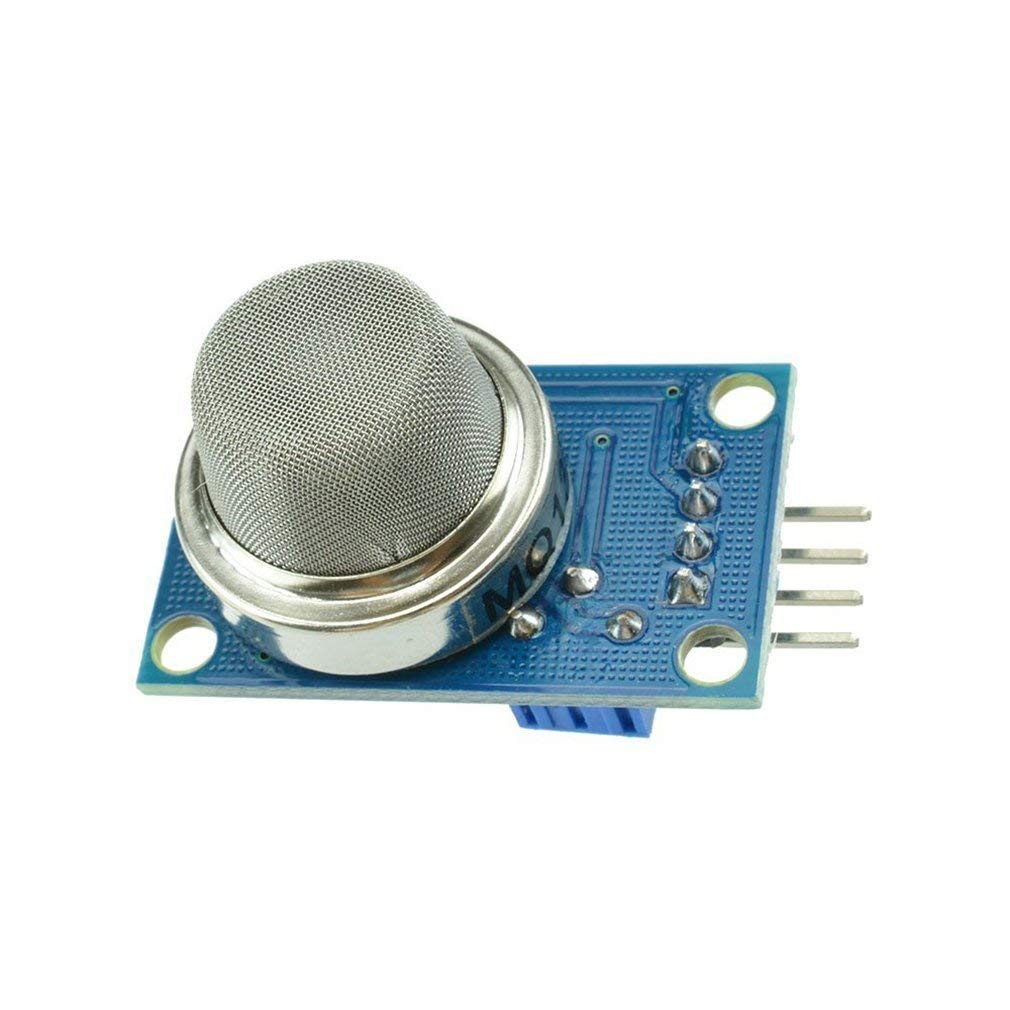
MQ-135 Air Quality/Gas Detector Sensor for Arduino
Analog sensor that often causes ADC issues — a logic analyzer helps debug the digital control lines when combining MQ-135 with digital threshold modules.
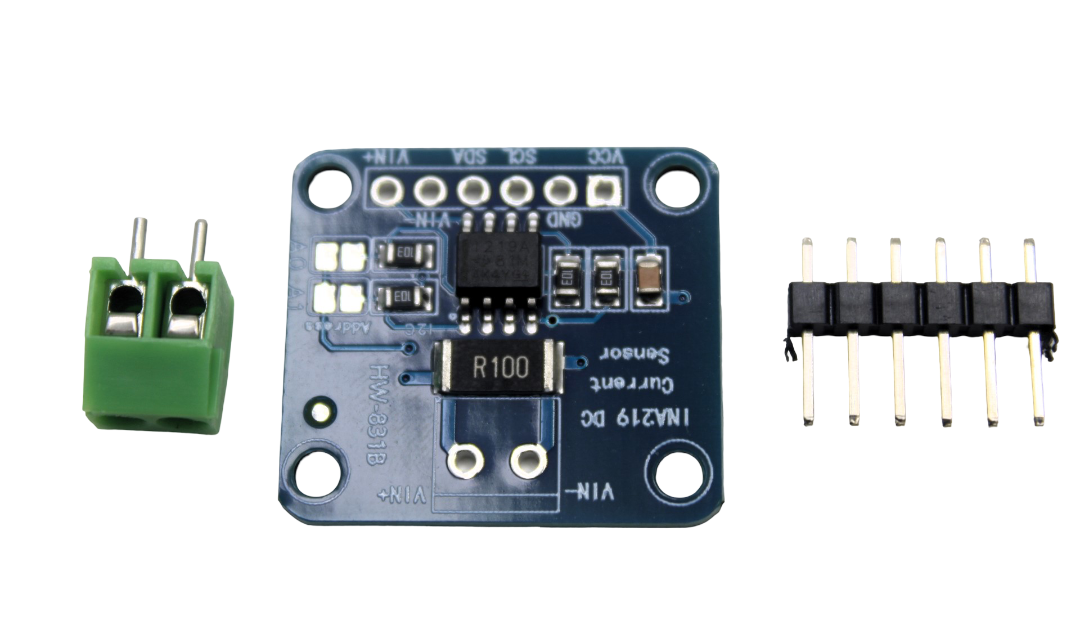
INA219 I2C Bi-directional Current/Power Monitor
The INA219 uses I2C with address selection pins — a logic analyzer verifies correct address ACK, register writes, and continuous mode trigger sequences.
FAQ
What is the best budget logic analyzer for Arduino in India?
The 8-channel USB clone (₹400–₹600) with PulseView is the best entry-level option for learning. For serious projects, the DSLogic Plus (₹9,000–₹12,000) is the best value mid-range analyzer in India in 2026.
Can I use a logic analyzer with 3.3V ESP32?
Most cheap 8-channel clones are 5V only — connecting them directly to 3.3V lines is technically fine (5V input can detect 3.3V HIGH), but the reverse is dangerous: never connect a 5V signal to a 3.3V ESP32 GPIO. The DSLogic Plus and Saleae Logic accept 1.8V–5V, making them ESP32-safe.
Do I need a logic analyzer or an oscilloscope?
Both tools are complementary. A logic analyzer decodes digital protocols (I2C bytes, SPI data, UART characters) — it’s purely digital and shows you what data was sent. An oscilloscope shows the analog voltage waveform — useful for checking signal integrity, ringing, rise times, and power supply noise. For most Arduino sensor debugging, the logic analyzer provides more actionable information faster.
Is the cheap ₹400 clone reliable?
For simple I2C and UART debugging at low speeds (≤1 MHz), yes — very reliable. At its claimed 24 MHz, USB bandwidth limitations cause dropped samples. The shallow buffer (a few hundred kilosamples) means it misses rare events. For production debugging, upgrade to DSLogic or Saleae.
Can PulseView decode custom protocols?
Yes. PulseView protocol decoders are Python scripts. You can write a custom decoder for any proprietary protocol (custom UART framing, PWM encoding, etc.) and add it to the decoder library. The sigrok wiki has a complete tutorial.
What sample rate do I need for I2C debugging?
I2C standard mode: 100 kHz → 1 MHz sample rate minimum. I2C fast mode: 400 kHz → 4 MHz. I2C fast-plus: 1 MHz → 10 MHz. The 24 MHz budget clones handle all three comfortably. For I2C high-speed mode (3.4 MHz), you need 34 MHz+ — DSLogic Plus or Saleae.
A logic analyzer is only half the equation — you need reliable sensors to debug. Browse Zbotic’s Sensors & Modules for I2C, SPI, and analog sensors with full datasheet support. All ship from Mumbai with fast delivery across India.
Add comment