
Choosing the right hub motor for your e-bike in India is the single most important decision in your conversion project. The motor determines your speed, climbing ability, heat management in Indian summers, and overall riding experience. With options ranging from 250W to 1000W and front-wheel or rear-wheel configurations, it’s easy to feel overwhelmed — but this guide breaks it down clearly.
We cover everything you need to know: wattage, KV ratings, voltage compatibility, geared versus direct-drive, and which motor suits your riding style whether you’re commuting in flat Chennai or tackling the Pune ghats every day.
How Hub Motors Work
A hub motor is a brushless DC (BLDC) motor integrated into the wheel hub of an e-bike. Unlike mid-drive motors that power the pedal crank, hub motors drive the wheel directly. Inside the motor, you’ll find:
- Stator: Fixed coils wound around an iron core, attached to the axle
- Rotor: Permanent magnets arranged around the inside of the motor shell
- Hall sensors: Three sensors detect rotor position and send signals to the controller
- Controller: External unit that switches power to stator coils in sequence, creating rotation
The key advantage is simplicity. No gears, no chain involvement (for front hub builds), minimal maintenance. The main limitation is that a hub motor operates most efficiently at a fixed speed band — unlike a mid-drive that uses bicycle gears to stay in its efficiency range.
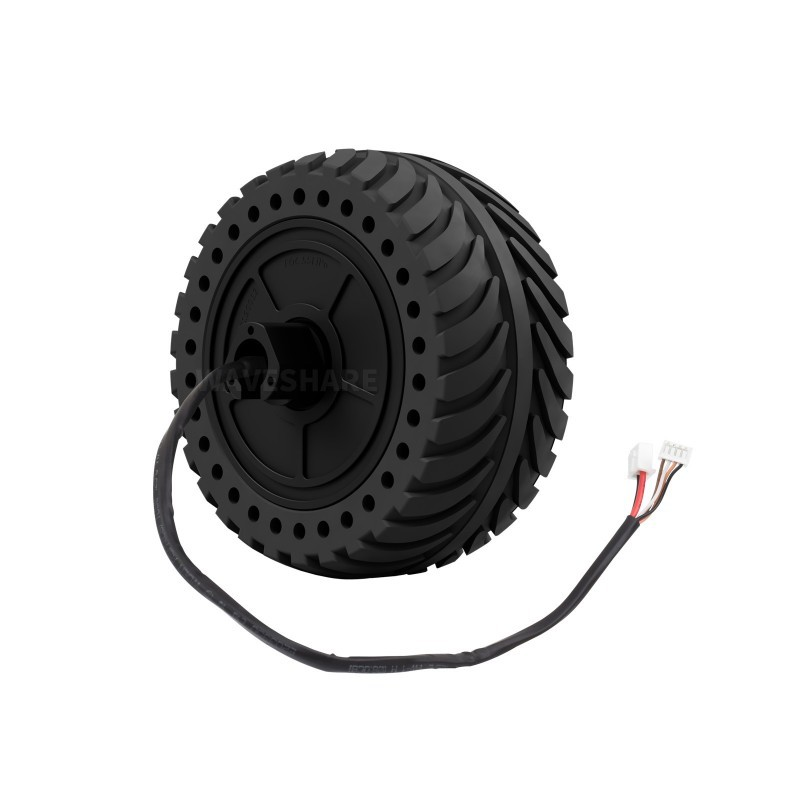
Waveshare DDSM115 Direct Drive Hub Motor
High-torque, low-noise direct drive hub motor ideal for DIY e-bikes and robotics. Runs quietly with efficient power delivery at low speeds — perfect for urban commuting builds.
Geared vs Direct Drive Hub Motors
This is the most fundamental choice in hub motor selection. Both types have genuine advantages depending on your use case.
Geared Hub Motors
A geared hub motor uses planetary reduction gears inside the motor shell. The motor spins faster internally (more efficient RPM) and the gears reduce this to wheel RPM, multiplying torque in the process.
Advantages:
- Higher torque per watt — better hill climbing
- Lighter weight (smaller motor for same output)
- No drag when coasting (freewheels via clutch)
- Better efficiency at lower speeds
Disadvantages:
- Nylon gear wear over time (60,000-100,000 km typically)
- No regenerative braking (clutch disengages)
- Slightly louder (gear noise at speed)
Direct Drive Hub Motors
In a direct drive motor, the motor shell IS the wheel hub — the outer shell with magnets spins directly without gears.
Advantages:
- Zero mechanical wear — can last the lifetime of the bike
- Regenerative braking possible
- Handles higher sustained power without gear damage
- Very quiet operation
Disadvantages:
- Heavier (larger motor shell)
- Noticeable drag when pedaling without motor power
- Less efficient at very low speeds
Verdict for India: For typical city commuters who ride every day and want low maintenance, geared hub motors are the better choice. For longer range builds where regenerative braking adds meaningful charge recovery (e.g., hilly terrain), direct drive makes sense.
250W Hub Motors: Legal Limit, City Commuter
250W hub motors are the legal sweet spot for e-bikes in India under Central Motor Vehicles Rules. A properly built 250W e-bike requires no registration, no insurance, and no driving license — making it the most practical choice for daily urban commuting.
What 250W Gets You
- Top speed: 22-28 km/h (depending on controller programming)
- Range: 30-50 km on 36V 10Ah battery
- Hill performance: Manages 5-8% gradients comfortably; steeper grades need pedaling assistance
- Rider weight: Optimal up to 75-80 kg; possible to 90 kg with pedaling
Best Cities for 250W Builds
Flat cities like Chennai, Hyderabad, Surat, Ahmedabad, and most of Mumbai are excellent for 250W hub motors. The motor will rarely get stressed, ensuring long life and consistent performance.
Real vs Rated 250W
An important distinction: a motor rated at 250W continuous often has a peak power of 350-500W. This is perfectly normal and means brief steep sections can be handled with burst power. What matters for legal compliance is the continuous power rating on the nameplate.
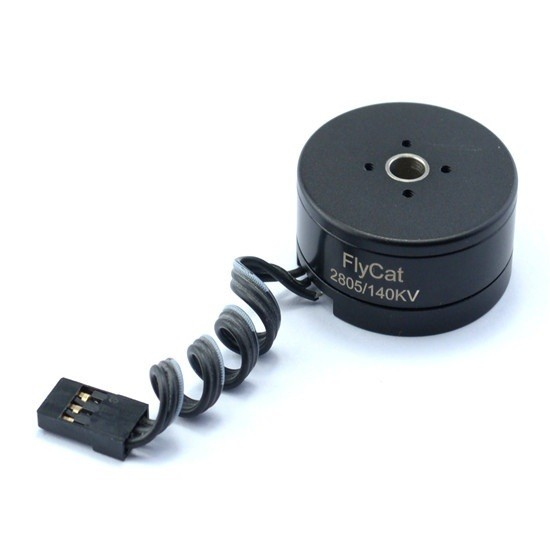
2805 140KV Brushless Motor
Low KV, high torque brushless motor rated at 2805 stator size. Ideal for slow-speed, high-torque electric vehicle and gimbal applications requiring smooth control.
350W Hub Motors: The Sweet Spot
The 350W hub motor occupies a practical middle ground that many Indian e-bike builders find optimal. It’s noticeably more powerful than a 250W unit without the weight and heat challenges of 500W motors.
350W Performance Profile
- Top speed: 28-35 km/h
- Hill performance: 8-12% gradients without pedaling
- Rider weight: Up to 100 kg with full payload
- Range on 48V 15Ah: 45-60 km
Ideal Use Cases
- Riders who frequently carry cargo (delivery, groceries, tools)
- Cities with moderate hills (Pune outskirts, parts of Bengaluru, Nashik)
- Heavier riders (80-100 kg range)
- Riders who want motor assistance without pedaling at all
Controller Pairing
A 350W motor on 48V draws about 7-8A continuous. Use a 15A or 20A controller for adequate headroom. KT-series controllers are popular in India for their reliability and wide compatibility.
500W Hub Motors: Hills and Heavy Loads
500W hub motors are the workhorses of serious e-bike builds in India. If you live in Pune, Bengaluru’s outer zones, Himachal Pradesh, or any hilly terrain — 500W is where you want to be.
500W Performance Profile
- Top speed: 35-45 km/h (controller dependent)
- Hill performance: 12-18% gradients without pedaling
- Rider weight: Up to 120 kg with cargo
- Range on 48V 20Ah: 55-75 km
Heat Management Considerations
500W motors generate significantly more heat, especially on extended climbs in Indian summer (35-45°C ambient). Look for motors with:
- Ventilation holes or ferrofluid cooling
- Stator wound with thicker copper wire (lower resistance = less heat)
- Temperature sensor connected to controller for auto-derating
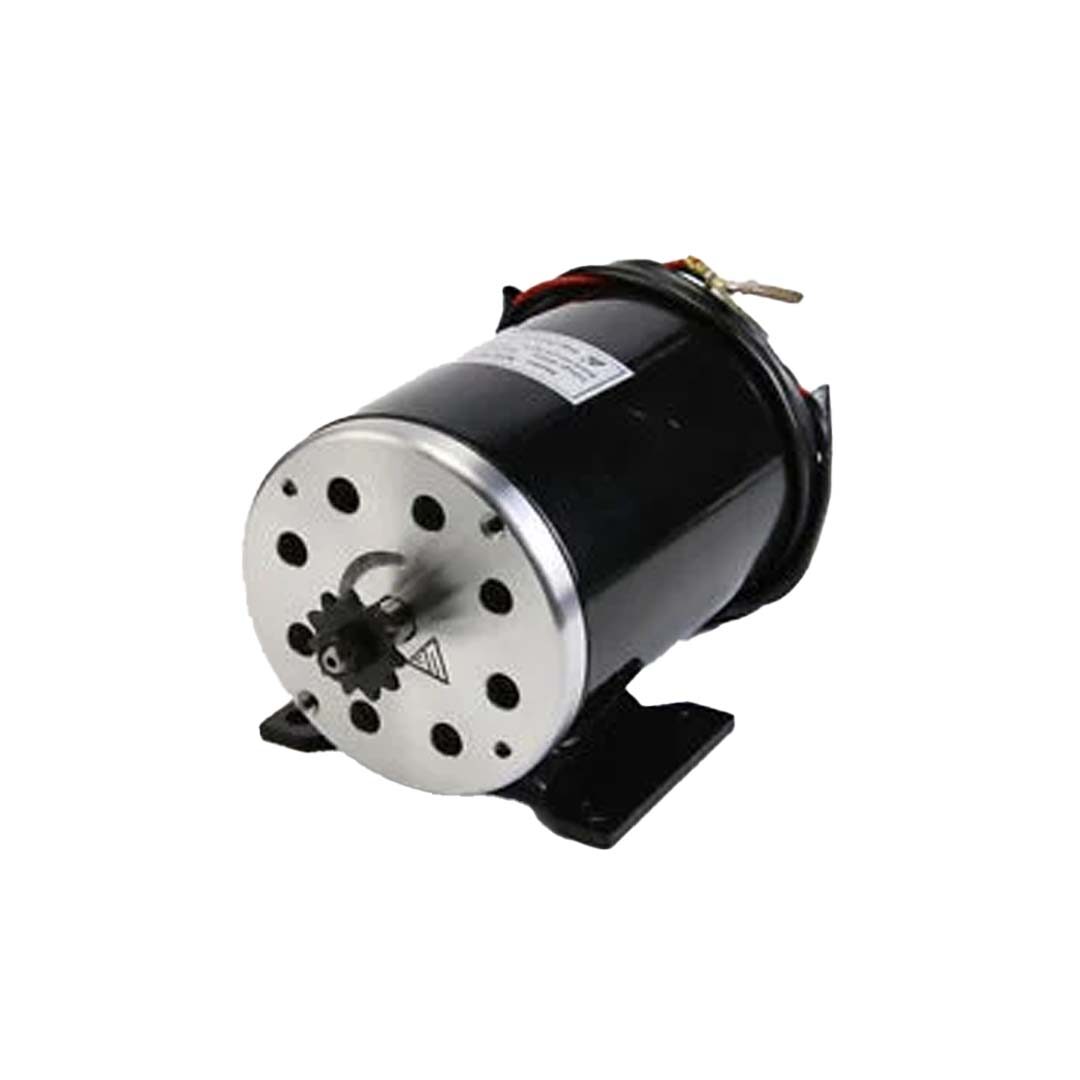
Ebike 500W 24V DC 2500 RPM Motor MY1020
Robust 500W brushed DC motor for e-bikes, scooters, go-karts, and mini ATVs. Delivers 2500 RPM at 24V — powerful enough for serious hill climbing and cargo loads.
KV Rating Explained for E-Bike Builders
KV is one of the most misunderstood specs in BLDC motors. KV means RPM per volt — the no-load RPM the motor spins per volt of input. It does NOT mean kilovolts.
KV and Its Implications
- High KV (e.g., 260 KV): Spins faster per volt, less torque. Better for high-speed, lower-load applications
- Low KV (e.g., 140 KV): Spins slower per volt, more torque. Better for low-speed, high-load applications like e-bikes
Calculating Wheel Speed from KV
Formula: Wheel RPM = KV × Voltage × (1 – motor slip factor ~15%)
For a 260 KV motor on 48V: 260 × 48 × 0.85 ≈ 10,608 motor RPM. But hub motors for e-bikes have built-in gear reduction (for geared types) or are wound to lower effective KV at wheel speed. A typical e-bike hub motor might have an effective wheel KV of 5-10 RPM per volt after gearing.
What matters practically: choose a motor with a stated wheel speed at your operating voltage that matches your target speed. A 48V motor stating 26″ wheel top speed of 30 km/h is giving you all the info you need.
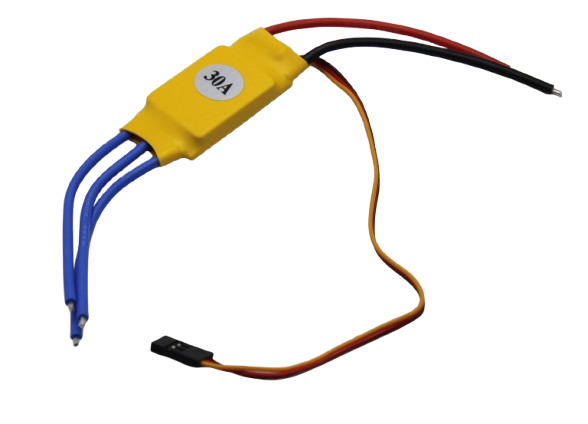
30A BLDC ESC Brushless Speed Controller
Reliable 30A electronic speed controller for brushless DC motors. Works with sensorless and sensored BLDC motors. Suitable for e-bike prototypes and robotics builds.
Heat Management in Indian Climate
Indian summers push hub motors harder than almost any other climate globally. Ambient temperatures of 40-45°C in cities like Delhi, Nagpur, and Ahmedabad mean a motor already starts 15°C warmer than European standards anticipate.
Warning Signs of Overheating
- Motor housing too hot to touch (above 70°C)
- Controller cutting out temporarily (thermal protection triggered)
- Burnt smell from motor or controller
- Noticeable loss of power during extended rides
Practical Cooling Tips
- Don’t ride at full throttle continuously — use pedal assist to reduce motor load
- Use ferrofluid — a few drops of this magnetic liquid in sealed motors dramatically improves heat transfer
- Derate in summer — if your controller has programmable current limits, reduce to 80% during peak summer months
- Early morning rides — schedule heavy-use rides before 9 AM in May-June
- Thermal paste — apply between stator and axle on direct drive motors during assembly
Hub Motor Buying Tips for India
What to Verify Before Buying
- Axle width: Front fork standard is 100mm; rear dropout standard is 135mm. Measure before ordering
- Spoke count: 36-spoke motors are most common; ensure your rim has matching holes
- Axle flats: The flat sections on the axle must fit your dropout slot width (usually 10mm)
- Hall sensor type: Ensure compatibility with your chosen controller
- IP rating: Minimum IP54 for Indian monsoon conditions
Red Flags When Shopping
- No stated wattage or only peak power listed
- No Hall sensor wires visible (sensorless operation is rough at low speeds)
- Suspiciously light weight for claimed wattage (thin copper windings)
- No return/warranty policy from seller
Frequently Asked Questions
Which is better for India — front or rear hub motor?
Rear hub motor is recommended for most Indian conditions. It provides rear-wheel drive traction (especially helpful on wet or loose roads), handles heavier loads, and feels more natural. Front hub motors are acceptable for lightweight 250W urban builds on smooth roads.
Can I use a 500W motor on 36V instead of 48V?
Yes, but the motor will produce less power: roughly 36/48 = 75% of its rated output. Speed will also be lower. This is sometimes used intentionally to run a powerful motor conservatively for longer life. Match controller voltage to battery voltage, not the motor’s rated voltage.
How do I know if my hub motor needs replacement?
Common signs include: unusual grinding or clicking noise (bearing failure), vibration at speed (stator or magnet issue), sudden loss of power that isn’t battery or controller related, or smoke/burning smell. Hall sensor failures cause jerky startup but the motor otherwise runs fine once moving.
Do I need a specific controller for geared vs direct drive?
No — both use sensored 3-phase BLDC controllers. The controller specification (voltage, current, features) is the same for both types. The only practical difference is that direct drive motors can use regen braking if the controller supports it.
What warranty should I expect on a hub motor in India?
Reputable sellers offer 6-12 months warranty. Be wary of sellers with no return policy. Hall sensor failures are the most common warranty claim and a good seller should cover these.
Find Your Perfect Hub Motor at Zbotic
Zbotic.in carries motors, controllers, and e-bike components with fast delivery across India. Our team can help you select the right motor for your bicycle, terrain, and budget.


Add comment