
A bench power supply is the foundation of every serious electronics lab. Unlike wall adapters that output a fixed voltage, a bench power supply gives you continuously variable voltage and current — letting you precisely power any circuit from 0 V upward, protect your components with current limiting, and diagnose power-related issues with built-in meters. This bench power supply buying guide is written specifically for Indian electronics enthusiasts, students, and professionals to help you choose the right instrument for your budget and application.
Why Every Electronics Lab Needs a Bench Power Supply
The number one component failure cause in electronics hobbyist work is incorrect supply voltage — connecting 5 V logic to a 3.3 V rail, accidentally reversing polarity, or drawing too much current from a supply with no protection. A bench power supply eliminates most of these risks.
Current limiting is the single most valuable feature of a bench supply. Set the current limit to 200 mA before powering up a new circuit for the first time. If something is wired wrong, the supply hits the limit, voltage drops, and your circuit is protected. Without current limiting, a wiring mistake can destroy a microcontroller, burn a motor driver, or create a fire hazard in seconds.
The built-in voltage and current meters let you monitor real-time power consumption — an invaluable diagnostic tool. A circuit drawing 400 mA when it should draw 50 mA tells you immediately that something is wrong.
For Arduino, ESP32, STM32, Raspberry Pi, motor drivers, LED arrays, RF circuits, audio amplifiers, and almost any electronics project, a bench supply simplifies the work and protects your investment in components.
Linear vs SMPS Bench Power Supplies
This is the fundamental architecture choice for any bench supply purchase:
Linear Bench Power Supplies
A linear supply uses a transformer to step down mains voltage, then a series pass transistor to regulate output. The key properties:
- Extremely low noise: Ripple is typically in the microvolts range — critical for audio, RF, and precision analogue circuits
- Fast transient response: Responds to load changes in microseconds
- Reliable current limiting: Inherently smooth and consistent
- Heavy and bulky: The mains transformer is large and dense
- Inefficient: Excess voltage is dissipated as heat — a 30 V/5 A supply can generate 150 W of heat at full output
Linear supplies are the professional standard for test and measurement. Brands like Keysight, Rigol, and Rohde & Schwarz make expensive but exceptional linear lab supplies.
Switching Mode Power Supplies (SMPS)
SMPS bench supplies use high-frequency switching to regulate output. Properties:
- Efficient: 80–90% efficiency — far less heat dissipation
- Compact and lightweight: No heavy mains transformer
- Higher ripple: Typically 10–50 mV peak-to-peak, acceptable for digital circuits
- More affordable: Same voltage/current specs at lower cost than linear equivalents
- Not ideal for sensitive analogue or RF work unless well-filtered
For most hobbyist and maker applications — powering Arduino, motors, sensors, LED projects — SMPS bench supplies are perfectly adequate and much better value. For audio amplifier design, radio receivers, or precision measurement circuits, invest in a linear supply.
Key Specifications Explained
| Specification | What It Means | Recommended Minimum |
|---|---|---|
| Max Voltage | Highest output voltage | 30 V for general work |
| Max Current | Maximum output current | 3 A minimum, 5+ A for motors |
| Voltage Resolution | Smallest voltage step | 10 mV or better |
| Current Resolution | Smallest current step | 1 mA or better |
| Ripple & Noise | Output noise floor | <5 mV (linear), <50 mV (SMPS) |
| Display Accuracy | Meter accuracy for V and A | ±0.5% or better |
| Output Channels | Number of independent outputs | Single channel is fine to start |
| Remote Sensing | Compensates for cable voltage drop | Useful for precision DC work |
Single, Dual, and Triple Output Supplies
Single channel: One independently adjustable output. Perfect for beginners and most hobbyist work. When you need a second voltage (e.g., +5V for logic AND +12V for a motor driver), a second channel-capable supply or a separate voltage regulator handles it.
Dual tracking: Two independent outputs that can be linked to create ±V (e.g., ±15 V for op-amps). Essential if you design analogue circuits with dual-rail op-amp power rails. Also useful for testing two independent circuits simultaneously.
Triple output: Two variable channels plus one fixed 5 V channel (for ICs and logic). Very popular in professional labs — covers the common case of ±supply for analogue plus 5 V for digital logic.
For students starting out: a good single-channel 30 V/5 A supply covers 95% of projects. As your work grows more complex, dual-channel or triple-channel becomes worthwhile.
Top Bench Power Supply Picks for India
1. KAIWEETS KPS305D (30V/5A SMPS) — Best Budget SMPS
Compact switching supply, 30V/5A, dual digital display, coarse+fine voltage adjustment knobs. Under ₹4,000. Excellent starting point for most hobbyist work. Not suitable for sensitive RF or audio design but covers all digital/microcontroller work.
2. HANMATEK HM305P / HM310T — Programmable Budget SMPS
These computer-controllable SMPS supplies have USB connectivity and PC software. The HM305P (30V/5A) and HM310T (30V/10A) can be scripted for automated testing — a significant feature at ₹5,000–₹9,000. The large LCD display shows voltage, current, power, and energy simultaneously.
3. Rigol DP832 (30V/3A×2 + 5V/3A) — Professional Triple Channel
The Rigol DP832 is the benchmark professional SMPS bench supply in India’s university and R&D lab market. Three output channels (30V/3A, 30V/3A, 5V/3A), LAN/USB/GPIB connectivity, full programmability, and excellent display. Price: ₹30,000–₹50,000 depending on variant. Worth every rupee in a serious lab.
4. KORAD KA3005P (30V/5A Linear) — Best Affordable Linear
If noise performance matters (audio, RF, precision ADC work), the KORAD KA3005P is a popular affordable linear supply with USB programmable control. At ₹6,000–₹9,000 in India, it bridges the gap between budget SMPS and expensive professional linear supplies.
Budget Alternatives Using SMPS Modules
For makers and hobbyists on very tight budgets, purpose-built DC-DC converter modules can serve as an inexpensive bench supply substitute — particularly for fixed-voltage work. They require some DIY assembly but offer real flexibility:
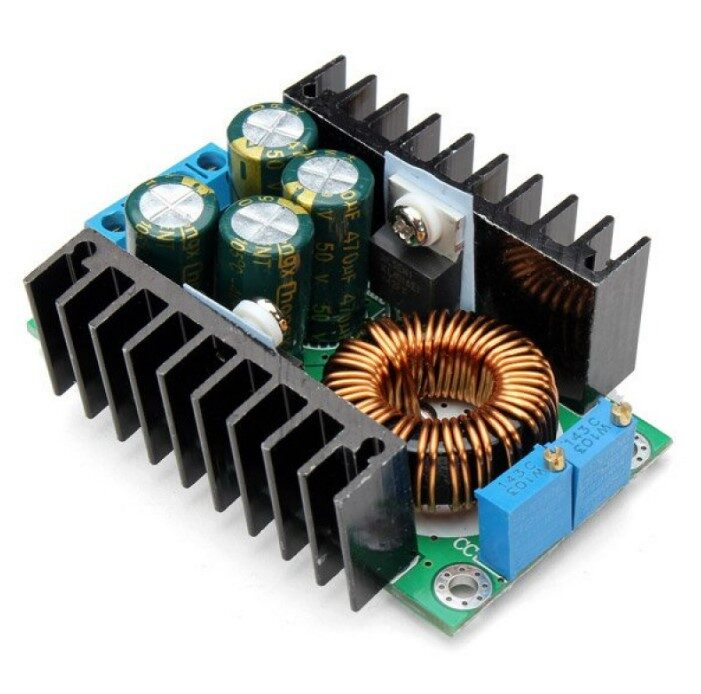
300W 10A DC-DC Adjustable Buck Converter Module
Pair this with a 12V–24V SMPS brick for a DIY variable bench supply — adjustable constant-voltage/constant-current control up to 10A at a fraction of commercial bench supply cost.
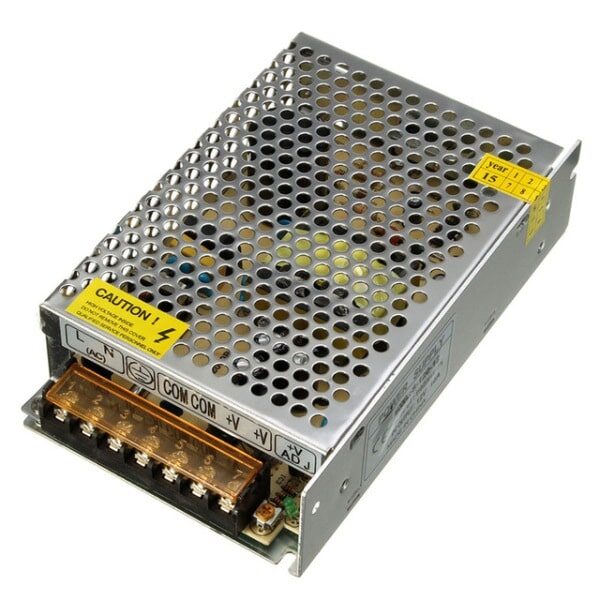
12V 10A 120W DC Metal SMPS Power Supply
A reliable 12V input for your buck converter module — this industrial-grade metal-cased unit provides clean DC power for your workbench experiments and LED projects.
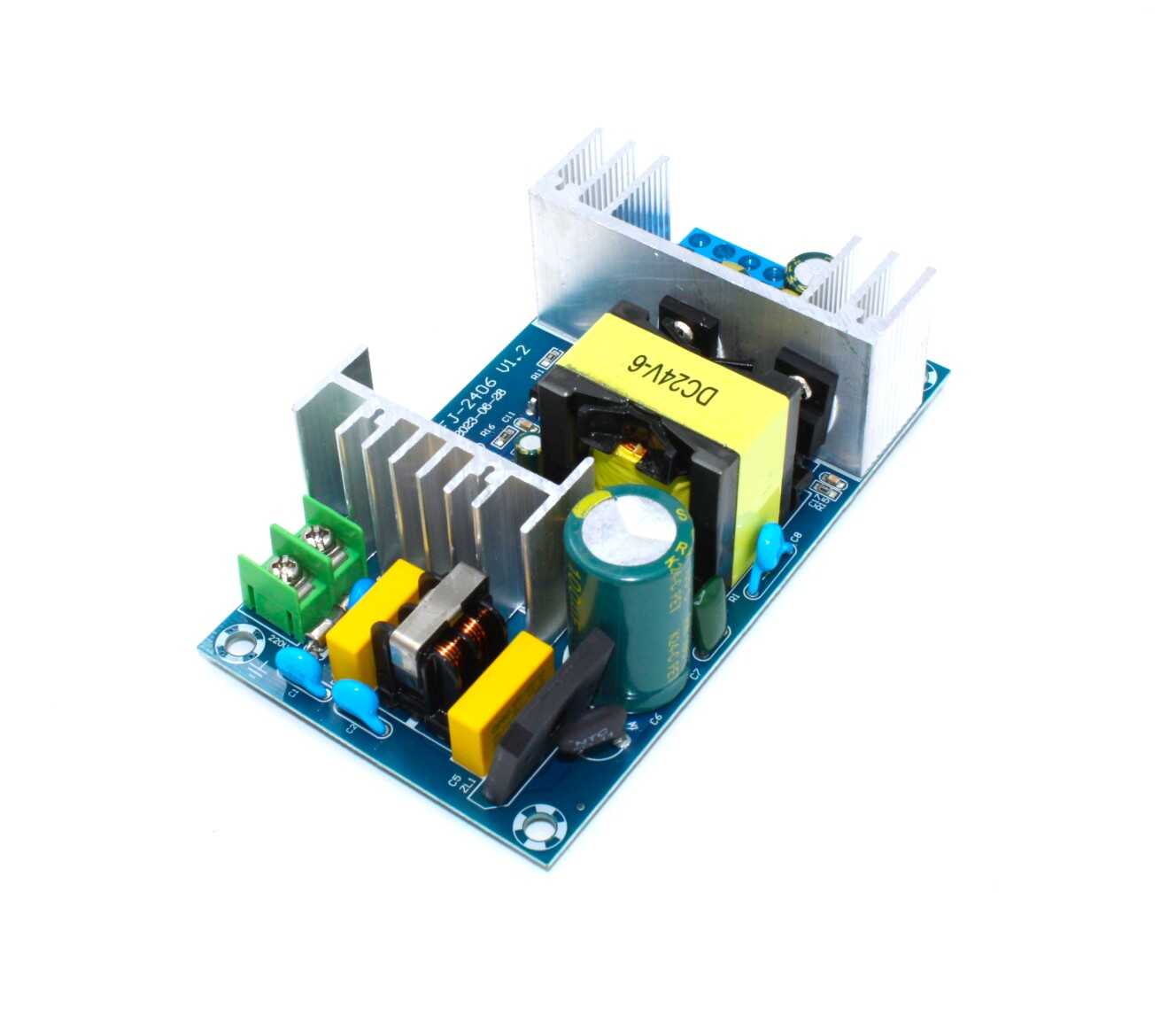
150W AC-DC Buck Converter 100–240V to 24V
Mains-direct 24V regulated DC output — use as a high-voltage input stage for a DIY bench supply or as a standalone supply for 24V servo and motor projects.
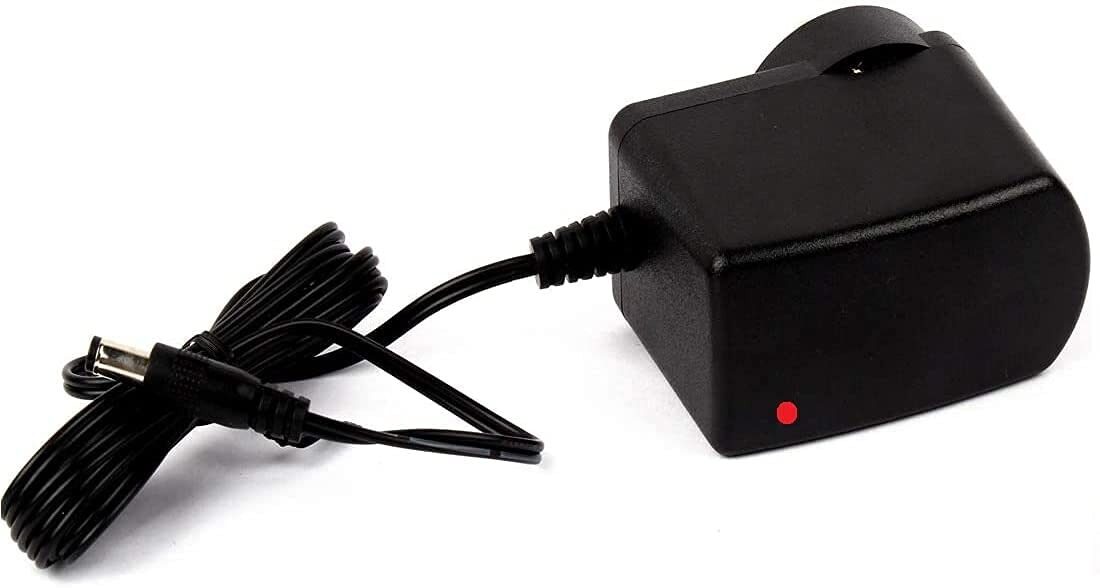
12V 2A Power Supply with 5.5mm DC Plug
A compact, regulated 12V adapter ideal for powering microcontroller development boards, Arduino projects, and small electronic circuits on your bench.
Usage Tips and Safety
A bench power supply is safe when used correctly. Follow these practices:
- Always set current limit before powering a new circuit. Start with the minimum necessary current — 200 mA for most microcontroller circuits. Increase only if needed.
- Check output voltage before connecting. Dial to the required voltage, verify on the display, then connect your circuit. Never assume the knob position is accurate.
- Use appropriate wire gauges. At 5A, use at least 20AWG wire for bench leads. Thin wires become resistive heaters at high current.
- Never reverse polarity on electrolytic capacitors by accident — set voltage correctly and double-check before powering up.
- Turn off before making circuit changes. Modifying a live circuit is a leading cause of component damage and personal injury.
- Keep ventilation clear. Linear supplies especially generate significant heat. Do not block ventilation slots.
Frequently Asked Questions
What voltage and current bench supply should a beginner buy?
A 0–30 V, 0–5 A single-channel supply covers essentially all beginner and intermediate electronics projects. Most microcontrollers run at 3.3 V or 5 V, motors at 5–12 V, and common circuits rarely need more than 2–3 A. 30 V headroom means you can also experiment with higher-voltage components safely.
Is an SMPS bench supply safe for Arduino and ESP32?
Yes, completely. Arduino and ESP32 boards are digital systems that tolerate switching noise well. SMPS ripple (10–50 mV) is negligible compared to the regulated supply tolerance of these boards. Only use a linear supply if you are specifically designing analogue or RF circuits sensitive to supply noise.
Can I use a 12V SMPS brick as a bench supply?
For fixed 12V work, yes. For variable voltage, combine it with a CC/CV buck converter module (like the 300W 10A module from Zbotic) to get an adjustable output. You will not have the accuracy or safety features of a proper bench supply, but it works well for basic maker projects.
What is the difference between CV mode and CC mode?
CV (Constant Voltage) mode keeps output voltage fixed regardless of load current — standard operating mode. CC (Constant Current) mode keeps output current fixed regardless of voltage — activates when a short or very low-impedance load exceeds the set current limit. This is the protective mode that saves your circuit from overcurrent damage.
Do I need a bench supply if I have a variable transformer (variac)?
A variac adjusts mains AC voltage but does not regulate it or limit current. It is not a DC supply and cannot protect electronic components. A bench supply provides regulated, controlled DC — a fundamentally different and necessary tool for electronics work.
Which Indian brands make bench power supplies?
Riden, Motech, Aplab, and Kusam-Meco are established Indian brands. International brands like KAIWEETS, HANMATEK, Rigol, and KORAD are widely available through Indian distributors and online marketplaces.
Power your projects right. Zbotic stocks SMPS modules, power supplies, DC-DC converters, and all the components you need to build a capable electronics workbench. Explore Power Supplies & Tools →




Add comment