
Table of Contents
- Bambu Lab in India: The Story So Far
- Bambu Lab Product Lineup 2026
- India Pricing and Where to Buy
- Why Bambu Lab Is So Expensive in India
- Performance Review: Speed, Quality, Reliability
- Bambu Studio Software Review
- Filament Costs and Compatibility
- Honest Pros and Cons for Indian Users
- Budget Alternatives Worth Considering
- Who Should Buy a Bambu Lab in India
- Frequently Asked Questions
- Conclusion: Worth It?
Bambu Lab burst onto the 3D printing scene in 2022 and immediately disrupted the market with printers that were fast, smart, and surprisingly reliable out of the box. In two years, they have become the most talked-about brand in consumer 3D printing globally. But for Indian buyers, the conversation always ends with the same question: is Bambu Lab worth the significantly higher price in India?
This is an honest, detailed review of Bambu Lab printers from an Indian perspective in 2026. We cover real prices, import costs, performance, software, filament ecosystem, and who should — and should not — consider buying one.
Bambu Lab in India: The Story So Far
Bambu Lab is a Chinese 3D printer manufacturer founded in 2022. Their first printer, the X1 Carbon, launched at ~$1,499 USD and immediately earned acclaim for printing at 500mm/s — roughly 5–10× faster than budget printers of the time. The more affordable P1P (now P1S) and A1 series followed, bringing the Bambu experience to a wider audience.
In India, Bambu Lab is officially distributed through select authorised resellers and their own India store. However, unofficial importing via services like Amazon India and Flipkart also occurs. The key difference from the Western market: Indian prices include GST (18%) and potentially customs duty, making the effective cost 30–50% higher than the US dollar price at current exchange rates.
Bambu also launched their filament range in India — including PLA, ABS, PETG, and specialty materials — which are now available through Indian electronics retailers like Zbotic.
Bambu Lab Product Lineup 2026
A1 Mini
Type: Open frame, Cartesian, no AMS | Build Volume: 180×180×180mm | Target: Beginners and compact desktops
The entry-level Bambu. Excellent print quality and speed for the price category. The smaller build volume limits large print jobs. Supports AMS Lite for limited multi-colour printing.
A1
Type: Open frame, Cartesian | Build Volume: 256×256×256mm | Target: Beginners to intermediate users wanting full bed size
The A1 is the bestselling Bambu in India. Full 256mm build plate, AMS Lite multi-colour support, and excellent print quality make it the most practical choice for most Indian buyers.
P1S
Type: Fully enclosed CoreXY | Build Volume: 256×256×256mm | Target: Serious hobbyists and semi-professional
The P1S adds a full enclosure (critical for ABS, ASA, and PA printing), a filtered ventilation system, and improved multi-colour AMS compatibility. The enclosure also enables quieter operation — important for apartment printing in Indian cities.
X1 Carbon
Type: Enclosed CoreXY with carbon fibre-capable hotend | Build Volume: 256×256×256mm | Target: Professional and industrial users
The flagship. Adds multi-material lidar scanning for print monitoring, carbon fibre composite printing, and the most advanced sensor suite. The price premium over P1S is significant — for most hobbyists, the P1S or A1 is the better value choice.
India Pricing and Where to Buy (2026)
Prices fluctuate with exchange rates and import regulations. Approximate 2026 India pricing:
| Model | US Price (approx) | India Price (approx) | Premium over US |
|---|---|---|---|
| A1 Mini | $299 (~₹25,000) | ₹38,000 – ₹42,000 | ~55% |
| A1 | $399 (~₹33,500) | ₹50,000 – ₹56,000 | ~55% |
| P1S | $699 (~₹58,700) | ₹85,000 – ₹95,000 | ~50% |
| X1 Carbon | $1,199 (~₹1,00,700) | ₹1,45,000 – ₹1,60,000 | ~45% |
AMS (Automatic Material System) for multi-colour printing adds another ₹15,000 – ₹22,000 to the price if purchased separately.
Where to Buy
- Bambu Lab India Official Store (bambulab.com/in): Most reliable source for warranty support
- Authorised Indian Resellers: Some electronics and 3D printing shops carry Bambu products with local warranty
- Amazon India: Available but warranty support can be inconsistent
- Grey market imports: Cheaper upfront but no warranty support — not recommended
Why Bambu Lab Is So Expensive in India
Understanding the cost breakdown helps you make a more informed buying decision:
- Import duty: Electronics imported to India attract 15–20% customs duty in most categories
- GST: 18% GST applies to all 3D printers in India
- Distributor margin: Authorised distributors add 10–20% margin
- Currency conversion: USD/INR exchange rate adds additional cost over the base dollar price
- Logistics: International freight and last-mile delivery adds ₹2,000–₹5,000
Combined, these factors create the 45–55% premium over US prices that Indian buyers face. This is not Bambu Lab charging extra for India — it is the structural cost of importing technology into India.
Performance Review: Speed, Quality, Reliability
Print Speed
Bambu Lab’s stated 500mm/s maximum speed is technically achievable but practical print speeds for quality models are 200–300mm/s. Even at these more conservative speeds, Bambu printers are 3–5× faster than a well-tuned Ender 3. A print that takes 8 hours on a budget printer takes 2–3 hours on an A1 or P1S.
This speed advantage is not just about saving time — it means more print iterations per day during prototyping, faster turnaround for print-on-demand business, and significantly lower per-print electricity cost because print time is so much shorter.
Print Quality
Out of the box, Bambu Lab printers produce noticeably better quality than most budget alternatives. The combination of a rigid frame, precise linear rails, auto bed levelling with 121-point mesh, and well-tuned default profiles means your first print is likely to be better than what many experienced users achieve on tuned budget printers.
Layer lines at 0.2mm are tight, dimensional accuracy is consistently within ±0.1mm on most features, and bridging/overhang performance exceeds expectations for the price point.
Reliability
The Indian 3D printing community’s experience with Bambu reliability has been mixed but generally positive. The most common issues reported:
- Clogged hardened steel nozzles (especially with generic filament)
- AMS filament feed issues with very dry or very flexible filament
- Occasional board failures in early units (greatly improved in recent production runs)
- Hotend replacement required after 3–6 months of heavy use with abrasive filaments
For typical PLA and PETG printing, Bambu Lab printers are among the most reliable consumer FDM machines available. Reliability drops when users push the limits with high-temperature or abrasive materials without the correct nozzle and hotend setup.
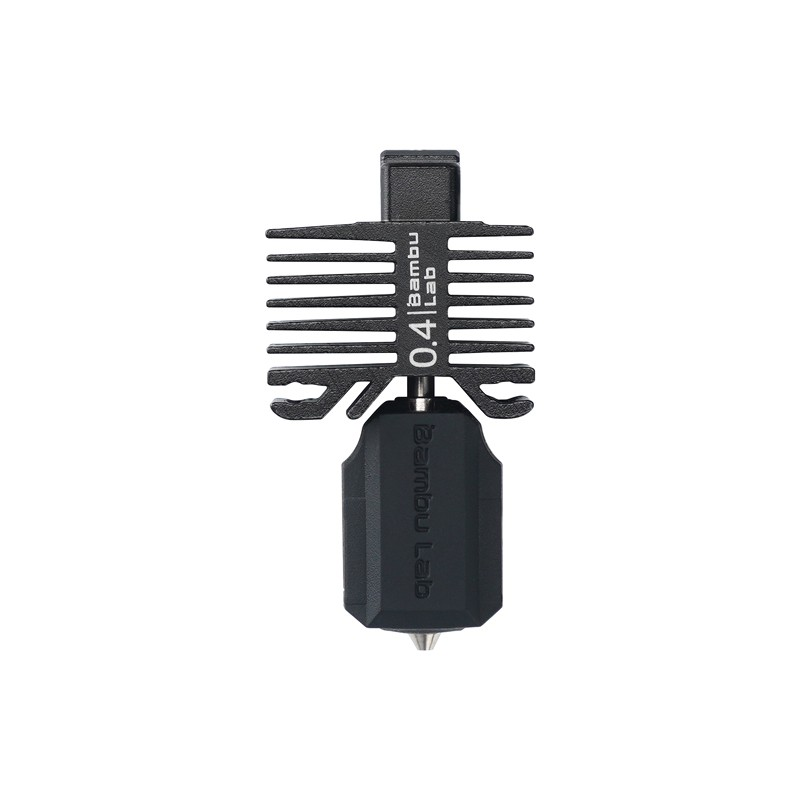
Bambu Lab Hotend with Hardened Steel Nozzle 0.4mm – for P1P, P1S, X1C
Genuine Bambu Lab replacement hotend — keep your P1S or X1C printing at peak quality with an authentic spare part.
Bambu Studio Software Review
Bambu Studio is Bambu Lab’s proprietary slicer, based on the open-source PrusaSlicer codebase. It has evolved significantly and is now one of the most capable consumer slicers available.
Strengths
- Cloud printing: Send prints directly from your phone or laptop over Wi-Fi, no SD card required
- Print monitoring: Live camera feed on A1, P1S, and X1C models
- AI failure detection: The camera system detects spaghetti failures and pauses the print automatically
- Pre-configured profiles: Bambu filament profiles are pre-loaded and excellent — very little calibration needed
- Multi-colour support: Best AMS workflow of any slicer for multi-filament printing
Weaknesses
- Privacy concerns: Bambu printers connect to Bambu’s cloud servers. Some users are uncomfortable with this telemetry, particularly in a professional context.
- LAN-only mode limitations: Full offline operation is available but loses some features
- Third-party filament profiles: Requires manual calibration for non-Bambu filament brands
- Bambu-first lock-in tendency: Software updates occasionally change behaviour in ways that favour Bambu filament
Overall, Bambu Studio is excellent for its target audience — users who want results without deep technical knowledge. Power users may miss the granular control of Cura or the open ecosystem of PrusaSlicer.
Filament Costs and Compatibility
Bambu Lab Filament in India
Bambu Lab’s own PLA and ABS filaments are now available in India through select retailers. Quality is excellent — tight diameter tolerance (±0.02mm), consistent colour, good flow characteristics, and pre-configured profiles in Bambu Studio that work flawlessly.
Price in India: ₹1,400 – ₹2,200 per 1kg spool, depending on material and colour. This is higher than budget domestic brands but competitive with other imported premium filaments.
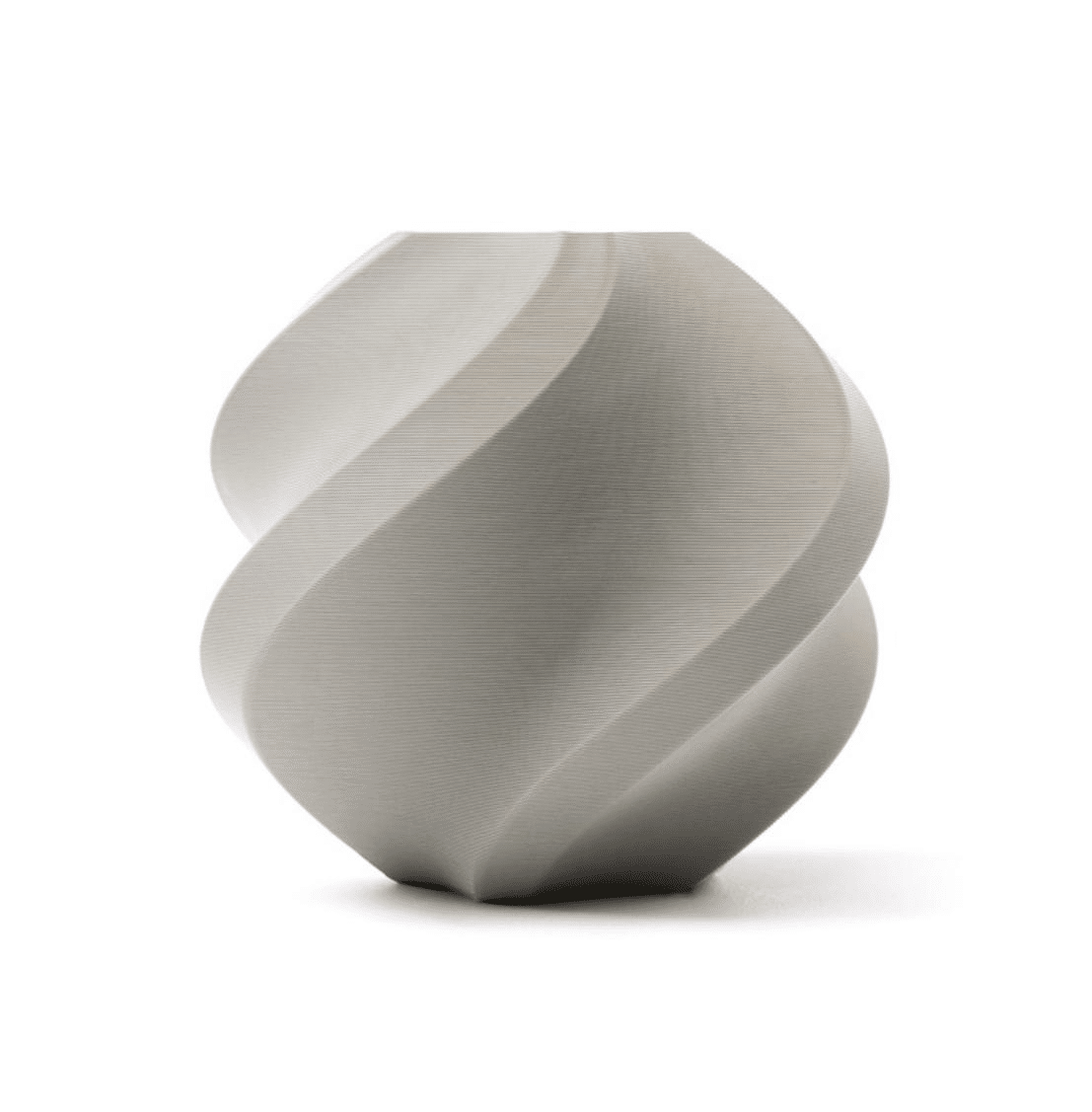
Bambu Lab PLA 3D Printer Filament – Grey 1.75mm with Reusable Spool
Official Bambu Lab PLA with reusable spool — perfectly calibrated for Bambu printers, available in India from Zbotic.
Third-Party Filament Compatibility
Bambu printers work with any 1.75mm filament — they are not locked to Bambu brand filament. However, third-party filaments require manual calibration of temperature, flow rate, and retraction settings. The “AMS Lite” and “AMS” systems require RFID-tagged spools for automatic profile switching — third-party spools do not have RFID tags and must be set up manually.
Popular Indian-available brands like eSun work well on Bambu printers with appropriate settings. The eSun PETG line in particular performs very consistently on Bambu hardware.
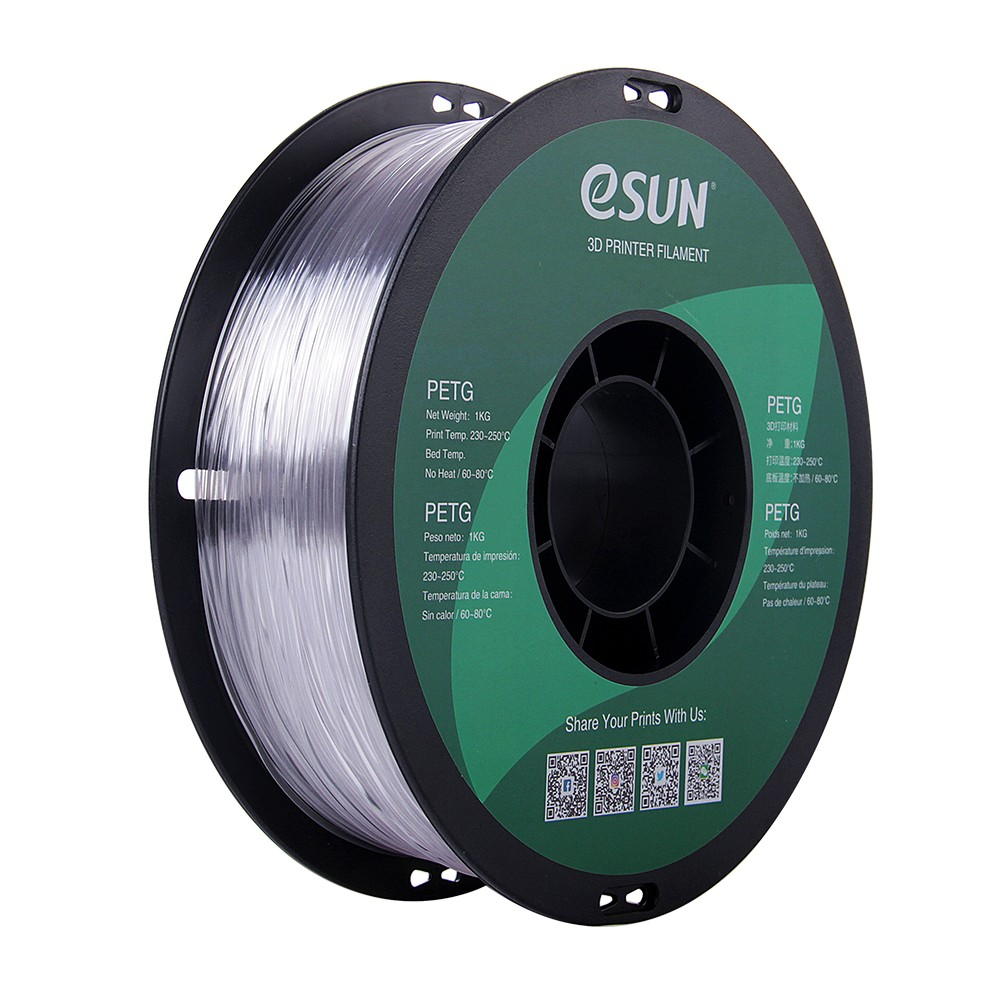
eSun PETG 1.75mm 3D Printing Filament 1kg – Clear
Premium PETG compatible with Bambu Lab printers — excellent transparency and strength, available in India from Zbotic.
Honest Pros and Cons for Indian Users
Pros
- Massively faster print times — 3–5× faster than budget FDM printers
- Excellent first-print quality — no weeks of calibration to get good results
- Wi-Fi printing and camera monitoring — genuinely useful for busy Indian professionals and students
- AI failure detection — saves filament and time when prints go wrong
- Multi-colour capability (with AMS) — no other printer in the price bracket does multi-colour as well
- Strong community and ecosystem — Makerworld models optimised for Bambu, growing Indian community
- Reusable spools — a genuine environmental and cost advantage over single-use spools
Cons
- High India price — the 45–55% import premium is a real barrier for most buyers
- Cloud dependency — full features require internet connectivity and Bambu account; data privacy concerns
- Higher consumable costs — genuine Bambu nozzles and hotends are more expensive than generic alternatives
- Limited local repair options — if something goes wrong outside warranty, parts and expertise are harder to find in India
- Proprietary design elements — some repairs require genuine Bambu parts that may not always be readily available
- AMS waste — multi-colour printing creates significant filament waste in the purge tower (5–15g per colour change)
Budget Alternatives Worth Considering
Before committing to a Bambu Lab purchase at Indian prices, consider these alternatives:
Creality Ender 3 S1 Pro or Neo (₹18,000 – ₹25,000)
The direct drive, auto-levelling variants of the Ender 3 offer much better performance than the original. Excellent for beginners learning the craft. Much slower than Bambu and requires tuning, but a fraction of the price.
Creality K1 / K1C (₹35,000 – ₹55,000)
Creality’s high-speed CoreXY printer is a direct competitor to Bambu’s A1. It offers similar speeds and enclosure options at lower India prices. Software is less polished than Bambu Studio, but the hardware quality is competitive.
Anycubic Kobra 2 Series (₹20,000 – ₹40,000)
Strong auto-levelling, decent print quality, and much lower price. Not as fast as Bambu but a significant step up from Ender 3 class printers.
Prusa MK4S (₹65,000 – ₹75,000 assembled)
Prusa is the gold standard for open-source reliability. The MK4S is slightly more expensive than the Bambu A1 in India but offers superior repairability, better third-party filament ecosystem, and excellent community support. A legitimate premium alternative if you prefer open ecosystem.
Who Should Buy a Bambu Lab in India
Should Buy
- Professionals who bill by the hour and value print speed highly
- Product developers running multiple print iterations per day
- Engineering students with access to institutional funding
- Makers who want to start printing immediately without a steep learning curve
- Anyone planning multi-colour prints (AMS is genuinely class-leading)
- Businesses offering 3D printing services where higher throughput directly increases revenue
Should Consider Alternatives
- Hobbyists on a tight budget for whom the ₹20,000 price difference matters significantly
- Users who want to deeply understand and modify their printer
- Anyone who prints very infrequently (monthly or less)
- Users in areas with unreliable internet (cloud features will not work well)
- Buyers who prioritise repairability and open-source software
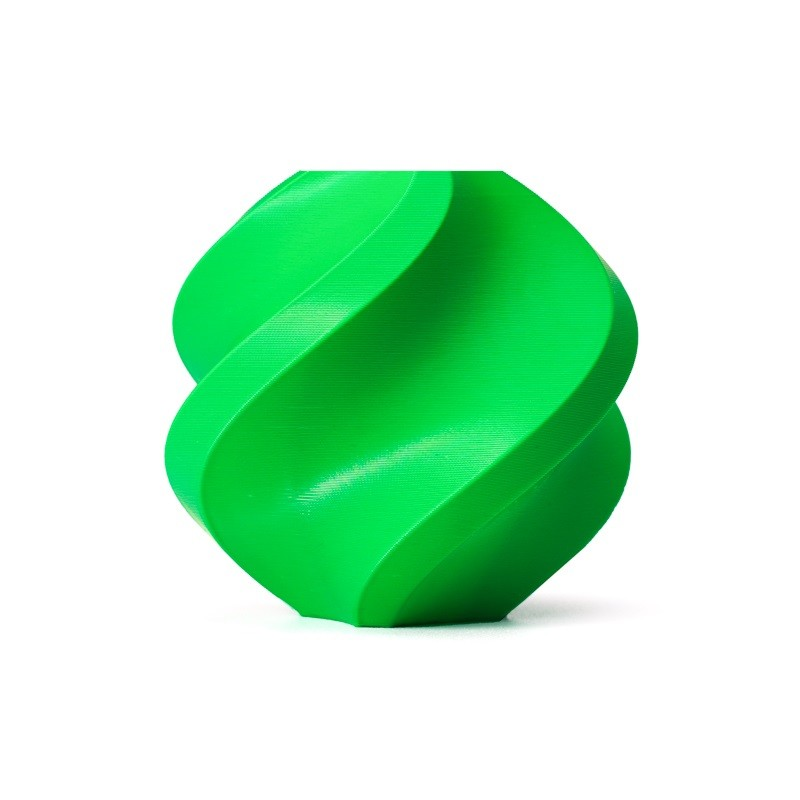
Bambu Lab ABS 3D Printer Filament – Bambu Green 1.75mm with Reusable Spool
Genuine Bambu Lab ABS — perfectly calibrated for P1S and X1C enclosed printers, now available in India from Zbotic.
Frequently Asked Questions
Is Bambu Lab available in India with warranty?
Yes, Bambu Lab has official India operations with warranty support. Always purchase from the official Bambu Lab India store (bambulab.com/in) or authorised resellers to ensure genuine warranty coverage. Unofficial grey market imports may not be eligible for warranty service.
Which Bambu Lab printer should I buy in India?
For most Indian buyers, the A1 offers the best value — full 256mm build volume, fast printing, good quality, and the most accessible price in the lineup. If you need to print ABS or other engineering materials regularly, upgrade to the P1S for the enclosure. The X1 Carbon is only worth the premium if you specifically need carbon fibre printing or multi-lidar monitoring.
Can Bambu Lab printers use any filament brand?
Yes. Bambu printers accept standard 1.75mm filament from any brand. The AMS auto-detection works only with RFID-tagged Bambu spools, but any spool can be loaded manually. Indian brands and eSun work well with manual profile settings.
What is the after-sales service like in India?
Bambu Lab’s India support has improved significantly from its early days. Most warranty issues are handled via courier replacement of faulty parts. Local repair expertise is still limited, so complex mechanical failures may require extended wait times compared to printers with widespread Indian service networks like Creality.
Is the Bambu Lab A1 Mini good enough for beginners?
The A1 Mini is one of the best beginner printers available today. The limited 180×180mm build volume is the only meaningful restriction. For learning, prototyping small parts, and desktop printing, it is excellent. If you anticipate needing larger print volumes, pay the premium for the full A1 instead.
How does Bambu Lab compare to Creality at similar India prices?
At comparable India prices (Bambu A1 vs Creality K1), Bambu edges ahead on software quality, print monitoring, and multi-colour capability. Creality has an edge on repairability, open-source ecosystem, and wider local availability. Both print at similar quality and speed. Your decision depends on whether you prioritise the polished Bambu ecosystem or the open Creality ecosystem.
Conclusion: Worth It?
Here is the honest answer for Indian buyers in 2026:
Bambu Lab is worth buying if: you value your time highly, plan to print frequently, want the best out-of-box experience, or need multi-colour printing capability. The speed advantage alone justifies the premium for anyone who prints more than 10 hours per week — the time savings over a year are substantial.
Bambu Lab is not worth it if: you are a casual hobbyist printing once a week, you are on a tight budget, or you prioritise repairability and open ecosystems. At Indian prices, the gap between a Bambu A1 and a well-configured budget alternative is significant — and that gap can fund a lot of filament and parts.
Whatever printer you own, quality filament and maintenance parts are key to getting the best results. Zbotic stocks Bambu Lab filaments (PLA, ABS) in India along with nozzles, hotends, thermistors, and other spare parts for all major FDM printer brands.
Official Bambu Lab PLA and ABS filaments, genuine hotends, and premium filaments from eSun — all in stock and shipped across India.






Add comment