
Table of Contents
- Introduction: Why Carbon Fibre Changes Everything
- What Is PETG-CF?
- Mechanical Properties and What They Mean
- PETG-CF vs Standard PETG: Is the Upgrade Worth It?
- Nozzle Requirements — This Is Critical
- Print Settings for PETG-CF
- Design Tips for Maximum Strength
- Best Applications for PETG-CF in India
- Recommended Products from Zbotic
- Troubleshooting PETG-CF Issues
- Frequently Asked Questions
- Conclusion
Introduction: Why Carbon Fibre Changes Everything
When most people think of carbon fibre, they picture exotic sports cars, Formula 1 bodywork and premium bicycle frames — high-performance, high-cost items from specialist manufacturers. Carbon fibre composite parts have traditionally required expensive autoclave curing processes, hand layup skills and materials that cost thousands of rupees per kilogram.
3D printing with carbon-fibre-reinforced filaments has changed this calculus completely. PETG-CF (PETG with short chopped carbon fibre) allows any maker with a suitably equipped FDM printer to produce parts that are significantly stiffer, stronger and lighter than standard PETG — without any of the traditional carbon fibre manufacturing complexity. You design the part in CAD, load the filament and print it. The result is a functional composite part that rivals injection-moulded glass-filled polymers in stiffness and weight.
For Indian makers working on drones, robots, automotive accessories, sports equipment modifications or industrial jigs, PETG-CF is one of the most exciting materials available in 2025. This guide covers everything you need to know to print it successfully.
What Is PETG-CF?
PETG-CF is a composite filament consisting of a PETG (Polyethylene Terephthalate Glycol) polymer matrix reinforced with chopped short carbon fibres. The fibres are typically 100–200 microns long and mixed into the polymer at concentrations of 10–20% by weight. During extrusion, the fibres align partially in the direction of flow, meaning they preferentially align along the print direction — which is why fibre orientation in the design matters enormously for mechanical performance.
The Carbon Fibre Role
Carbon fibre has an exceptionally high tensile modulus — it is very stiff for its weight. When short CF is embedded in a polymer matrix, it transfers load from the softer polymer through fibre-matrix interfacial bonds. The result is a composite with significantly higher stiffness (elastic modulus) than the base polymer alone, at only a modest weight increase (CF is less dense than PETG, so the composite is actually slightly lighter per unit volume than unfilled PETG).
Chopped Fibre vs Continuous Fibre
It is important to distinguish PETG-CF (chopped/short fibre) from continuous-fibre composites produced by printers like Markforged’s Mark Two. Chopped-fibre materials like PETG-CF are printable on any standard FDM printer with a hardened nozzle and produce improvements of 2–3× in stiffness. Continuous-fibre composites achieve 10–20× stiffness improvements but require dedicated expensive printers. PETG-CF represents the accessible, affordable entry point into structural composite 3D printing.
Mechanical Properties and What They Mean
Understanding what PETG-CF’s numbers mean in practice helps you decide when to use it.
| Property | Standard PETG | PETG-CF | Improvement |
|---|---|---|---|
| Tensile modulus (stiffness) | ~2 GPa | ~7–9 GPa | 3.5–4.5× |
| Tensile strength | ~50 MPa | ~65–80 MPa | 1.3–1.6× |
| Flexural modulus | ~2 GPa | ~8–12 GPa | 4–6× |
| Density | 1.27 g/cm³ | 1.18–1.22 g/cm³ | 5–7% lighter |
| Heat deflection temp | 70–80°C | 85–95°C | +15°C |
Stiffness vs Strength: An Important Distinction
PETG-CF is primarily a stiffness upgrade, not a strength upgrade. The tensile modulus (how much the part resists deformation under load) improves dramatically. Tensile strength (the maximum stress before fracture) improves more modestly. This means PETG-CF is ideal for parts that must not flex under load — brackets, frames, rails, motor mounts — but for parts that must absorb impact energy, standard PETG or TPU remains better (CF composites tend to be more brittle).
PETG-CF vs Standard PETG: Is the Upgrade Worth It?
The answer depends entirely on your application. For parts where stiffness is the design constraint — a drone arm that must not flex during flight, a CNC router dust shoe that must maintain precise geometry, a camera slider rail that must not bow — PETG-CF is transformative. You can design thinner, lighter parts that out-perform thicker standard PETG parts.
For parts where flexibility and impact resistance matter — living hinges, snap clips, protective cases — standard PETG is superior. PETG-CF’s brittleness compared to plain PETG means it will crack rather than deform under sharp impacts.
Cost-wise, PETG-CF typically costs 1.5–2.5× more per kilogram than standard PETG. For most applications, this is well justified by the performance gain. But a nozzle upgrade (mandatory, as we discuss next) adds a one-time cost of ₹800–₹3,000 depending on the nozzle choice.
Nozzle Requirements — This Is Critical
This is the most important practical consideration when starting with PETG-CF, and the one most often overlooked by beginners. Carbon fibre is extremely abrasive. Printing PETG-CF through a standard brass nozzle will wear the nozzle orifice within 50–200 grams of filament, dramatically enlarging it from 0.4mm to 0.5–0.6mm or beyond. The result is increasingly over-extruded, inaccurate prints that deteriorate rapidly.
Required: Hardened Steel Nozzle
For PETG-CF and any other abrasive composite filament, you must use a hardened steel nozzle. Hardened steel (typically tool steel or stainless steel hardened to 60+ HRC) resists the abrasive CF much better than soft brass. A quality hardened steel nozzle will print 1–5kg of PETG-CF before showing meaningful wear, compared to 50–200g for brass.

3D Printer Stainless Steel Nozzle – 0.4mm (V6/MK8 Compatible)
Stainless steel nozzle — a significant step up from brass for printing abrasive materials including PETG-CF, ASA-CF and glow-in-the-dark filaments. Compatible with most standard V6 and MK8 hotend formats.

Bambu Lab Hotend with Hardened Steel Nozzle – 0.4mm
The correct hotend for printing PETG-CF on Bambu A1/A1 Mini printers. Hardened steel nozzle handles carbon fibre abrasion without wear, maintaining dimensional accuracy throughout its lifespan.
Nozzle Size for PETG-CF
PETG-CF with its 100–200 micron fibres can theoretically print through a 0.4mm nozzle, but a 0.6mm or 0.8mm nozzle is strongly recommended. The larger orifice reduces the chance of fibre clumping causing partial blockages, improves flow consistency, and allows higher volumetric flow rates for faster printing. Layer resolution is not the priority for structural parts — strength is — so the coarser layers from a larger nozzle are an acceptable trade-off.
Print Settings for PETG-CF
Temperature
PETG-CF typically prints 10–20°C hotter than standard PETG because the carbon fibres act as heat sinks and the material needs more energy to flow consistently. Start at 250–260°C (nozzle) and 85–90°C (bed). If you see under-extrusion or rough surface texture, increase temperature in 5°C increments up to 270°C. Most PETG-CF formulations handle up to 275–280°C without degradation.
Print Speed
PETG-CF benefits from slightly slower print speeds than standard PETG, especially for perimeters: 40–60mm/s for perimeters, 80–120mm/s for infill. Slower perimeter speeds improve layer adhesion and fibre alignment in critical structural zones. Infill speed matters less for fibre alignment but should still be limited to prevent flow inconsistency.
Layer Height
Use 0.2–0.3mm layer heights for structural PETG-CF parts. Thicker layers (0.3–0.4mm with a 0.6mm nozzle) give excellent layer bonding and print faster. Avoid very thin layers (below 0.15mm) as they increase print time dramatically with no structural benefit for CF composites.
Wall Count and Infill
For maximum structural performance, use 4–6 perimeters (walls) and 40–60% infill with a grid or gyroid pattern. For PETG-CF specifically, gyroid infill gives excellent isotropic (direction-independent) strength, which complements the directional fibre alignment in the walls. For directional parts (beams under bending load), rectilinear infill oriented along the load direction enhances performance further.
Cooling
Reduce part cooling compared to standard PETG. At 50% or less fan speed, layer adhesion is stronger — the fibres bond better across layer interfaces with less rapid cooling. For large, flat parts, turn cooling off entirely. The higher crystallinity that results from slow cooling also improves mechanical performance.
Retraction
Reduce retraction compared to standard PETG: 2–4mm for Bowden, 0.5–1.5mm for direct drive. PETG-CF oozes less than standard PETG at the same temperature (fibres reduce polymer flow viscosity under retraction), but excessive retraction can cause fibre clumping and hot end jamming. Dial in retraction carefully with a calibration tower.
Design Tips for Maximum PETG-CF Strength
Fibre Orientation Is Your Friend
In FDM PETG-CF printing, short fibres align predominantly along the print direction (the direction the nozzle moves). Walls (perimeters) have fibres aligned along the wall path; infill has fibres aligned along the infill lines. This means the strongest direction in your part is along the perimeter paths — the highest tensile and flexural strength is in the plane of each layer, along wall directions.
Design implication: orient your part so that the primary load direction is in the plane of the layers, not across layer interfaces. A beam loaded in bending should have its neutral axis perpendicular to the layer lines, which puts the tensile and compressive faces (the highest stress regions) along the wall directions.
Avoid Sharp Internal Corners
Carbon fibre reinforced polymers are more notch-sensitive than unfilled polymers. Sharp internal corners concentrate stress and can initiate cracks that propagate through the material. Use fillets (minimum 1mm radius, ideally 2–3mm) on all internal corners in PETG-CF parts.
Generous Wall Thickness
The strength advantage of PETG-CF is best realised with adequate wall thickness. Design with 2mm minimum wall thickness for light-duty parts, 3–5mm for structural applications. The first two perimeters (where fibre alignment is highest) contribute most to structural performance — additional perimeters beyond four see diminishing returns.
Best Applications for PETG-CF in India
Drone and UAV Parts
Drone frames, motor mounts, landing gear and gimbal mounts are ideal PETG-CF applications. The combination of stiffness (reduces vibration transmission to cameras and electronics), light weight (extends flight time) and heat resistance (motor mounts near hot motors) makes PETG-CF excellent here. Indian drone operators and farmers using agricultural drones for crop spraying have a real use case for affordable high-strength replacement parts.
Robotics and Automation
Robot arm links, gripper jaws, mounting brackets and structural frames benefit enormously from PETG-CF’s stiffness-to-weight ratio. A stiff arm link maintains end-effector positioning accuracy even under dynamic loads — impossible with flexible standard PETG at similar part weights.
Automotive and Motorcycle Accessories
Custom brackets, dash mounts, cable management clips, air duct adapters and decorative trim pieces for bikes and cars. India’s vibrant aftermarket modification culture is a natural fit. PETG-CF’s improved heat resistance (85–95°C HDT vs PETG’s 70–80°C) also makes it more suitable for under-bonnet parts than standard PETG.
Industrial Jigs and Fixtures
Jigs for assembly, quality checking fixtures, drill guides and clamping fixtures are excellent PETG-CF applications. Dimensional stability under mechanical load is critical for jig accuracy — PETG-CF’s stiffness ensures the jig holds its geometry even under clamping forces.

eSUN PETG 1.75mm Filament 1kg – Clear
Premium eSUN PETG for prototyping and non-structural outdoor parts. Use alongside PETG-CF for design iteration — print in standard PETG first to verify fit, then print final in PETG-CF for strength.

ABS PLA PETG Filament Filter Cleaner – Dust Removal Block
Essential for PETG-CF printing — removes surface debris and moisture from filament before it enters the hotend. Consistent, debris-free filament feeding reduces partial blockages that carbon fibre composites are prone to.
Troubleshooting PETG-CF Issues
Nozzle Clogging
Partial clogs are the most common issue with PETG-CF, especially in 0.4mm nozzles. Prevention: dry filament thoroughly (8+ hours at 70°C), use a filament filter, print at adequate temperature (250°C+), and avoid retractions over 2mm. Treatment: perform a hot pull at 230°C, then 80°C cold pull. If persistent, move to a 0.6mm nozzle — the larger orifice dramatically reduces clog frequency.
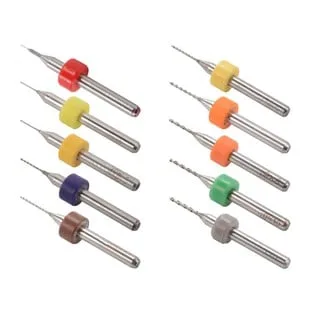
0.1–1.0mm Mixed Nozzle Cleaning Drill Bit Kit – 10Pcs for MK7/MK8
When PETG-CF clogs occur, this mixed-size drill bit kit clears the blockage quickly without damaging the nozzle interior. Essential maintenance kit for any printer running abrasive composite filaments.
Poor Layer Adhesion
If the part delaminate easily between layers, increase print temperature by 5°C, reduce cooling fan speed, reduce print speed for perimeters, and check that filament is thoroughly dry. PETG-CF with poor layer adhesion often has been exposed to humidity — the steam from moisture disrupts the polymer-fibre interface at layer boundaries.
Rough Surface Finish
PETG-CF’s carbon fibres create a naturally matte, slightly rough surface compared to standard PETG’s glossy finish. This is normal and not a defect — it is the surface texture of the exposed carbon fibres. For applications requiring smooth surfaces (sliding contact, aerodynamic surfaces), wet sanding with 400–800 grit followed by filling primer or epoxy coating will achieve smooth results. Unlike PLA or standard PETG, PETG-CF does not benefit from acetone or chloroform smoothing.
Frequently Asked Questions
Q: Can I print PETG-CF on my Ender 3 or CR-10?
A: Yes, but you need to upgrade the nozzle to stainless steel or hardened steel first — do not skip this step. The stock brass nozzle will wear quickly. Ender 3 with a direct drive extruder upgrade handles PETG-CF better than the stock Bowden configuration. Print temperature 255–265°C, bed 85°C with PEI sheet or glass + glue stick, and reduce cooling fan to 30–50%.
Q: Is PETG-CF food-safe?
A: No. The carbon fibre creates micro-crevices in the surface that harbour bacteria, and the hardened steel or stainless steel nozzles required may not meet food-contact material standards. Do not use PETG-CF for food contact applications — use food-safe PLA or PETG with a brass nozzle for those applications.
Q: How does PETG-CF compare to ABS for structural parts?
A: PETG-CF is significantly stiffer and lighter than ABS, and easier to print (no enclosure required, less warping). PETG-CF’s heat resistance (85–95°C HDT) is similar to ABS. However, PETG-CF is more brittle than ABS — it shatters under sharp impacts where ABS would dent and deform. For impact-absorbing applications, ABS remains better; for stiffness-critical applications, PETG-CF wins.
Q: Does PETG-CF work in Bambu printers?
A: Yes, and Bambu printers handle PETG-CF very well due to their high-flow hotends and precise temperature control. Always use the hardened steel nozzle version of the Bambu hotend — never the standard brass nozzle for CF materials. Bambu Studio has a built-in PETG-CF profile that provides excellent starting settings.
Q: How long does a hardened steel nozzle last with PETG-CF?
A: A good quality hardened steel nozzle typically handles 2–5kg of PETG-CF before showing significant wear. Track print hours — if extrusion line width starts increasing consistently, the nozzle orifice has worn and it is time for replacement. Keep a spare hardened nozzle in your maintenance kit.
Q: Can I use PETG-CF to make drone propellers?
A: Propellers are safety-critical and high-speed rotating parts — not recommended for 3D printed PETG-CF. Layer adhesion in FDM creates failure points that can cause catastrophic propeller failure at high RPM. Use commercially manufactured propellers. PETG-CF is appropriate for drone arms, body frames, camera mounts and landing gear.
Conclusion
PETG-CF represents a genuine step change in what desktop 3D printing can produce for structural applications. With stiffness 3.5–4.5× higher than standard PETG at essentially the same weight or lighter, it opens up applications in drones, robotics, automotive accessories, industrial jigs and sports equipment that standard filaments simply cannot address.
The keys to success are straightforward: invest in a hardened steel nozzle (non-negotiable), dry your filament properly, print at adequate temperature, use a larger nozzle (0.6mm preferred) for reliability, and design with fibre orientation in mind. The learning curve from standard PETG to PETG-CF is modest — most makers master it within 2–3 print sessions.
For Indian makers building drones, robots, agriculture tech and custom automotive parts, PETG-CF is one of the most exciting materials available today at accessible prices. Start your PETG-CF journey with quality materials and the right hardware from Zbotic’s 3D printing store.



Add comment