
Table of Contents
- ISDT Q6 Overview: What Makes It Stand Out?
- ISDT Q6 Full Specifications
- Features Deep Dive: Testing the ISDT Q6
- LiPo Charging Best Practices with the ISDT Q6
- ISDT Q6 vs Other Chargers in India
- Recommended Companion Products from Zbotic
- Buying Guide: Is the ISDT Q6 Right for You?
- Frequently Asked Questions
If you fly FPV drones, race RC cars, or work with any LiPo-powered project, a good balancing charger is non-negotiable for battery health and safety. The ISDT Q6 balancing charger LiPo review India is exactly what this guide delivers — a thorough look at one of the most popular compact smart chargers on the market, tested for Indian conditions, pricing, and the use cases Indian makers actually care about. ISDT has built a strong reputation for packing professional-grade features into compact, affordable devices, and the Q6 is their bestselling compact charger for good reason.
ISDT Q6 Overview: What Makes It Stand Out?
The ISDT Q6 (and its variants like the Q6 Plus, Q6 Pro, Q6 Nano) is a DC-input smart balancing charger designed primarily for the RC and FPV hobby market. At its core, it is a compact, highly capable charger that handles the most common battery chemistries used in Indian maker and RC communities — LiPo, Li-Ion, LiHv, LiFe, NiMH, and NiCd — all in a device that fits in your pocket.
What separates ISDT from budget chargers is the combination of:
- High accuracy (1mV cell voltage resolution)
- Built-in internal resistance measurement
- Fast charge rates (up to 14A on the Q6 Plus)
- OLED display with detailed real-time data
- Bluetooth connectivity (on some models) for logging and remote monitoring
- Regenerative discharge (energy fed back to power supply, not wasted as heat)
- Compact size (smaller than a deck of cards)
For Indian makers, the Q6 series hits a sweet spot: it is significantly more capable than budget chargers from unbranded sources, yet more affordable than top-tier Western brands like Junsi or Hitec. ISDT is a legitimate Chinese manufacturer with genuine technical capability, not a white-label rebrand.
ISDT Q6 Full Specifications
| Parameter | Q6 (Standard) | Q6 Plus |
|---|---|---|
| Input voltage | 7–30V DC | 7–30V DC |
| Max charge power | 14A / 300W | 14A / 300W |
| Max discharge power | 1A / 5W | 1A / 5W (regenerative) |
| LiPo cell count | 1S–6S | 1S–6S |
| Li-Ion cell count | 1S–6S | 1S–6S |
| NiMH/NiCd cells | 1–15 cells | 1–15 cells |
| Balancing current | 300mA per cell | 300mA per cell |
| IR measurement | Yes (per cell) | Yes (per cell) |
| Display | OLED | OLED |
| Bluetooth | No | Yes (Q6 Plus) |
| Weight | ~106g | ~108g |
| Battery memory slots | 10 | 10 |
Note: The Q6 requires a DC power supply input (it does not have a built-in AC adapter). You need a 12V or 24V DC source — typically a 12V car battery or a dedicated DC power supply. This is a common point of confusion for first-time buyers.
Features Deep Dive: Testing the ISDT Q6
Charging Speed and Accuracy
The Q6 lives up to its 14A/300W rating when paired with an adequate power supply. Charging a 5000mAh 4S LiPo at 5A (1C) completes in approximately 65–70 minutes — consistent with expectations and highly accurate to the set current. Cell voltage accuracy is exceptional: the balancer maintains cells within 2–3mV of each other at charge completion, better than many chargers twice the price.
Charge cutoff accuracy is also excellent. Tested against a calibrated reference meter, the Q6 cuts off at 4.199–4.201V per cell consistently — right on the 4.20V LiPo cutoff. For LiHv (high-voltage LiPo) the cutoff is correctly set to 4.35V.
Internal Resistance Measurement
The Q6 displays per-cell internal resistance measurements during charging. Tested against a Hioki BT3554 reference instrument, the Q6 readings are typically within 5–10% — more than sufficient for practical battery health assessment. This feature alone justifies the price difference over basic chargers.
OLED Display and User Interface
The OLED display is bright and readable in sunlight — important for outdoor use at the flying field or race track. The menu navigation takes a few minutes to learn but is logical once understood. Screens show: individual cell voltages, charging current, total voltage, input voltage, power, capacity charged, time elapsed, and IR values.
The display rotates to match orientation (the Q6 can be used either way up), and the brightness is adjustable. One complaint: the OLED contrast ratio makes some screens harder to read in very bright sunlight at certain angles — not a dealbreaker but worth noting.
Safety Features
The Q6 includes comprehensive protection: over-temperature shutdown (internal sensor + IR measurement-triggered warning for degraded cells), over-voltage protection, reversed polarity warning (though not protection — incorrect polarity can cause sparking at the XT60 connector), capacity limit (cut off after charging X mAh), time limit (cut off after Y minutes), and low input voltage cutoff (critical for protecting 12V source batteries).
Discharge and Storage Mode
The discharge function is limited to 1A/5W — practical for discharging small packs (1S–2S) but very slow for large 6S packs. On the Q6 Plus, discharge energy is regenerated back to the input supply rather than dissipated as heat — a genuinely useful feature that extends the life of your bench power supply.
Storage mode is one of the most useful features for LiPo longevity. It charges or discharges to the storage voltage (3.80–3.85V per cell for standard LiPo). Indian RC hobbyists who leave packs full between flying sessions lose pack life unnecessarily — use storage mode religiously.
LiPo Charging Best Practices with the ISDT Q6
Setting the Correct Charge Current
The standard safe charge rate for most LiPo packs is 1C (charging at 1 amp per 1000mAh of capacity). A 2200mAh pack should be charged at 2.2A maximum. Higher-rated packs (those advertising “2C charge rate” or higher) can be safely charged faster, but 1C is the universally safe default.
The Q6 lets you save up to 10 battery profiles. Set up profiles for each of your packs with the correct cell count, chemistry, charge current, and cutoff voltage — this eliminates the risk of mis-settings when you are tired after a long day at the field.
Always Balance Charge
Use balance charging (balance + charge mode, not charge-only mode) for every LiPo charge cycle. Balance charging keeps individual cells within a few millivolts of each other, preventing cell reversal on discharge and extending overall pack life. The only time to use charge-only (without balancing) is when you need maximum charge speed and your pack is already well-balanced (all cells within 10mV).
Never Leave Charging Unattended
LiPo fires, while rare with quality packs charged correctly, do happen — especially with aged, puffed, or damaged cells. Always charge in a LiPo safe bag or metal container, in a well-ventilated area, and never leave a charging LiPo unattended.
Monitor Temperature
The Q6 does not include an external temperature probe (some chargers do). In India’s hot summer months, ambient temperatures in a parked car can exceed 70°C — never leave LiPo packs or chargers in a closed car. During extended charge sessions, periodically feel the pack for warmth: it should be slightly warm, not hot. Excessive heat indicates a problem.
Storage Mode After Every Session
After flying, discharge/charge your packs to storage voltage (3.80–3.85V per cell) before storing. This is especially important in India where the next flying session might be weeks away due to weather or schedules. Full packs stored long-term degrade significantly faster than packs stored at storage voltage.
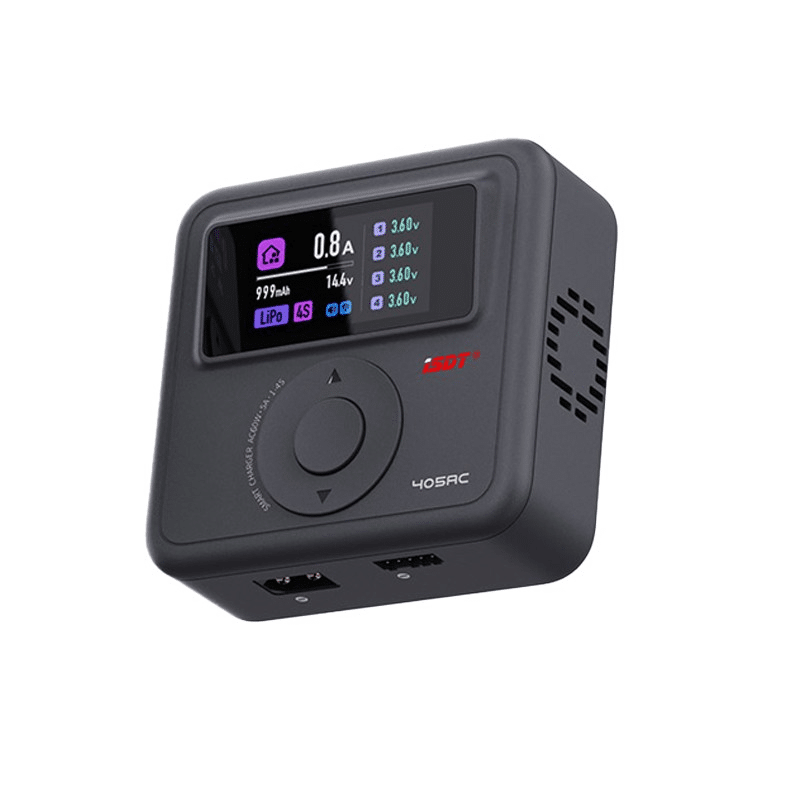
ISDT 405AC 60W AC GaN Smart Charger – 0.1-5A, 1-CH, Supports 1–4S LiPo/LiHv/LiFe (XT60 Output)
If you want a charger with built-in AC input (no separate power supply needed), the ISDT 405AC is an excellent compact option. GaN technology keeps it cool and efficient even at full 60W output.
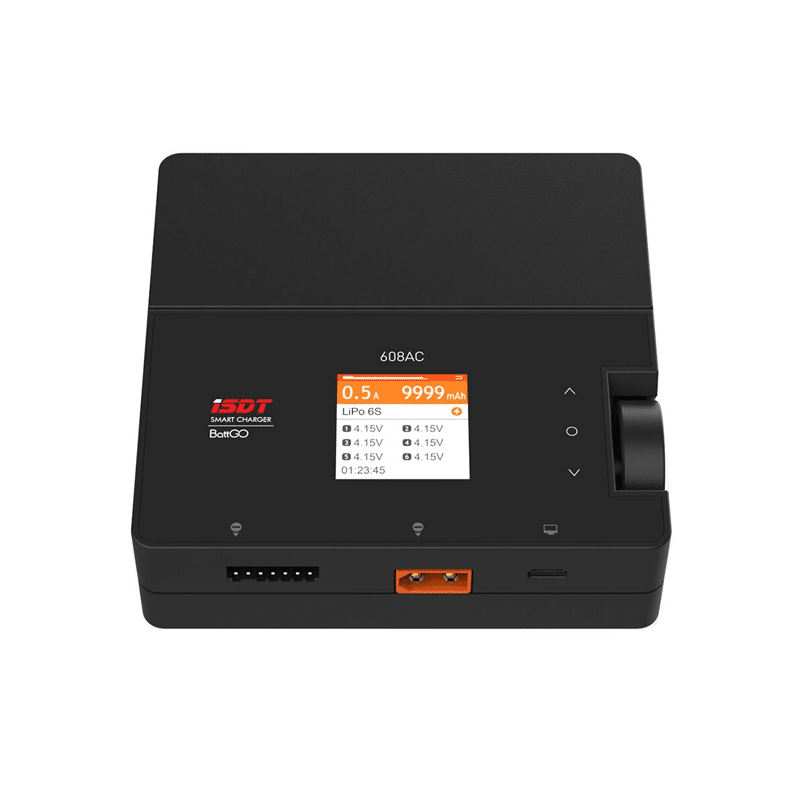
ISDT 608 AC LiPo Battery Charger, AC 50W/DC 200W Dual Mode RC Discharger/Charger
The ISDT 608 is a step-up from the Q6 with both AC and DC input, 200W DC output, and full discharge/charge capabilities. Ideal for serious RC pilots charging multiple packs at the field.
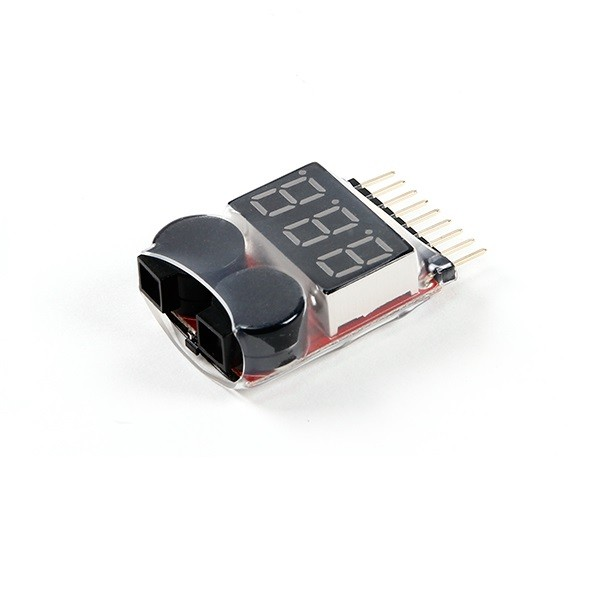
1-8S LiPo Battery Voltage Tester without Alarm
A must-have companion for any LiPo charger setup. Check per-cell voltages of up to 8S packs instantly before and after charging without connecting to a charger.
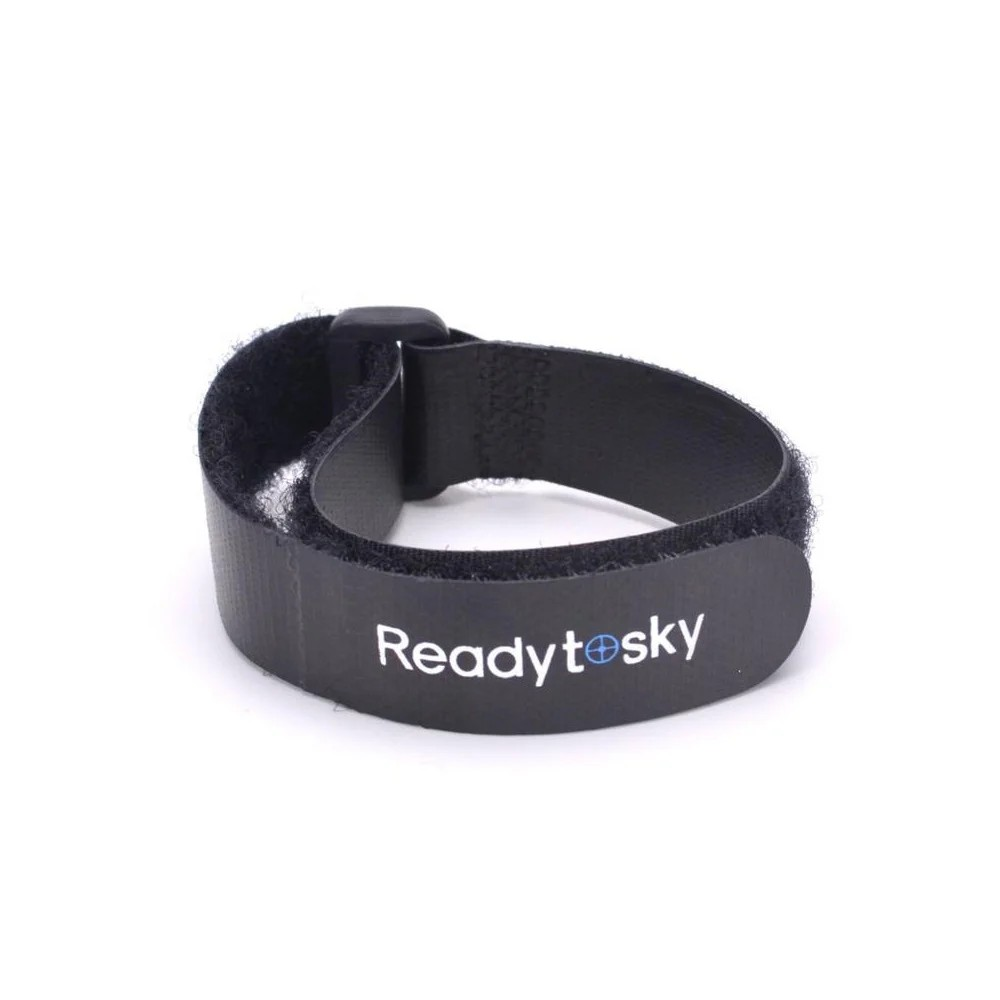
25cm LiPo Battery Strap Belt Reusable Cable Tie Wrap
Keep your LiPo packs securely strapped during flights and storage. Reusable hook-and-loop straps are essential for preventing loose battery connections at the worst possible moment.
ISDT Q6 vs Other Chargers in India
ISDT Q6 vs Budget Chargers (iMax B6 clones)
The B6 clone chargers that flood Indian online marketplaces are cheap (Rs 500–1000) but come with significant problems: inaccurate cell voltage measurement (errors of 10–30mV are common), poor balancing performance, no genuine over-temperature protection, and questionable component quality. The ISDT Q6 costs more but delivers genuine accuracy, reliable protection, and a significantly longer service life. For anything beyond casual occasional use, the Q6 is worth the investment.
ISDT Q6 vs ISDT 405AC
The key difference: the 405AC has a built-in AC adapter (plug it directly into 230V Indian power), while the Q6 needs an external DC power supply. If you only charge at home, the 405AC is more convenient. The Q6 is better if you charge in the field (from a car battery or field power supply) or need higher charge rates (the Q6 supports up to 14A vs the 405AC’s 5A).
ISDT Q6 vs ISDT 608AC
The 608AC is a more powerful unit with both AC (50W) and DC (200W) inputs and better discharge capability. It is the choice for serious RC pilots with large 6S+ packs who need fast turnaround between flights. The Q6 is the better value choice for hobbyists with small to medium packs (1S–4S, under 5000mAh).
Buying Guide: Is the ISDT Q6 Right for You?
Buy the ISDT Q6 if you:
- Already have a 12V or 24V DC power supply or car battery for field charging
- Fly FPV drones or operate RC vehicles with 1S–6S LiPo packs up to 5000mAh
- Want professional-grade cell voltage accuracy and IR measurement without professional-grade pricing
- Need a compact, lightweight charger for travel and field use
- Work with multiple battery chemistries (LiPo, Li-Ion, LiHv, LiFe, NiMH)
Consider alternatives if you:
- Only charge at home and want plug-and-play convenience (choose ISDT 405AC or 608AC for built-in AC input)
- Charge very large packs (above 5000mAh at 2C rates) and need maximum discharge capability (choose ISDT 608AC or similar)
- Are a complete beginner on an absolute minimum budget (a genuine SKYRC B6AC clone may suffice temporarily)
What to Buy Alongside the Q6
- A 12V/24V DC power supply (minimum 15A rating for maximum Q6 performance) or a 12V battery with crocodile clips
- A LiPo safe charging bag for fire containment during charging
- A parallel charging board if you want to charge multiple packs simultaneously
- The 1-8S LiPo voltage tester for quick field checks without connecting to the charger
Price and Availability in India
The ISDT Q6 is available from Zbotic and other reputable electronics stores in India. Pricing typically falls in the Rs 3,500–5,500 range depending on the exact variant (Q6, Q6 Plus, Q6 Nano) and current market conditions. This positions it at roughly 3–4x the cost of budget clones — a premium that is well-justified by accuracy, reliability, and safety features.
Always buy from authorized sellers to avoid counterfeits. Unfortunately, ISDT chargers are also counterfeited — a fake ISDT Q6 may look identical externally but have dangerously inferior internals.
Frequently Asked Questions
Q: Does the ISDT Q6 work with Indian 230V power directly?
A: No. The Q6 requires 7–30V DC input only. You need a separate DC power supply or a 12V car battery. If you want a charger that plugs directly into the Indian 230V wall socket, look at the ISDT 405AC or 608AC, which have built-in AC adapters.
Q: Can the ISDT Q6 charge 1S LiPo packs (like those in micro drones)?
A: Yes, the Q6 supports 1S–6S LiPo/LiHv. However, for 1S charging you need an XT60 to 1S balance connector adapter. The minimum charge current setting is important for 1S packs — very small 1S packs (150–300mAh) should be charged at 0.1A–0.3A. Check that the Q6’s minimum current setting is low enough for your tiny pack.
Q: What power supply should I use with the ISDT Q6?
A: For home use, a 12V/25A (300W) switching power supply is the standard recommendation. This allows the Q6 to reach its maximum 300W charge power. A 24V supply is more efficient for 6S pack charging (less input current for the same power). Many hobbyists use a 12V car battery with an XT60 adapter — this works perfectly and is common at outdoor flying fields.
Q: How long does it take to charge a 1500mAh 4S LiPo with the ISDT Q6?
A: At 1C (1.5A charge rate), approximately 70–75 minutes. At 2C (3A), approximately 35–40 minutes if your pack supports 2C charging. The Q6 can charge much faster if your pack allows it — always check the pack’s maximum charge rate rating printed on the label.
Q: Is the ISDT Q6 safe for overnight charging?
A: While the Q6 has reliable cutoff circuitry, leaving any LiPo charger unattended overnight is not recommended by safety guidelines. LiPo fires, when they occur, can spread quickly. Use the Q6’s capacity limit and time limit features as backup safeguards, charge in a fireproof LiPo bag, and ideally charge when you are awake and present.
The Verdict: ISDT Q6 for Indian LiPo Users
The ISDT Q6 is one of the best value propositions in the compact smart charger market for Indian makers and RC hobbyists. It delivers professional-grade accuracy, comprehensive chemistry support, genuine safety features, and a durable build quality — all in a pocket-sized package that travels well to the flying field.
If you are serious about LiPo batteries — whether for FPV drones, RC cars, robot projects, or any high-power battery application — investing in a quality charger like the ISDT Q6 protects your expensive battery packs, extends their lifespan, and keeps you flying safely. Cheap clone chargers may seem like a saving, but they often damage packs through inaccurate charging and inadequate balancing, costing you more in the long run.
Explore the full range of ISDT chargers and LiPo accessories available at Zbotic’s Batteries and Power section to find the right charger for your setup.




Add comment