
Whether you’re building a robotic hand, a pan-tilt camera mount, an RC plane, or a small automation project, you almost certainly need a mini servo motor. The good news: India now has a thriving electronics component market, and you can get genuinely capable servo motors for well under ₹100 — if you know which ones to pick and what the real specs mean.
This guide covers everything: how mini servos work, a breakdown of the most popular budget models available in India (SG90, MG90S, and similar), how to interface them with Arduino and ESP32, and what to watch out for when buying cheap. We’ll also show you exactly where to get them with reliable shipping.
How a Mini Servo Motor Works
A servo motor is a self-contained unit combining a DC motor, a gear train, a position sensor (potentiometer), and a control circuit board — all in a small plastic housing. Unlike a plain DC motor that just spins, a servo actively holds an angular position.
The control signal is a PWM (Pulse Width Modulation) signal on the signal wire (usually orange or yellow):
- Signal period: 20ms (50Hz)
- 1ms pulse → 0° position
- 1.5ms pulse → 90° (centre position)
- 2ms pulse → 180° position
The onboard controller reads the potentiometer, compares the current position to the commanded position, and drives the motor until they match. This is a closed-loop position control system — that’s what makes servos precise and self-correcting.
Standard vs Continuous Rotation Servos
- Standard servo (180°): Moves to a specific angle and holds. The potentiometer limits rotation to ~180°. Most SG90s are this type.
- Continuous rotation servo: Modified to rotate continuously. PWM controls speed and direction, not position. The potentiometer is replaced or centred. Used in wheeled robots.
SG90: The Most Popular Budget Servo
The SG90 is the world’s most widely used hobbyist servo motor, and it’s available in India for ₹60–₹90. Designed originally by TowerPro, it has been cloned extensively — which is why you’ll find both branded TowerPro versions and generic “China chip” versions in the market.
SG90 Key Specifications
| Parameter | SG90 (TowerPro) | Generic SG90 |
|---|---|---|
| Operating Voltage | 4.8V – 6V | 4.8V – 6V |
| Torque @ 4.8V | 1.8 kg-cm | 1.2 – 1.6 kg-cm |
| Speed @ 4.8V | 0.1 sec/60° | 0.12 – 0.15 sec/60° |
| Weight | 9g | 9 – 11g |
| Gear Material | Nylon/Plastic | Nylon/Plastic |
| Price in India | ₹80 – ₹100 | ₹60 – ₹80 |
Budget Servo Comparison Table
Here’s a comparison of the most popular mini servos under or around ₹100 that are available in India:
| Model | Torque | Voltage | Gears | Weight | Best For |
|---|---|---|---|---|---|
| SG90 (China chip) | ~1.5 kg-cm | 4.8–6V | Nylon | 9g | Learning, light arms, RC |
| TowerPro SG90 | 1.8 kg-cm | 4.8–6V | Nylon | 9g | Reliable hobby projects |
| MG90S | 2.2 kg-cm | 4.8–6V | Metal | 13.4g | Durability, higher loads |
| MG996R (budget) | 9–13 kg-cm | 4.8–7.2V | Metal | 55g | Robot arms, steering |
Note: MG996R is not strictly a “mini” servo but is included for comparison as it’s the next step up from budget mini servos.
Specs Decoded: Torque, Speed & Gear Material
Torque (kg-cm)
Servo torque is the force the servo can exert at 1cm from the shaft. The SG90’s 1.8 kg-cm means it can lift approximately 1.8kg at 1cm from the shaft, or 0.18kg at 10cm. For a robot finger or small flipper, this is adequate. For a robotic arm with a 20cm forearm holding 200g, you need 200g × 20cm = 4000 g-cm = 4 kg-cm — the SG90 would struggle. Upgrade to MG996R territory.
Speed (sec/60°)
Lower is faster. SG90 at 0.1 sec/60° is reasonably quick. Don’t confuse “fast servo” with “more torque” — they’re independent specs. For camera pan-tilt smoothness you might actually want a slightly slower servo to avoid jerky movement.
Nylon vs Metal Gears
- Nylon (plastic) gears: Quieter, lighter, absorb shock without shattering — but strip under high torque or sudden stalls. SG90 and most sub-₹80 servos use nylon gears.
- Metal gears (MG90S, MG996R): Handle higher torque, more durable under stall conditions, but slightly heavier and can be noisier. Worth the small extra cost for any load-bearing application.
Wiring & Arduino Control
Servo Connector Pinout
All standard hobby servos use a 3-pin JST/JR connector:
- Brown / Black: GND
- Red: +5V (power supply)
- Orange / Yellow / White: Signal (PWM)
Critical: Do NOT power servos from Arduino’s 5V pin for real projects. The SG90 draws up to 250mA at load. Multiple servos will brownout the Arduino. Use a separate 5V supply (or 4x AA batteries) for the servo power, sharing only the GND with Arduino.
Arduino Servo Library
#include <Servo.h>

Servo myServo;

void setup() {
  myServo.attach(9);  // Signal wire to pin 9
  myServo.write(90);  // Move to centre (90 degrees)
}

void loop() {
  myServo.write(0);    // Go to 0 degrees
  delay(1000);
  myServo.write(90);   // Go to 90 degrees
  delay(1000);
  myServo.write(180);  // Go to 180 degrees
  delay(1000);
}
ESP32 / ESP8266 Note
ESP32 GPIO outputs 3.3V logic, but most servos accept 3.3V signals fine (the signal threshold is about 2.5V). The power supply must still be 5V — do not power the servo from the ESP32’s 3.3V pin.
Using Multiple Servos with PCA9685
The PCA9685 is a 16-channel PWM driver module (I2C interface) that lets you control up to 16 servos with just 2 Arduino pins plus a dedicated power supply. Essential for robot arms, hexapods, and any project using 4+ servos simultaneously. Available from Zbotic.
Project Ideas for Mini Servos
- Pan-Tilt Camera Mount: Two SG90s on XY axes for a surveillance or gimbal system. Total cost under ₹200.
- Robotic Hand / Finger: 4–5 SG90s controlling individual fingers via strings/tendons. Great engineering college project.
- RC Plane Elevon/Rudder: SG90 is standard for small foam RC planes. Lightweight and fast.
- Automated Door Lock: Single SG90 or MG90S rotating a latch mechanism — Arduino + Bluetooth control.
- Solar Tracker Single Axis: MG996R for heavier solar panels, SG90 for small learning models. Light sensor feedback.
- Drawing Robot (Plotter): Servo for pen lift/lower (Z axis) combined with stepper motors for XY movement.
- Robotic Arm (4 DOF): 4× SG90 + 1× MG996R (for base rotation) = full desktop robotic arm under ₹600 total.
- Hexapod Robot: 12 or 18 SG90s for a 6-legged walking robot. Use PCA9685 for servo control.
Buying Tips: Avoiding Fakes & Poor Quality
With budget servos flooding the market from grey-market sellers, here’s how to ensure you get a reliable unit:
- Buy from reputable Indian electronics retailers like Zbotic — not random marketplace listings. Genuine TowerPro SG90s have consistent markings, and quality Chinese clones from known OEMs are actually fine for most projects.
- Check the weight: A genuine 9g SG90 should weigh approximately 9 grams. Some counterfeits are lighter (cheaper materials) or heavier (extra plastic, lower-quality motor).
- Test torque immediately: Use a popsicle stick as a lever arm with a known weight. If claimed 1.8 kg-cm can’t hold 180g at 1cm, you’ve got a substandard unit.
- Listen for gear noise: Some very cheap servos have poorly formed gears that grind or chatter. A little hum is fine; grinding is not.
- Check the potentiometer: Jitter (micro-oscillation when at rest) often indicates a worn or low-quality pot. The servo should hold position silently when at rest with no load.
Best Mini Servos to Buy from Zbotic

TowerPro SG90 180 Degree Rotation Servo Motor
The genuine TowerPro SG90 — the gold standard for budget hobby servos. 1.8 kg-cm torque, 9g, 180° travel. Perfect for beginners and makers alike.
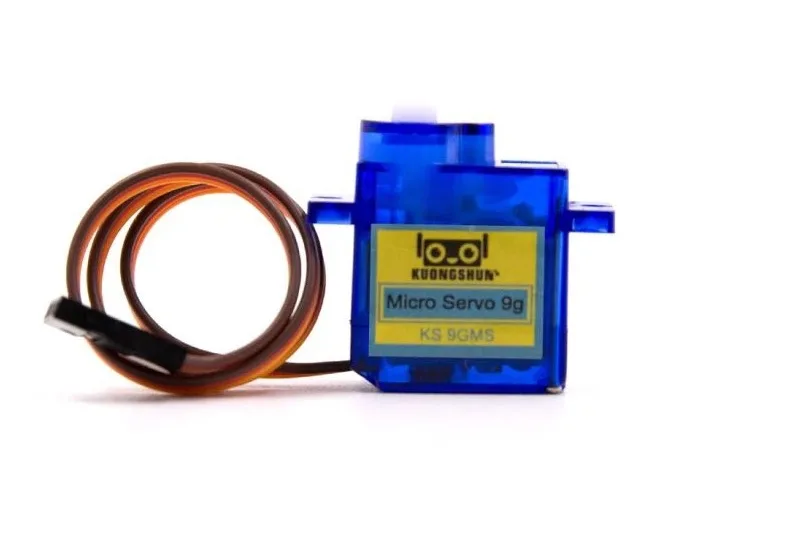
Servo SG90 9g 180 Degree (China Chip)
Budget SG90 clone — excellent value for learning projects, school builds, and prototyping where cost matters more than peak performance.

Servo MG996 13KG 180 Degree (High Quality)
When SG90 isn’t enough — 13 kg-cm with metal gears for robotic arms, steering, and heavy-duty projects. The definitive upgrade from the SG90.
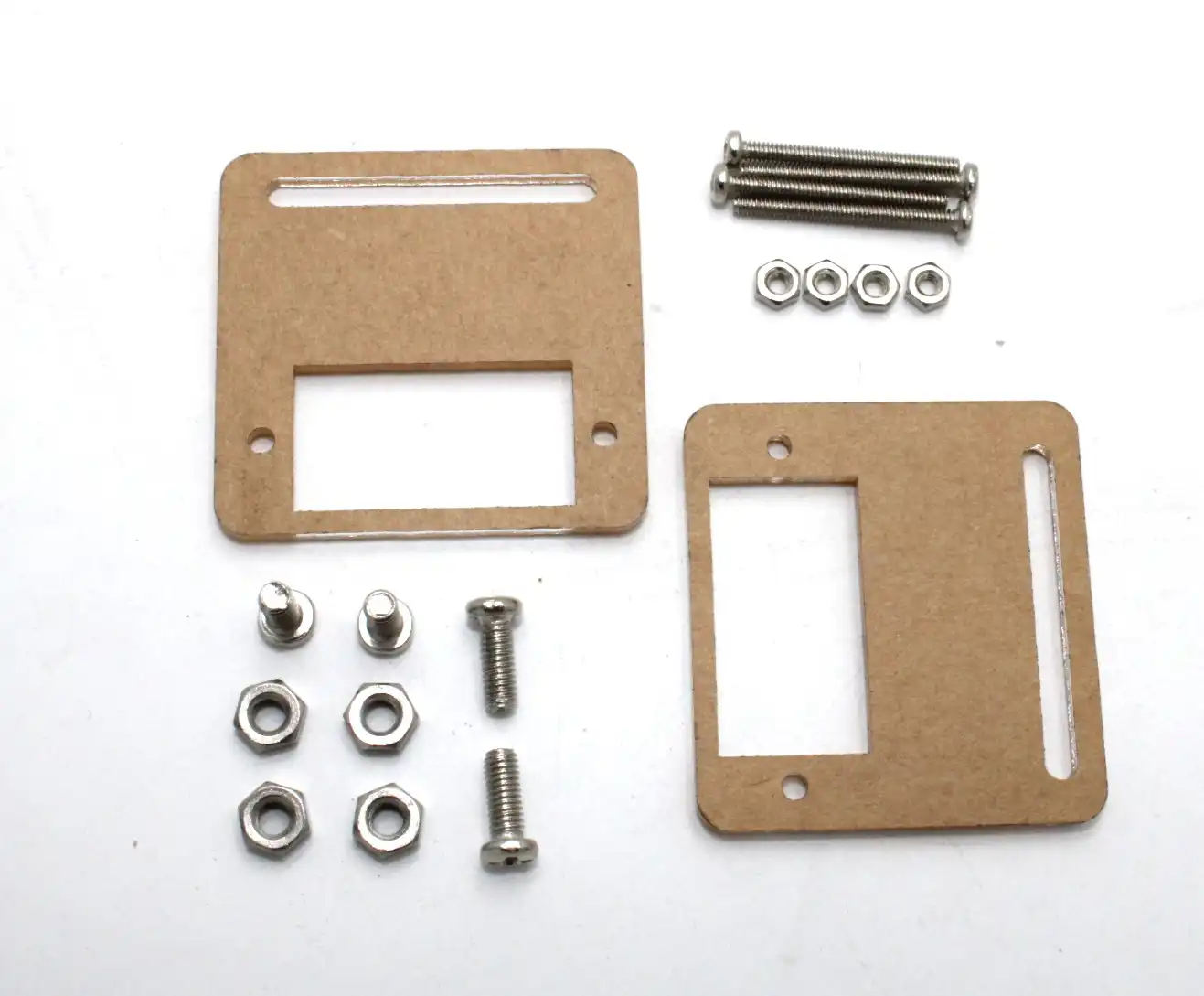
Servo Mount Holder Bracket for SG90/MG90 (Pack of 2)
Plastic mounting brackets designed for SG90 and MG90 servos — essential for clean, rigid servo installations in pan-tilt rigs and robot frames.
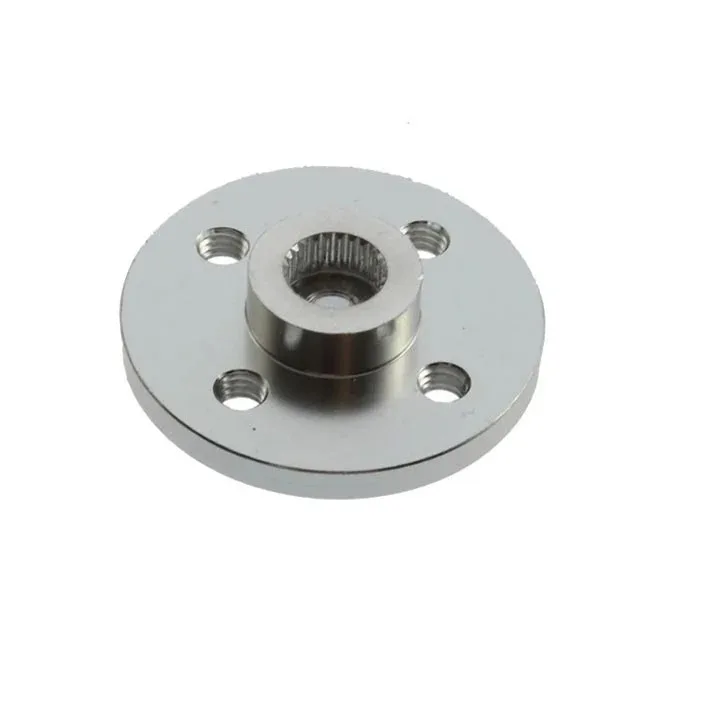
Aluminum Servo Horn/Arm 25T Round Type Disc (MG995/MG996)
Upgrade from plastic servo horns to aluminium for robotic arms — far stronger attachment, won’t strip under high torque. Compatible with 25T spline servos.
Frequently Asked Questions
Q1: Can I power an SG90 servo directly from Arduino’s 5V pin?
For a single servo running lightly loaded and just for testing, the Arduino’s 5V regulator can sometimes manage (it’s rated to about 500mA total on the Uno’s onboard regulator). However, for any real project, especially with two or more servos, always use a separate 5V power supply. Connect the grounds together but keep servo power separate from Arduino power.
Q2: What is the difference between SG90 and MG90S?
Both have the same physical footprint and operate on 4.8–6V. The SG90 uses nylon (plastic) gears; the MG90S uses metal gears. The MG90S is slightly heavier (13.4g vs 9g) and rated for a bit more torque (2.2 vs 1.8 kg-cm). Choose MG90S whenever your servo might stall under load or needs longer service life.
Q3: What is the maximum number of servos I can control with an Arduino Uno?
The Arduino Servo library can handle up to 12 servos on the Uno (using Timer1 and Timer3). However, powering more than 2–3 servos from Arduino’s onboard 5V regulator is not recommended. Use a PCA9685 PWM driver board for 4+ servos.
Q4: My servo is jittering at rest — what’s wrong?
Jitter at rest is usually caused by: (1) electrical noise on the power supply — add a 100µF capacitor across the servo power lines; (2) signal wire interference — keep signal wires away from motor power wires; (3) a worn potentiometer inside the servo — the servo may need replacement; (4) PWM signal drift from your microcontroller — use a dedicated PWM library, not manual delay loops.
Q5: Can I run an SG90 at 3.7V (LiPo battery)?
Technically yes, but you’ll get significantly less torque (roughly 70% of 4.8V rated torque). The servo will work but weakly. For battery-powered projects, use 4.8V (4× AA NiMH cells) or 5V regulated. A single 3.7V LiPo is marginal. Two LiPo cells in series (7.4V) would overvolt the SG90 — don’t do this without a 5V regulator.
Conclusion
Mini servo motors under ₹100 are genuinely capable components. The SG90 — whether TowerPro branded or a quality clone — is sufficient for an enormous range of projects: camera rigs, light robotic arms, RC planes, automation, and student projects. When you need more torque or durability, step up to the MG90S (metal gears, same size) or MG996R (same PWM interface, 7× more torque).
The key rules: power servos from a dedicated 5V supply (not Arduino’s pin), use the correct PWM library, and choose metal gears whenever the servo might stall. Follow those three rules and your servo projects will be reliable and long-lasting.
Get Your Servo Motors Delivered Across India
Shop the full range of SG90, MG90S, MG996R servos and accessories — with fast shipping nationwide from Zbotic.


Add comment