
Proximity sensors are among the most widely used components in robotics, automation, and IoT projects in India. Whether you’re building an obstacle-avoiding robot, an automatic hand sanitizer dispenser, a presence detection system, or an industrial counter, choosing the right proximity sensor for your Arduino or Raspberry Pi project is crucial. This comprehensive buying guide covers every major type of proximity sensor available in India, explains when to use each, and helps you make an informed purchasing decision.
Types of Proximity Sensors
Proximity sensors detect the presence or distance of objects without physical contact. Different technologies suit different applications:
- Infrared (IR): Detect nearby objects by reflecting IR light. Short range, low cost, good for obstacle avoidance.
- Ultrasonic: Use sound waves to measure distance accurately. Excellent range (2cm–4m), unaffected by object color or transparency.
- Capacitive: Detect changes in electric field. Can sense non-metallic objects through surfaces, ideal for liquid level and touch detection.
- Inductive: Detect metallic objects only, extremely durable for industrial environments.
- LiDAR/ToF (Time of Flight): Laser-based high-precision distance measurement. High accuracy, compact, expensive.
- PIR (Passive Infrared): Detect moving warm bodies (humans, animals). Used for motion detection and security.
IR Proximity Sensors
How IR Proximity Sensors Work
An IR proximity sensor emits infrared light from an IR LED and detects the reflected light with an IR photodiode or phototransistor. When an object comes within range, the reflected IR light is detected and the sensor outputs a digital LOW signal (active LOW logic).
Popular Models in India
TCRT5000 Line Tracking / Proximity Sensor
The TCRT5000 is the most popular IR proximity sensor among Arduino hobbyists in India. It integrates both the IR emitter and detector in a single compact package. Typical detection range: 2–15mm. Extensively used in line-following robots, encoder discs, and short-range obstacle detection.
Pros: Very affordable (₹15–40), compact, available on modules with adjustable sensitivity potentiometer.
Cons: Very short range (max ~15mm), affected by ambient IR light (sunlight).
FC-51 Infrared Obstacle Avoidance Sensor Module
A widely used module for robot obstacle avoidance with adjustable detection distance from 2cm to 30cm via an onboard potentiometer. Outputs both analog and digital signals. Very popular for Arduino Uno robot car kits sold in India.
Pros: Adjustable range up to 30cm, digital output easy for beginners, cheap (₹40–80).
Cons: Not reliable in direct sunlight, can’t distinguish between white and transparent objects.
E18-D80NK Diffuse Reflective Sensor
A cylindrical industrial-style IR proximity sensor with detection range up to 80cm. Weatherproof and more robust than module-type sensors. Popular for 3D printer filament runout detection and conveyor belt object counting.
Pros: Up to 80cm range, robust housing, adjustable sensitivity.
Cons: More expensive (₹150–300), slightly larger form factor.
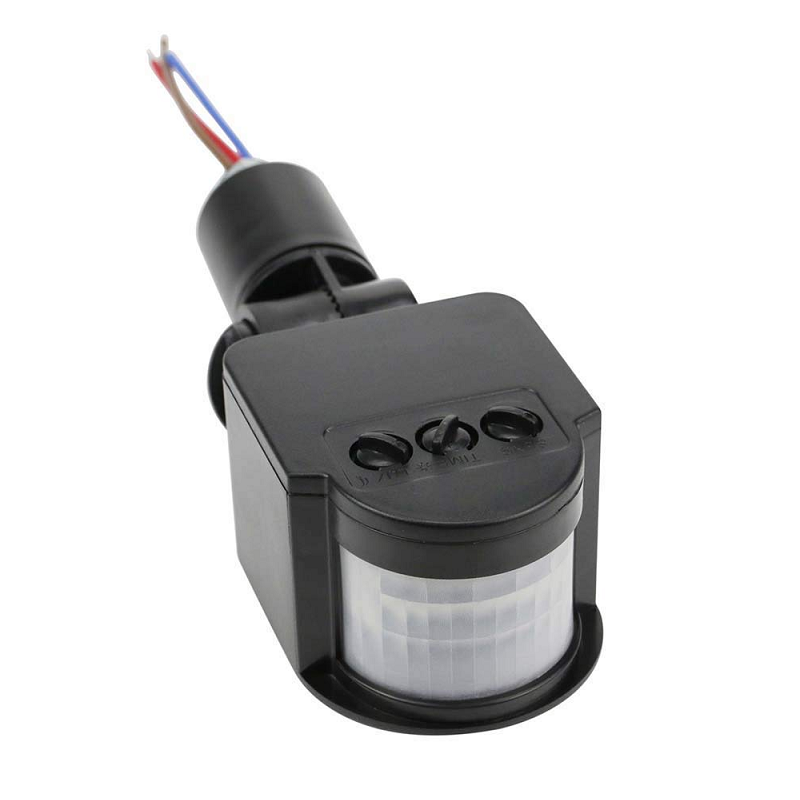
AC 220V Security PIR Human Body Motion Sensor with LED Switch
Ready-to-install 220V PIR sensor for automatic staircase, corridor, and security lighting. No Arduino needed — directly replaces your light switch.
Ultrasonic Sensors (HC-SR04 and Variants)
Ultrasonic sensors are the most popular choice for distance measurement in Arduino projects in India. They work by emitting a 40kHz sound pulse and measuring the time for the echo to return, then calculating distance using the speed of sound.
HC-SR04 — The Beginner’s Standard
The HC-SR04 is likely the most sold sensor module in India’s Arduino ecosystem. Measuring range: 2cm to 400cm, accuracy ±3mm.
Specs: 5V operation, 15mA current draw, 15° beam angle, 10µs trigger pulse needed.
Price in India: ₹50–120
Best for: Robot obstacle avoidance, parking sensors, liquid level measurement, intruder detection zones.
JSN-SR04T — Waterproof Ultrasonic
The JSN-SR04T uses a waterproof probe (separated from the main board) for measuring liquid levels or outdoor distance sensing. The same HC-SR04 code works with it. Detection range: 25cm to 450cm.
Best for: Water tank level monitoring, outdoor weather-exposed installations, underwater distance measurement.
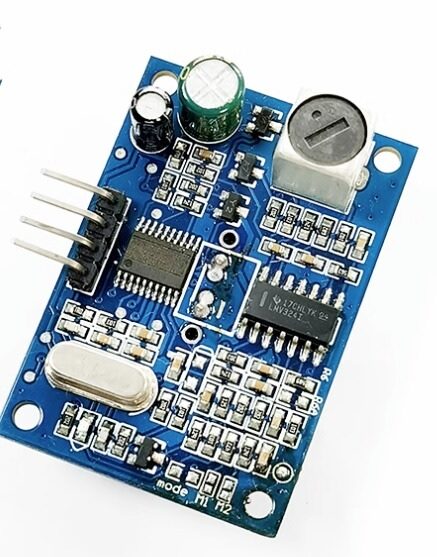
JSN-SR04T Waterproof Ultrasonic Rangefinder Module V3.0
Waterproof probe design perfect for water level monitoring, outdoor robotics, and environments where moisture or splashing is a concern.
Capacitive Proximity Sensors
Capacitive proximity sensors detect the change in electric field capacitance when an object (metallic or non-metallic) enters the sensing range. Unlike inductive sensors, they can detect plastics, liquids, wood, and even human hands through non-metallic walls.
TTP223 Touch Sensor Module
A capacitive touch sensor that detects finger proximity/touch. Detection through 3–4mm of material is possible. Used for touch buttons in enclosures, lamp switches, and capacitive keyboards. Very popular in Indian DIY projects.
Price: ₹30–60 | Best for: Touch interfaces, hidden buttons through enclosures, liquid level detection
LJC18A3 Capacitive Proximity Switch
An industrial cylindrical capacitive sensor. Detects non-metallic materials (plastic, liquid, wood) at 1–8mm range. Operates at 6–36V DC. Used in industrial conveyor and packaging automation.
Price: ₹200–500 | Best for: Industrial automation, plastic/liquid detection, harsh environments
Inductive Proximity Sensors
Inductive sensors generate an electromagnetic field and detect changes caused by metallic objects entering the field. They exclusively detect metals — steel, iron, aluminum, copper — and ignore plastic, wood, and other non-metals. They are extremely durable, with no moving parts and sealed construction.
LJ12A3 Inductive Proximity Sensor
The standard M12 cylindrical inductive sensor commonly used in Indian industrial and 3D printer applications. Detection distance: 2–4mm for ferrous metals.
Price: ₹150–350 | Best for: CNC machine homing, metal object counting, 3D printer bed leveling (BLTouch alternative)
LiDAR and Time-of-Flight (ToF) Sensors
LiDAR and ToF sensors represent the high end of proximity sensing. They use laser pulses to measure distance with millimeter accuracy, compact form factors, and fast update rates.
VL53L0X Time-of-Flight Sensor
ST Microelectronics’ VL53L0X is a single-zone ToF sensor in a tiny 2.5mm × 2.5mm package. Accurate to ±3% over 2m. I2C interface (address 0x29). Arduino library available from Pololu.
Price in India: ₹200–400 | Best for: Precise short-range distance (0–2m), gesture detection, drone altitude hold, robot cliff detection
TFmini-S LiDAR Module
A compact LiDAR sensor with 0.1m–12m range and ±1% accuracy. UART or I2C interface. Much higher range than ultrasonic sensors with better accuracy.
Price in India: ₹1,500–3,000 | Best for: Drone altitude, blind spot detection, industrial AGVs
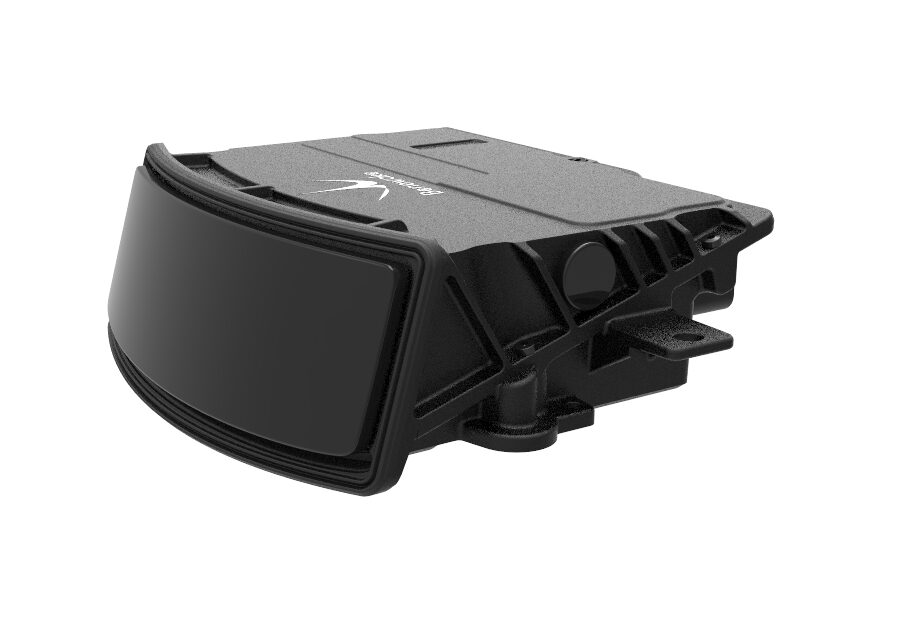
Benewake AD2-S-X3 Automotive-Grade LiDAR Sensor
Professional-grade 3D LiDAR for autonomous driving and advanced robotics applications. Ideal for research projects and advanced autonomous systems.
PIR Motion Sensors
PIR (Passive Infrared) sensors detect the infrared radiation emitted by warm bodies — humans and animals. They don’t emit any signal of their own, which is why they’re called passive. They are the standard sensor for motion-activated lights, security alarms, and automatic doors across India.
HC-SR501 PIR Motion Sensor
The most popular PIR module for Arduino in India. Detection range up to 7 meters, 120° cone angle. Two onboard potentiometers control sensitivity (1–7m) and time delay (3s–5 minutes) that the output stays HIGH after motion is detected.
Price: ₹50–120 | Best for: Security alarms, automatic lights, intruder detection
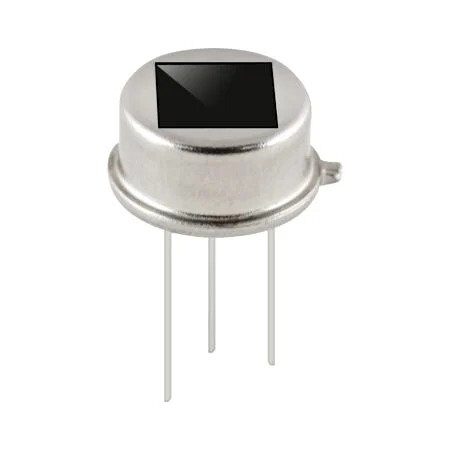
B2X2 4-Element Infrared Motion Analog PIR Sensor for Lighting
A 4-element dual-beam PIR sensor with analog output, offering reduced false alarms compared to standard single-element PIR sensors for professional security systems.
Full Comparison Table
| Sensor Type | Range | Detects | Price (India) | Interface | Best Use Case |
|---|---|---|---|---|---|
| IR (FC-51) | 2–30cm | Opaque objects | ₹40–80 | Digital/Analog | Robot obstacle avoidance |
| Ultrasonic (HC-SR04) | 2cm–4m | Any solid/liquid | ₹50–120 | TRIG/ECHO | Distance measurement |
| Ultrasonic (JSN-SR04T) | 25cm–4.5m | Any solid/liquid | ₹200–400 | TRIG/ECHO | Water level (outdoor) |
| Capacitive (TTP223) | 0–10mm | Any material | ₹30–60 | Digital | Touch buttons, liquid level |
| Inductive (LJ12A3) | 2–4mm | Metals only | ₹150–350 | Digital (NPN/PNP) | CNC homing, 3D printing |
| ToF (VL53L0X) | 1cm–2m | Any solid | ₹200–400 | I2C | Precise distance, drones |
| PIR (HC-SR501) | Up to 7m | Moving warm bodies | ₹50–120 | Digital | Security, auto lighting |
| LiDAR (TFmini-S) | 0.1–12m | Any surface | ₹1,500–3,000 | UART/I2C | Autonomous drones/robots |
How to Choose the Right Sensor
Use this decision framework to select the best proximity sensor for your specific application:
Ask These Questions
- What is the required detection range? Under 5cm → IR/capacitive. 5cm–4m → ultrasonic. Over 4m → LiDAR/PIR.
- What type of object are you detecting? Metal only → inductive. Any solid → IR/ultrasonic. Transparent objects → ultrasonic. Moving people → PIR. Through walls → capacitive.
- Do you need distance measurement or just presence detection? Just presence → IR or PIR. Distance measurement → ultrasonic, ToF, or LiDAR.
- What is your budget? Under ₹100 → IR or HC-SR04. ₹100–500 → JSN-SR04T, VL53L0X. ₹500+ → LiDAR.
- Indoor or outdoor? Outdoor requires weatherproof sensors (JSN-SR04T, E18-D80NK) or protective enclosures.
- Does the environment have bright sunlight? Avoid IR sensors outdoors without IR filter — use ultrasonic or capacitive instead.
Tips for Using Proximity Sensors with Arduino & Raspberry Pi
Arduino Uno / Nano
- HC-SR04 requires precise timing — use the
pulseIn()function or theNewPinglibrary for reliable readings. - NPN-output inductive sensors: connect output through a 1kΩ pull-up resistor to 5V for proper HIGH/LOW levels.
- Multiple HC-SR04 sensors: stagger trigger pulses (never trigger two simultaneously) to avoid echo cross-talk.
Raspberry Pi
- Raspberry Pi GPIO is 3.3V — use a voltage divider (1kΩ + 2kΩ) on the HC-SR04 ECHO pin (which outputs 5V).
- Python libraries:
gpiozerohas built-in support for HC-SR04 with theDistanceSensorclass. Very clean and easy. - For I2C sensors (VL53L0X), enable I2C in
raspi-configand install the corresponding Python library from pip.
Frequently Asked Questions
What is the best proximity sensor for a beginner in India?
The HC-SR04 ultrasonic sensor is the best starting point for Arduino beginners in India. It costs ₹50–100, is available everywhere, works reliably with a simple library, and teaches the fundamental concept of distance measurement. After mastering HC-SR04, move to IR sensors for obstacle avoidance robots, and then explore ToF sensors for precision applications.
Can I use an HC-SR04 with Raspberry Pi?
Yes, but with a voltage divider on the ECHO pin. The HC-SR04 outputs 5V on ECHO, but Raspberry Pi GPIO is only 3.3V tolerant. Use a voltage divider with 1kΩ and 2kΩ resistors to bring the 5V ECHO signal down to 3.3V. The TRIG pin can connect directly since 3.3V HIGH is recognized as valid by the HC-SR04.
What is the difference between active and passive infrared sensors?
Active IR sensors (like FC-51 or TCRT5000) emit their own infrared light and detect the reflection — they can sense any object in their range. Passive IR (PIR) sensors only detect the infrared heat emitted by warm bodies (humans, animals) — they don’t emit any light and cannot detect static cold objects or inanimate obstacles.
Which proximity sensor works best outdoors under direct sunlight?
Ultrasonic sensors (HC-SR04, JSN-SR04T) work well outdoors as they use sound waves which are not affected by sunlight. Standard IR sensors perform poorly in direct sunlight because the strong solar IR component saturates the IR detector. If you must use IR outdoors, choose sensors with optical IR-pass filters and narrow-angle detectors like the E18-D80NK.
Can I use multiple ultrasonic sensors with one Arduino?
Yes, but they need to be triggered sequentially to avoid echo cross-talk. Trigger the first sensor and wait for its echo to return before triggering the second. Alternatively, use multiplexing or position sensors far apart (60cm+) and aim them in different directions to minimize interference.
What is the indoor vs outdoor recommendation for PIR sensors?
Standard HC-SR501 PIR sensors are designed for indoor use. They can be affected by outdoor temperature fluctuations, wind (causing changes in apparent IR background), and sunlight heating surfaces to body temperature (causing false triggers). For outdoor use, choose a PIR sensor module rated for outdoor use with UV-resistant housing and adjustable temperature compensation.
Shop Proximity Sensors in India
Zbotic.in stocks a comprehensive range of proximity sensors — from beginner IR modules and HC-SR04 ultrasonic sensors to industrial-grade LiDAR modules. All products are stocked in India for fast delivery to your doorstep.
Conclusion
Choosing the best proximity sensor for your Arduino or Raspberry Pi project in India comes down to matching sensor capabilities to your specific requirements. The HC-SR04 ultrasonic sensor remains the top recommendation for most distance measurement applications due to its excellent balance of range, accuracy, cost, and ease of use. For motion detection, the HC-SR501 PIR sensor is unbeatable at its price point. When you need precision, transparency detection, or extreme miniaturization, the VL53L0X ToF sensor offers professional-grade performance at an accessible price.
Start with the sensor that fits your current project, learn its strengths and limitations, and gradually expand your knowledge to other sensor types. The Indian electronics community has excellent resources for all these sensors, and platforms like Zbotic.in make sourcing them fast and reliable.

Add comment