
DJI O3 Air Unit Review: Best FPV Video Transmission for India Builders
When DJI launched the O3 Air Unit, it fundamentally changed the expectations of FPV pilots everywhere, including in India. For years, the choice was simple: accept the visual limitations of analog FPV or pay enormous premiums for DJI’s early digital systems that were hard to source in India. The O3 changed that equation — bringing 1080p/60fps digital video with sub-30ms latency into a form factor small enough for a 3-inch freestyle quad.
This review is written specifically for Indian FPV builders and buyers. We look beyond the spec sheet to discuss real-world factors that matter here: availability and pricing in India, regulatory considerations, local RF interference behaviour, heat performance in Indian summers, and what alternatives you should consider at various price points. Whether you are building a cinematic freestyle rig for social media content or a long-range FPV explorer, this guide will help you decide whether the O3 Air Unit is the right choice for your build.
1. DJI O3 Air Unit: Complete Specifications
| Specification | Value |
|---|---|
| Video Resolution | 1080p/60fps, 810p/120fps, 720p/60fps |
| DVR Recording (goggles) | 1080p/100fps |
| Video Latency | Low-latency mode: ~22ms; High-quality: ~40ms |
| Transmission Range | Up to 10km (FCC), 6km (CE/SRRC) |
| Frequency | 2.400–2.483 GHz / 5.725–5.850 GHz |
| Max Transmission Power | 700mW (FCC), 25mW (CE/SRRC) |
| Air Unit Weight | 35.4g |
| Camera Weight | 32g (with bracket) |
| Input Voltage | 6.8–26V (2S–6S) |
| Idle Power Consumption | ~7W |
| FOV (Camera) | 155° (D), 116° (H), 82° (V) |
| Camera Sensor | 1/1.7″ CMOS |
| Low-Light Performance | Excellent — usable down to ~0.1 lux |
| Onboard Storage | Micro-SD card slot (up to 2TB) |
| MSC / FC Connection | UART + SPI (OSD data injection) |
The O3 Air Unit system consists of two main components: the Air Unit (transmitter, mounted on the drone) and the camera. It is compatible with DJI Goggles 2, Goggles Integra, and Goggles 3 via the DJI FPV ecosystem.
2. Video Quality and Latency: Real-World Performance
2.1 Video Quality
The O3’s 1/1.7″ CMOS sensor is genuinely impressive for an FPV system. Compared to analog systems like RunCam Phoenix or Foxeer cameras:
- Dynamic range: The O3 handles high-contrast scenes (flying from shade into bright sun) far better than any analog camera. Detail in shadows is preserved while highlights do not blow out as severely.
- Low light: Sunset and dusk flying, which is popular during Indian evenings, produces clean, usable footage with the O3. Analog cameras are noisy and smeared in the same conditions.
- Colour science: The O3’s D-LOG M colour profile provides latitude for colour grading in post-production. For content creators posting to Instagram Reels, YouTube Shorts, or portfolio work, this matters enormously.
- Onboard recording: The microSD recording at up to 4K/60fps (on compatible goggles setups) means separate action cameras like GoPro become optional rather than essential for certain shooting scenarios.
2.2 Latency
DJI advertises 22ms latency in Low-Latency mode. In practice, Indian pilots have measured 24–30ms end-to-end (including goggles display lag). For context:
- Analog FPV: 1–5ms (but with heavy noise and compression artifacts)
- O3 Air Unit (Low Latency): ~24–30ms
- O3 Air Unit (High Quality): ~40ms
- Walksnail Avatar HD: ~22–28ms
- HDZero Whoop Lite: ~14–20ms
For freestyle and cinematic flying, 24–30ms is imperceptible — most pilots cannot distinguish below 40ms in practice. For competitive racing, some pilots find analog or HDZero preferable due to lower latency, but the O3 is competitive at most non-elite racing levels.
3. Range and Obstacle Penetration in Indian Conditions
3.1 Urban Indian Environments
Indian cities present challenging RF environments. Dense concrete construction (often without rebar spacing standards), massive mobile tower deployments on 2.4GHz and 5GHz bands, and general WiFi saturation all compete with the O3’s frequencies. In testing by Indian FPV communities:
- Open field / rural: 4–6km range with DJI Goggles 2 is achievable — largely limited by Indian regulatory practice rather than technical capability
- Dense urban (Mumbai, Delhi, Bengaluru): 800m–2km before significant video degradation in heavily congested RF areas
- Penetration through walls: Excellent compared to analog — one to two concrete floors of signal penetration is typical
3.2 2.4 GHz vs 5.8 GHz Band
The O3 dual-band capability (2.4 and 5.8 GHz) is practically useful in India. In congested WiFi environments (apartment complexes, tech parks), the 5.8 GHz band is often less congested and provides better performance, despite slightly shorter range. The O3 can switch bands automatically or manually via DJI Fly app settings.
3.3 Indian RF Regulations
In India, the O3 operates under TRAI and WPC (Wireless Planning and Coordination) regulations. The 2.4 GHz band (2400–2483.5 MHz) is de-licensed for limited power (up to 4W EIRP), and 5.8 GHz indoor use (5725–5875 MHz) is permitted without licence. The O3’s actual transmit power in CE/SRRC mode (25mW) is well within Indian limits. Operating at FCC power levels (700mW) would technically require WPC approval and is not advisable without it.
4. Heat Management in Indian Summer
The O3 Air Unit generates significant heat — it is a small computer running H.264/H.265 video encoding in real time. In Indian ambient temperatures of 38–45°C, thermal throttling becomes a real concern.
Observed Thermal Behaviour
- At 25°C ambient, the O3 runs indefinitely at 1080p/60fps without thermal issues
- At 38–40°C ambient (without airflow), the unit can hit thermal throttling after 8–12 minutes in 1080p/60fps mode, dropping to 720p
- In flight (active airflow over the unit), even 42°C ambient is generally manageable
- Ground testing and hovering in hot conditions are the most problematic scenarios
Mitigation Strategies for Indian Builders
- Orient the O3 Air Unit so props wash air over it — typically mounting with the antenna connector facing forward allows airflow from the forward props
- Use a small copper shim between the O3 and the frame to conduct heat away
- Avoid prolonged ground runs (arm, test, disarm cycle repeatedly) in direct noon summer sun
- Park and arm in shade before take-off when ambient exceeds 42°C
5. Integration: Flight Controller Compatibility and OSD
The O3 Air Unit connects to your flight controller via a UART for OSD data overlay (MSP protocol) and telemetry. This works with both Betaflight and ArduPilot:
Betaflight Integration
Configure the UART connected to the O3 for MSP in Betaflight Configurator → Ports. Enable OSD in the Features tab. All standard OSD elements (voltage, RSSI, GPS, speed, flight mode) overlay on the O3’s video output. The O3’s OSD resolution is much sharper than analog VTX OSD — text is clean and readable at all distances.
ArduPilot Integration
ArduPilot supports the O3 Air Unit via MSP OSD (set OSD_TYPE = 5). This enables full ArduPilot OSD data — GPS coordinates, battery state, flight mode, altitude, and more — to appear in the DJI goggles. For GPS-based ArduPilot builds using the O3 for first-person navigation, this is extremely useful.
UART Requirements
The O3 Air Unit needs a full UART (TX + RX) for MSP. On boards like Matek F405 (6 UARTs) this is rarely a problem. On smaller FCs with only 4 UARTs (GPS, receiver, ESC telemetry, O3) you may be running tight — plan your UART allocation before buying.

1/3″ CMOS 700TVL Mini FPV Camera 2.1mm Lens PAL/NTSC
Budget analog FPV camera for analog VTX setups. If the O3 system is over budget for your first build, start with this camera and upgrade to digital when ready.
6. Goggles Compatibility
The O3 Air Unit is compatible with the following DJI goggles:
- DJI Goggles 2 — the flagship, best display quality (Micro-OLED), 100fps playback
- DJI Goggles Integra — similar performance to Goggles 2, integrated head tracking
- DJI Goggles 3 — passthrough mode allows combined real-world + FPV view
- DJI FPV Goggles V2 — NOT compatible with O3 (only compatible with the older Air Unit 2)
This is an important note for Indian buyers: the very common DJI FPV Goggles V2 (which many Indian pilots own or have bought used) does NOT support the O3 Air Unit. Verify goggles version before purchasing the O3 system. The total system cost (Air Unit + compatible Goggles 2) can reach ₹60,000–80,000 from Indian retailers, making it one of the more significant investments in the hobby.
7. Pros and Cons for Indian Buyers
Pros
- Best-in-class video quality for FPV — 1080p/60fps with D-LOG M is genuinely cinematic
- Dual-band (2.4/5.8 GHz) helps navigate India’s congested RF environments
- Excellent low-light performance for golden hour and evening flying
- Rock-solid signal penetration through Indian concrete construction
- Onboard microSD recording eliminates need for a separate action camera in many scenarios
- Clean MSP OSD integration with both Betaflight and ArduPilot
- Wide input voltage range (2S–6S) — works with almost any FPV build
Cons
- High total system cost (₹40,000+ for Air Unit + compatible goggles)
- Thermal throttling in Indian summer conditions requires careful mounting
- DJI FPV Goggles V2 (very common in India) NOT compatible — forces expensive goggles upgrade
- Closed ecosystem — no third-party goggles work with O3
- 35g weight is significant for micro and 3-inch builds
- 5.8 GHz operation requires careful antenna routing away from GPS module
- DJI’s India pricing and availability can be inconsistent — delivery from authorised dealers can take weeks
8. Alternatives: When O3 Is Not the Right Choice
8.1 Walksnail Avatar HD Kit X
Walksnail’s Avatar system (now owned by Caddx) is the closest competitor to O3. The Avatar HD Kit X delivers similar 1080p/60fps video quality, is compatible with third-party goggles, and costs roughly 20–30% less than an O3 system. Latency is comparable (~25ms). For Indian builders seeking digital FPV at a lower entry cost, Avatar deserves serious consideration.
8.2 HDZero Digital FPV
HDZero uses a different approach — uncompressed digital video at 720p/60fps or 1080p/60fps with extremely low latency (~14ms). It is the choice of competitive racers who want digital quality without latency penalties. The open ecosystem (compatible with multiple goggle brands including FatShark Shark Byte) is a major advantage for Indian buyers already in the FatShark ecosystem.
8.3 Analog FPV (for pure beginners)
For a first build, an analog system (VTX + 700/1500TVL camera) remains the most affordable way to get flying. Total analog FPV system cost is typically ₹1,500–3,000, versus ₹40,000–80,000 for a complete O3 digital system. Learn flying fundamentals on analog first, then upgrade.

35A V2.1 2-5S 4-in-1 Brushless ESC for FPV Racing
Compact 4-in-1 ESC stack to pair with your O3 Air Unit build. Supports 2S to 5S for maximum flexibility across 3-inch to 5-inch freestyle builds.
9. Regulatory Considerations in India
Under DGCA UAS Rules 2021, FPV drone flight in India has specific constraints that directly affect the O3’s most compelling features:
Visual Line of Sight (VLOS) Requirement
DGCA mandates that all drone operations (except those with specific waivers) be conducted within Visual Line of Sight. The O3’s 10km range capability cannot be legally utilised without a BVLOS (Beyond Visual Line of Sight) waiver, which is extremely difficult to obtain for recreational operators. Practical FPV range is therefore limited to approximately 500m–800m under VLOS rules.
FPV Flying Provisions
Pure FPV (where the pilot’s primary view is through goggles rather than direct visual observation) technically requires an observer under DGCA rules. FPV flying in India exists in a regulatory grey area for recreational use — most pilots fly with a spotter and operate well within VLOS distances. Always fly responsibly and keep the safety intent of DGCA rules in mind.
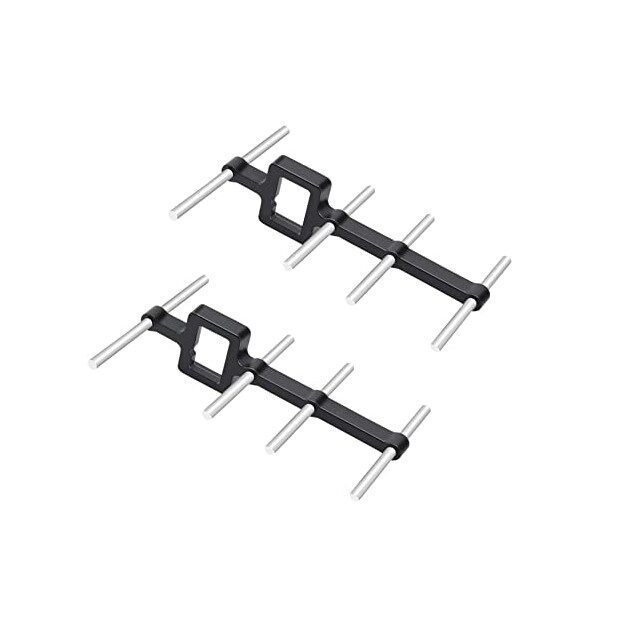
2.4GHz Yagi-UDA Drone Signal Booster
High-gain directional antenna for long-range drone operations. Improves command and control link reliability at extended VLOS distances in congested urban RF environments across India.
10. Recommended Supporting Components for Your O3 Build
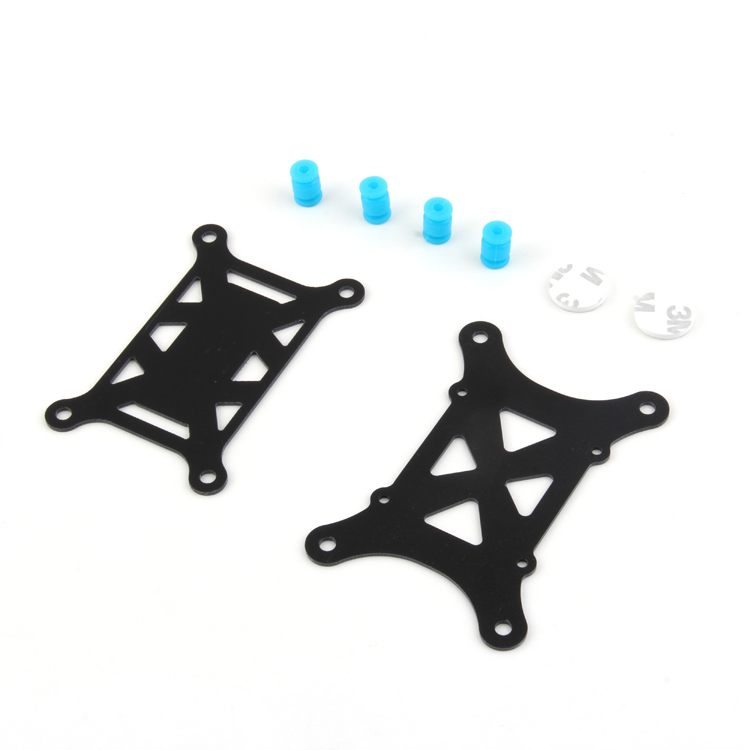
Anti-Vibration Shock Absorber for Flight Controller
Silicone vibration damper for your FC stack. Reducing prop wash vibration to the FC also reduces video jitter visible in your O3 footage — especially important for long-duration cinematic shots.
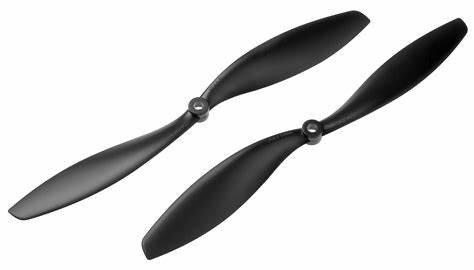
1045 Carbon Fiber Propeller CW&CCW (Pair)
Balanced carbon fiber propellers for smooth vibration-free flight. Reduced vibration from props directly improves the video quality captured through your O3 Air Unit system.
11. Frequently Asked Questions
Q: Is the DJI O3 Air Unit legal to use in India?
A: The O3 Air Unit operates on 2.4 GHz and 5.8 GHz bands. 2.4 GHz is de-licensed in India for low-power use. 5.8 GHz indoor use is also permitted. Using the system at CE/SRRC power levels (25mW) is within Indian regulations. Operating FCC power levels (700mW) without WPC approval is not recommended. The complete drone system must also comply with DGCA UAS Rules 2021 for the drone category.
Q: Will DJI FPV Goggles V2 work with the O3 Air Unit?
A: No. DJI FPV Goggles V2 are only compatible with the Air Unit 2 and older systems. The O3 Air Unit requires DJI Goggles 2, Goggles Integra, or Goggles 3. This is one of the most common purchasing mistakes — always verify compatibility before buying.
Q: Can I record onboard footage while simultaneously flying FPV?
A: Yes. The O3 Air Unit has a microSD card slot and records up to 4K/30fps or 1080p/60fps simultaneously with live FPV transmission. The recording is higher quality than the transmitted stream (less compression). This is one of the O3’s major advantages over analog systems and even some competing digital systems.
Q: Does the O3 interfere with GPS?
A: The O3’s 5.8 GHz band can potentially interfere with GPS signals on some builds if the antenna is positioned poorly. Keep the O3’s antennas at least 10cm from the GPS module and route cables away from the GPS antenna. The 2.4 GHz band does not typically cause GPS interference. Most builds with careful antenna placement have no GPS issues with the O3.
Q: Is there a cheaper way to get digital FPV in India?
A: Yes — the Walksnail Avatar HD Mini Kit and some Runcam HDZero kits are available in India at lower price points than a complete O3 system. Budget ₹15,000–25,000 for an entry-level digital FPV system vs ₹40,000–80,000 for O3 + Goggles 2. For pure beginners, starting with analog (₹2,000–4,000) and upgrading later is the most economical path.
Q: How do I get the best video quality from my O3 Air Unit?
A: Shoot in D-LOG M colour profile for maximum colour grading latitude. Record to microSD on the Air Unit (not just DVR in goggles) for highest quality source footage. Ensure your props are balanced and your FC vibration damping is good — even with O3’s EIS, excessive vibration creates jello-like rolling shutter artifacts. Shoot in 1080p/60fps for best freeze-frame and slow motion flexibility in post.
Ready to Build Your Digital FPV Rig?
Zbotic stocks FPV cameras, ESCs, motors, frames, and all the components you need to build around a DJI O3 Air Unit system. Fast delivery across India with expert advice for Indian builders.







Add comment