
Table of Contents
- Introduction: The Bottleneck in Fast 3D Printing
- How Hotend Melt Rate Works
- Volcano Hotend: The Classic High-Flow Upgrade
- CHT (Creality High Temperature) Nozzle Insert
- Bambu Lab High-Flow Hotend System
- Comparison: Which Upgrade Is Right for You?
- Installation Guide and Tips
- Slicer Settings for High Flow Printing
- Troubleshooting High Flow Issues
- Recommended Parts from Zbotic
- Frequently Asked Questions
- Conclusion
Introduction: The Bottleneck in Fast 3D Printing
Speed is the perennial obsession in 3D printing. Every maker has experienced the frustration of watching a print crawl through a 24-hour job at 50mm/s, knowing that there must be a faster way. Modern high-acceleration printers like the Bambu Lab X1C and the input-shaping-equipped Ender 3 S1 Pro have proven that head speeds of 200–500mm/s are mechanically achievable. But there is a catch: printing faster does not mean extruding faster if your hotend cannot melt plastic quickly enough.
The hotend is the thermal bottleneck of fast 3D printing. At high speeds, the printer demands more melted plastic per unit time — more volumetric flow. If the hotend cannot keep up, you get under-extrusion: thin, gappy layers that look terrible and have poor mechanical properties. The solution is a high-flow hotend upgrade that increases the melt rate, allowing the printer to actually use the speed its mechanics can deliver.
In this guide, we cover the three main approaches available to Indian makers: the Volcano heater block (E3D’s original high-flow design), CHT nozzle inserts (a clever internal modification to standard nozzles), and Bambu Lab’s purpose-built high-flow system for their printers.
How Hotend Melt Rate Works
To understand high-flow upgrades, you need to understand what limits standard hotend melt rate. When filament enters the hotend, it must absorb enough heat energy to transition from solid to molten state before reaching the nozzle orifice. The key parameter is melt zone length — the length of the heated zone over which the filament is in contact with hot metal.
A standard E3D V6 or MK8 hotend has a melt zone of approximately 17–22mm (the length of the heated block). At typical print speeds (50–100mm/s with a 0.4mm nozzle), this provides adequate melt rate — around 10–15 mm³/s of volumetric flow. But at 200–500mm/s, you need 25–50 mm³/s. Standard hotends simply cannot supply this; the centre of the filament rod remains semi-solid, creating inconsistent flow and eventually under-extrusion.
High-flow solutions address this in two ways:
- Longer melt zone — giving filament more time in contact with the heated block (Volcano approach)
- Increased thermal conductivity within the melt zone — splitting the filament into thinner streams that heat faster (CHT approach)
Volcano Hotend: The Classic High-Flow Upgrade
E3D introduced the Volcano heater block as a simple, effective way to increase melt rate for any printer using their V6 hotend system. The Volcano block is approximately 50% longer than a standard V6 block, extending the melt zone from ~17mm to ~26mm. This longer contact time allows the filament core to reach melting temperature even at high flow rates.
Volcano Performance
In benchmarks, a Volcano hotend with a 0.8mm nozzle (the most common pairing) achieves 25–40 mm³/s of volumetric flow — roughly double a standard V6. Combined with a 0.8mm nozzle, this allows layer heights of 0.4–0.6mm and line widths of 1.0–1.2mm, dramatically reducing print times for structural parts and prototypes where surface finish is secondary.
When to Use Volcano
Volcano is ideal for:
- Large structural parts where print time matters more than fine detail
- Functional prototypes for testing fit and function
- Production runs of simple mechanical parts
- Vase mode prints (single wall, continuous extrusion)
- Draft prints for design iteration
Volcano Limitations
The longer block requires longer nozzles (Volcano-specific nozzles, not compatible with standard V6 nozzles). The added thermal mass means longer heat-up times and slightly more power consumption. At 0.4mm nozzle, Volcano gains over a standard V6 are modest — the real benefit comes with 0.6mm+ nozzles. Volcano is not compatible with all printer designs — it requires additional clearance below the heatsink.
CHT Nozzle Insert: More Flow from a Standard-Length Hotend
The CHT (often attributed to Creality’s High Throughput design, though various manufacturers produce versions) is a different approach entirely. Rather than lengthening the melt zone, CHT nozzles use an internal insert that splits the incoming filament rod into three thinner streams inside the nozzle body. These thinner streams have a much higher surface-area-to-volume ratio and heat up significantly faster than a single large rod.
How CHT Works in Detail
The CHT insert sits inside the nozzle body and creates three channels from a single entry point. Each channel is roughly 1/3 the cross-sectional area of the incoming filament. Because heat transfer rate scales with surface area, three smaller streams melt much faster than one large rod — enabling high-flow rates within a standard-length heater block. A standard CHT 0.4mm nozzle can achieve 18–28 mm³/s, compared to 10–15 mm³/s for a conventional 0.4mm nozzle.
CHT Advantages
- Drop-in replacement: CHT nozzles have the same thread and external dimensions as standard nozzles — no heater block change needed
- Works with PLA, PETG, ABS, ASA (standard brass CHT) or abrasive materials (hardened steel CHT)
- Achieves high flow within a standard-size hotend, so no clearance modifications required
- Significant improvement at 0.4mm nozzle (unlike Volcano, which benefits most with larger nozzles)
CHT Limitations
The internal insert can be more difficult to clean when changing filament colours or types. Cold pulls are less effective due to the channel structure. CHT performs best with quality, consistently-sized filament — variable diameter filament can partially block one of the three channels. Not all CHT products on the market maintain adequate manufacturing quality; stick to reputable brands.
Bambu Lab High-Flow Hotend System
Bambu Lab took a different approach to high-flow printing: instead of adapting a legacy design, they engineered a new hotend system from scratch for their printer line. The Bambu hotend uses a purpose-built all-metal design with optimised thermal conductivity and a proprietary nozzle geometry that achieves up to 32 mm³/s flow rate at standard 0.4mm nozzle size — the highest of any consumer-grade 0.4mm hotend as of 2025.
Bambu Hotend Features
- Hardened steel nozzle option for abrasive filaments (CF, GF, abrasive composites)
- Stainless steel outer body for corrosion resistance
- Designed for rapid swap (tool-free nozzle change on X1C and P1S)
- Integrated thermistor and heater cartridge for simplified replacement
- Compatible with Bambu’s multi-material AMS system
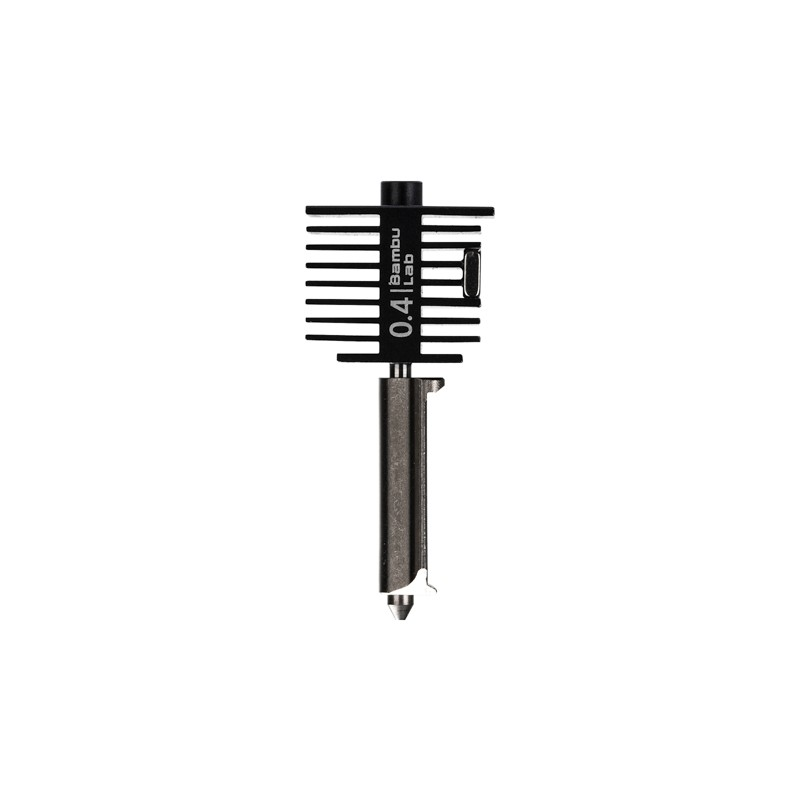
Bambu Lab Hotend with Hardened Steel Nozzle – 0.4mm
Genuine Bambu Lab complete hotend assembly for A1/A1 Mini printers. High-flow design handles 32 mm³/s. Hardened steel nozzle for abrasive filaments including PETG-CF, PA-CF and glow-in-the-dark materials.
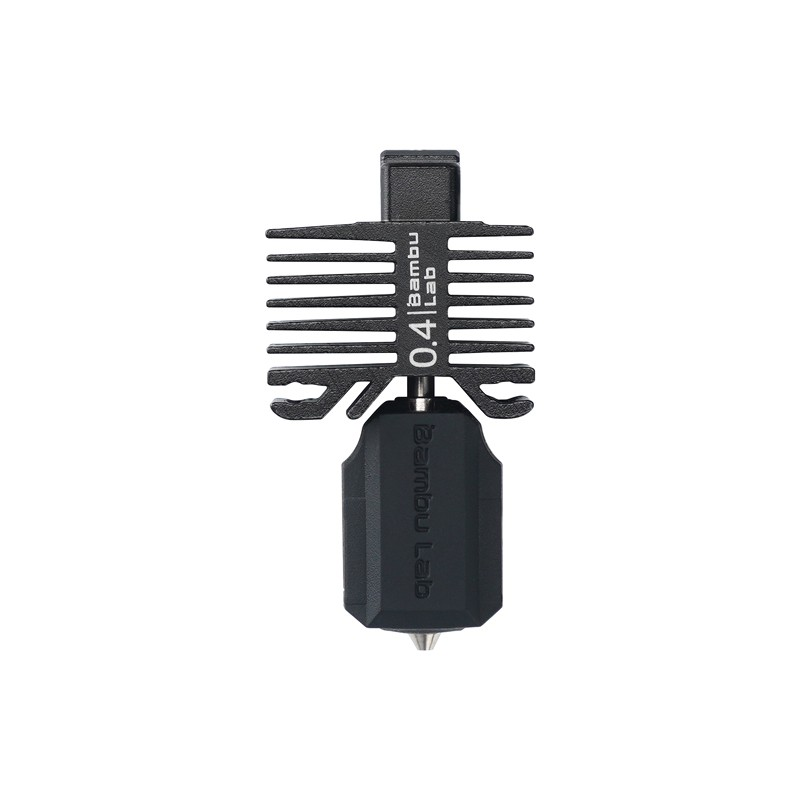
Bambu Lab Hotend with Hardened Steel Nozzle – 0.4mm for P1P, P1S, X1C
Factory-spec replacement and upgrade hotend for Bambu’s P1 and X1 series flagship printers. Restores or upgrades flow rate to factory specification. Essential maintenance part for any serious Bambu user.
Comparison: Which Upgrade Is Right for You?
| Factor | Volcano | CHT Nozzle | Bambu System |
|---|---|---|---|
| Max flow (0.4mm) | 15–20 mm³/s | 18–28 mm³/s | 28–32 mm³/s |
| Max flow (0.8mm) | 30–45 mm³/s | 35–50 mm³/s | N/A (proprietary) |
| Printer compatibility | V6-based printers | Most standard hotends | Bambu printers only |
| Installation complexity | Medium | Low (nozzle swap) | Low (tool-free) |
| Best for | Large fast prints | Speed boost, any size | Bambu owners |
Installation Guide and Tips
Volcano Installation on V6-Based Printers
1. Heat the existing hotend to printing temperature and remove the old nozzle (hot tightening only — never overtighten cold). 2. Allow to cool completely. 3. Disassemble the heater block, heater cartridge and thermistor. 4. Thread the new Volcano block onto the heat break. 5. Install heater cartridge and thermistor into the Volcano block. 6. Install a Volcano-compatible nozzle and tighten hot. 7. Run PID tuning after installation as the new thermal mass will change temperature response characteristics.
CHT Nozzle Installation
CHT nozzles are a straightforward nozzle swap. Heat to printing temperature, remove the old nozzle, install the CHT nozzle with appropriate torque (1.5–2 Nm — firm but not excessive). The internal insert is already factory-fitted. After installation, run a short flow rate calibration (extrusion multiplier test) as CHT nozzles often flow slightly more than their rating at standard settings.
Key Maintenance: Thermistor and Heater Cartridge
When working on any hotend, inspect the thermistor and heater cartridge. These are small, fragile components that fail from thermal stress, vibration and repeated assembly/disassembly. Replace them proactively if the wires show any fraying or the connections are loose.
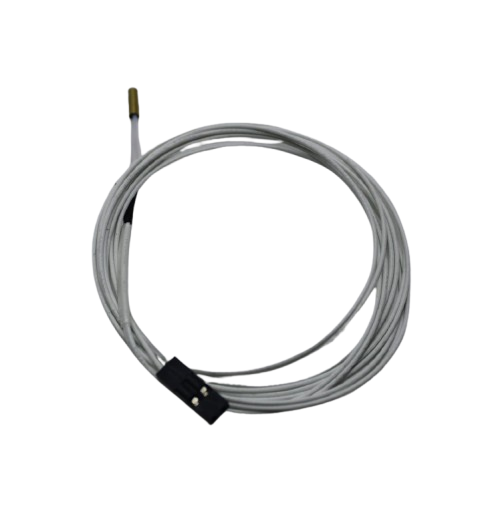
100k NTC Thermistor with Copper Tip for MK8 Extruder
High-quality NTC thermistor for accurate temperature reading in your hotend. Essential spare part during any hotend upgrade — a faulty thermistor undermines even the best high-flow nozzle.
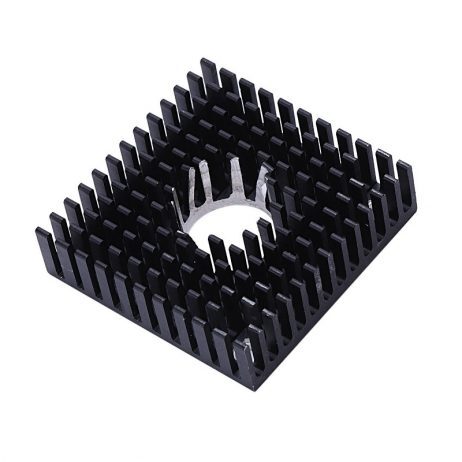
B Type Aluminium Heat Sink for MK7/MK8 Extruder
Aluminium heatsink for the cold zone of your MK7/MK8 hotend. Efficient heat dissipation at the cold zone is critical for preventing heat creep in high-flow, high-temperature printing sessions.
Slicer Settings for High Flow Printing
Volumetric Flow Rate Limit
In OrcaSlicer, Bambu Studio and PrusaSlicer, you can set a maximum volumetric flow rate (mm³/s) that the slicer will not exceed regardless of print speed setting. Set this to your hotend’s rated maximum — this is the most reliable way to run at full speed without under-extrusion. Start conservatively (80% of rated max) and increase in 10% increments while monitoring print quality.
Temperature Settings for High Flow
High flow rates require higher temperatures than standard printing because the filament spends less time in the melt zone. For PLA: standard 205°C → high flow 215–225°C. For PETG: standard 235°C → high flow 245–255°C. Increase temperature gradually and check for stringing (excessive temperature) versus under-extrusion (insufficient temperature).
Acceleration and Jerk Settings
High-flow hotends remove the melt-rate bottleneck but expose other bottlenecks: head acceleration and vibration. Enable input shaping (resonance compensation) in Klipper, or use Bambu Studio’s vibration compensation calibration, to allow high accelerations without print quality loss. Without input shaping, increasing speed beyond ~200mm/s typically causes visible ringing artifacts.
Troubleshooting Common High Flow Issues
Under-Extrusion at High Speed
Increase print temperature in 5°C increments. Check that the volumetric flow limit is set correctly in the slicer. Verify the extruder motor current is sufficient for the extrusion force required. Check for partial Bowden tube clogging or PTFE liner damage that creates friction.
Heat Creep
High ambient temperatures combined with high-flow printing increase heat creep risk (heat migrating up into the cold zone and softening filament prematurely). Ensure the hotend cooling fan is running at full speed. In Indian summer conditions (35°C+ ambient), consider upgrading the cold zone cooling fan to a higher static pressure model.
Stringing After Upgrade
Higher melt zone temperatures combined with a larger liquid resin volume in the nozzle increase oozing and stringing. Increase retraction distance by 0.5–1mm and retraction speed by 10–20mm/s. Enable pressure advance / linear advance in firmware for the most effective stringing control.
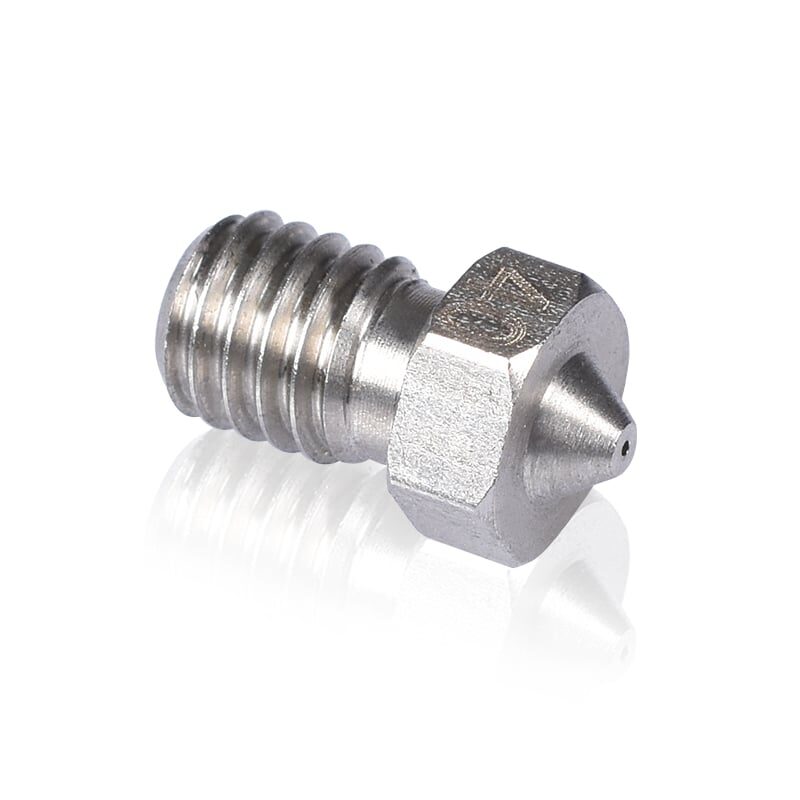
3D Printer Stainless Steel Nozzle – 0.4mm
High-quality stainless steel nozzle with better corrosion resistance than standard brass. Excellent for food-safe prints, abrasive materials and environments with high humidity. Compatible with V6, MK8 and most popular hotend formats.
Frequently Asked Questions
Q: Will a high flow hotend work with my Ender 3?
A: Yes. The Ender 3 uses an MK8-style hotend. CHT nozzles are the easiest upgrade — they thread directly into the existing heater block. For Volcano, you will need to replace the heater block and use Volcano-length nozzles. Both upgrades require firmware adjustment of flow rate limits and possibly PID retuning.
Q: How much faster will I actually print after a high-flow upgrade?
A: Time savings depend heavily on the specific print. For large, simple parts: 30–60% time reduction is realistic. For small, detailed prints: minimal benefit since the perimeter speed (not flow rate) is typically the limiting factor. A CHT nozzle upgrade is cost-effective for any printer that runs jobs over 4 hours regularly.
Q: Do I need to upgrade my extruder motor when upgrading to high flow?
A: Possibly. High-flow printing requires higher extrusion force, which demands more torque from the extruder stepper. If you are already running a quality dual-drive extruder (BMG, Orbiter, Sherpa, Bambu’s built-in), you are likely fine. If you have a stock single-arm extruder (stock Ender 3, for example), upgrading to a direct-drive or dual-drive extruder alongside the hotend upgrade is recommended.
Q: Can I use a CHT nozzle with a Bambu printer?
A: Bambu uses a proprietary nozzle format. Standard CHT nozzles are not compatible. Bambu’s own hotend already incorporates a high-flow design, so a CHT upgrade is unnecessary. The relevant Bambu upgrade is the hardened steel nozzle version of their standard hotend, which enables printing of abrasive materials at the same flow rates.
Q: What is the best filament quality for high-flow printing?
A: Diameter consistency is paramount. High-flow printing is sensitive to filament diameter variation — a ±0.1mm variation causes visible extrusion width changes at high speeds. Premium filaments like Bambu Lab’s own line have very tight diameter tolerances. Running a filament cleaner/filter also removes surface debris that can temporarily reduce flow through the nozzle.
Conclusion
High-flow hotend upgrades represent some of the best value-per-rupee modifications available for 3D printers. A CHT nozzle swap costing a few hundred rupees can reduce print times by 30–50% on suitable prints. A Volcano hotend upgrade for draft and prototype printing can be transformative for workshop productivity. And for Bambu Lab owners, using genuine Bambu hotends with hardened steel nozzles unlocks the full performance potential of their already fast printers.
The key is matching the upgrade to your use case. If you print many large structural parts, go Volcano. If you want universal speed improvement with minimal installation work, CHT is your answer. If you own a Bambu printer, stock up on genuine Bambu hotend assemblies and keep a spare on hand — they are serviceable consumables, not permanent components.
Shop our complete range of 3D printer hotend parts and upgrades at Zbotic and take your printing speed to the next level.







Add comment