
Table of Contents
- Introduction
- Applications of Drone Payload Systems in India
- Types of Payload Drop Mechanisms
- Servo-Actuated Drop Mechanism: Design and Build
- Electromagnet Release System
- Weight Distribution and Balance
- Flight Controller Integration
- Safety Considerations
- Indian Regulations for Payload Drones
- Recommended Products
- Frequently Asked Questions
- Conclusion
Introduction
The ability to carry and precisely deliver a payload is what transforms a drone from a flying camera into a genuinely useful tool. Whether you’re designing a system to drop seed balls in a reforestation project in the Sahyadris, deliver medicine to a remote village in the North East, or drop a rescue line to a flood victim in Assam’s Brahmaputra floodplain, drone payload drop mechanisms are complex engineering challenges that combine mechanical design, electronics, and flight dynamics.
India’s DGCA drone regulations, finalised under the Drone Rules 2021 and subsequent amendments, have opened the door to commercial payload delivery operations. Drone delivery startups, agricultural solution providers, and defence-adjacent manufacturers are actively building payload-capable platforms. If you want to be part of this space — whether as a hobbyist, researcher, or commercial operator — understanding how to design and build reliable payload release systems is essential.
This comprehensive guide covers everything from the basic physics of payload drop to practical build instructions for servo-actuated and electromagnet release systems, balance considerations, ArduPilot integration, and the regulatory landscape in India.
Applications of Drone Payload Systems in India
Agricultural Seeding and Crop Treatment
Beyond liquid spray systems, drones are increasingly used for solid payload drops — seed bombing in reforestation drives, dropping of pest control sachets in hard-to-access terrain, and even placing soil moisture sensors in remote fields. Organisations like the Forest Department and various NGOs have run drone seeding pilots in Rajasthan, Odisha, and the Northeast.
Humanitarian and Emergency Response
India’s disaster-prone geography makes drone payload delivery potentially life-saving. During floods — which affect millions annually in Bihar, Assam, and coastal Andhra Pradesh — drones can drop food packets, medicines, and flotation devices to stranded victims faster than ground teams can respond. The National Disaster Response Force (NDRF) has explored drone payload systems in pilot exercises.
Defence and Law Enforcement
Defence PSUs and startups in India’s growing drone defence sector build payload systems for flare drops, signal disruption, and non-lethal deterrence. This is a regulated domain requiring appropriate licenses and is beyond the scope of this civilian guide, but the underlying mechanism design principles are the same.
Research and Education
IIST, IITs, and aerospace engineering colleges use drone payload mechanisms as learning platforms for control systems, kinematics, and embedded systems courses. Building a functional payload release system as a final year project demonstrates real engineering competence.
Hobbyist Competitions
Competitions like the SAE Aero Design India challenge and various DGCA-compliant drone competitions require participants to design payload delivery systems under specified weight and accuracy constraints.
Types of Payload Drop Mechanisms
Before choosing a mechanism, understand the key variables that determine which type is right for your application:
- Payload weight: Grams vs kilograms changes the required actuator force dramatically
- Release precision: Must it drop from a precise GPS point, or is approximate location acceptable?
- Release reliability: One-shot mechanisms fail and the payload is lost; repeatable mechanisms can try again
- Payload type: Solid object, liquid container, flexible package, fragile item?
- Retrieval: Is the mechanism a permanent installation or needs to be reloaded between flights?
- Weather resistance: Operating in monsoon rain, dusty conditions, extreme heat?
1. Servo-Actuated Mechanical Release
The most common mechanism for DIY builds. A standard RC servo rotates a cam, lever, or pin that holds the payload. When the servo is commanded, the holding element moves and releases the payload. Simple, lightweight, reliable, and reusable.
Best for: Payloads up to 2kg, precision drops, repeated use
Pros: Very reliable, easy to build, full control of release timing, audible confirmation of release
Cons: Servo can jam if payload creates binding force, requires mechanical linkage design
2. Electromagnet Release
An electromagnet is energised to hold a ferromagnetic payload or a metal plate attached to it. De-energising the electromagnet drops the payload. Very clean mechanism with no moving parts in the release itself.
Best for: Payloads up to 500g, applications where mechanical interference is undesirable, clean releases with no shock
Pros: No moving parts, very fast release, can hold and release repeatedly without mechanical wear
Cons: Draws continuous current while holding (increases battery drain), payload must be ferromagnetic or have a metal attachment plate, release is less positive at high speeds due to airflow
3. Servo + Winch (Controlled Lowering)
A servo drives a small spool that winds or unwinds a line. The payload can be lowered to a precise height, released, and the line retracted. Used for precision indoor delivery where dropping from height would damage the payload.
Best for: Fragile payloads (medicines, electronics), indoor delivery to balconies or windows
Pros: Gentle delivery, can be retracted, precise positioning
Cons: Mechanically complex, requires winch motor, heavy, slow (payload swings during flight)
4. Spring-Loaded Release
A spring holds the payload release mechanism closed. A servo or solenoid retracts a latch, and the spring forces the payload out with positive ejection. Good for applications where the payload must clear the drone quickly (to avoid prop strikes).
Best for: Applications needing positive ejection, payloads that might stick without positive force
5. Gravity Drop with Servo Gate
A simple gate or door held by a servo keeps the payload in a container underneath the drone. Opening the gate allows the payload to fall by gravity. This is the simplest mechanism of all.
Best for: Multiple small payloads (seeds, sand bags, small packages), agricultural seeding
Servo-Actuated Drop Mechanism: Design and Build
Here’s a complete build guide for a servo-actuated pin release mechanism capable of holding up to 1.5kg.
Materials Required
- Standard RC servo (25g, ~3kg·cm torque minimum, 5kg·cm recommended)
- 3mm carbon fibre plate or 3mm aluminium plate for the release bracket
- 3mm stainless steel pin (acts as the retaining pin)
- 2mm servo arm or custom-cut horn
- M3 bolts, nuts, and standoffs
- 2mm wire (stainless or piano wire) for the linkage rod
- Small spring (optional, for positive pin retraction)
Mechanical Design Principles
The key to a reliable servo release is mechanical advantage. The servo torque must be sufficient to overcome the friction and binding force of the loaded pin. Calculate the required torque:
Required torque = (Payload weight × 9.81 m/s²) × friction coefficient × lever arm length
For a 1kg payload with 0.15 friction coefficient on a 2cm lever arm: 1 × 9.81 × 0.15 × 0.02 = 0.029 N·m = 2.9 kg·cm. So a 5kg·cm servo gives 70% margin — sufficient for reliable operation even under worst-case conditions.
Build Steps
- Design the mount plate: Cut a 60mm × 40mm bracket from 3mm carbon fibre or aluminium. Drill two mounting holes for M3 bolts to attach to the drone frame underside.
- Create the payload hook: Drill a 3.2mm hole in the bracket for the retaining pin. Drill a second hole for the pivot point of the servo lever. Space them so the servo arm travel (60°) fully withdraws the pin from the hook.
- Fabricate the hook: The payload attachment point. This can be a welded D-ring, a bent 4mm aluminium strip, or a 3D printed ABS hook. The hook catches on the retaining pin. Load is applied downward, keeping the hook engaged until the pin is withdrawn.
- Mount the servo: Secure the servo adjacent to the retaining pin hole. The servo arm connects via a 2mm wire linkage to the retaining pin. When the servo rotates, the linkage pulls the pin out of the hook.
- Add positive return spring: Attach a small spring to return the pin to the locked position when the servo returns to centre. This ensures re-engagement works reliably.
- Test without payload first: Bench test the mechanism 50 times with no load to check for binding, clearance issues, or servo stall. The servo should move freely through its full travel.
- Load test: Test with 1.2× the intended payload weight (safety factor). Check that the servo releases cleanly under load.
3D Printing for Payload Mechanisms
PETG and ABS are good material choices for 3D printed payload components. PLA is not recommended due to its low heat deflection temperature — drone components mounted near ESCs can exceed 60°C in Indian summer. PETG prints reliably and handles impact well. For critical structural components, use 60%+ infill with 4+ perimeters.
Electromagnet Release System
An electromagnet release is simpler mechanically but requires electrical design attention.
Choosing the Electromagnet
Key specifications:
- Holding force: Select an electromagnet rated for 2× your maximum payload weight at the operating voltage. Account for drone vibration and airflow at the drop point.
- Voltage: 5V electromagnets can be driven directly from the flight controller’s servo rail. 12V magnets are stronger but need a BEC or separate supply.
- Current draw: Typical small electromagnets draw 200–500mA continuously. Factor this into your power budget.
Drive Circuit
Do NOT connect the electromagnet directly to a servo output. The inductive load (electromagnet coil) generates voltage spikes when switched off that will damage the FC or BEC. Use a simple MOSFET switching circuit:
- MOSFET (IRLZ44N or similar logic-level FET)
- Gate resistor: 100Ω
- Flyback diode: 1N4007 across the electromagnet (cathode to + terminal)
- Gate drive: from FC PWM servo output via the gate resistor
The PWM signal from the flight controller drives the MOSFET gate, switching the electromagnet on/off. The flyback diode protects the circuit from inductive kickback when the magnet is switched off.
ArduPilot Integration for Electromagnet
Configure the servo output connected to your MOSFET gate as a relay output in ArduPilot:
- Set
SERVOx_FUNCTION = 28(Servo output for a relay) - Or use ArduPilot’s dedicated relay outputs:
RELAY_PINparameter - Trigger via RC switch:
RCx_OPTION = 28for relay toggle - Trigger from Mission Planner: Actions → Set Relay or via DO_SET_RELAY mission command
Weight Distribution and Balance
Payload drop mechanisms fundamentally change the drone’s centre of gravity (CG) in two ways: before and after the drop. Both states must be flyable, and the transition between them must not destabilise the drone.
Before Drop: Loaded State
The combined CG of drone + payload must be directly below the centre of lift. If the payload is forward of the CG, the drone pitches forward; if below one arm, it rolls. Calculate the loaded CG position and adjust payload placement or battery position accordingly.
Simple CG calculation for a quadcopter with bottom-mounted payload:
CG height = (Drone weight × Drone CG height + Payload weight × Payload CG height) / (Drone weight + Payload weight)
Keep the loaded CG as close to the drone’s geometric centre as possible.
After Drop: Unloaded State
After releasing the payload, the drone is suddenly lighter and its CG shifts upward (payload was below the drone CG). ArduCopter’s flight controller compensates automatically via the PID control loop, but a large sudden weight change can cause momentary altitude loss or pitch oscillation.
Mitigations:
- Reduce payload weight relative to total drone weight — a 1kg payload on a 5kg drone (20% weight change) is much more stable than a 1kg payload on a 2kg drone (50% weight change)
- Configure throttle at drop: increase throttle 10–15% just before release to pre-compensate for weight loss
- Tune ArduCopter’s altitude hold parameters (ALTHOLD_THR_FILT) for smooth response to load changes
Pendulum Effect
Bottom-mounted payloads on a long suspension line act as a pendulum, inducing oscillation in windy conditions. Keep the suspension point as high as possible (close to drone CG) to minimise pendulum length, or use a rigid mount instead of a hanging mount.
Flight Controller Integration
Triggering via RC Transmitter
The simplest integration: assign a servo output on the Pixhawk to a function (Relay or Passthrough), and map it to an RC switch channel. Flipping the switch on your transmitter triggers the payload release.
- In Mission Planner → Config → Servo Output: Set the output channel to Function = Servo (passthrough)
- In Config → RC Input: Assign your switch to the same channel
- Set Min/Max/Trim values so the servo travels to the release position when the switch is activated
Triggering via Mission Command
For autonomous drops at precise waypoints:
- Plan your mission in Mission Planner
- At the waypoint where you want the drop, add a
DO_SET_SERVOcommand (not a waypoint) - Specify the servo output channel and the PWM value for the release position
- Add a second
DO_SET_SERVOcommand after the first to return the servo to locked position - Add a
DELAYcommand between them to ensure the payload clears before re-locking
BEC for Servo Power
The payload servo draws current from the BEC powering the flight controller servo rail. A standard BEC supplies 2–3A on the servo rail. Multiple servos and a high-torque payload servo can exceed this. Use a dedicated BEC for the payload servo if needed.
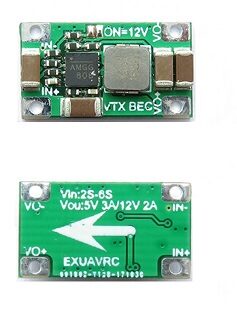
2-6S 5V 5A BEC for Quadcopter Drone
A dedicated 5A BEC that can power both the flight controller servo rail and payload release servos independently. Prevents voltage drops that could cause premature or missed payload releases.
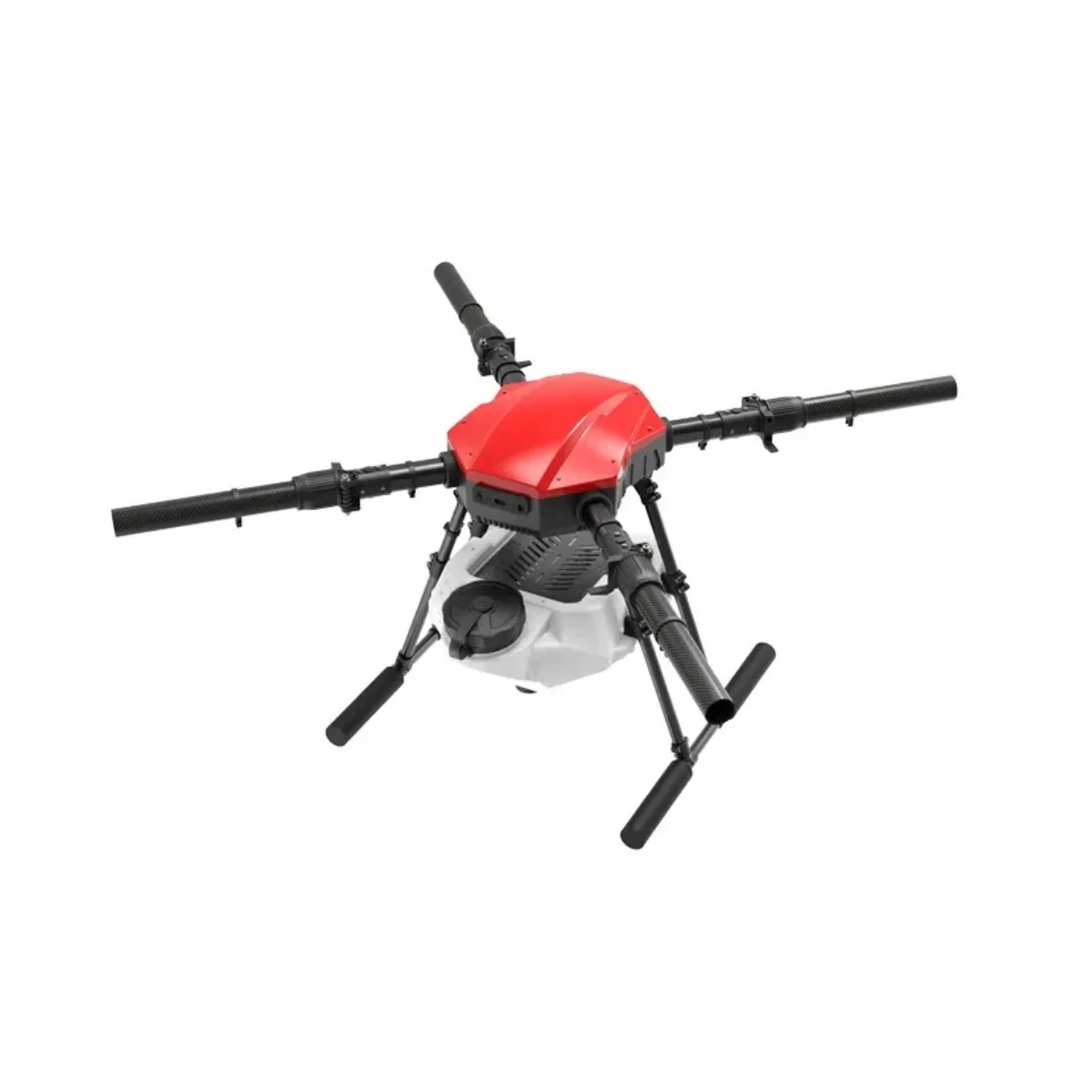
EFT E410P 10L Agricultural Drone Frame
A robust 4-axis drone frame with dedicated mounting points for payload systems. The foldable arm design and reinforced central plate make it ideal for building a custom payload delivery drone.
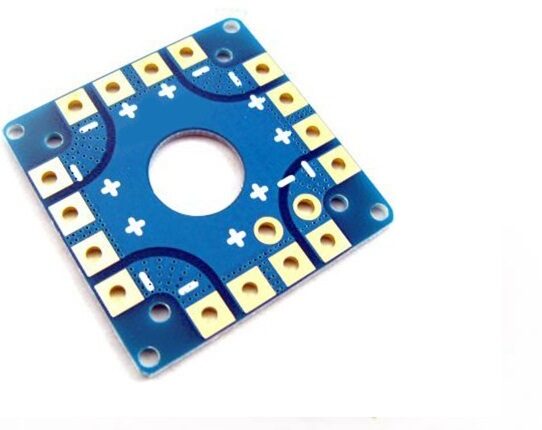
100A Multirotor ESC Power Distribution Board
High-current PDB providing clean power distribution to all ESCs and subsystems on a payload drone. Essential for builds where the payload mechanism and FPV system run simultaneously without voltage interference.
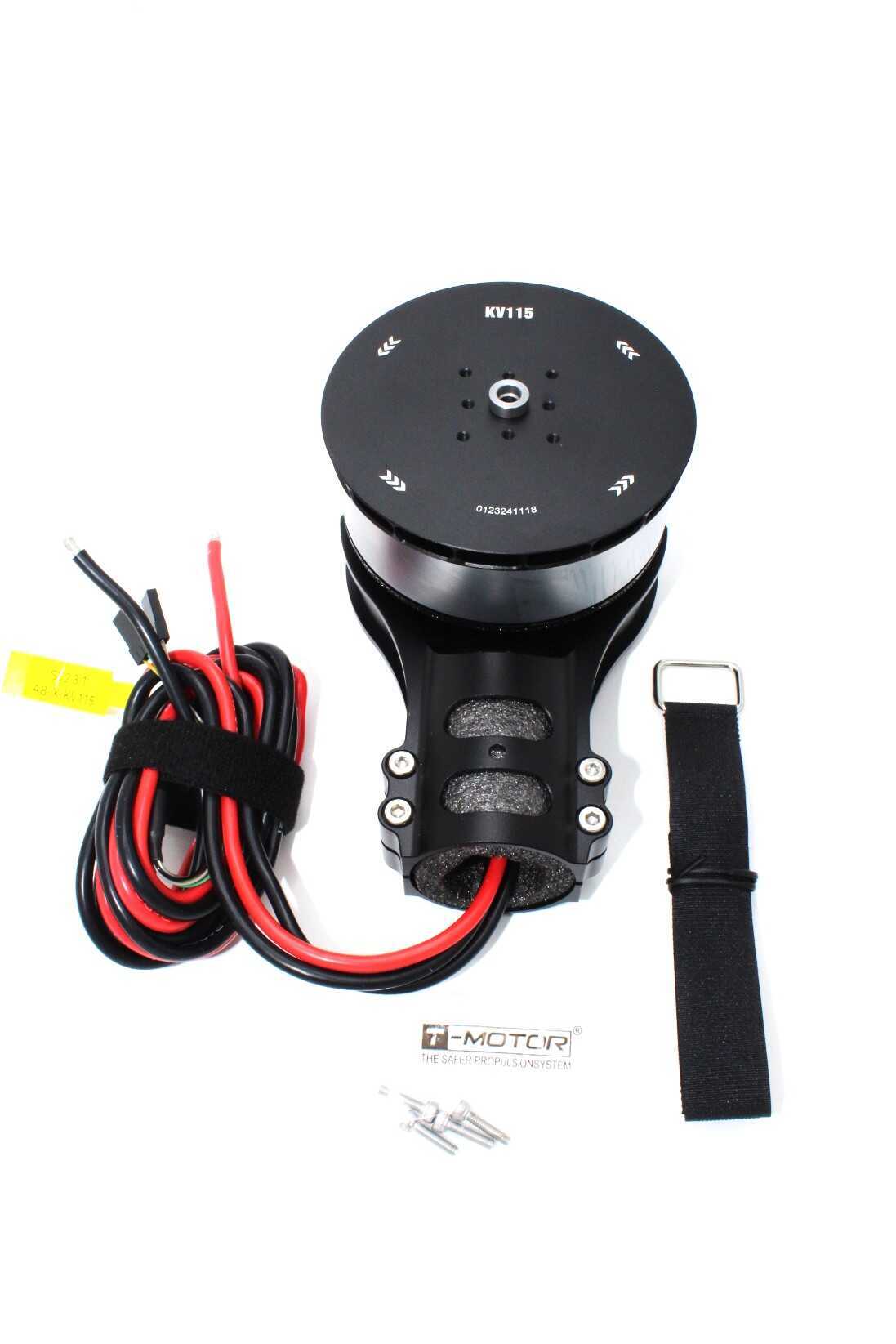
T-Motor A8-X KV115 CCW Modular Propulsion System
High-efficiency T-Motor propulsion system for heavy-lift payload drones. The modular design allows easy replacement of motor, ESC, or propeller independently — critical for payload drones that see hard landings.
Safety Considerations
Payload Drop Safety Distance
A 1kg object dropped from 10 metres reaches approximately 14 m/s before impact — enough to cause serious injury. The minimum safe horizontal distance from people during a payload drop depends on:
- Drop altitude
- Wind speed (determines horizontal drift)
- Payload aerodynamics (whether it tumbles, drifts, or falls straight)
As a rule of thumb: safety exclusion zone radius = drop altitude × 2 (in calm conditions). At 10m altitude, keep people at least 20m away from the intended landing point. In 10 km/h wind at 10m drop altitude, the payload can drift 2–3 metres horizontally — expand the safety zone accordingly.
Accidental Release Prevention
- Use a two-step release: require BOTH a RC switch flip AND a Mission Planner confirmation before the servo fires
- Install a physical safety pin that must be manually removed before the mechanism can release
- Set the release servo’s failsafe position to the LOCKED state — if RC signal is lost, the payload should NOT be released accidentally
Payload Containment
Payloads must be securely contained in flight to prevent accidental drop from vibration or manoeuvres. Even if the release mechanism is reliable, verify that the payload is secured against vertical and lateral forces experienced during maximum-rate turns and altitude changes.
Indian Regulations for Payload Drones
Under India’s Drone Rules 2021 and DGCA’s drone regulations:
- Payload delivery operations require a specific DGCA operational approval beyond standard UIN/UAOP.
- Drone delivery (carrying goods for commercial delivery) requires an Air Operator Certificate for drone operations.
- Research and development operations with payloads require DGCA’s RPA Research permission.
- Agricultural spraying drones are regulated under a specific agricultural drone category with defined payload limits.
- Weight limits: Total drone + payload weight determines the drone category (Nano: <250g, Micro: 250g–2kg, Small: 2–25kg, Medium: 25–150kg, Large: >150kg). Each category has different airspace and operational permissions.
Always consult the latest DGCA Digital Sky platform (digitalsky.dgca.gov.in) for current regulations before undertaking any commercial payload drop operations. Regulations for drone delivery corridors are evolving rapidly in India as pilot programs expand in cities like Bengaluru, Hyderabad, and Chandigarh.
Frequently Asked Questions
What is the best servo for a 1kg payload release mechanism?
For a 1kg payload, use a servo rated for at least 5kg·cm torque with metal gears. Digital servos are preferred over analog for their better position holding under load. Popular choices include the Tower Pro MG996R (10kg·cm, ₹350–₹500), the Hitec HS-5245MG (6.4kg·cm), or any 20–25g metal gear servo with 5kg·cm or above. Metal gears are essential — plastic gears strip under load.
Can I trigger the payload release from Mission Planner autonomously?
Yes, using the DO_SET_SERVO mission command in ArduPilot. Insert the command in your waypoint list at the drop waypoint. Specify the servo output number and the PWM value corresponding to the release position (typically 1900–2000µs for full extension). Add a DELAY of 0.5–1 second followed by another DO_SET_SERVO to return to the locked position.
How do I minimise accuracy error in payload drop position?
Accuracy is affected by GPS accuracy, drop altitude, wind, and the drone’s reaction to the sudden weight change. To minimise error: use RTK GPS (cm-level accuracy) if budget permits, reduce drop altitude, fly in low-wind conditions (under 10 km/h), and pre-compensate throttle before release. Expect 2–5 metre accuracy with standard GPS at 10m altitude in calm conditions, improving to under 1 metre with RTK GPS.
Do I need DGCA permission to test a payload mechanism at a private field?
If your drone + payload total weight is under 250g (Nano category) and you’re flying in a private area, DGCA notification is typically not required. For heavier drones, you need at minimum the UIN registration and UAOP for the area. For payload drops specifically, check current regulations on DGCA Digital Sky — the rules are evolving. When in doubt, apply for the appropriate permission before testing.
What payload weight can a quadcopter lift?
Rule of thumb: a drone can carry approximately 30–50% of its own dry weight as useful payload while maintaining a reasonable thrust-to-weight ratio for stability and battery life. A well-optimised heavy-lift quadcopter (like the EFT E410P platform) can carry its own weight in payload. For example, a 4kg drone with efficient T-Motor or Hobbywing propulsion can comfortably carry 2–3kg and maintain 15+ minutes of flight time. Exceeding this reduces flight time and stability margins drastically.
Conclusion
Drone payload systems represent the cutting edge of what autonomous flying machines can do — and India is at the forefront of this technology adoption. From seed bombing coastal wetlands to delivering medical supplies to Himalayan villages, the applications are as diverse as the country itself.
Building a reliable payload drop mechanism requires attention to mechanical design, electrical safety, flight dynamics, and regulatory compliance. The principles we’ve covered in this guide — servo-actuated releases, electromagnet systems, CG management, and ArduPilot integration — apply across all scales, from a 250g educational drone to a 25kg commercial delivery platform.
Start small: build a 100g payload release servo mechanism on a 5-inch quad, test it extensively on the bench, then in a safe open field. Master the basics before scaling up to heavy-lift delivery systems. With quality components from Zbotic and the right knowledge, you have everything you need to build professional-grade payload drone systems.






Add comment