
Nylon PA12 (Polyamide 12) is the engineering filament of choice when you need parts that are simultaneously tough, flexible, fatigue-resistant, and chemically stable. Unlike PLA or PETG which are brittle under repeated stress, PA12 can flex thousands of times without cracking, making it ideal for living hinges, snap fits, cable routing clips, and any mechanical part that sees real-world load cycles.
PA12 is widely used in the automotive, industrial, and consumer electronics industries. The ability to print these parts at home or in a small workshop — at a fraction of the cost of machined nylon — is one of the most compelling reasons to move beyond PLA. This guide covers everything an Indian maker needs to know to print PA12 reliably and get parts that actually perform as intended.
PA12 Material Properties
PA12 sits in a unique position among common FDM filaments. It combines properties that are normally in tension with each other:
- Tensile strength: 45–55 MPa — similar to PETG but with far superior toughness and elongation at break
- Elongation at break: 150–300% — PA12 stretches dramatically before failing, unlike brittle PLA or PETG
- Fatigue resistance: Exceptional. PA12 snap-fit clips can cycle 10,000+ times where PLA fails in dozens
- Heat resistance: 100–120°C heat deflection temperature — much better than PLA (55°C) and comparable to ABS
- Chemical resistance: Resistant to oils, fuels, hydraulic fluids, and most organic solvents — excellent for automotive and industrial applications
- Low friction coefficient: Self-lubricating properties make PA12 ideal for gears, bushings, and sliding parts
- Vibration damping: PA12’s inherent flexibility absorbs vibration, reducing mechanical noise in assemblies
The main limitations are hygroscopicity (absorbs water aggressively), higher printing difficulty than PLA/PETG, and moderate surface finish compared to machined nylon. Printed PA12 also has slightly lower strength than injection-moulded PA12 due to layer lines — design with this anisotropy in mind.
PA12 vs PA6 vs PA6-CF
Understanding the nylon family helps you choose the right grade:
PA6 (Nylon 6): Higher strength than PA12 but absorbs moisture even more aggressively. PA6 parts can swell and warp noticeably after moisture absorption, which affects dimensional accuracy in tight-tolerance assemblies. Best for short-term functional prototypes or parts in dry environments.
PA12 (Nylon 12): Lower moisture absorption than PA6 (typically 0.25% equilibrium vs 2.5% for PA6). This makes PA12 far more dimensionally stable in humid Indian conditions. The first choice for long-term functional parts, especially in humid coastal regions.
PA6-CF (Carbon Fibre reinforced Nylon 6): Carbon fibre fills dramatically increase stiffness and reduce the flexibility that makes plain nylon useful. PA6-CF is excellent for stiff structural parts but it requires a hardened steel nozzle (carbon fibre is highly abrasive), and the parts are brittle compared to unfilled nylon. Use PA6-CF for brackets and rigid structures; use PA12 for snap fits and flexible parts.
PA12-CF: Combines PA12’s moisture stability with carbon fibre stiffness. The best option for high-performance stiff parts in humid environments, but expensive and requires a hardened nozzle.
Moisture: The Critical Factor
Moisture management is the single most important aspect of printing nylon successfully in India. PA12 absorbs moisture from the air continuously — even sealed in a zip-lock bag, it will slowly absorb humidity.
Consequences of wet nylon:
- Popping, crackling, and hissing from the nozzle as water flashes to steam
- Foamy, rough surface finish with visible bubbles
- Severely reduced inter-layer adhesion — parts become brittle and delaminate
- Stringing dramatically worsens as moisture reduces melt viscosity
- Dimensional inaccuracy as steam expands within the melt
Drying PA12:
- Temperature: 70–80°C (do not exceed 90°C — nylon can soften near its glass transition)
- Duration: 8–12 hours minimum; 16 hours for severely wet spools
- Equipment: A food dehydrator or dedicated filament dryer is ideal
Printing from a dry box: Always print PA12 directly from a sealed dry box with desiccant. The print can take 8–24+ hours, and even a well-dried spool will reabsorb moisture if left open in humid Indian air for that duration. A sealed box with fresh silica gel maintains spool quality throughout long prints.
India-specific note: During the monsoon season (June–September), ambient relative humidity in coastal cities regularly exceeds 80–90%. In these conditions, you must be even more vigilant — dry your nylon for longer and prioritise dry-box printing.
Hardware Requirements
Hotend: An all-metal hotend is strongly recommended for PA12. While PTFE-lined hotends can technically print nylon at 240°C (below PTFE degradation temperature), the PTFE surface can develop adhesion issues with nylon over time, causing jams. All-metal hotends eliminate this risk and allow you to print at 250–260°C for better layer adhesion.
Nozzle: Standard brass nozzles work fine for unfilled PA12. For PA12-CF or PA12-GF (glass fibre), use a hardened steel or ruby-tipped nozzle — abrasive fibres destroy brass nozzles within a few hours.
Enclosure: Strongly recommended but not always mandatory for PA12. Unlike PC which absolutely requires an enclosure, PA12 can sometimes be printed on open machines with aggressive brim and draft shields for smaller parts. Enclosures do produce significantly better results — less warping, better layer adhesion, and more consistent surface quality.
Extruder: PA12 is somewhat flexible and can slip on weak extruder wheels. A quality dual-drive extruder with strong grip is recommended. The filament’s flexibility makes long Bowden tubes problematic — a direct drive setup is preferred for PA12.
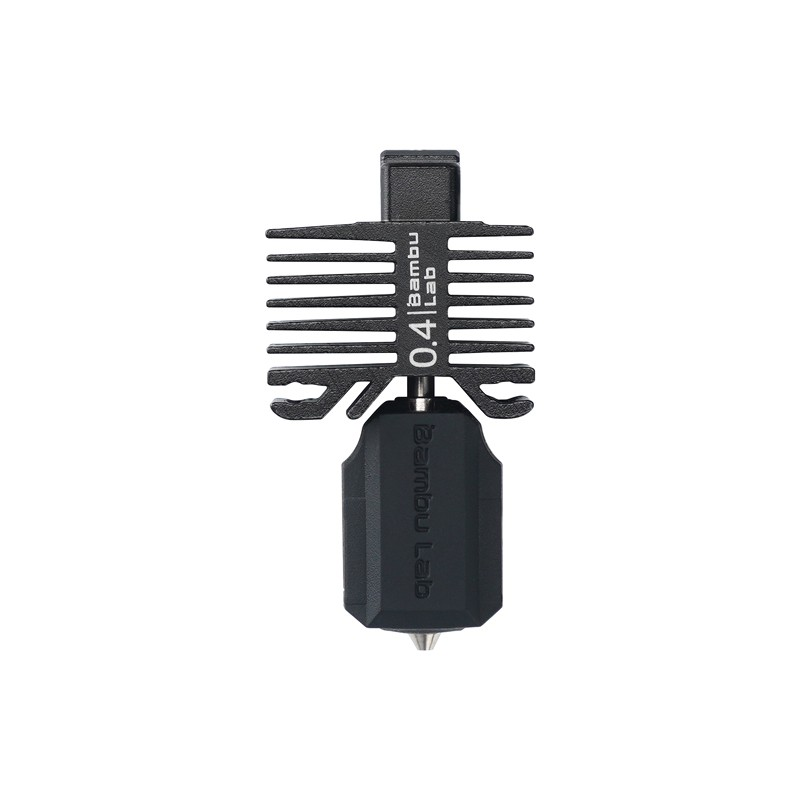
Bambu Lab Hotend with Hardened Steel Nozzle – 0.4mm for P1P, P1S, X1C
Factory-matched hotend with hardened steel nozzle for Bambu Lab printers. Rated for high-temperature engineering filaments including PA12, PC, and ABS.
View on ZboticPrint Settings for PA12
| Parameter | Recommended Value |
|---|---|
| Nozzle Temperature | 240–260°C |
| Bed Temperature | 70–85°C |
| Print Speed | 40–60 mm/s |
| Layer Height | 0.2–0.3mm |
| Wall Count | 4–6 walls |
| Infill | 50–80% (gyroid recommended) |
| Cooling Fan | 0–20% (minimal) |
| Retraction | 1–2mm (direct drive) / 4–6mm (Bowden) |
| Brim Width | 8–15mm |
Cooling: Keep the cooling fan at 0–20%. Too much cooling causes delamination. Unlike PLA where high cooling improves bridging, nylon benefits from slow, controlled cooling that maximises inter-layer bonding.
Gyroid infill: Gyroid infill pattern is particularly good for nylon because its isotropic structure distributes stress more evenly and the continuous curves work well with nylon’s flexibility.
Bed Adhesion for Nylon
Nylon’s bed adhesion is notoriously temperamental. Here are the proven approaches:
Garolite (FR4 PCB material): The gold standard for nylon printing. Nylon bonds strongly at print temperature and releases cleanly when cool. A 220×220mm FR4 sheet sourced from an electronics supplier or PCB supplier in India works excellently.
PVA glue stick on PEI: Apply a thin layer of school glue stick (PVA-based) on a PEI spring steel sheet. This creates a release layer that allows nylon to stick during printing and release cleanly when cool. Reapply every few prints.
Nylon-specific adhesives: Some brands sell nylon bed adhesive sprays. Magigoo PA is a popular choice. Apply to the warm bed before printing.
Avoid bare PEI: Nylon bonds too aggressively to bare textured PEI at high bed temperatures — parts may tear the PEI sheet when removed. Always use a release layer.
Managing Warping and Shrinkage
PA12 shrinks approximately 1–2% during cooling. This is less than PC or ABS but still significant for large flat parts.
Anti-warp strategies specific to PA12:
- Use a large brim (10–15mm) on all prints
- Enable enclosure or draft shield in your slicer
- Avoid very long, thin flat sections — add ribs or slight curvature to designs
- Slow down the first layer to 15–20 mm/s for maximum bed contact
- Let the bed pre-heat for 15–20 minutes before starting the print
- Do not open the enclosure or disturb the printer during the print
- Allow the print to cool slowly inside the enclosure rather than opening immediately
Design Tips for Nylon PA12 Parts
PA12’s unique properties allow design features that are impossible in rigid filaments:
Living hinges: Print thin (0.4–0.8mm) flexible sections between rigid regions. With the hinge axis perpendicular to layer lines, PA12 living hinges can flex tens of thousands of times. This is essentially impossible with PLA or PETG.
Snap fits: PA12’s high elongation allows aggressive snap fits with deep engagement. PLA snap fits require very conservative engagement to avoid cracking; PA12 can use full industrial snap-fit geometry.
Tolerances: Account for 1–2% shrinkage in part dimensions. For tight-tolerance holes and features, add 0.2–0.3mm to the hole diameter and test-print a calibration piece before your final part.
Wall thickness: A minimum wall thickness of 1.2–1.5mm (3–4 walls at 0.4mm) ensures adequate strength. PA12 at high infill with thick walls is very strong — more so than equivalent PLA parts in most load scenarios.
Orientation: Print functional parts with load direction aligned with the layer plane, not perpendicular to it. Layer interfaces in nylon are weaker than in-plane material — this is true of all FDM materials but particularly relevant for structural nylon parts.
Real-World Use Cases in India
PA12’s unique combination of toughness, flexibility, chemical resistance, and heat resistance opens up applications that PLA and PETG simply cannot handle:
Automotive: Cable routing clips, wiring harness brackets, under-bonnet brackets (where temperatures can exceed 80°C), intake manifold blanking plugs. PA12 is chemically resistant to engine oil, coolant, and brake fluid.
Industrial machinery: Gears, bushings, guide rails, cam followers. PA12’s self-lubricating properties reduce wear in these applications. Small production runs of machine parts in PA12 can replace expensive machined nylon at a fraction of the cost.
Electronics: Printed connectors, cable strain reliefs, enclosure latches, flex PCB covers. PA12’s excellent electrical insulation properties and flexibility make it ideal.
Agricultural equipment: Irrigation system connectors, spray nozzle brackets, sensor housings for field equipment — PA12 resists UV, moisture, and agrochemicals better than PLA.
Medical and dental equipment prototyping: PA12 is biocompatible in some grades and used for medical device enclosures and instrument handles in prototyping contexts.
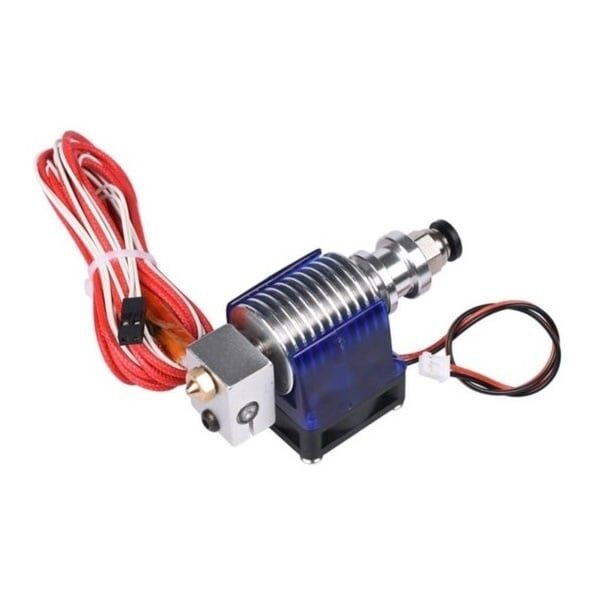
All Complete Bowden V6 Hotend with Fan Cable – 1.75mm, 0.2mm Nozzle
Complete V6 hotend assembly with fan and cable for 1.75mm filament. Compatible with E3D-style mounting. Upgrade your printer for engineering filament printing.
View on Zbotic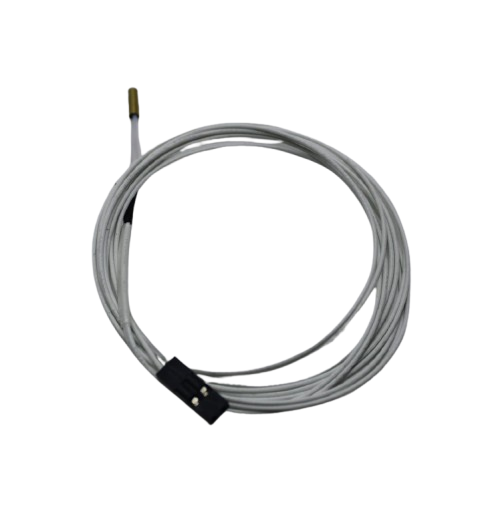
100K NTC Thermistor with Copper Tip for MK8 Extruder
High-accuracy 100K NTC thermistor with copper tip for MK8 extruder assemblies. Essential for accurate temperature control when printing engineering filaments like PA12.
View on ZboticTroubleshooting
Part pops off bed mid-print: Increase bed temperature by 5°C, widen brim to 15mm, use Garolite surface, pre-soak bed for 20 minutes, and add a draft shield in slicer.
Severe stringing: Filament is wet — dry for 12 hours. Also reduce retraction speed, increase travel speed, and enable combing mode in your slicer to avoid crossing open spaces.
Weak, brittle parts: Wet filament causes dramatically reduced inter-layer adhesion. Dry thoroughly. Also increase nozzle temperature by 5–10°C and reduce print speed.
Nozzle jamming repeatedly: Nylon can jam at insufficient temperatures. Increase nozzle temp, verify heat block temperature is accurate with a separate thermometer, and check for partial nozzle clogs using a cleaning needle.
Ready to Print Tougher Parts?
Get the hotend components, nozzles, and maintenance tools you need for printing PA12 and other engineering filaments. Delivered across India.
Shop 3D Printing Supplies at ZboticFrequently Asked Questions
Is Nylon PA12 stronger than PETG?
In terms of toughness and fatigue resistance, yes — PA12 is significantly superior to PETG. PETG is stiffer and has better surface finish, but PA12 absorbs far more energy before failure and can flex thousands of times where PETG would crack. For impact-resistant and fatigue-critical parts, PA12 wins clearly.
Can I print Nylon PA12 without an enclosure?
For small parts (under 60×60mm), it is possible with aggressive brim and draft shields. For larger parts, warping is very likely without an enclosure. An enclosure dramatically improves success rates and part quality.
How do I store PA12 filament in India?
Seal immediately in a zip-lock bag or vacuum bag with fresh silica gel desiccant after every printing session. During monsoon months, store in an airtight container with a large quantity of desiccant and replace the desiccant weekly. Never leave PA12 open on the printer between sessions.
Can I print PA12 with a standard brass nozzle?
Yes, for unfilled PA12. Brass nozzles work fine for plain PA12 and PA12-GF (glass fibre), the glass is only mildly abrasive. For PA12-CF (carbon fibre), you need a hardened steel nozzle — carbon fibre will destroy a brass nozzle very quickly.
What is the best infill pattern for functional PA12 parts?
Gyroid infill is the top choice for PA12 functional parts. Its continuous curved structure distributes stress isotropically, which pairs well with PA12’s elastic properties. For parts that must be stiff, cubic or honeycomb infill at higher density (60–80%) is a good alternative.
How does PA12 compare to ABS for functional parts?
PA12 is generally superior to ABS for functional parts in most scenarios. PA12 is tougher, more chemically resistant, has lower moisture sensitivity than you might expect (especially compared to PA6), and does not require acetone vapour for post-processing like ABS. ABS’s main advantages are lower cost and easier machining/acetone smoothing for aesthetic parts.



Add comment