
Choosing the right battery can make or break your DIY electronics project. When comparing 18650 vs LiPo vs LiFePO4 batteries, Indian makers face a tough decision — each chemistry has distinct strengths, trade-offs, and ideal use cases. Whether you’re building a portable power bank, an FPV drone, a solar energy storage system, or a custom RC car, understanding these three battery types is essential before spending your hard-earned rupees.
Table of Contents
- What is an 18650 Battery?
- What is a LiPo Battery?
- What is a LiFePO4 Battery?
- Side-by-Side Comparison
- Which Battery is Best for Which Project?
- Safety Tips for Indian Hobbyists
- Buying Batteries in India: What to Look For
- Frequently Asked Questions
What is an 18650 Battery?
The 18650 is a cylindrical lithium-ion cell measuring 18mm in diameter and 65mm in length (hence the name). It is one of the most popular rechargeable battery formats in the world, used in laptop battery packs, flashlights, power banks, and increasingly in DIY electronics projects across India.
A typical 18650 cell has a nominal voltage of 3.6V–3.7V and a capacity ranging from 1800mAh to 3500mAh, depending on the brand and chemistry. Popular brands include Samsung 25R, LG HG2, Panasonic NCR18650B, and Molicel P26A. In India, these cells are available individually or in second-life laptop battery packs that hobbyists salvage for DIY builds.
The key advantage of 18650 cells is their standardised form factor. You can slot them into holders, connect them in series or parallel, and replace individual faulty cells. This repairability makes them ideal for long-term projects. The cells also handle moderate discharge rates well — typically 5–20A continuous depending on the variant.
On the downside, 18650 cells require a Battery Management System (BMS) for safe operation. Without a BMS, over-discharge, over-charge, or short circuits can cause swelling, fire, or explosion. Building a multi-cell 18650 pack also demands proper spot welding or soldering skills and an understanding of series/parallel configurations.
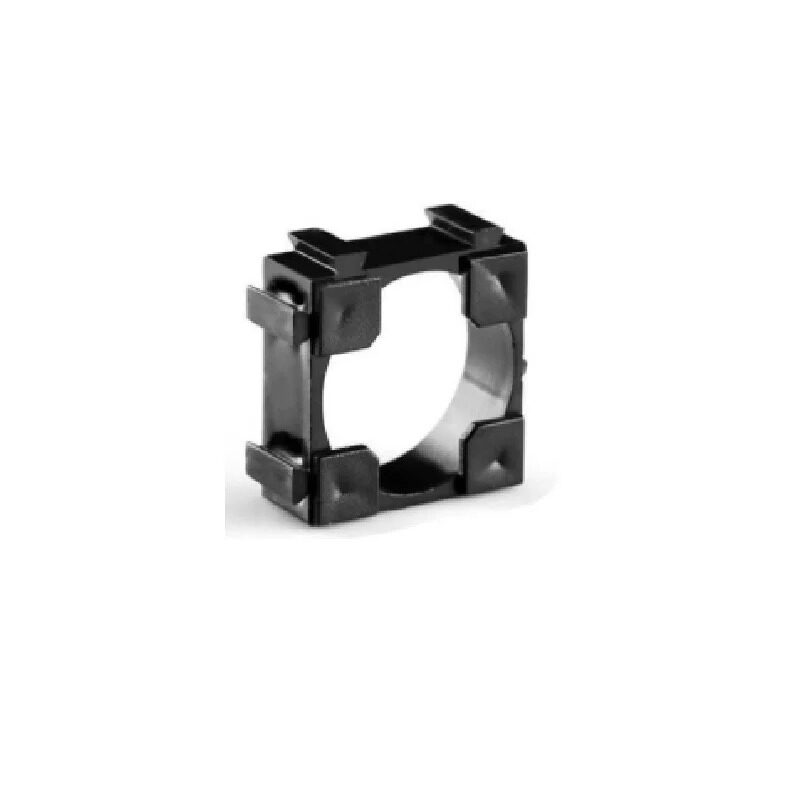
1 x 18650 Battery Holder with 18.4MM Bore Diameter – Pack of 4
Sturdy single-cell 18650 holders perfect for prototyping. Build packs in any series/parallel configuration without soldering.
What is a LiPo Battery?
Lithium Polymer (LiPo) batteries use a gel or solid polymer electrolyte instead of a liquid one, allowing them to be manufactured in flexible, flat, pouch-style packages. Each cell has a nominal voltage of 3.7V (fully charged: 4.2V, discharged: 3.0V), and multi-cell packs are specified as 1S, 2S, 3S, 4S, 6S, etc., where each “S” represents one cell in series.
LiPo batteries are the go-to choice for RC vehicles, FPV drones, and high-current applications because they can deliver extremely high discharge rates — often 20C, 50C, or even 100C. A 1300mAh 50C pack can theoretically deliver 65A instantaneously, which is why drones can pull enormous power from compact, lightweight packs.
The main drawbacks of LiPo batteries are safety and lifecycle. They are sensitive to overcharge, over-discharge, physical puncture, and high temperatures — all of which can cause thermal runaway (fire or explosion). LiPo packs should always be charged with a proper balance charger, stored at storage voltage (3.8V/cell), and kept in a LiPo-safe bag when charging or in storage. Their cycle life is also lower than 18650 cells — typically 200–500 cycles depending on how aggressively they are discharged.
In India, LiPo batteries are widely available from brands like Tattu, Gens Ace, CNHL, and generic Chinese imports. For FPV racing drones, quality matters — cheap unbranded LiPos often puff up after just a few cycles in Indian summer temperatures (40°C+).
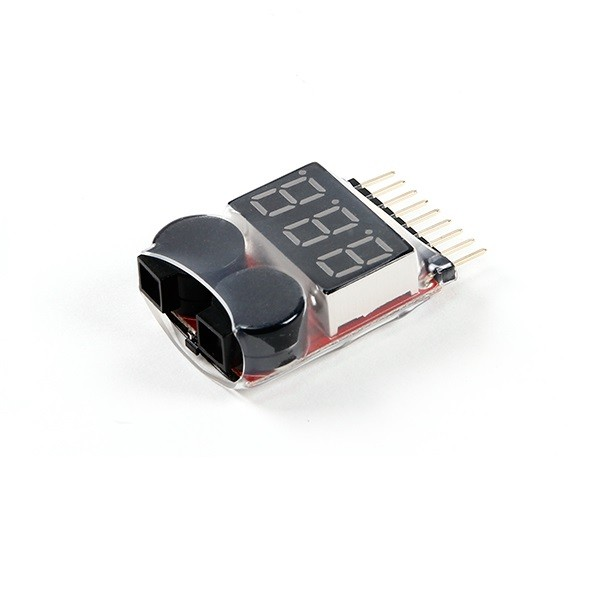
1-8S LiPo Battery Voltage Tester without Alarm
Instantly check the voltage of each cell in your 1S to 8S LiPo pack. Essential for preventing over-discharge and maintaining battery health.
What is a LiFePO4 Battery?
Lithium Iron Phosphate (LiFePO4 or LFP) is a variant of lithium-ion chemistry that replaces the cobalt oxide cathode with iron phosphate. This makes LiFePO4 batteries significantly safer, longer-lasting, and more thermally stable than both 18650 (NMC/NCA chemistry) and LiPo batteries.
Key specs: nominal voltage of 3.2V per cell (fully charged 3.65V, discharged 2.5V), cycle life of 2000–5000 cycles — often 10x the cycle life of LiPo packs. The flat discharge curve means voltage stays remarkably stable through most of the discharge, which is great for electronics that require consistent voltage.
LiFePO4 cells do not experience thermal runaway under normal conditions, making them ideal for solar energy storage, electric bikes, automotive applications, and home UPS systems. They perform better in high-temperature environments like those common across India in summer. The trade-off is lower energy density — LFP batteries are heavier and bulkier for the same capacity compared to NMC/LiPo chemistries.
In India, LiFePO4 batteries are gaining popularity for solar home systems (replacing lead-acid banks), DIY e-bike conversions, and portable power stations. Cells are available in cylindrical (32700, 26650) and prismatic formats. Brands like EVE, CATL, and CALB supply bulk cells, while assembled packs from domestic brands are increasingly affordable.

ISDT A4 Air Smart Battery Charger – Supports LiFePO4, Li-Ion, NiMH with Bluetooth
A versatile smart charger that handles LiFePO4, Li-Ion, NiMH, and NiCd chemistries with Bluetooth monitoring — perfect for multi-chemistry workshops.
Side-by-Side Comparison: 18650 vs LiPo vs LiFePO4
| Parameter | 18650 (Li-Ion) | LiPo | LiFePO4 |
|---|---|---|---|
| Nominal Voltage | 3.6–3.7V | 3.7V | 3.2V |
| Energy Density | High (150–250 Wh/kg) | Very High (150–300 Wh/kg) | Moderate (90–160 Wh/kg) |
| Cycle Life | 300–500 cycles | 200–400 cycles | 2000–5000 cycles |
| Safety | Moderate | Low (fire risk) | Very High |
| Discharge Rate | 5–30C | 20–150C | 3–10C typical |
| Cost in India | ₹200–600/cell | ₹500–3000/pack | ₹400–800/cell |
| Temperature Range | -20°C to 60°C | -20°C to 60°C | -20°C to 70°C |
| Best For | Power banks, flashlights, DIY packs | Drones, RC, high-current loads | Solar storage, e-bikes, UPS |
Which Battery is Best for Which Project?
FPV Drones and RC Vehicles
Winner: LiPo. The extremely high C-rating of LiPo packs is non-negotiable for brushless motors that draw 20–80A in bursts. A 4S 1300mAh 75C LiPo delivers the power-to-weight ratio that makes FPV racing possible. 18650 cells simply cannot match this burst current without enormous cell counts. LiFePO4 would add too much weight.
DIY Power Bank
Winner: 18650. The standardised form factor, high capacity, and availability of salvaged laptop cells make 18650 the go-to for DIY power banks in India. Pair with a TP4056 charging module and a boost converter for a complete solution. LiPo flat-pack cells are an alternative but require more custom enclosure work.
Solar Home Storage
Winner: LiFePO4. The 5000-cycle life means your battery bank can last 10–15 years, far outlasting the 2–3 years you’d get from a LiPo pack in deep daily cycling. The high thermal stability is critical for installations in hot Indian rooftop environments. Lead-acid to LiFePO4 conversion is a popular upgrade for solar hobbyists.
Arduino / Raspberry Pi Portable Projects
Winner: 18650 or LiPo (flat cell). For compact, low-power IoT devices, both work well. A single 18650 with a TP4056 module and 5V boost converter is perhaps the most common DIY combination in Indian maker circles. Small flat LiPo cells offer better packaging for slim enclosures.
E-Bike Conversion
Winner: LiFePO4 (long term) or 18650 (budget). For Indian roads and heat, LiFePO4 packs are the safest and most durable choice. However, well-built 18650 packs using high-quality cells (Samsung/LG) with a proper 13S or 14S BMS are very popular in the DIY e-bike community due to lower upfront cost.
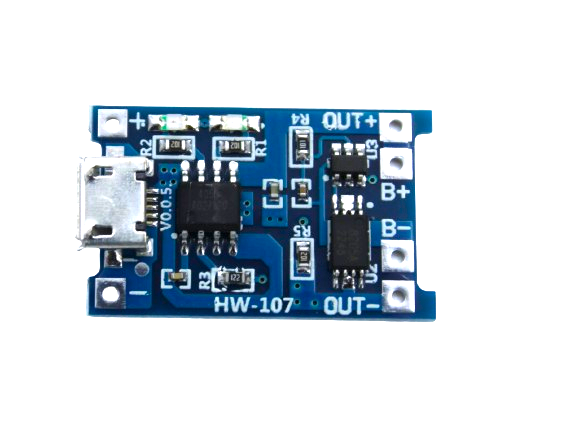
TP4056 1A Li-Ion Battery Charging Board – Micro USB with Protection
The most popular single-cell Li-Ion charger module in India. Includes over-charge, over-discharge, and short-circuit protection for safe DIY builds.
Safety Tips for Indian Hobbyists
Battery safety in India has unique challenges. Summer temperatures in many states exceed 40°C, power cuts lead to prolonged charging on backup power, and counterfeit cells are rampant on e-commerce platforms. Here are essential safety practices:
- Always use a BMS with 18650 packs. Never charge without protection circuitry.
- For LiPo batteries, always use a balance charger that monitors each cell. Never leave charging unattended or overnight.
- Store LiPo batteries at storage voltage (3.8V per cell, not full 4.2V) if not using for more than a week.
- Avoid counterfeit cells. Genuine Samsung, LG, and Panasonic 18650 cells purchased from reputable sources are worth the premium. Cells claiming 9000mAh in 18650 format are always fake.
- Check for swelling regularly. A puffed LiPo is a fire hazard and must be disposed of safely.
- Use LiFePO4 for applications where batteries are enclosed in hot spaces (e.g., solar charge controllers in outdoor boxes).
- Never short circuit any lithium cell — even briefly. High-current Li-Ion cells like the 25R can deliver 20A+ instantaneously.
Buying Batteries in India: What to Look For
The Indian battery market is flooded with counterfeits and re-wrapped cells. Here’s how to buy smart:
18650 cells: Stick to brand names (Samsung INR18650-25R, LG INR18650-HG2, Panasonic NCR18650B). Capacity above 3600mAh in standard 18650 format does not exist legitimately — any such claim is a fake. Buy from trusted electronics suppliers with return policies.
LiPo packs: For drones, buy from established brands. Check the discharge rating is realistic (150C packs are marketing, true burst ratings are more like 50–75C). Physically inspect for any puffing on arrival. For hobbyist use, ISDT smart chargers are excellent for conditioning and monitoring LiPo health.
LiFePO4 cells: Grade A prismatic cells (EVE, CATL) are available from bulk suppliers. For small quantities, check the documentation and capacity test results. Avoid Grade B cells for critical applications.
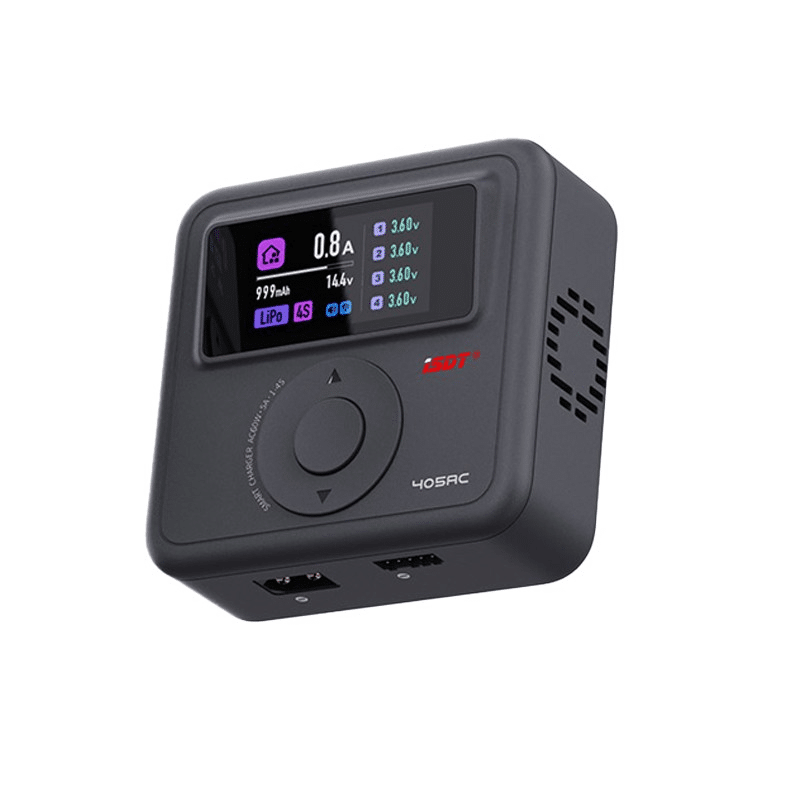
ISDT 405AC 60W AC GaN Smart Charger – Supports 1–4S LiPo/LiHv/LiFe
Compact GaN-powered smart charger for LiPo, LiHv, and LiFePO4 packs up to 4S. Perfect for safely charging drone and RC batteries at home.
Frequently Asked Questions
Can I replace LiPo with 18650 in my drone?
Generally no. Drones are designed around the high C-rating and compact pouch form factor of LiPo packs. 18650 cells cannot deliver the burst current most brushless motors demand, and the cylindrical format adds weight and vibration complexity. However, some larger, slower drones and robotic platforms successfully use 18650 packs with appropriate BMS.
Is LiFePO4 worth the higher price in India?
For long-term applications like solar storage or e-bikes, yes — absolutely. The 10x longer cycle life means the cost per cycle is far lower than LiPo or NMC lithium-ion. For a solar system running daily charge/discharge cycles, LiFePO4 pays for itself within 2–3 years versus replacement lead-acid or cheaper lithium packs.
What voltage is a fully charged 18650 cell?
A standard NMC/NCA 18650 cell charges to 4.2V. Some high-voltage variants charge to 4.35V. Never charge to above the rated maximum voltage — doing so accelerates degradation and can cause venting or fire.
How many 18650 cells do I need for a 12V battery pack?
You need 3 cells in series (3S) for a nominal 11.1V pack (3 × 3.7V). This works for most 12V applications with a boost converter or where 11.1V is acceptable. For a true 12V nominal, LiFePO4 chemistry requires 4 cells in series (4 × 3.2V = 12.8V nominal).
Which battery chemistry is safest for indoor use in India?
LiFePO4 is the safest lithium chemistry for indoor use. It does not experience thermal runaway under normal conditions, making it safe for storage in living spaces. 18650 (NMC) cells are reasonably safe with a proper BMS. LiPo batteries should always be charged and stored with appropriate precautions, preferably in a fireproof LiPo bag.
Final Thoughts: Choose the Right Battery for Your Needs
The answer to 18650 vs LiPo vs LiFePO4 isn’t universal — it depends entirely on your project requirements. Choose LiPo for high-power, weight-critical applications like FPV drones. Choose 18650 for general-purpose DIY electronics, power banks, and budget-friendly multi-cell packs. Choose LiFePO4 when safety, longevity, and temperature stability matter more than energy density — especially for solar and e-mobility projects in India.
Whatever chemistry you choose, invest in a quality BMS, use a proper charger, and buy cells from trusted sources. A good battery system is the foundation of every reliable electronics project.
Ready to power your next project? Browse all batteries and power modules at Zbotic — fast shipping across India!

Add comment