
RC Transmitter Buying Guide India: FrSky vs RadioMaster 2026
Choosing your first RC transmitter — or upgrading from an entry-level radio to a serious one — is one of the most important decisions an FPV drone pilot makes. Unlike props and batteries that you replace frequently, a good transmitter can serve you for 5–10 years across multiple drones, different models, and evolving radio protocols.
In 2026, the Indian FPV market is dominated by two major radio brands: FrSky (the long-time incumbent) and RadioMaster (the aggressive challenger that has captured massive market share since 2020). Both offer excellent products, but they have very different philosophies, ecosystems, and price points.
This guide cuts through the marketing noise to help Indian FPV pilots and RC hobbyists pick the right transmitter for their budget, flying style, and future plans.
1. What to Look for in an RC Transmitter
Before comparing brands, understand the specifications that actually matter:
Number of Channels
Channels are individual control inputs the transmitter can send simultaneously. A basic quadcopter needs 4 channels (throttle, pitch, roll, yaw). Add flight mode switching, arm/disarm, beeper, camera tilt, VTX control, and you quickly need 8–10 channels. Minimum 8 channels for any serious FPV or RC build; 12–16 for more complex aircraft.
Radio Protocol
The wireless protocol determines range, latency, and which receivers you can use. This is the single most important specification in 2026 — see Section 2 for a full breakdown.
Hall Effect Gimbals
Entry-level radios use potentiometer (pot) gimbals that wear out and develop stick drift over time. Hall effect (magnetic sensor) gimbals have no physical contact, so they essentially never wear out and maintain accuracy throughout their life. A must-have for anyone spending more than ₹5,000 on a transmitter.
Internal Module vs External Module Bay
An internal module transmits the RF signal from within the radio body. An external module bay (JR bay standard) allows you to plug in third-party modules — essential flexibility for pilots who fly multiple aircraft using different protocols.
EdgeTX / OpenTX Compatibility
EdgeTX (the evolved fork of OpenTX) is the open-source firmware that runs on most serious RC transmitters. It provides a virtually limitless configuration system, logical switches, custom sounds, mixer pages, and scripting. Radios running EdgeTX/OpenTX give you far more control than proprietary firmware systems.
2. Radio Protocols Explained: ELRS vs ACCESS vs ACCST
Radio protocol wars are real in 2026, and your choice of protocol locks in which receivers you can use.
ExpressLRS (ELRS)
The game-changing open-source protocol that has essentially become the default for new FPV builds. ELRS offers:
- Ultra-low latency: As low as 1.5ms at 1000Hz packet rate (vs 18–30ms for traditional protocols)
- Excellent range: 10–40km theoretical, 5–15km practical with modest power levels
- Open source: Receivers from multiple manufacturers (Betaflight, BetaFPV, RadioMaster, Matek, etc.) at very low cost (₹500–₹1,500 for good ELRS receivers)
- 2.4GHz and 900MHz variants: 2.4GHz for FPV racing/freestyle (lower latency); 900MHz for long-range and penetration
Verdict: ELRS is the protocol to be on in 2026. Any radio you buy should have ELRS either internally or via external module.
FrSky ACCESS
FrSky’s modern proprietary protocol. Better than ACCST (their older standard) but still closed-source, meaning you can only use FrSky-branded receivers. ACCESS receivers in India cost ₹1,500–₹4,000 and are harder to source than ELRS. Not recommended for new builds.
FrSky ACCST (D16/D8)
The legacy FrSky protocol. Still works fine for short-to-medium range applications but is an outdated standard with higher latency than ELRS. If you have existing ACCST receivers, FrSky radios can still support them, but do not start a new build on ACCST.
Crossfire (TBS)
Team BlackSheep’s proprietary long-range protocol. Excellent range and reliability but expensive receivers (₹3,000–₹8,000 each). Being squeezed out by ELRS 900MHz in 2025–2026. Not recommended for new buyers.
3. FrSky 2026 Lineup: Key Models
FrSky Tandem X20S
FrSky’s flagship for 2025–2026. Dual-band (2.4GHz + 900MHz simultaneously), ACCESS + ACCST + ELRS (via external module), 24 channels, gorgeous OLED display. Price in India: approximately ₹28,000–₹35,000 (import). The hardware is superb but the price is hard to justify when RadioMaster offers comparable specs for less.
FrSky X9D Plus SE
The classic FPV radio that dominated the market for nearly a decade. Reliable, excellent build quality, hall effect gimbals, but stuck on older ACCST/ACCESS protocol. Price: ₹14,000–₹18,000 imported. Still viable if you have an existing FrSky receiver ecosystem but hard to recommend to new buyers over ELRS alternatives.
FrSky X20 Lite
More affordable ACCESS/ELRS-compatible entry point from FrSky. Better value than the X9D in 2026. Price: ₹12,000–₹16,000 imported.
FrSky Pros and Cons
| Pros | Cons |
|---|---|
| Premium build quality and gimbals | Significantly more expensive than RadioMaster |
| Established brand, widespread service awareness | Proprietary ACCESS ecosystem (receiver costs) |
| Dual-band options available | Hard to find locally in India — import dependent |
| EdgeTX compatible on newer models | ELRS only via external module (no internal ELRS on most models) |
4. RadioMaster 2026 Lineup: Key Models
RadioMaster Boxer
The game-changer that disrupted the market. Game-controller form factor, internal ELRS 2.4GHz, EdgeTX pre-installed, hall effect gimbals, USB-C charging. Price in India: ₹7,000–₹10,000. Perfect for FPV pilots who fly primarily with goggles (no need for a large screen radio).
RadioMaster TX16S Mark III
The premium large-format radio for pilots who want everything. 7-inch colour touchscreen, dual internal RF modules (ELRS 2.4GHz + 900MHz simultaneously), hall effect AG01 gimbals, USB-C, 5000mAh internal battery. Price in India: ₹14,000–₹18,000. Arguably the best value flagship radio available globally in 2026.
RadioMaster Zorro
Ultra-compact stick-style radio ideal for simulators and entry-level pilots. Internal ELRS or CC2500 module options. Price in India: ₹5,500–₹8,000. Great for sim training but limited for complex channel configurations.
RadioMaster Pocket
The entry-level EdgeTX radio. No internal module on base model (CC2500 multiprotocol on ELRS version), smaller form factor. Price in India: ₹4,000–₹6,000. For absolute beginners on the tightest budget who want EdgeTX experience.
RadioMaster Pros and Cons
| Pros | Cons |
|---|---|
| Excellent value — internal ELRS at fraction of FrSky price | Newer brand, less long-term track record |
| Internal ELRS across most of their lineup | Customer support primarily through forums/Discord |
| EdgeTX pre-installed on all models | Some entry models have average build quality |
| Active community support in India and globally | Gimbals on budget models not as smooth as FrSky premium |
5. Head-to-Head Comparison by Use Case
FPV Racing and Freestyle
Winner: RadioMaster Boxer or TX16S. ELRS internal, game-controller ergonomics (Boxer), ultra-low latency. FrSky can compete but at higher cost with external ELRS module added.
Long-Range FPV (Wings/Fixed-wing)
Winner: RadioMaster TX16S Mark III with dual internal (2.4GHz + 900MHz). Both RadioMaster and FrSky Tandem X20S cover this, but TX16S at significantly lower cost.
Agricultural/Professional Drones (Pixhawk/ArduPilot)
Winner: FrSky X9D Plus SE or RadioMaster TX16S. Both work excellently with Pixhawk via SBUS. If you are already invested in FrSky ACCESS receivers, stay FrSky. New builds should go RadioMaster + ELRS.
Beginner Learning
Winner: RadioMaster Boxer. Familiar game-controller shape, lower price, ELRS built-in, and EdgeTX is well-documented for learning.
Fixed-Wing RC Planes
Winner: FrSky X9D Plus SE for its traditional radio layout with shoulder switches and trim buttons that fixed-wing pilots prefer. RadioMaster TX16S is also excellent for this.
6. India Pricing and Import Considerations
This is where the rubber meets the road for Indian buyers. All serious RC transmitters are imported — mostly from China and the USA.
Import Duty and GST
RC transmitters imported via courier are subject to:
- Basic Customs Duty: 10–20% depending on HS code classification
- IGST: 18% on (CIF + BCD)
- Courier handling fee: ₹500–₹1,000
- Total effective import cost premium: 30–40% over base price
Approximate 2026 India Prices
| Model | Base USD Price | Approx India Price (INR) |
|---|---|---|
| RadioMaster Pocket ELRS | $45 | ₹5,000–₹6,500 |
| RadioMaster Zorro ELRS | $65 | ₹7,000–₹9,500 |
| RadioMaster Boxer ELRS | $90 | ₹9,500–₹13,000 |
| RadioMaster TX16S MkIII | $170 | ₹17,000–₹22,000 |
| FrSky X9D Plus SE (2020) | $180 | ₹18,000–₹24,000 |
| FrSky Tandem X20S | $290 | ₹28,000–₹38,000 |
Buying Options in India
- Indian hobby shops: Limited stock of RadioMaster; almost no FrSky. Prices typically 15–25% higher than importing yourself but with local warranty handling.
- Zbotic.in: Stocks drone electronics and components relevant to builds. Good place for ESCs, PDB boards, and accessories.
- Import via AliExpress/Banggood: Lowest price but customs risk and no local after-sales support.
- Amazon India third-party sellers: RadioMaster available, prices moderate, easier returns.
7. Best Picks for Beginners in India
Under ₹8,000: RadioMaster Zorro ELRS
The Zorro packs internal ELRS 2.4GHz, EdgeTX, and 16 channels into a slim game-controller form factor that beginners find natural. The CC2500 multiprotocol version also works with toy-grade receivers for binding cheap RC cars and planes. This is our top recommendation for Indian beginners who want to start on the right protocol ecosystem from day one.
Under ₹13,000: RadioMaster Boxer ELRS
Step up from the Zorro with better gimbals, a built-in colour screen, and the ergonomics of a full-size gaming controller. The Boxer has become enormously popular in India’s growing FPV community. Buy this if your budget allows and you know you are serious about FPV flying.
8. Best Picks for Intermediate and Advanced Pilots
RadioMaster TX16S Mark III: The All-Rounder Champion
For pilots who fly multiple aircraft types — FPV quads, fixed-wing, helicopters, agricultural drones — the TX16S Mark III is the definitive recommendation. Dual internal RF, large colour touchscreen, excellent AG01 hall effect gimbals, and EdgeTX make it the most versatile radio in its price range globally. Nothing from FrSky matches it at this price point.
FrSky Tandem X20S: For the FrSky Loyalist
If you have a significant existing investment in FrSky ACCESS receivers and equipment, the X20S keeps you in the FrSky ecosystem while offering dual-band and modern features. The hardware quality is arguably the best in class. But at ₹30,000+ landed in India, it is a hard sell against the RadioMaster TX16S Mark III.
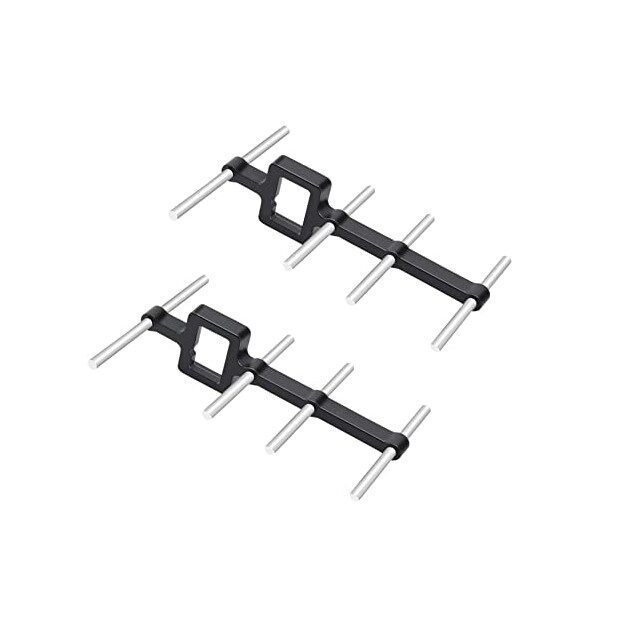
2.4GHz Yagi-UDA Drone Signal Booster
Directional Yagi antenna booster for 2.4GHz RC transmitters. Significantly extends the effective range of 2.4GHz ELRS and traditional protocol transmitters — essential accessory for long-range or BVLOS operations.
View on Zbotic9. Other Brands Worth Considering
Jumper T-Pro / T-20
Jumper offers some of the cheapest EdgeTX-compatible radios with internal ELRS. Build quality is slightly below RadioMaster but pricing is aggressive. The T-Pro is a popular entry point for Indian buyers on tight budgets.
Flysky
Flysky makes affordable radios primarily for the budget hobby segment. Their AFHDS 3 protocol is decent for fixed-wing and basic drones but ELRS has essentially outclassed it for FPV. Consider Flysky only for controlling RC cars, boats, and planes where latency is less critical than cost.
Spektrum
Popular in the USA fixed-wing market but barely relevant in India in 2026. DSM2/DSMX protocol is proprietary, receivers are expensive, and the value proposition does not hold against RadioMaster in the Indian market.
10. Essential Transmitter Accessories
Regardless of which radio you choose, these accessories are worth investing in:
- Gimbal guards: Protect the precision gimbals when storing the radio in a bag. Most radios come with plastic covers; aftermarket TPU prints are popular in the Indian FPV community.
- Neck strap: Essential for long sessions — holding a radio for 2+ hours causes fatigue without a strap.
- Directional antenna: For long-range flying, a Yagi or patch antenna on the transmitter dramatically extends range.
- 18650 battery upgrade: Many radios accept 18650 cells. Using quality protected cells (Samsung 30Q or similar) gives better battery life than the supplied packs.
- Hall effect gimbal upgrade: Budget radios with pot gimbals can often be upgraded with AG01 or similar hall effect gimbal kits.

35A V2.1 2-5S 4-in-1 Brushless ESC for FPV Racing
Once you have your transmitter sorted, pair it with a reliable 4-in-1 ESC for your FPV build. This 35A ESC supports DSHOT600 and bidirectional DSHOT for RPM filtering — compatible with ELRS receivers and any major flight controller.
View on Zbotic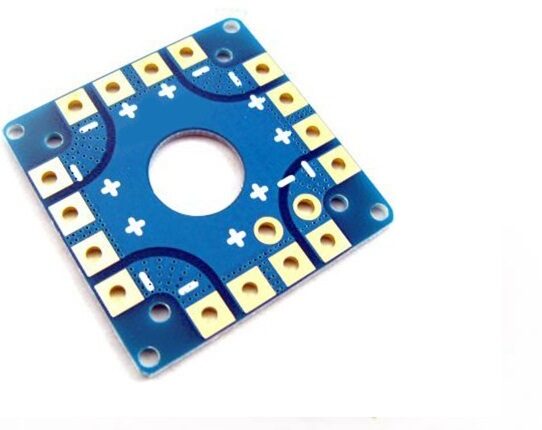
100A Multirotor ESC Power Distribution Battery Board
Power distribution board for your complete drone build. Handles high current from your battery to all four ESCs. Compatible with builds using any RC transmitter protocol — ELRS, ACCST, or ACCESS.
View on ZboticReady to Build Your FPV Drone?
Once you have chosen your transmitter, Zbotic has everything else you need for your drone build — ESCs, power boards, motors, propellers, and FPV cameras. Fast shipping across India with GST invoicing.
Shop Drone Parts at ZboticFrequently Asked Questions
Which RC transmitter is best for beginners in India in 2026?
The RadioMaster Zorro ELRS or RadioMaster Boxer ELRS are the best beginner choices in India in 2026. Both come with internal ExpressLRS 2.4GHz, EdgeTX firmware, and hall effect gimbals at prices under ₹13,000 — a much better value proposition than entry-level FrSky models. The Boxer’s game-controller form factor is particularly intuitive for beginners who are used to PlayStation or Xbox controllers.
Is FrSky better than RadioMaster?
FrSky has better build quality and gimbal feel on their premium models, and their FCC certification is cleaner for professional operations. RadioMaster offers significantly better value — you get internal ELRS, EdgeTX, and hall effect gimbals at 40–60% of the price of comparable FrSky models. For most Indian pilots, RadioMaster is the better choice unless you have a specific reason to stay in the FrSky ecosystem.
What is ExpressLRS (ELRS) and why does it matter?
ExpressLRS is an open-source RC radio protocol designed for FPV drones. It offers extremely low latency (as low as 1.5ms), excellent range (5–40km depending on configuration), and interoperability across dozens of receiver brands. In 2026, ELRS has become the dominant protocol for FPV flying globally, including in India. ELRS receivers are cheap (₹500–₹1,500), widely available, and regularly updated with new features.
Where can I buy RC transmitters in India?
RadioMaster transmitters are available on Amazon India through third-party sellers, and some Indian hobby shops in Bengaluru, Delhi, Mumbai, and Chennai stock them. FrSky transmitters are harder to find locally and usually need to be imported. For drone components like ESCs, motors, and power boards to go with your transmitter, Zbotic.in is an excellent domestic source with fast shipping across India.
Do I need a licence to operate an RC transmitter in India?
RC transmitters operating on 2.4GHz ISM band do not require a separate radio licence in India under WPC rules. However, for commercial drone operations (flying for hire or reward), you need a Remote Pilot Certificate (RPC) issued by DGCA. The RC transmitter itself can be purchased and used without a licence for recreational hobbyist flying of sub-250g Nano category drones.
Can I use a RadioMaster transmitter with a Pixhawk flight controller?
Yes. RadioMaster transmitters with ELRS receivers can connect to Pixhawk via SBUS, CRSF, or UART protocols. Configure your ELRS receiver to output SBUS and connect it to the Pixhawk RC input port. All channel mappings, failsafe settings, and radio calibration are done through Mission Planner or QGroundControl exactly the same way as with any other RC system.







Add comment