
Portable Generator vs Solar Power Backup: India Comparison Guide 2024
Power cuts are an everyday reality across India — from tier-2 cities in Uttar Pradesh and Bihar to industrial towns in Gujarat and remote villages in Rajasthan. If you’ve been searching for portable generator vs solar power backup options for India, you’re not alone. Millions of Indian households and small businesses face the same dilemma: do you invest in a traditional petrol generator, or make the switch to modern solar backup solutions? Both options have real advantages, and the right choice depends on your location, load requirements, budget, and how long outages typically last in your area. This guide breaks down everything you need to know to make an informed decision.
India’s Power Backup Scenario in 2024
India’s electricity distribution has improved dramatically over the past decade, but load shedding and unplanned outages remain common in many regions. Rural areas in states like Bihar, Jharkhand, and Odisha can experience 4–10 hours of daily power cuts. Semi-urban areas frequently face scheduled load shedding during summer peak demand. Even in Tier-1 cities, unexpected tripping and maintenance shutdowns can last hours.
The market for power backup solutions in India was estimated at over ₹18,000 crore in 2023 and continues to grow at 15% annually. Traditionally, inverter-battery systems (using lead-acid batteries) dominated Indian homes. But rising petrol prices, falling solar panel costs, and increasingly affordable lithium battery storage have dramatically shifted the conversation in 2024.
For electronics makers and hobbyists specifically, stable power is non-negotiable. A power surge or abrupt cutoff can damage sensitive components, corrupt firmware, or ruin hours of work. Let’s look at both options in detail.
Portable Generators: Pros, Cons, and Costs
Portable petrol generators have been the go-to backup solution for Indian workshops, construction sites, and rural households for decades. They’re immediate, powerful, and widely understood.
How they work: A petrol (or diesel) engine drives an alternator to produce AC electricity. Most portable generators produce 220–240V AC at 50Hz, directly compatible with Indian appliances. Output ranges from 800W (for basic lighting and fans) to 5000W+ (for air conditioners and heavy machinery).
Advantages:
- High power output: A 2kVA generator can run multiple fans, a refrigerator, and a TV simultaneously with no problem.
- Instant availability: Pull the cord, and you have power in seconds — no waiting for batteries to charge.
- Weather independent: Runs in rain, on cloudy days, at night — whenever you need it.
- Lower upfront cost: A decent 1kVA portable generator costs ₹8,000–₹15,000 in India.
- Refuellable anywhere: Petrol is available at every pump in India.
Disadvantages:
- Running cost is high: At ₹100/litre petrol and 1 litre/hour consumption for a 1kVA generator, you’re spending ₹3,000/month for just 1 hour of daily use.
- Noise: Most portable generators produce 65–80 dB — like standing next to a lawnmower. Illegal in many residential societies.
- Maintenance: Oil changes every 50–100 hours, air filter cleaning, spark plug replacement, carburettor cleaning — all add to total cost of ownership.
- Emissions: CO and NOx emissions make generators unsuitable for indoor or semi-enclosed spaces.
- Power quality: Cheap generators produce irregular sine waves that can damage sensitive electronics, motor windings, and switch-mode power supplies.
- Fuel storage: Storing petrol at home requires fire safety precautions and has a limited shelf life (3–6 months).
Typical India pricing (2024):
- 800W portable generator: ₹8,000–₹12,000
- 2kVA portable generator: ₹20,000–₹35,000
- 5kVA portable generator: ₹50,000–₹90,000
Solar Power Backup: Pros, Cons, and Costs
Solar power backup systems combine photovoltaic panels, a charge controller (MPPT or PWM), a battery bank, and an inverter. In India, with 300+ sunny days in most states, solar is increasingly compelling — and lithium battery storage has made it viable for serious backup applications.
Advantages:
- Zero fuel cost: After the initial investment, the sun charges your battery bank for free.
- Silent operation: No noise, no fumes — ideal for residential areas and indoor workshops.
- Clean power: Modern solar inverters produce pure sine wave output, safe for all electronics.
- Low maintenance: Clean panels occasionally, check connections annually — that’s it.
- Scalable: Start with a small 100W panel and 100Ah battery. Add more panels and batteries as budget allows.
- Government subsidies: PM Surya Ghar Muft Bijli Yojana offers up to ₹78,000 subsidy for rooftop solar — a massive advantage for permanent installations.
- Long lifespan: Quality solar panels last 25 years; LiFePO4 battery banks 10–15 years.
Disadvantages:
- High upfront cost: A complete 1kW solar backup system with 100Ah lithium battery costs ₹60,000–₹1,20,000.
- Weather dependent: Output drops on cloudy days and is zero at night (unless your battery bank is large enough to carry overnight load).
- Space for panels: 1kW of solar needs approximately 6–8 sq metres of shadow-free roof or ground space.
- Battery depth of discharge: Lead-acid batteries (cheaper) should only be discharged to 50%; lithium batteries allow 80–95% DoD but cost more upfront.
- Slow recharge: If batteries are fully discharged overnight, recharging from solar takes 4–8 hours of good sunlight.
Typical India pricing (2024):
- Basic solar backup (200W panel + 100Ah lead-acid + PWM): ₹25,000–₹40,000
- Lithium solar backup (500W panel + 100Ah LiFePO4 + MPPT inverter): ₹70,000–₹1,20,000
- Grid-tie + backup (3kW system): ₹1,80,000–₹2,80,000 (before subsidy)
Head-to-Head Comparison Table
| Factor | Portable Generator | Solar Backup |
|---|---|---|
| Upfront Cost | Low (₹8K–₹35K) | High (₹25K–₹1.2L) |
| Running Cost | High (₹100–₹120/hour) | Near zero (after install) |
| Noise | Very loud (65–80 dB) | Silent |
| Emissions | High (CO, NOx) | Zero |
| Power Quality | Variable (may need AVR) | Pure sine wave |
| Availability | Any time, any weather | Limited at night/cloudy |
| Maintenance | High (oil, filters, carb) | Very low |
| Lifespan | 3–8 years typical | 15–25 years (panels) |
| Best for | High-load, short outages | Long outages, daily use |
| Electronics Safety | Use AVR/UPS between | Safe (pure sine) |
Best Choice for Makers and Electronics Hobbyists
For an electronics hobbyist or maker, the answer is almost always solar — especially for your workshop or lab. Here’s why:
Power quality matters: Arduino boards, Raspberry Pi, oscilloscopes, soldering stations, and 3D printers are all sensitive to voltage spikes and frequency variations. A cheap petrol generator’s output can damage USB ports, corrupt flash memory, and reduce the lifespan of your equipment. A solar inverter with pure sine wave output is as good as grid power.
Silence enables focus: A 75dB generator running outside your workshop window makes it impossible to hear audio-related electronics tests, conduct video calls for remote troubleshooting, or simply concentrate on complex builds.
DIY potential: As a maker, you can build your own solar backup system from components — MPPT charge controller, lithium battery bank, inverter, and panels — learning deeply about power electronics in the process. This is exactly the kind of project that builds valuable skills.
That said, generators win for high-load workshops (heavy welding machines, industrial motors, large 3D printer farms) or in locations with very limited roof space for panels.
Building a DIY Solar Backup for Your Maker Workshop
A basic DIY solar backup for an electronics workshop can power: Arduino/Pi development station (50W), soldering iron (50W), LED work lights (40W), laptop charger (65W), oscilloscope (30W) — totalling about 235W of continuous load.
Components you’ll need:
- Solar panel: 300W monocrystalline panel (~₹8,000)
- MPPT charge controller: 20A MPPT (₹2,500–₹5,000)
- Battery: 100Ah LiFePO4 (₹18,000–₹25,000) or 150Ah lead-acid (₹12,000)
- Inverter: 600W–1000W pure sine wave (₹5,000–₹12,000)
- Wiring, fuses, MC4 connectors: (~₹2,000)
Total DIY cost: ₹35,000–₹52,000 — providing 4–6 hours of workshop backup on a single cloudy day, and virtually unlimited operation on a sunny day.
For microcontroller-based projects, you can also build a small-scale LiPo or 18650 pack backup specifically for your workbench, using BMS boards and a dedicated charger. This scales from a few watts to hundreds of watts depending on how many cells you assemble in series and parallel.
Recommended Products from Zbotic
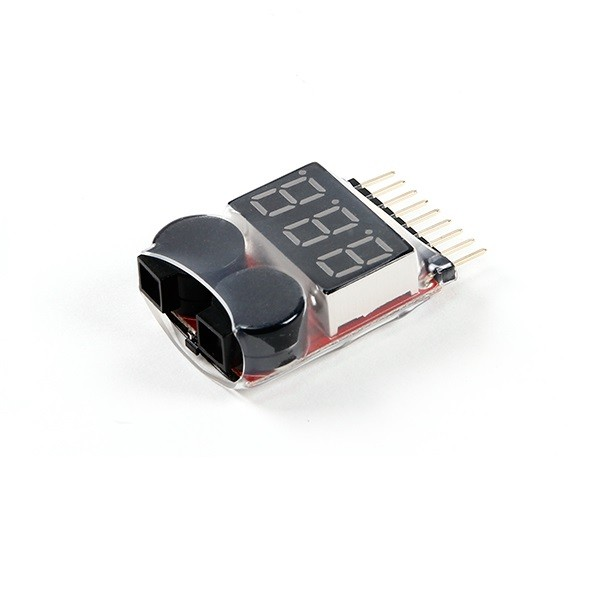
1-8S Lipo Battery Voltage Tester without Alarm
Instantly check cell voltages in your LiPo battery pack. Essential for monitoring your DIY solar storage system’s battery health.
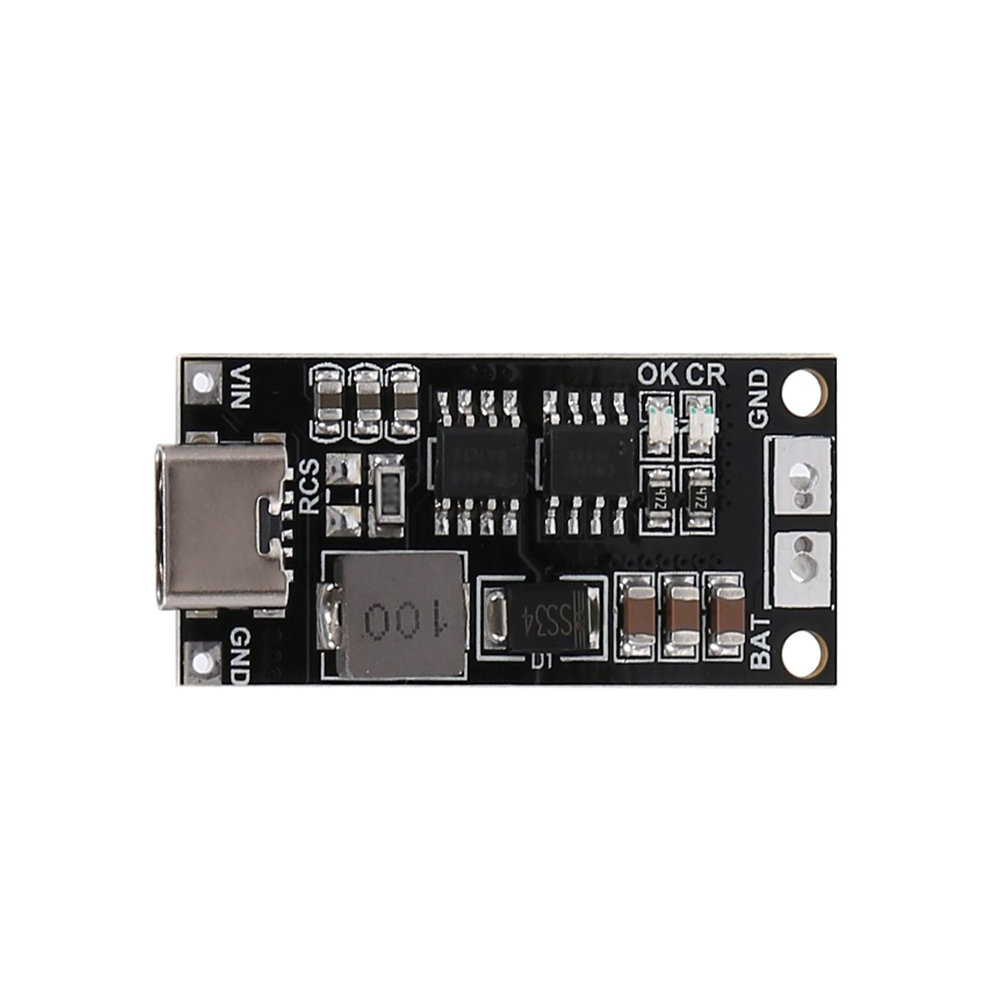
18650 Polymer Lithium Ion Charger Type-C to 3S 12.6V 2A Booster Module
Charge a 3S lithium pack to 12.6V via USB-C at 2A. Ideal for building a compact 12V portable backup bank for your maker workbench.

ISDT A4 Air Smart Battery Charger – NiMH, NiCd, Li-Ion, LiFePO4 with Bluetooth
Professional multi-chemistry charger with Bluetooth monitoring. Perfect for managing the battery packs in your solar backup or RC power system.

1S 18650 Li-ion Lithium Battery BMS Charger Protection Board for 3.7V
Compact BMS board for single-cell 18650 protection. Use multiple boards for individual cell protection in a custom multi-cell backup pack.
Frequently Asked Questions
Q1: Is solar power backup worth it in India considering the high upfront cost?
Yes, especially if you face more than 2 hours of daily load shedding. With petrol at ₹100/litre, a generator costs ₹3,000/month for 1 hour of daily use. A solar backup system pays for itself in 3–5 years and then operates virtually for free for another 15–20 years. Government subsidies under PM Surya Ghar can dramatically reduce the upfront cost for rooftop systems.
Q2: Can I run a 1.5-ton AC on solar backup?
A 1.5-ton inverter AC draws about 1200–1500W. To run it for 4 hours on solar backup, you’d need at least a 2kW panel array and a 200Ah lithium battery bank — a system costing ₹1.5–2.5 lakh. It’s feasible but expensive. Many households run only lights, fans, and a TV on solar backup, reserving the AC for grid power.
Q3: Are portable generators allowed in residential areas in India?
Most residential societies and municipal areas have noise pollution rules limiting sound levels to 55 dB during day and 45 dB at night. Most portable generators (65–80 dB) violate these limits. Check your local municipal rules before using one.
Q4: What is the best battery type for a DIY solar backup system in India?
LiFePO4 (Lithium Iron Phosphate) is the best choice for 2024. It offers 80–95% depth of discharge (vs 50% for lead-acid), 2000–4000 cycle life (vs 300–500 for lead-acid), and does not need maintenance or ventilation. The higher upfront cost is offset by 5–10x longer life and much lower total cost of ownership.
Q5: Can I charge a solar battery with a regular inverter battery charger during cloudy days?
Yes. During extended cloudy periods, you can charge your battery bank from grid power using a standard charger. This is called a hybrid setup and ensures you always have backup power regardless of weather — combining the best of both approaches.
Make the Right Choice for Your Power Backup Needs
For most Indian makers and hobbyists, a solar-based backup system is the smarter long-term investment — cleaner, quieter, safer for electronics, and cheaper to run over a 5-year horizon. A portable generator remains the pragmatic choice when you need high power on demand in a pinch, or when roof space and budget simply don’t allow a solar installation yet.
Start small with a DIY 18650 or LiPo battery pack for your workbench backup, then scale up to a full solar system as your needs grow. Zbotic has all the battery management components — BMS boards, charging modules, and battery holders — you need to begin building reliable, solar-ready power systems today.





Add comment