
An IoT cold chain temperature logger for pharma applications in India addresses one of the most critical and underserved needs in the Indian pharmaceutical and food supply chain. India loses an estimated ₹92,000 crore worth of perishable goods annually due to cold chain failures, and the pharma sector faces strict regulatory requirements from CDSCO (Central Drugs Standard Control Organisation) and WHO GDP (Good Distribution Practice) guidelines for temperature-sensitive medicines including vaccines, insulin, biologics, and blood products. A well-designed IoT cold chain monitor built around ESP32 and precision temperature sensors offers pharmaceutical companies, distributors, and cold storage operators a cost-effective, compliant, and scalable solution.
Cold Chain Challenges in India’s Pharma Sector
India’s pharmaceutical industry is the world’s third largest by volume and thirteenth by value. With a vast geography — from the Himalayan cold of Himachal Pradesh to the tropical heat of Tamil Nadu — and an infrastructure that ranges from world-class highway corridors to last-mile village roads, maintaining cold chain integrity is extraordinarily challenging.
Key problem areas include:
- Last-mile delivery: The final leg from district cold storage to health sub-centres or pharmacy shops often involves open vehicles, uninsulated boxes, and exposure to ambient temperatures that can exceed 45°C in Indian summers
- Power failures: Cold storage facilities in semi-urban and rural areas experience frequent power cuts. Without real-time monitoring and alerts, refrigeration units can fail silently for hours before anyone notices
- Manual documentation: Many small distributors still rely on manual temperature logs filled twice a day — gaps of 12 hours create enormous compliance risks and provide no early warning of excursions
- Counterfeiting risk: Without end-to-end chain of custody documentation that includes temperature history, it is difficult to verify that medicines were not tampered with or subjected to damaging conditions
An IoT temperature logger that continuously records data, sends real-time alerts, and generates tamper-evident digital reports directly addresses all these challenges at a fraction of the cost of commercial pharmaceutical data loggers (which can cost ₹5,000–₹20,000 per unit). An ESP32-based solution can deliver equivalent monitoring capability for ₹800–₹1,500 per unit in hardware costs.
Regulatory Requirements: CDSCO and WHO GDP
Understanding the regulatory framework helps you design a compliant system from the start rather than retrofitting compliance later. Key requirements for pharma cold chain temperature loggers:
- Measurement accuracy: WHO GDP requires ±0.5°C accuracy for cold chain (+2°C to +8°C) and ±1°C for frozen (−20°C to −15°C). Your sensor selection and calibration must meet these specifications
- Logging frequency: Minimum every 15 minutes for continuous monitoring. For critical shipments or high-value biologics, every 5 minutes is recommended
- Data storage: Records must be retained for at least 5 years. Local data storage plus cloud backup is the recommended approach
- Alarm thresholds: Systems must alert responsible personnel within 30 minutes of a temperature excursion. Real-time SMS/email/app alerts are mandatory
- Audit trail: All alarms, acknowledgements, and configuration changes must be logged with timestamp and user identity — a basic tamper-evident audit trail
- Calibration: Sensors must be calibrated annually (minimum) against a NABL-accredited reference. Include a calibration certificate holder in your device design
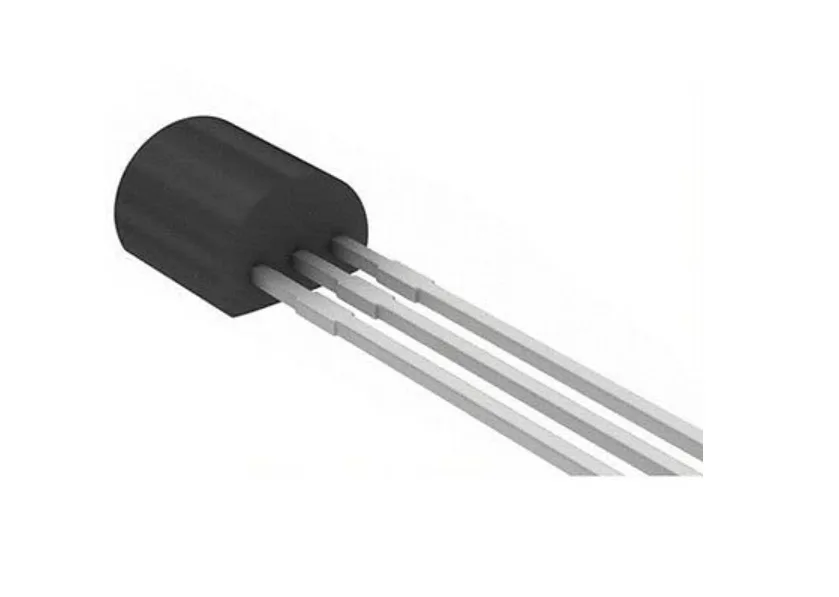
DS18B20 Programmable Resolution Temperature Sensor
The DS18B20 is the gold standard for cold chain temperature logging — ±0.5°C accuracy from -10°C to +85°C, digital 1-Wire output, and unique 64-bit serial number for device identification.
Hardware Design for a Pharma-Grade Logger
The hardware design for a cold chain logger must balance precision, reliability, power efficiency, and tamper evidence. Here is the recommended bill of materials:
- Main controller: ESP32 (WROOM-32E) with 4 MB flash — sufficient for local data buffering of 30+ days at 5-minute intervals
- Primary temperature sensor: DS18B20 (1-Wire) for cold chain and ambient monitoring. For frozen applications (down to -40°C), use the DS18B20 in TO-92 package, not the waterproof probe version (rated to -55°C nominal but accuracy degrades below -40°C)
- Secondary/backup sensor: SHT31 (I2C) — a high-accuracy humidity + temperature sensor for environments where humidity monitoring is also required (vaccine storage requires RH 35–75%)
- Real-Time Clock: DS3231 (I2C) — an extremely accurate RTC with temperature-compensated crystal oscillator. Critical for accurate timestamping of records even during Wi-Fi outages
- Local storage: MicroSD card module for writing CSV logs. 16 GB microSD card stores over 5 years of 5-minute interval records
- Battery backup: 3.7V 18650 lithium cell with TP4056 charging IC — maintains operation for 48–72 hours during power cuts (depending on transmission interval)
- Connectivity: Primary Wi-Fi (ESP32 built-in); optional 4G LTE module (SIM800L or SIM7600) for remote cold storage locations without reliable Wi-Fi
- Display: SSD1306 OLED (128×64) for local temperature readout without needing a phone or computer
- LED indicators: Green (normal), Red (alarm), Blue (Wi-Fi connected)
- Buzzer: For local audible alarm on temperature excursion

DS18B20 Temperature Sensor Module
A ready-to-use DS18B20 module with pull-up resistor included — reduces assembly time and ensures correct sensor operation straight out of the box.
Sensor Selection: Accuracy and Calibration
Temperature sensor selection is the most critical decision in a pharma cold chain logger. The wrong sensor can produce compliant-looking data that is actually inaccurate — a dangerous situation for patient safety.
DS18B20 vs DHT22 vs BME280 for Cold Chain
| Sensor | Accuracy | Range | Cold Chain Suitable? |
|---|---|---|---|
| DS18B20 | ±0.5°C (−10 to +85°C) | −55 to +125°C | Yes — preferred choice |
| DHT22 | ±0.5°C | −40 to +80°C | Marginal — slow response time |
| BME280 | ±1°C (0 to 65°C) | −40 to +85°C | No — insufficient accuracy spec |
| SHT31 | ±0.3°C (0 to 90°C) | −40 to +125°C | Yes — best accuracy if RH needed |
Calibration procedure: Before deployment, immerse all sensors in an ice water bath (should read 0.0°C ± 0.3°C) and in boiling water at your altitude (Bengaluru: 98.0°C, Mumbai: 99.5°C, Delhi: 99.3°C). Record the offset and apply it in firmware. Store calibration data in NVS along with the calibration date and calibrator’s name for regulatory documentation.

DHT20 SIP Packaged Temperature and Humidity Sensor
The DHT20 offers I2C interface, improved accuracy over DHT11/DHT22, and SIP packaging suitable for PCB integration in compact cold chain logger designs.
Firmware Architecture for Cold Chain Logging
The firmware for a pharma-grade logger must be deterministic, reliable, and fault-tolerant. Here is the recommended architecture:
Tasks (FreeRTOS):
1. sensor_task (priority 5, 30s stack):
   - Read DS18B20 every 5 minutes
   - Apply calibration offset
   - Write to circular buffer in RTC_DATA_ATTR (survives deep sleep)
   - Check alarm thresholds
   - Wake other tasks if alarm condition

2. storage_task (priority 3):
   - Flush circular buffer to microSD CSV
   - Format: timestamp,temp_c,humidity_rh,alarm_flag,battery_mv
   - Rotate log files daily (one file per day)

3. network_task (priority 4):
   - Transmit buffered readings to MQTT broker / REST API
   - Send SMS/Telegram alert on excursion
   - Sync RTC with NTP server on each successful Wi-Fi connection

4. watchdog_task (priority 6):
   - Hardware watchdog timer (WDT) reset every 30s
   - Software watchdog monitors all other task heartbeats
   - Log hardware fault to NVS for post-mortem analysis
Data record format stored in microSD CSV:
2026-03-11T14:30:00+05:30,4.2,45.1,0,3820,A1B2C3D4E5F60001
timestamp(ISO8601+IST),temp_c,rh_percent,alarm(0/1),battery_mv,device_serial
Alerts, Reporting, and Data Integrity
Regulatory compliance requires that temperature excursions trigger alerts promptly and that all data is tamper-evident. Implement these features:
- Immediate SMS alert: On threshold breach, send SMS via Twilio or MSG91 (popular Indian SMS gateway with good delivery rates) within 2 minutes. Include device ID, current temperature, breach type (high/low), and duration
- MQTT alert: Publish alarm to
coldchain/{device_id}/alarmtopic — your monitoring dashboard subscribes and displays real-time status - Telegram bot notification: For small operators, a Telegram bot is the most practical alert channel since it costs nothing and works on any phone without a dedicated app
- Escalation: If an alarm is not acknowledged within 15 minutes, send a second alert to a supervisor’s number. Implement this logic in the server-side software (not in the ESP32 firmware) for reliability
Data integrity and tamper evidence: For regulatory compliance, every record should include an HMAC-SHA256 signature computed using a device-specific secret key stored in eFuse (ESP32’s one-time programmable memory). This makes it mathematically impossible to alter historical records without detection — crucial for audit trails submitted to CDSCO or WHO inspectors.
Frequently Asked Questions
Can an ESP32-based logger be CDSCO-compliant for pharma use?
CDSCO Schedule M and WHO GDP guidelines specify performance requirements (accuracy, alarm response time, data retention) rather than specific hardware. An ESP32-based logger that meets the accuracy, logging frequency, alarm, and data integrity requirements is technically compliant. However, for regulated pharma manufacturers subject to FDA or EMA audits in addition to CDSCO, you may need a more formal qualification (IQ/OQ/PQ) process for your custom device. For distributors and smaller pharma companies subject only to CDSCO, a well-documented ESP32 logger with calibration certificates is acceptable.
How long does the ESP32 cold chain logger run on battery?
With a single 18650 cell (3,400 mAh) and deep sleep between readings at 5-minute intervals, typical runtime is 4–7 days. For 10-day+ battery life, use a 2-cell 18650 shield (6,800 mAh) and extend the reading interval to 15 minutes during transit. The DS18B20 draws only 1.5 mA during conversion, and the ESP32 in deep sleep draws just 10 µA — most power is consumed during the Wi-Fi transmission burst (peak ~300 mA, but only 1–3 seconds per transmission).
What happens to data when Wi-Fi is unavailable?
The microSD card and ESP32 SPIFFS local flash serve as primary local storage. All readings are written locally first, then transmitted to the cloud when connectivity is available. The circular buffer in RTC memory (survives deep sleep) holds the last 100 readings in case of microSD failure. On Wi-Fi reconnection, the firmware automatically transmits all buffered data in chronological order — ensuring no gaps in the audit trail even after extended outages.
Is the ESP32 logger suitable for vaccine cold chain monitoring under India’s Universal Immunization Programme?
Yes, with appropriate design choices. The UIP requires monitoring of vaccine cold chain from state cold stores down to sub-centre level. At the sub-centre level, Ice-Lined Refrigerators (ILRs) and vaccine carriers need logging. An ESP32-based logger with DS18B20 probe, 4G connectivity (for areas without Wi-Fi), and a cloud dashboard accessible by ASHA workers and district health officers is a practical and cost-effective solution. The device cost of ₹1,200–₹1,800 per unit is well within government procurement budgets compared to commercial alternatives at ₹8,000–₹15,000.
Build Your Cold Chain IoT Logger with Zbotic
Source all components for your pharma cold chain temperature logger from Zbotic — DS18B20 sensors, ESP32 boards, BME280 modules, and more. Genuine components, competitive pricing, and fast delivery across India.


Add comment