
Table of Contents
- Why Freeze Detection Matters for Pipes
- How Freeze Detection Sensors Work
- Sensor Technologies for Freeze Detection
- Components for Your Freeze Alert System
- Wiring and Circuit Diagram
- Arduino Code with SMS / Buzzer Alert
- Outdoor Installation Best Practices
- Advanced Features: IoT and Remote Monitoring
- Pipe Freeze Prevention Strategies
- Frequently Asked Questions
Why Freeze Detection Matters for Pipes
Frozen pipes are one of the most destructive plumbing problems a home or business can face. When water freezes inside a pipe, it expands by approximately 9% in volume. Since pipes cannot expand, the pressure builds until the pipe bursts — often causing thousands of rupees of water damage before anyone realises what has happened. In India, this is a concern particularly in northern hill stations like Shimla, Manali, Mussoorie, and Ooty, as well as industrial facilities with cold-storage systems, air conditioning chiller lines, and outdoor water supply infrastructure.
A freeze detection sensor provides early warning when pipe temperatures approach the freezing point of water (0°C), giving you time to take protective action — running water, enabling heat tape, or opening an insulation valve — before actual freezing and pipe damage occurs. This guide walks you through building a complete, practical freeze alert system using widely available sensors and an Arduino microcontroller.
How Freeze Detection Sensors Work
Freeze detection fundamentally comes down to temperature monitoring with a threshold alert. The system continuously reads the temperature of the pipe surface or the ambient air around the pipe. When temperature drops below a programmable set point (typically 2–4°C, giving a few degrees of safety margin above 0°C), the system triggers an alert.
More sophisticated systems also detect the transition from liquid to solid water by monitoring the latent heat plateau — the brief period during freezing where temperature stops dropping as heat of fusion is released. However, for practical DIY applications, a simple threshold-based alert is both effective and reliable.
The sensor must be in good thermal contact with the pipe or the air immediately surrounding it. A temperature sensor monitoring room temperature in a warm indoor space cannot tell you that an outdoor pipe is freezing. Proper mounting is as important as sensor selection.
Sensor Technologies for Freeze Detection
DS18B20 — The Gold Standard for Pipe Monitoring
The DS18B20 waterproof temperature sensor is the most popular choice for outdoor pipe freeze detection. It uses the 1-Wire protocol, operates from 3.3 V to 5.5 V, measures from -55°C to +125°C with ±0.5°C accuracy, and comes in a stainless-steel waterproof probe form factor ideal for outdoor use. Multiple DS18B20 sensors can be daisy-chained on a single GPIO pin, allowing you to monitor several pipes simultaneously.
NTC Thermistors
Negative Temperature Coefficient thermistors are low-cost analogue temperature sensors whose resistance increases dramatically as temperature drops. Near 0°C, an NTC thermistor provides excellent sensitivity. A simple voltage divider with a fixed resistor and an Arduino analogue input is all that is needed. The downside is that the resistance-temperature relationship is non-linear, requiring lookup tables or the Steinhart-Hart equation for accurate readings.
LM35 and LM35DZ
The LM35 is a classic analogue temperature sensor with a linear output of 10 mV/°C. It reads from -55°C to +150°C and connects directly to an Arduino analogue pin. Simple to use, but the standard through-hole package is not waterproof — you would need to pot it in silicone or use a waterproof housing for outdoor pipe contact measurement.
DHT11 and DHT22
DHT sensors measure both temperature and humidity, which can be useful for contextual monitoring (high humidity + low temperature = icing risk on exposed surfaces). The DHT11 measures temperature from 0°C to 50°C, making it unsuitable for sub-zero detection. The DHT22 measures from -40°C to +80°C and is the better choice if you want combined temp/humidity monitoring.
Dedicated Freeze/Ice Sensors
Some industrial systems use dedicated ice detection sensors that directly detect the formation of ice crystals on a cooled probe using capacitance or optical methods. These are highly accurate but expensive (₹5,000–₹50,000) and generally used in aircraft de-icing systems or cold-chain industrial applications.
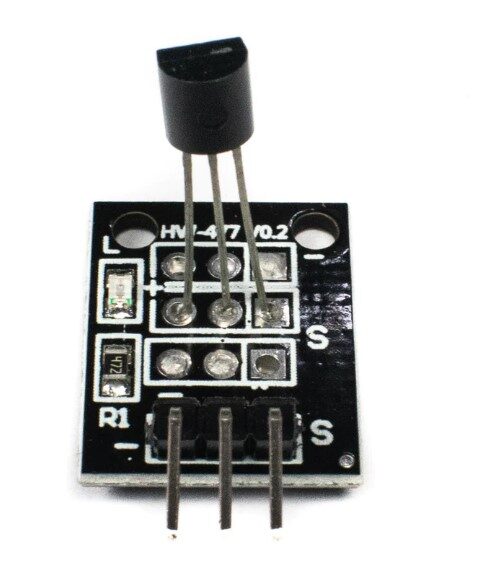
DS18B20 Temperature Sensor Module
Waterproof stainless steel probe, perfect for mounting directly on outdoor pipes. 1-Wire protocol makes daisy-chaining multiple sensors across all your pipes effortless.
Components for Your Freeze Alert System
Here is everything you need to build a basic freeze detection and alert system:
- Arduino Uno or Nano — the microcontroller brain
- DS18B20 waterproof probe sensor(s) — one per pipe or monitoring zone
- 4.7 kΩ resistor — required pull-up for the 1-Wire bus
- Active buzzer module — local audio alert
- LED (red) — visual alert indicator
- SIM800L GSM module (optional) — for SMS alerts to your phone
- ESP8266 / ESP32 (optional) — for Wi-Fi-based IoT alerts
- 12 V DC power adapter — for outdoor installation via power supply
- Weatherproof enclosure — IP65 or better for electronics housing
- Cable glands — waterproof cable entry into enclosure
Wiring and Circuit Diagram
The DS18B20 has three wires: VCC (red), GND (black), and DATA (yellow/white). Connect them as follows:
- DS18B20 VCC → Arduino 5V
- DS18B20 GND → Arduino GND
- DS18B20 DATA → Arduino D2
- 4.7 kΩ resistor between DATA and VCC (pull-up)
- Buzzer positive → Arduino D8
- Buzzer negative → Arduino GND
- LED anode → 220 Ω resistor → Arduino D9
- LED cathode → Arduino GND
For multiple pipes, connect all DS18B20 DATA wires together to the same Arduino pin (D2). Each sensor has a unique 64-bit address and the Arduino can address them individually using the OneWire and DallasTemperature libraries.
Outdoor wiring tip: Use UV-resistant cable for any wiring exposed to sunlight. Seal all cable joints with self-amalgamating tape and silicone compound. Run cables through conduit wherever possible. The DS18B20 probe can be clad against the pipe with pipe insulation foam wrapped over it to measure pipe surface temperature rather than ambient air temperature.
Arduino Code with SMS / Buzzer Alert
#include <OneWire.h>
#include <DallasTemperature.h>

#define ONE_WIRE_BUS 2
#define BUZZER_PIN 8
#define LED_PIN 9
#define FREEZE_THRESHOLD 3.0  // Alert at 3°C — 3 degrees above freezing

OneWire oneWire(ONE_WIRE_BUS);
DallasTemperature sensors(&oneWire);

bool alertSent = false;

void setup() {
  Serial.begin(9600);
  sensors.begin();
  pinMode(BUZZER_PIN, OUTPUT);
  pinMode(LED_PIN, OUTPUT);
  Serial.println("Freeze Alert System Ready");
}

void loop() {
  sensors.requestTemperatures();
  float tempC = sensors.getTempCByIndex(0);

  Serial.print("Pipe Temperature: ");
  Serial.print(tempC);
  Serial.println(" C");

  if (tempC <= FREEZE_THRESHOLD && tempC != -127.0) {
    // -127 means sensor error, ignore it
    digitalWrite(LED_PIN, HIGH);
    tone(BUZZER_PIN, 1000, 500);
    if (!alertSent) {
      Serial.println("WARNING: FREEZE RISK DETECTED!");
      // Insert SMS send code here for SIM800L
      alertSent = true;
    }
  } else {
    digitalWrite(LED_PIN, LOW);
    noTone(BUZZER_PIN);
    alertSent = false;  // Reset after temperature recovers
  }
  delay(10000);  // Check every 10 seconds
}
The alertSent flag prevents sending repeated SMS messages every 10 seconds once a freeze condition is detected — you only get one alert until the temperature rises back above the threshold. This is important to avoid filling your SIM card’s message quota.

LM35 Temperature Sensors
Classic linear output temperature sensor, ideal as a backup or secondary temperature reference in freeze detection projects. Simple analogue interfacing with any Arduino ADC pin.
Outdoor Installation Best Practices
Sensor Placement
The most vulnerable pipe sections are those that are exposed to outdoor air, run through unheated spaces (crawl spaces, garages, exterior walls), or are located in areas with poor airflow. Place your DS18B20 probe at the point of greatest exposure — typically the section farthest from any heat source. Press the probe firmly against the pipe surface and secure it with a cable tie. Wrap foam pipe insulation over the sensor and a 10 cm section of pipe around it — this ensures the sensor reads pipe temperature rather than air temperature, and responds faster to temperature changes inside the pipe.
Electronics Enclosure
House the Arduino and all electronics in an IP65-rated weatherproof junction box. Mount it in a sheltered location — under an eave, inside a meter cupboard, or on a wall sheltered from direct rain. Use cable glands to create waterproof cable entries. Seal any unused holes with rubber plugs. In very cold locations (below -10°C), consider adding a small 5 W heating resistor inside the enclosure controlled by a thermostat to prevent the microcontroller from operating outside its rated temperature range.
Power Supply
An outdoor freeze detection system must run reliably through winter nights and storms. Use a quality 5 V or 12 V DC adapter with surge protection. If mains power is unavailable at the installation point, a 12 V sealed lead-acid battery with a solar charge controller can provide weeks of battery backup. The DS18B20 + Arduino combination draws only 50–100 mA, so even a small 7 Ah battery provides several days of standby operation.
Alert System
For a property you visit infrequently (holiday home, farm, remote office), a GSM SMS alert is invaluable. The SIM800L module connects to the Arduino via serial and can send SMS messages with a few AT commands. Alternatively, an ESP8266 can push alerts to a Telegram bot, IFTTT webhook, or Blynk dashboard over Wi-Fi — ideal if the property has a Wi-Fi connection.
Advanced Features: IoT and Remote Monitoring
Upgrading from a simple local buzzer to a full IoT monitoring system is straightforward with modern Wi-Fi modules:
MQTT / Home Assistant Integration
Replace the Arduino Uno with an ESP32, which has built-in Wi-Fi and Bluetooth. Use the PubSubClient library to publish temperature readings to an MQTT broker (Mosquitto) running on a Raspberry Pi or a cloud MQTT service. Home Assistant can then display live pipe temperatures on a dashboard, send push notifications through the Home Assistant app, and automate responses — such as turning on a smart plug connected to a pipe heat tape.
Data Logging and Trend Analysis
Log temperature data to a ThingSpeak channel or an InfluxDB database. Viewing historical temperature trends helps you identify which pipes are at highest risk and on what types of nights (wind direction, cloud cover, sustained duration of cold). This data can optimise your freeze prevention strategy over multiple winters.
Multiple Zone Monitoring
A single DS18B20 bus can support up to 127 sensors. Using multiple sensors on different pipes gives you a comprehensive view of your entire plumbing system. The DallasTemperature library handles individual sensor addressing automatically using each sensor’s unique 64-bit ROM code.
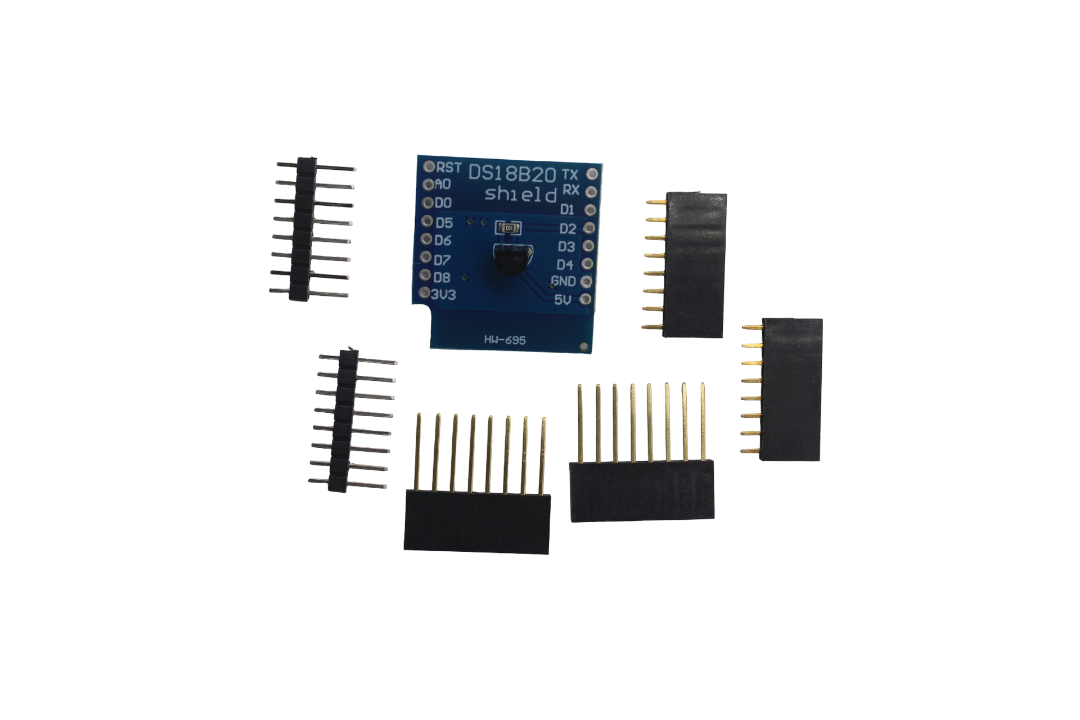
DS18B20 Module for D1 Mini Temperature Measurement
Combines DS18B20 with a D1 Mini (ESP8266) breakout for instant Wi-Fi temperature logging. Perfect for IoT-enabled freeze alert systems with remote monitoring via MQTT or Blynk.
Pipe Freeze Prevention Strategies
Early detection is only half the solution. Once the freeze alert fires, you need fast, effective prevention measures ready to go:
Electric Heat Tape (Pipe Trace Heating)
Self-regulating heat tape wraps around the pipe and consumes more power when the pipe gets colder, less when warm. Connect it through a smart plug controlled by your Arduino/ESP32 system. When the sensor triggers, the relay activates the heat tape automatically. This is the most reliable prevention method for consistently cold locations.
Insulation
Foam pipe insulation and fibreglass pipe wrap slow down heat loss dramatically. While insulation alone cannot prevent freezing in extreme conditions, it buys time and reduces how often heat tape needs to run. Always insulate before winter arrives — emergency insulation during a freeze event is far less effective.
Drip Prevention
Allowing a slow trickle of water through the pipe keeps water moving, which raises the temperature at which it freezes. Automatic drip valves triggered by your freeze sensor can open at 3°C and close again at 5°C. This wastes water but prevents pipe bursts in emergency situations.
Air Sealing
Cold drafts from gaps in walls, floors, or crawl space vents dramatically accelerate pipe freezing. Identify and seal these air infiltration points before winter. Sometimes a simple gap in an exterior wall around a pipe penetration is the cause of recurring freeze events.
Frequently Asked Questions
At what temperature do pipes typically freeze?
Water in pipes can begin freezing at 0°C, but exposed pipes typically only freeze solid after sustained exposure to temperatures of -6°C or lower, especially with wind chill. Pipes inside walls freeze at lower ambient temperatures because they have some thermal protection. Set your alert threshold at 2–4°C to give yourself a response window before actual freezing begins.
Can I use a DHT11 for freeze detection?
No — the DHT11 has a minimum temperature range of 0°C, making it unsuitable for detecting sub-zero conditions. Use a DS18B20 (range: -55°C to +125°C) or a DHT22 (range: -40°C to +80°C) instead. The DS18B20 is the preferred choice for pipe monitoring due to its waterproof probe form factor.
How many DS18B20 sensors can I connect to one Arduino pin?
Theoretically up to 127 sensors on a single 1-Wire bus, though in practice 10–20 sensors per bus is more reliable, especially over longer cable runs. For very long cable runs (over 30 metres), use a strong pull-up resistor (2.2 kΩ) and ensure the bus is not loaded by too many parasitic-powered sensors simultaneously.
Will the Arduino work in very cold temperatures?
The Arduino Uno (ATmega328P) is rated for operation from -40°C to +85°C. However, the crystal oscillator used on many Arduino boards can lose accuracy at very low temperatures. For extreme cold applications, use a ceramic resonator variant or heat the electronics enclosure with a small resistor heater.
What is the best way to power an outdoor freeze sensor system?
Mains power via a quality weatherproof DC adapter is the most reliable option. For locations without mains power, a 12 V sealed lead-acid (SLA) battery charged by a 10 W solar panel is a practical solution. The deep-discharge protection and wide temperature range of SLA batteries make them well suited for outdoor winter installations.
Can this system also control a heat cable automatically?
Yes. Add a 5 V relay module between the Arduino output and the heat cable’s power circuit. When the temperature drops below the threshold, the Arduino energises the relay coil, switching on the heat cable. When temperature recovers above the upper threshold (e.g., 5°C), the relay opens and the heat cable turns off. This creates a simple but effective automatic pipe heating system.
A freeze detection sensor system is a smart, low-cost investment that can prevent thousands of rupees in water damage from burst pipes. With a DS18B20 waterproof probe, an Arduino, and a few additional components, you can build a reliable ice alert system for outdoor pipes in a single weekend. Add ESP32 Wi-Fi connectivity and MQTT integration, and you have a professional-grade remote monitoring solution that alerts you instantly wherever you are.





Add comment