
When working with the ESP32, one of the first decisions you must make is choosing between ESP32 Bluetooth Classic vs BLE for your project. Both protocols live in the same 2.4 GHz chip, but they are fundamentally different technologies designed for completely different use cases. Making the wrong choice leads to poor battery life, range issues, or compatibility problems with the devices you want to connect. This comprehensive guide explains the architectural differences, key metrics, and gives you a clear decision framework for every common Indian maker project scenario.
Protocol Architecture: How They Differ
Bluetooth Classic (also called Bluetooth BR/EDR for Basic Rate/Enhanced Data Rate) was designed in the late 1990s for streaming audio and reliable high-throughput serial connections. It creates a persistent connection between two devices and maintains that connection for the duration of the session, much like a physical cable.
Bluetooth Low Energy (BLE), introduced in Bluetooth 4.0 in 2010, was designed from scratch for devices that need to communicate infrequently and run on coin cell batteries for years. Instead of a persistent streaming connection, BLE uses a publish-subscribe model based on the GATT (Generic Attribute Profile) protocol, where the peripheral device exposes a set of Characteristics (data values) that a central device can read, write, or subscribe to.
The ESP32 chip supports both protocols simultaneously in its hardware, thanks to the dual-mode Bluetooth controller. However, you cannot use them at the same time as easily as you might think — both share the 2.4 GHz RF front end, and certain configurations require time-division multiplexing that can affect both performance profiles.
Data Rate, Range, and Power Comparison
| Parameter | Bluetooth Classic | BLE 4.x | BLE 5.x (Long Range) |
|---|---|---|---|
| Max Data Rate | 3 Mbps (EDR) | 1 Mbps | 2 Mbps / 125 kbps |
| Typical Range | 10 m (Class 3), 100 m (Class 1) | 10 to 30 m | Up to 400 m (coded PHY) |
| Peak Current | 30 to 40 mA | 15 mA peak, avg under 1 mA | 15 mA peak, avg under 1 mA |
| Connection setup | 2 to 10 seconds (pairing) | Under 10 ms (advertising) | |
| Simultaneous connections | 1 active (piconet) | Up to 7 (ESP32 limit) | Up to 7 |
| Audio streaming | Yes (A2DP, HFP) | No (LE Audio in BT 5.2+) | LE Audio (future) |
| Phone app compatibility | SPP profile (serial) | All modern Android and iOS | All modern Android and iOS |
| iOS support | No (Apple restricted SPP) | Yes, full support | Yes, full support |
The iOS compatibility row is critical for Indian product developers: if your device needs to connect to iPhones (common in India’s urban market), BLE is the only option. Apple has restricted Bluetooth Classic SPP profile access to MFi-certified hardware, making Bluetooth Classic essentially non-functional for custom ESP32 iPhone apps.
When to Use Bluetooth Classic
Audio Projects (Speakers, Headphones)
If you are building a Bluetooth speaker, audio receiver, or wireless microphone system, Bluetooth Classic with A2DP (Advanced Audio Distribution Profile) is the only choice. BLE does not support the audio codecs or sustained bandwidth required for audio streaming in Bluetooth 4.x. The ESP32’s Bluetooth Classic stack supports A2DP sink mode, meaning you can build a speaker that any Android phone connects to like a standard Bluetooth speaker.
Android App Serial Communication (SPP)
The Serial Port Profile (SPP) makes Bluetooth Classic behave like a wireless cable. On Android, you can connect to the ESP32 using the standard Bluetooth settings and then use a serial terminal app. This is excellent for debugging, sending AT commands, or building simple control apps. The data throughput of up to 3 Mbps makes it suitable for sending data-heavy payloads like images or configuration files.
When Arduino-Style SimpleBT Apps Are Needed
Many popular Indian Arduino courses and tutorials still use the HC-05 Bluetooth module approach, which is Bluetooth Classic SPP. If you are replacing an HC-05 in an existing project or following a course that uses a Bluetooth serial app like Serial Bluetooth Terminal, Bluetooth Classic on ESP32 is a drop-in replacement.
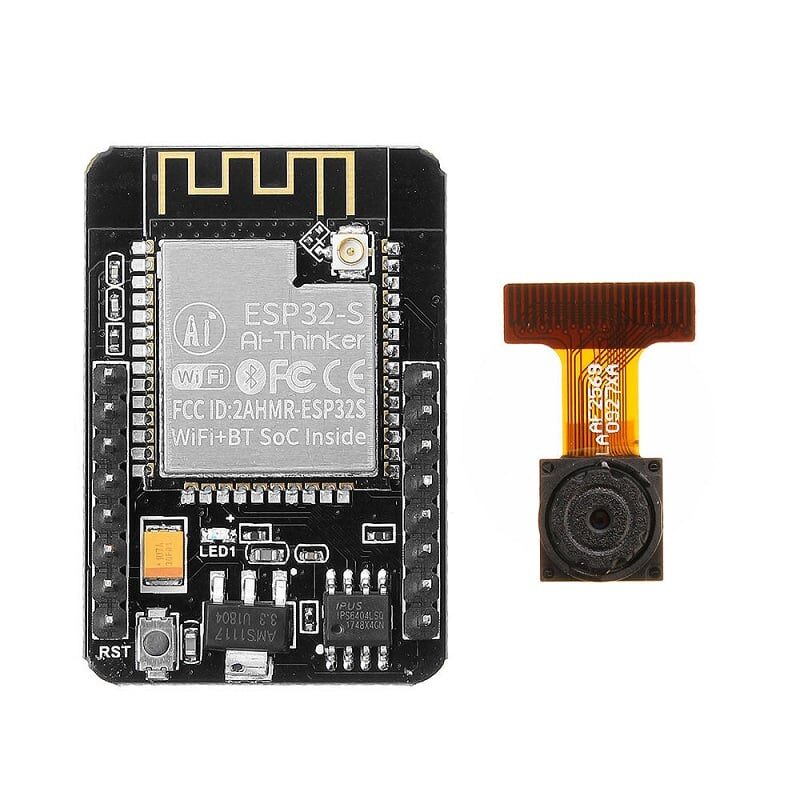
Ai Thinker ESP32 CAM Development Board WiFi+Bluetooth with Camera
Full-featured ESP32 board with Wi-Fi, Bluetooth Classic, and BLE all built in. Perfect for projects that need camera streaming over Wi-Fi plus Bluetooth control, or for testing both Bluetooth modes side by side.
When to Use BLE
Battery-Powered IoT Sensors
BLE’s average current draw of under 1 mA (when using deep sleep between advertisements) allows a small 1000 mAh LiPo battery to power a sensor node for weeks or months. Use BLE advertising (non-connectable) to broadcast sensor data without any connection overhead at all — the ESP32 wakes up, broadcasts a 31-byte advertisement packet containing temperature and humidity, then goes back to sleep. No pairing, no handshake, minimal power.
iPhone and iPad Compatibility
As mentioned, this is non-negotiable. Any Indian startup or maker building a product that must work with iPhones must use BLE. The Apple Core Bluetooth framework provides full access to GATT services and characteristics from native iOS apps and, increasingly, from web browsers using Web Bluetooth on Chrome.
Multi-Device Central Applications
A single ESP32 acting as a BLE Central can connect to up to 7 BLE peripherals simultaneously. This makes it suitable for aggregating data from multiple sensors without requiring each sensor to have Wi-Fi. For example, a factory floor data collector that connects to temperature, vibration, and humidity BLE sensors on multiple machines and uploads the aggregated data via Wi-Fi.
Beacons and Indoor Positioning
BLE advertising (iBeacon, Eddystone, and custom formats) is the technology behind most indoor positioning and proximity marketing systems. The ESP32 can act as a beacon, broadcasting location data that smartphones pick up without any connection required. Used in retail stores, hospitals, and warehouse management in India.
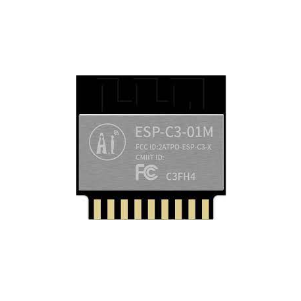
Ai Thinker ESP32-C3-01M Wi-Fi + BLE Module
Ultra-compact ESP32-C3 module with BLE 5.0 support. Ideal for battery-powered BLE sensors and IoT edge nodes. RISC-V core with lower power consumption than original ESP32, perfect for coin cell applications.
ESP32 Bluetooth Classic Code Examples
The ESP32 Arduino core includes the BluetoothSerial library for SPP-mode classic Bluetooth. It is one of the simplest wireless APIs available:
#include "BluetoothSerial.h"

BluetoothSerial SerialBT;

void setup() {
  Serial.begin(115200);
  SerialBT.begin("ESP32_Classic"); // Device name visible on phone
  Serial.println("Bluetooth Classic started. Pair now.");
}

void loop() {
  if (SerialBT.available()) {
    String received = SerialBT.readString();
    Serial.println("Received: " + received);
    SerialBT.println("Echo: " + received); // Echo back
  }
}
On an Android phone, pair the device in Bluetooth settings (look for “ESP32_Classic”), then open any serial Bluetooth terminal app to send and receive data.
ESP32 BLE Code Examples
BLE is more complex due to the GATT structure of Services and Characteristics. Here is a minimal BLE peripheral (server) that exposes a single characteristic for reading and writing:
#include <BLEDevice.h>
#include <BLEServer.h>
#include <BLEUtils.h>
#include <BLE2902.h>

#define SERVICE_UUID        "4fafc201-1fb5-459e-8fcc-c5c9c331914b"
#define CHARACTERISTIC_UUID "beb5483e-36e1-4688-b7f5-ea07361b26a8"

BLECharacteristic *pCharacteristic;

class MyCallbacks : public BLECharacteristicCallbacks {
  void onWrite(BLECharacteristic *pChar) {
    String value = pChar->getValue().c_str();
    Serial.print("BLE received: ");
    Serial.println(value);
  }
};

void setup() {
  Serial.begin(115200);
  BLEDevice::init("ESP32_BLE");
  BLEServer *pServer = BLEDevice::createServer();
  BLEService *pService = pServer->createService(SERVICE_UUID);
  pCharacteristic = pService->createCharacteristic(
    CHARACTERISTIC_UUID,
    BLECharacteristic::PROPERTY_READ |
    BLECharacteristic::PROPERTY_WRITE |
    BLECharacteristic::PROPERTY_NOTIFY
  );
  pCharacteristic->addDescriptor(new BLE2902());
  pCharacteristic->setValue("Hello India!");
  pService->start();
  BLEDevice::startAdvertising();
  Serial.println("BLE advertising started");
}

void loop() {
  delay(1000);
  pCharacteristic->setValue("Temp: 28.5C");
  pCharacteristic->notify(); // Push update to connected client
}
Use the nRF Connect app (available on Android and iOS from Nordic Semiconductor) to scan for the device, connect, and read or write characteristics during development.
Running Both Simultaneously
The ESP32 can run Bluetooth Classic and BLE simultaneously, but with important constraints. Both protocols share the single 2.4 GHz radio and use time-division multiplexing. When both are active, throughput and latency for both protocols is reduced. In practice:
- BLE advertising still works well alongside active Bluetooth Classic connections.
- BLE GATT operations alongside Bluetooth Classic audio streaming cause noticeable audio artifacts.
- The ESP32’s Bluetooth stack (ESP-IDF v4+) supports co-existence, but the Arduino core’s BluetoothSerial and BLE libraries must both be initialized correctly without interfering.
For most projects, choose one protocol. If you genuinely need both — for example, an audio speaker that also sends battery status notifications to an iOS app — use Bluetooth Classic for audio (A2DP) and BLE for the control/status channel. This is exactly how commercial Bluetooth speakers handle iPhone compatibility.
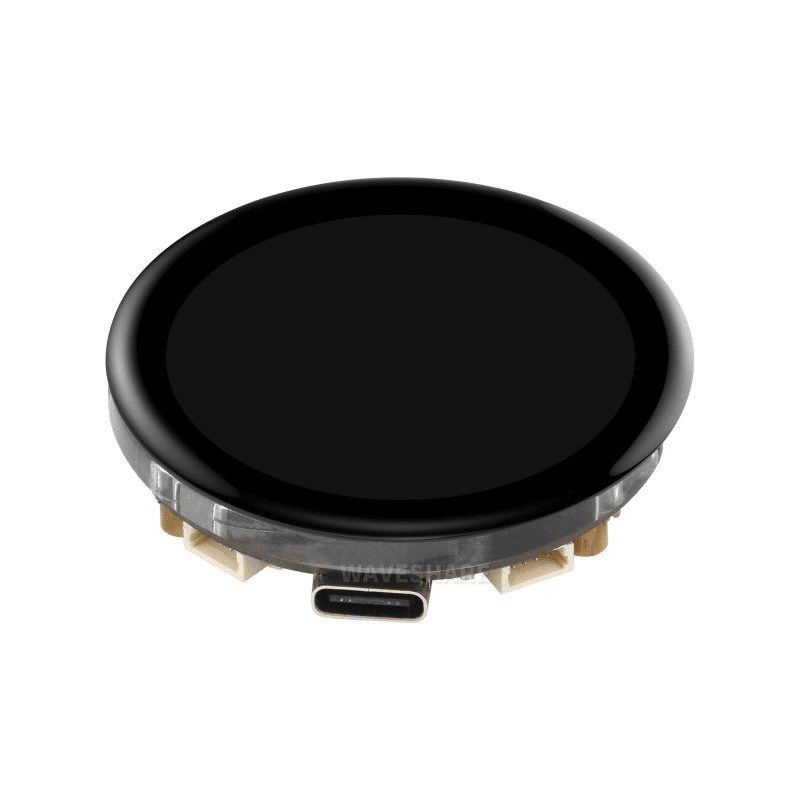
Waveshare ESP32-S3 1.43inch AMOLED Display Development Board
ESP32-S3 with stunning 466×466 AMOLED display, Wi-Fi and Bluetooth 5.0 LE. Build BLE-connected wearables, fitness trackers, or smart displays that show data received over BLE from remote sensors.
Frequently Asked Questions
Which is better for controlling a robot from a phone — Bluetooth Classic or BLE?
For Android-only projects, Bluetooth Classic with SPP is simpler to code and has lower latency for real-time control. For cross-platform projects that must also work on iPhone, use BLE with a GATT service for control commands. BLE latency (connection interval as low as 7.5 ms) is sufficient for robot control at typical speeds.
Can BLE work without pairing?
Yes. BLE supports two interaction modes: connected mode (requires pairing) and advertising/scanning mode (no pairing). In advertising mode, the ESP32 broadcasts data packets that any scanner can receive without any connection or pairing step. This is used for beacons and sensor broadcasting.
Does the ESP32-C3 support Bluetooth Classic?
No. The ESP32-C3 and ESP32-S3 support BLE 5.0 only, not Bluetooth Classic. Only the original ESP32 (ESP32-D0WD, ESP32-WROOM, ESP32-WROVER variants) supports both Bluetooth Classic and BLE. If your project needs Bluetooth Classic audio or SPP, use the original ESP32, not C3, S2, or S3 variants.
Is BLE range sufficient for a home automation project?
For typical Indian home sizes, yes. BLE range of 10 to 30 m covers most apartments. For larger homes or those with thick concrete walls common in India, place an ESP32 central node centrally and use BLE 5.0’s Long Range mode (coded PHY at 125 kbps) which can push range to 100+ m even indoors.
Can I use the same ESP32 for both Wi-Fi and Bluetooth simultaneously?
Yes, this is one of the ESP32’s key advantages. Wi-Fi and Bluetooth coexist on the same 2.4 GHz radio via time-division multiplexing. Performance is reduced compared to using either alone, but both work concurrently. This is how most IoT gateway projects work: BLE collects data locally, Wi-Fi sends it to the cloud.
Get Your ESP32 Bluetooth Project Started
Zbotic carries the full ESP32 family including original ESP32, ESP32-C3, and ESP32-S3 boards, so you can choose exactly the Bluetooth variant your project needs. Fast delivery across India.
Add comment