
Finding the best WiFi smart switch India has never been more competitive. Whether you’re retrofitting a Mumbai apartment or building a bungalow automation system in Bangalore, the two brands dominating every comparison thread in 2024–2025 are Sonoff and Shelly. Both offer OTA firmware updates, local API control, and Home Assistant compatibility — but they differ in price, build quality, installation complexity, and open-source friendliness. This buying guide breaks down every important difference and tells you which one to buy for your specific use case.
- Why Smart Switches for Indian Homes?
- Sonoff: Product Range & Strengths
- Shelly: Product Range & Strengths
- Head-to-Head Comparison
- Local Control & Home Assistant Integration
- Installation in Indian Wiring (Modular Switches)
- Build Your Own Smart Switch with ESP32
- Which Should You Buy?
- Frequently Asked Questions
Why Smart Switches for Indian Homes?
India’s smart-home market is growing at 25–30% annually, driven by affordable broadband penetration, falling sensor prices, and the popularity of Google Home and Amazon Alexa in Tier-1 and Tier-2 cities. Smart switches are the most popular entry point because they let you automate existing lights and fans without rewiring your entire home.
The challenges unique to Indian homes include:
- Modular switch boxes: Most Indian homes use modular switch plates (Legrand, Anchor, Havells) with single-gang plates and limited back-box depth.
- No neutral wire: Many older Indian buildings wire switches in the live line only, with no neutral at the switch point.
- 240V 50Hz supply: Indian mains are 240V, which both Sonoff and Shelly support.
- High ambient temperatures: Indian summers see ambient temperatures of 40–45°C in many cities, stressing electronics.
- Power cuts and fluctuations: Frequent voltage fluctuations in Tier-2 cities demand robust hardware design.
Sonoff: Product Range & Strengths
Sonoff is manufactured by ITEAD (China) and has been popular in India since 2017. Their products are available from local distributors and major e-commerce platforms at very competitive prices.
Popular Sonoff Models in India
- Sonoff BASICR2 / BASICR4: Single-channel relay module, ₹500–700, fits inside existing switch boxes or junction boxes.
- Sonoff Mini R4: Ultra-compact, 40×33×19mm, fits in standard Indian modular back-boxes. Supports no-neutral wiring. ₹800–1,000.
- Sonoff TX Series (T0, T1, T2, T3): Complete touch panel replacement for Indian modular switches, 1/2/3 gang, ₹1,200–2,200.
- Sonoff 4CH Pro R3: Four-channel DIN rail module for panel boards, ₹2,500–3,000.
- Sonoff POW Elite: Energy monitoring relay, ₹1,800–2,200.
Sonoff runs its own cloud (eWeLink) and also supports Alexa and Google Home via skill/action integrations. The eWeLink app is available in Hindi and has a simple UI that’s accessible to non-technical users — a big plus for family members managing the system.
Sonoff Strengths
- Very affordable — cheapest entry point for smart switches in India
- Wide product range covering lights, fans, curtains, energy monitoring
- eWeLink scenes and automations are easy to set up
- LAN control mode (local API) available since 2020
- Tasmota support via OTA flash (DIY mode) for complete local control
Sonoff Weaknesses
- Cloud-dependent by default — automations break if eWeLink servers are down
- LAN mode requires enabling DIY mode, which is not obvious
- Build quality varies — some users report relay failures after 2–3 years of heavy use
- New BASICR4 uses a different chip (ESP32-C3) that requires a different Tasmota build
Shelly: Product Range & Strengths
Shelly is made by Allterco (Bulgaria) and is newer to India but has quickly built a strong reputation in the Indian hobbyist and home-automation community. Shelly devices prioritize local control from day one.
Popular Shelly Models in India
- Shelly 1: Single-channel relay, universal wiring, very compact. ₹1,800–2,200.
- Shelly 1PM: Single-channel with power monitoring. ₹2,200–2,600.
- Shelly 2.5 / Plus 2PM: Dual-channel relay for two lights or one shutter motor. ₹2,800–3,500.
- Shelly i4: Four digital inputs for scene control, no relays. ₹2,500.
- Shelly Plus 1 Mini: Ultra-compact, comparable to Sonoff Mini R4. ₹2,000–2,400.
- Shelly Pro Series: DIN rail modules with Ethernet, for panel board installation. ₹4,000–8,000.
Shelly Strengths
- Local REST API and MQTT work out of the box — no cloud account needed
- CoAP/WebSocket support for real-time state updates
- Open firmware (Mongoose OS based) with public API documentation
- Built-in web UI accessible via browser at device IP address
- Home Assistant auto-discovery via native Shelly integration
- Higher build quality — Allterco quotes 70,000+ switching cycles
Shelly Weaknesses
- Significantly more expensive than Sonoff equivalents
- Shelly Cloud app less polished than eWeLink for casual users
- Smaller Indian distribution network — harder to buy locally
- Newer Gen 2 devices (Shelly Plus/Pro) use a different API than Gen 1
Head-to-Head Comparison
| Feature | Sonoff Mini R4 | Shelly Plus 1 Mini |
|---|---|---|
| Price (approx) | ₹800–1,000 | ₹2,000–2,400 |
| Max Load | 10A / 2200W | 8A / 2000W |
| No-Neutral | Yes (with bypass cap) | Yes (with bypass kit) |
| Local API | LAN mode (enable manually) | Always on (REST + MQTT) |
| Home Assistant | Via SonoffLAN / Tasmota | Native integration |
| Chip | ESP32-C3 | ESP32-C3 |
| Alexa/Google | Yes (via eWeLink) | Yes (via Shelly Cloud) |
| Custom Firmware | Tasmota (via OTA) | Not recommended (voids warranty) |
Local Control & Home Assistant Integration
Both brands now support local control, but the implementation philosophy differs significantly. Shelly’s approach is developer-first: every device exposes a documented REST API and MQTT interface on port 80 and 1883 respectively, working from the moment you connect it to your Wi-Fi — no accounts, no cloud, no setup beyond Wi-Fi credentials.
Sonoff’s LAN mode requires enabling DIY mode through a specific sequence in the eWeLink app, and the API uses a different authentication scheme. The popular SonoffLAN custom component for Home Assistant abstracts this, but it adds a maintenance dependency.
For a fully self-hosted setup (no internet dependency), Shelly wins hands-down. For a user-friendly setup that family members can manage through a polished app, Sonoff’s eWeLink is more accessible.
Installation in Indian Wiring
Indian modular switch boxes (standard 3-module or 6-module frames from Anchor/Havells/Legrand) typically have a back-box depth of 35–50mm. Both the Sonoff Mini R4 (19mm deep) and Shelly Plus 1 Mini (29mm deep) fit comfortably behind a single switch plate, provided you connect the wiring carefully.
Important safety note: Mains wiring work must be done by a licensed electrician in India. Always switch off the MCB before opening switch boxes. Both Sonoff and Shelly modules carry CE and RoHS certification but Indian BIS certification is still in progress for most models — verify the current certification status before commercial/rental installations.
For no-neutral wiring (very common in older Indian buildings where only a live wire reaches the switch): Both Sonoff Mini R4 and Shelly Plus 1 Mini support no-neutral operation with an optional bypass capacitor. However, no-neutral mode can cause LED lights to flicker slightly — test with your specific bulb brand before full deployment.
Build Your Own Smart Switch with ESP32
For the truly DIY-minded, building a custom smart switch using an ESP32-C3 module and a relay board gives you total control over firmware, cloud dependency, and form factor. Zbotic.in has everything you need:
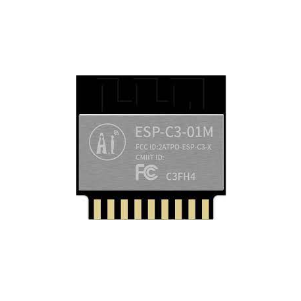
Ai Thinker ESP32-C3-01M Wi-Fi + BLE Module
The same chip inside many commercial smart switches. Flash Tasmota or ESPHome to build a fully local, Home Assistant-compatible smart relay with no cloud dependency.
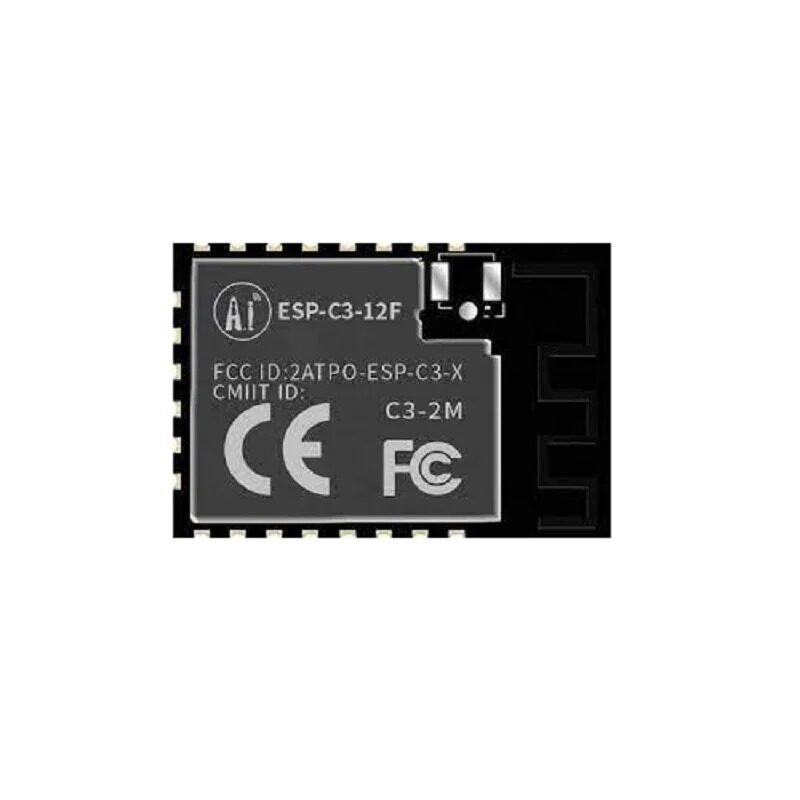
Ai-Thinker ESP32-C3-12F Wi-Fi + BLE Module
A larger footprint version with an on-board antenna — better Wi-Fi range in concrete Indian apartment buildings where signal penetration is a concern.
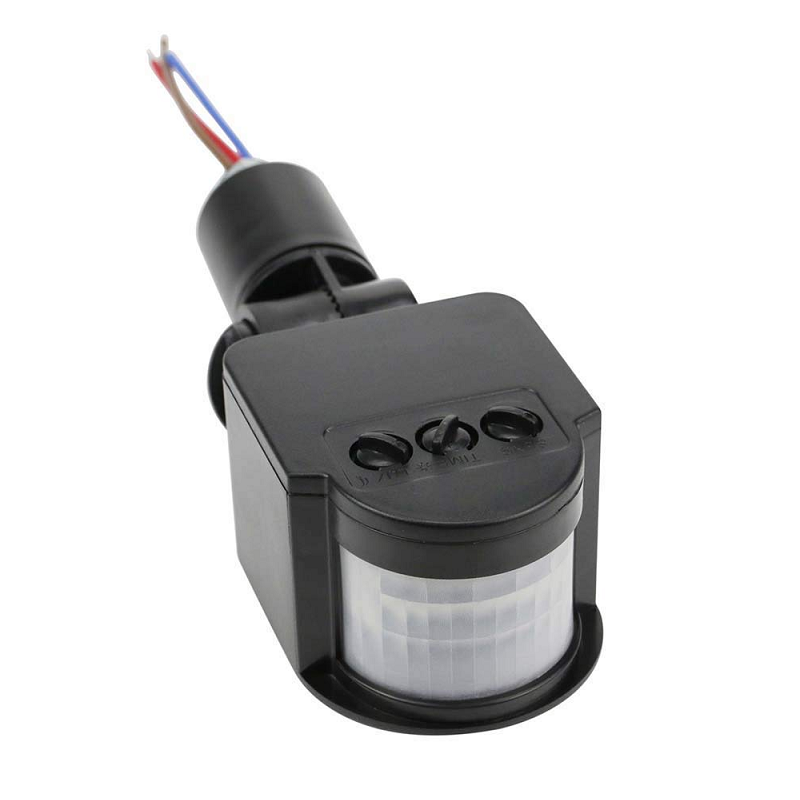
AC 220V Security PIR Human Body Motion Sensor LED Light Switch
Complement your smart switch setup with automatic motion-triggered lighting — ideal for hallways, bathrooms, and parking areas where manual control is inconvenient.
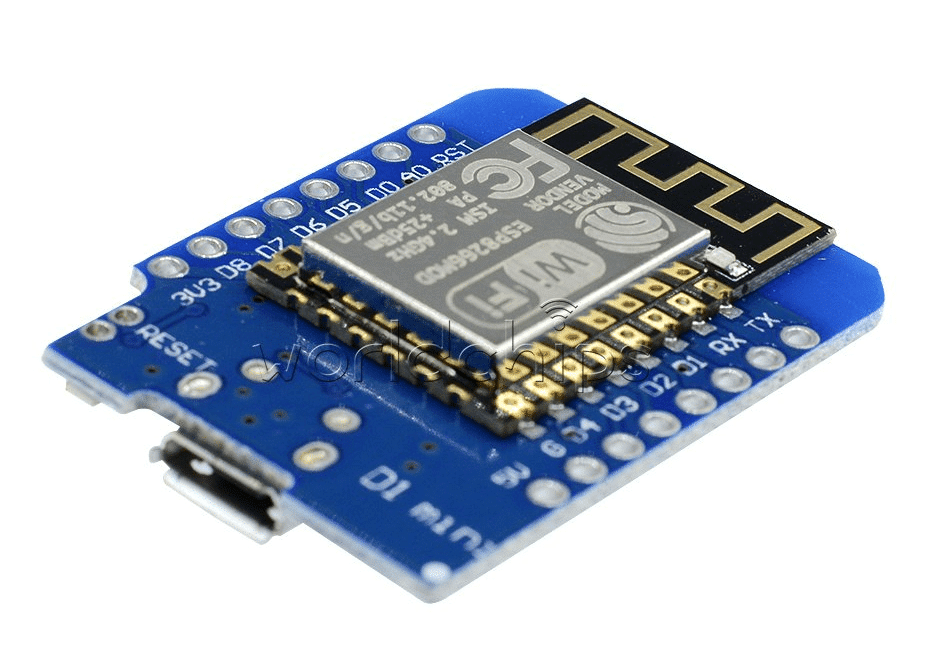
D1 Mini V2 NodeMCU Wi-Fi Development Board (ESP8266)
A classic for budget DIY smart-switch projects. Flash ESPHome and control it from Home Assistant — no monthly subscription, no cloud accounts.
Which Should You Buy?
Buy Sonoff if: you want the lowest price, plan to use the eWeLink app for family management, don’t need local-first operation, or are setting up a large number of switches across multiple rooms and budget is a constraint.
Buy Shelly if: you’re building a Home Assistant-based system, want zero cloud dependency, plan to integrate with MQTT, Node-RED, or custom dashboards, or prioritize long-term reliability and build quality.
Build your own if: you’re comfortable with ESP-IDF or ESPHome, want to learn embedded development, or need a specific form factor that neither Sonoff nor Shelly offers. Zbotic.in stocks all the ESP32-C3 modules, relay boards, and sensors needed to build production-quality DIY smart switches.
Frequently Asked Questions
Does Sonoff or Shelly work without internet in India?
Shelly works fully locally without any internet from day one. Sonoff requires enabling DIY/LAN mode through the eWeLink app, which initially needs an internet connection to set up. After enabling LAN mode, Sonoff devices also work locally.
Which is safer for Indian 240V mains?
Both brands are rated for 100–240V AC. Shelly has a slight edge in thermal management at high ambient temperatures. Always buy from authorised resellers to avoid counterfeit products that may not meet safety ratings.
Can I use these with a 3-pin switch (with two-way switching)?
Yes. Both Sonoff and Shelly support S1/S2 external switch inputs for traditional two-way (staircase) wiring. This lets you keep your existing physical switch working while adding smart control.
Do they work with Jio/Airtel/BSNL routers?
Yes — both use standard 2.4 GHz Wi-Fi (802.11b/g/n) and work with any router. Note that 5 GHz-only Wi-Fi will not work — make sure your 2.4 GHz SSID is enabled.
Shop Smart Home Components at Zbotic.in
From ESP32 development boards to sensors and relay modules — Zbotic.in is your one-stop shop for DIY smart home projects in India, with fast delivery and expert support.






Add comment