
When building a robot, CNC machine, automated gate, or any motorised mechanism, the type of gearmotor you choose directly determines how much torque you get, how efficiently power is used, and how long the system lasts. Two of the most popular gearmotor architectures in electronics and robotics projects are the worm gear motor and the planetary gear motor. They look different, operate differently, and suit very different applications.
In this guide we break down exactly how each type works, compare their torque density, mechanical efficiency, backlash, self-locking behaviour, noise, cost, and give you a clear decision framework so you can choose the right motor for your project the first time.
How a Worm Gear Motor Works
A worm gear motor consists of a rotating screw-like shaft (the worm) that meshes with a toothed wheel (the worm wheel or worm gear). The worm is driven by the motor shaft, and as it rotates, it turns the worm wheel at a right angle. This 90-degree power transmission is one of the defining features of the worm gear design.
The gear ratio in a worm gearbox is determined by the number of teeth on the worm wheel divided by the number of starts on the worm. A single-start worm with a 40-tooth wheel gives a 40:1 ratio. Because of the geometry, very high reduction ratios (up to 100:1 in a single stage) are possible in a compact package.
The sliding contact between worm and wheel, however, generates significant friction — and friction means heat and energy loss. This is the fundamental trade-off of worm gear design: extreme reduction ratio and compactness in exchange for lower efficiency.
How a Planetary Gear Motor Works
A planetary gearbox (also called an epicyclic gearbox) consists of three components: a central sun gear driven by the motor shaft, two to four planet gears that orbit the sun gear while meshing with it, and an outer ring gear (annulus) that is fixed to the housing. The output shaft is connected to the planet carrier.
Because the load is distributed across multiple planet gears in contact simultaneously, planetary gearmotors handle torque exceptionally well relative to their size. A 3-planet design distributes radial forces equally, which is why the bearings last longer and output torque per unit volume is high.
Planetary stages can be stacked to achieve higher ratios, but each stage adds length. Typical ratios range from 3:1 to 100:1 (multi-stage). The rolling/meshing contact of the planet gears against the ring produces far less sliding friction than a worm, giving planetary gearmotors their characteristic high efficiency.
Torque Density: Which Delivers More?
Torque density is the amount of output torque delivered per unit of motor volume or weight. This matters for compact robot joints, drone gimbal axes, and confined automation cavities.
Worm gear motors can achieve large absolute torque figures at high reduction ratios, but because efficiency is low (40–70%), a significant portion of motor power becomes waste heat. You need a larger, hotter motor to hit the same useful output torque compared to a planetary stage of similar ratio.
Planetary gear motors have high torque density because efficiency is high (90–97%). Almost all motor power converts to mechanical torque at the output. For the same motor input wattage, a planetary gearmotor delivers meaningfully more output torque, especially at ratios above 20:1.
At very high ratios (60:1 and above) achievable in a single worm stage, the worm gear can match or exceed absolute torque output because the ratio itself multiplies torque enough to compensate for losses. But at the same ratio using multi-stage planetary, the planetary unit still wins on efficiency and heat generation.
Mechanical Efficiency: The Big Difference
This is where the two designs diverge most dramatically:
| Parameter | Worm Gear Motor | Planetary Gear Motor |
|---|---|---|
| Typical efficiency | 40 – 70% | 90 – 97% |
| Heat generation | High | Low |
| Requires lubrication? | Yes, always | Yes, periodic |
| Battery life impact | High drain | Low drain |
| Single-stage ratio range | 5:1 – 100:1 | 3:1 – 10:1 per stage |
For battery-powered robots, drones, or portable automation, the efficiency difference is critical. A worm gearmotor at 50% efficiency wastes half the battery charge as heat. A planetary at 95% wastes only 5%. Over a 2-hour run, that difference determines whether your robot completes its mission or dies halfway through.
Backlash, Precision & Repeatability
Backlash is the angular play or ‘slop’ between input and output when you reverse direction. It is inherent in gear teeth and matters greatly for precision positioning applications like robotic arms, CNC axes, and camera gimbals.
Worm gear motors typically have moderate backlash (0.5° to 3°) due to the tooth profile and clearance between worm and wheel. This can cause positioning errors when reversing direction. Anti-backlash designs exist but add cost.
Planetary gear motors can be manufactured with very low backlash (under 1 arcminute in precision grades) because load is spread across multiple meshing points. Standard hobbyist/industrial planetary motors have 0.1° to 1° backlash — much better than worm equivalents at similar price points.
For a gimbal motor or robotic joint requiring precise angular positioning, planetary wins. For a conveyor belt, gate opener, or lifting mechanism where exact angular position is not critical, worm gear is perfectly adequate.
Self-Locking Behaviour
This is the one area where worm gear motors have a decisive advantage. When the lead angle of the worm is small (typically below 5°), the gear is self-locking — meaning the output shaft cannot back-drive the input. Turn off power and the load stays exactly where it is without a separate brake.
This makes worm gear motors ideal for:
- Lifting mechanisms (hoists, wheelchair lifts)
- Gate openers and door actuators
- Conveyor inclines that must hold position
- Camera slider carriages
Planetary gear motors are not self-locking. Back-drive is easy — a load on the output will spin the motor backward if power is removed. For holding applications you need a separate mechanical brake or active motor braking, which adds complexity and cost.
If your design requires holding a position under load with zero power, worm gear is the correct choice regardless of efficiency considerations.
Noise, Vibration & Smoothness
Worm gear motors tend to run quietly at moderate speeds because the sliding tooth contact acts as a natural damper. At high speeds they generate heat-related whine. Planetary gearmotors with metal gears produce a characteristic gear meshing hum that is higher pitched and more constant. Plastic planet gears run quieter but wear faster.
For hobbyist use, neither type is objectionably loud at typical operating speeds. In consumer products like automated curtains or smart locks, quietness is critical — here, quality worm gear motors (with bronze worm wheels) have an edge over budget metal planetary motors.
Size, Weight & Mounting Options
Worm gear motors have output shafts at 90° to the motor axis. This right-angle configuration is a space-saving advantage in many mechanical layouts. The gearbox is relatively compact radially but can be longer axially at very high ratios. Weight is moderate because the worm and wheel are typically steel/bronze.
Planetary gear motors are coaxial — motor and output shaft are on the same axis. This makes them easier to integrate into linear mechanisms and robot joints. They are typically more compact radially but require length for stacked stages. All-metal planetary motors can be heavy; models with plastic planets are lighter but less durable.
Cost & Availability in India
In India, basic DC worm gear motors (like 25GA-370 type) are widely available at ₹150–₹800 depending on voltage, RPM, and torque rating. They’re popular in robotics kits and hobbyist automation because of their low cost and built-in self-locking.
Planetary gear motors start around ₹400 for small hobby versions and go up to several thousand rupees for precision industrial types. The cost premium over worm motors is justified when efficiency, backlash, or lifespan is critical.
For most Arduino and Raspberry Pi projects, a budget worm gear motor is the pragmatic first choice — unless you need to run continuously on battery or need precise angle control.
Best Applications for Each Type
Choose Worm Gear Motor When:
- You need self-locking / holding capability
- Power is from mains / not battery-critical
- 90-degree output layout is convenient
- Very high single-stage reduction (40:1–100:1) is needed
- Budget is tight
- Application: gate openers, conveyor drives, hoist mechanisms, linear stages on mains power
Choose Planetary Gear Motor When:
- Battery runtime is important
- Precise positioning is needed (robotic arm, CNC)
- Low backlash matters
- You need high torque in a compact coaxial package
- Application: drone gimbals, robotic joints, AGV wheels, camera sliders, electric bikes
Quick Decision Table
| Application | Recommended Type | Reason |
|---|---|---|
| Arduino gate opener | Worm gear | Self-locking, high torque |
| Robotic arm joint | Planetary | Low backlash, high efficiency |
| Camera gimbal | Planetary (brushless) | Smooth, precise, low backlash |
| Mains-powered conveyor | Worm gear | Cost-effective, no back-drive |
| Battery robot (AGV) | Planetary / BLDC hub | Extends battery life significantly |
| Linear actuator control | Worm gear | Self-locking holds position |
Recommended Products from Zbotic
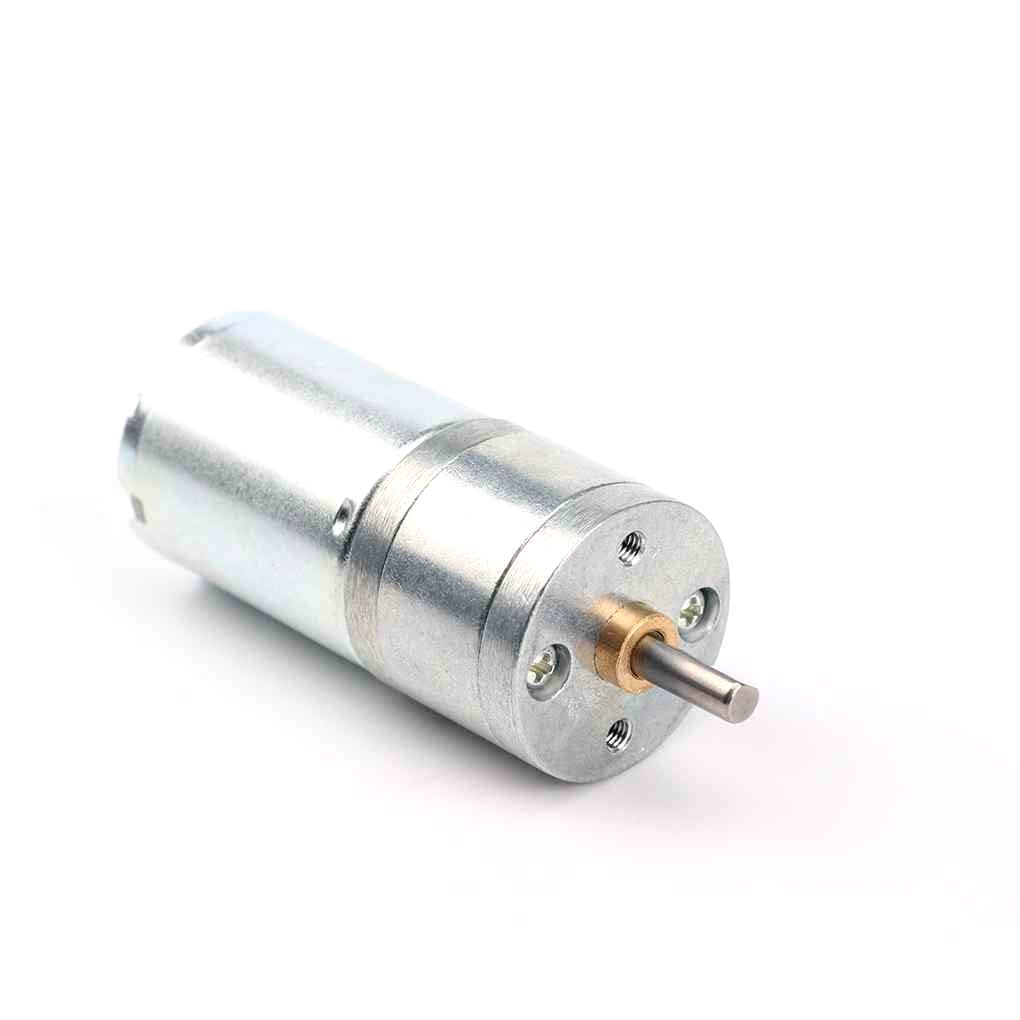
25GA-370 12V 12RPM DC Reducer Gear Motor
A compact worm-type DC gearmotor at 12RPM — ideal for slow, high-torque applications like gate openers, conveyor drives, and robotic chassis where self-locking is beneficial.
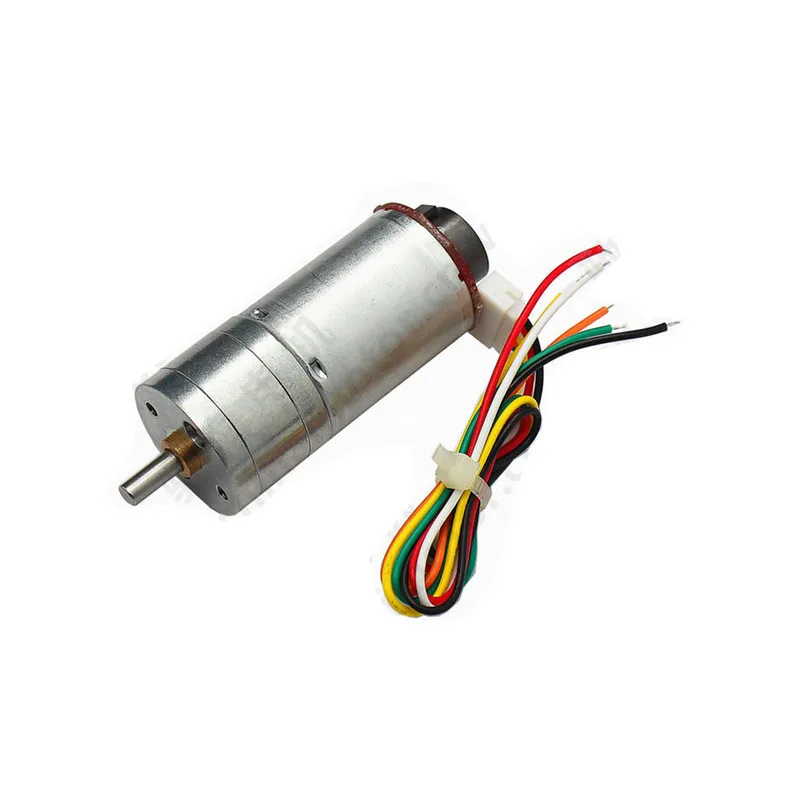
25GA-370 12V 12RPM DC Reducer Gear Motor with Encoder
Same compact gearmotor but with a quadrature encoder — adds closed-loop position feedback so you can count shaft rotations precisely even with worm gear backlash.
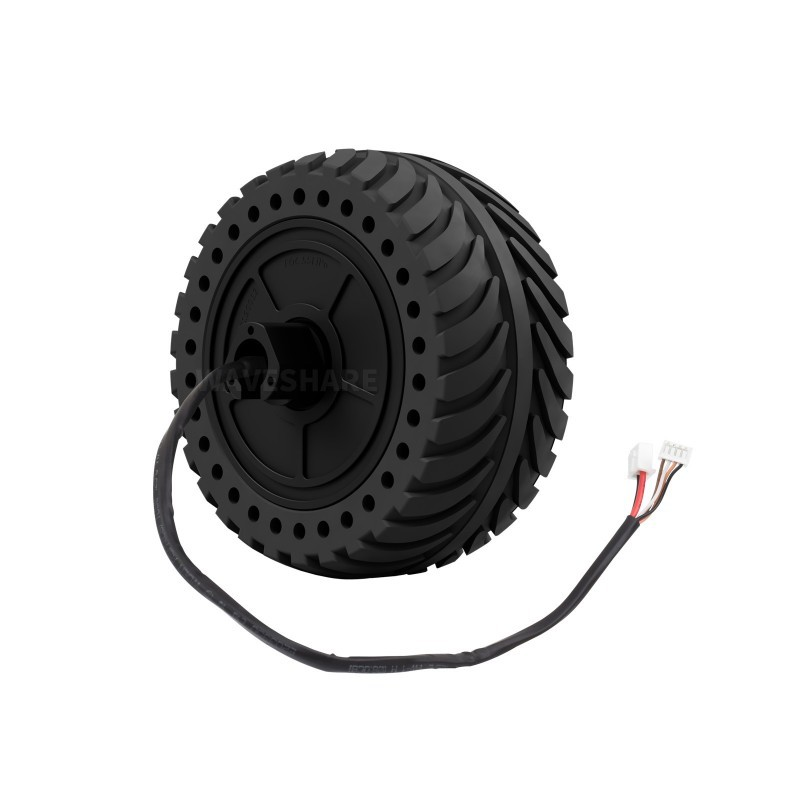
Waveshare DDSM115 Direct Drive Servo Motor (Hub Motor)
A high-torque low-noise hub motor that combines BLDC efficiency with integrated control — the planetary-class choice for AGV wheels and UGV robot drives.
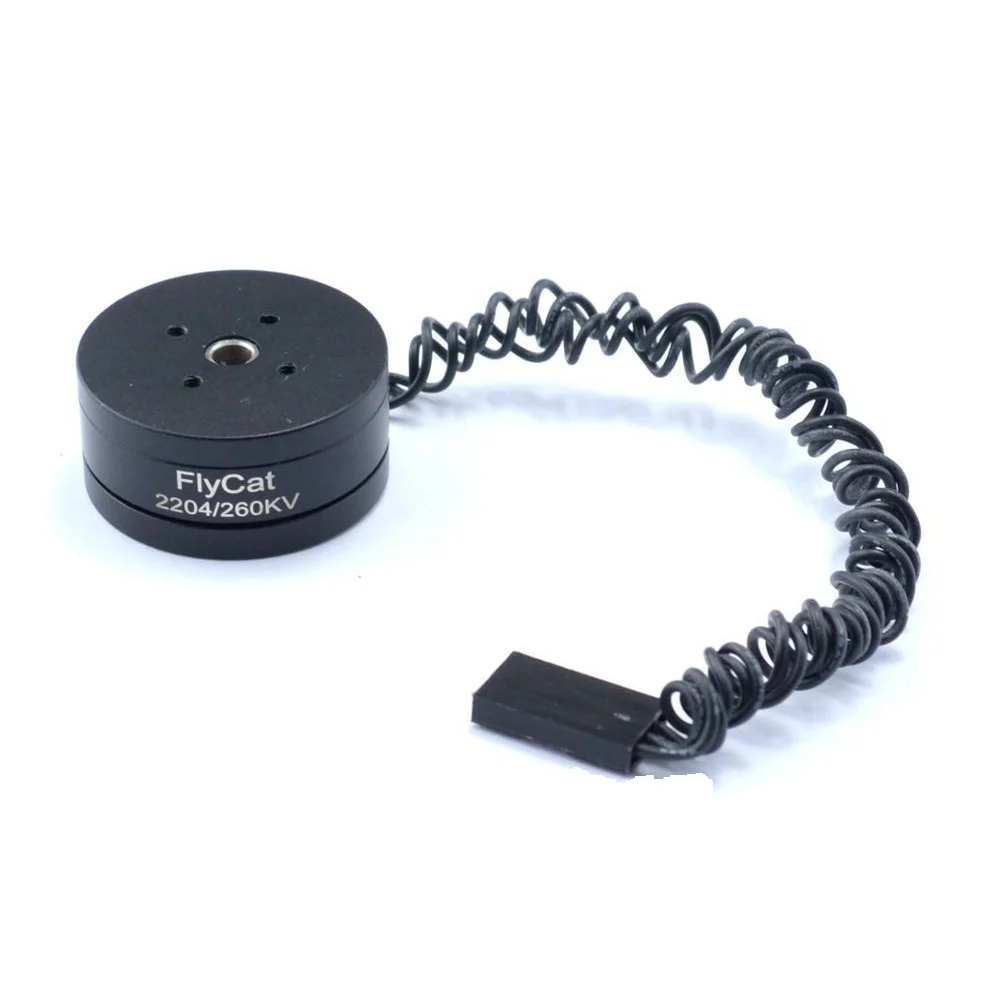
2204 260KV Brushless Gimbal Motor
A low-KV brushless motor designed for camera gimbals — functionally acts like a direct-drive planetary system with near-zero backlash and very smooth torque output for stabilisation.
Frequently Asked Questions
Can I use a worm gear motor in reverse (back-drive it)?
At lead angles below ~5° the gear is self-locking and back-driving is mechanically impossible. Above ~10° lead angle some worm motors can be back-driven, but efficiency in reverse is even lower. If back-drivability is needed, choose planetary.
What is the lifespan difference between worm and planetary?
Planetary gearmotors generally last longer under continuous duty because rolling contact wears less than the sliding contact of a worm gear. Worm gears with bronze wheels and proper lubrication can last thousands of hours, but the worm wheel is typically the wear item. Planetary gears in hardened steel can outlast the motor’s brushes or windings.
Is a planetary gearmotor always more expensive?
At small hobby sizes, yes — planetary motors cost 2–5× more than equivalent worm motors. At larger industrial sizes, the cost gap narrows. The efficiency savings in electricity often offset the purchase premium within months of continuous operation.
Can I add an encoder to either type?
Yes. Encoders attach to the motor input shaft (before the gearbox) or the output shaft. Input-side encoders are more common and give finer resolution since the motor shaft rotates faster. The 25GA-370 with encoder is a good example of this approach for worm gearmotors.
Which type runs cooler?
Planetary gearmotors run significantly cooler because 90–97% of input power becomes mechanical output. Worm gear motors convert 30–60% of input energy to heat, requiring thermal management in continuous-duty designs.
For an Arduino robot, which should I pick?
For a simple 2-wheel drive robot running on mains-adapter power with no precision requirement, a worm gear DC motor is cost-effective and self-locking. For a battery robot needing distance/angle control, a planetary gearmotor with encoder gives better performance per rupee over time.
Explore our full range of motors and actuators at Zbotic. From compact 25GA-370 DC gear motors to precision brushless gimbal motors, we stock what Indian makers and engineers need — with fast delivery across India.





Add comment