
The L298N dual H-bridge module has been the go-to motor driver for Indian hobbyists for over a decade. It’s simple, well-documented, and supported by every Arduino tutorial you’ll find on YouTube. But it has a significant problem: it wastes up to 3V in voltage drop across its internal transistors, runs hot even at moderate loads, and offers no microstepping for stepper motors. In 2025, there are several cheap motor driver alternatives that are more efficient, smaller, and available in India for under ₹200.
This buying guide covers every viable L298N replacement — for DC motors, stepper motors, and brushless motors — with honest pros/cons and price comparisons based on current Indian market rates.
Why the L298N Falls Short
Before jumping to alternatives, it’s worth understanding exactly what makes the L298N a poor choice for modern projects:
- 2–3V voltage drop per H-bridge: Run a 6V motor from a 7.4V LiPo through an L298N and the motor only sees ~4.5V — significant power loss, limiting top speed and torque.
- Efficiency around 70%: The remaining 30% becomes heat. The large aluminium heatsink on the L298N module isn’t decorative — it’s necessary. Most MOSFET-based alternatives are 95%+ efficient.
- Maximum 2A continuous (derated in practice to ~1.5A): The rated 2A per channel drops sharply when the chip heats up, which happens fast.
- No 3.3V logic compatibility: The L298N’s input logic threshold is 2.3V minimum, borderline for 3.3V MCUs (ESP32, STM32). MOSFET drivers handle 3.3V logic natively.
- No built-in current sense or protection: No overcurrent, no thermal shutdown in most clone modules — you find out the hard way when it fails.
- Bulky: The L298N module is 43×43mm. Many alternatives are under 20×15mm.
TB6612FNG — Best Overall Alternative
The TB6612FNG (Toshiba) is what the L298N should have been. It uses MOSFETs instead of bipolar transistors, making it dramatically more efficient. It’s the driver used inside the Sparkfun and Adafruit motor driver breakouts.
Specifications
- 2 independent motor channels, each up to 1.2A continuous / 3.2A peak
- Motor voltage: 2.5–13.5V
- Logic voltage: 2.7–5.5V (3.3V and 5V compatible)
- On-resistance: ~1Ω (vs L298N’s ~2Ω + diode drops)
- Built-in: overcurrent protection, thermal shutdown, under-voltage lockout
- Standby pin for power saving
- Voltage drop: ~0.5V (vs L298N’s ~2–3V)
Why Choose TB6612FNG
For any project running 2 DC motors under 1.2A each, the TB6612FNG is the first choice. The near-zero voltage drop means your motors get full battery voltage. It’s compact (breakout ~25×20mm), compatible with 3.3V MCUs, and available from Indian suppliers for ₹90–₹160 as a ready-to-use module.
The only downside: at 1.2A continuous, it’s not suitable for large motors drawing 2A+. For those you need the BTS7960 or similar high-current driver.
L293D — Classic Budget Option
The L293D is often confused with the L298N, but it’s a different (older) device. Like the L298N it uses bipolar technology, so it shares the efficiency problem — but it’s even cheaper.
Specifications
- 2 channels (or 4 half-bridges), 600mA per channel continuous
- Motor voltage: 4.5–36V
- Logic: 5V (not 3.3V friendly without level shifting)
- Internal protection diodes included (unlike L298N which needs external flyback diodes on the module)
- Available as DIP-16 IC or on a small module with headers
When to Use L293D
Only for very small motors (toy motors, small fans, pump starters) drawing under 500mA. It’s the classic choice for Arduino Uno shield kits because it fits in a standard 16-pin DIP socket. For anything requiring more current, move up to TB6612FNG.
Price in India: ₹30–₹60 for the bare IC; ₹80–₹120 for a module with screw terminals.
MX1508 — Cheapest Dual DC Driver
The MX1508 is a Chinese-designed dual H-bridge IC that has become enormously popular in India because complete modules cost as little as ₹35–₹60. It’s a MOSFET-based design with respectable specs for its price.
Specifications
- 2 motor channels, 1.5A continuous / 2.5A peak per channel
- Motor voltage: 2–10V (limited to 10V — not suitable for 12V systems)
- Logic: 1.8–7V (wide logic range, works with 3.3V and 5V)
- MOSFET-based, so efficiency is much better than L298N
- PWM input supported (up to 10kHz)
Limitations of MX1508
The 10V motor voltage limit is a real constraint. You cannot run standard 12V gear motors or robot drive motors from it. If your project uses a 2S LiPo (7.4V) or a 9V system, MX1508 works fine. For 12V systems, use TB6612FNG, L298N, or BTS7960.
Also, the MX1508 modules from some suppliers lack any protection beyond what’s in the IC itself — inspect the module before use.
DRV8833 — Low Voltage Champion
Texas Instruments’ DRV8833 is optimised for battery-powered devices running at 2.7–10.8V. It has extremely low RDS(on) and includes sophisticated current-limiting via a sense resistor.
Specifications
- 2 channels (or 1 stepper), 1.5A continuous / 2A peak per channel
- Motor voltage: 2.7–10.8V
- Built-in current regulation (set via sense resistor)
- Sleep mode: 1µA quiescent (excellent for battery projects)
- Thermal shutdown, overcurrent protection, under-voltage lockout
- Tiny SOT-23 or HTSSOP package — smallest of all options listed here
Best Use Cases
The DRV8833 shines in Li-ion battery powered robots (3.7V single cell or 7.4V dual cell), small RC models, and portable electronics where every milliwatt of quiescent current matters. Available as breakout modules in India for ₹100–₹180.
A4988 — Stepper Motor Replacement
If you’re driving a stepper motor, the L298N is a particularly bad choice — it offers no microstepping and wastes too much voltage. The A4988 is the standard 1/16 microstepping stepper driver used in almost every 3D printer worldwide.
Specifications
- 1 stepper motor channel (dual H-bridge internally)
- Up to 2A per coil (with heatsink and cooling)
- Motor voltage: 8–35V
- Logic: 3.3–5V
- Microstepping: full, 1/2, 1/4, 1/8, 1/16
- Built-in current limiting (set via potentiometer)
- Thermal shutdown, overcurrent protection
Why A4988 Over L298N for Steppers
1/16 microstepping gives 3200 steps/revolution on a standard 200-step stepper, resulting in dramatically smoother motion and lower vibration. The L298N gives only full or half-step (200 or 400 steps/rev). For CNC machines, plotters, and camera sliders, the A4988 is the minimum acceptable driver.
Price in India: ₹80–₹150 per module. One of the best value components in hobby electronics.
BTS7960 — High Current Alternative
For motors drawing 3–43A (e-bikes, large robot drive motors, heavy conveyor drives), the BTS7960B dual H-bridge module is the answer. It uses Infineon’s industrial MOSFET drivers with on-chip current sensing.
Specifications
- 43A rated per channel (continuous ~15–20A with adequate heatsinking)
- Motor voltage: 6–27V
- Logic: 3.3–5V
- Integrated current sense output
- Built-in PWM speed control
When to Use BTS7960
Electric go-karts, heavy sumo robots, e-bike motor controllers, and industrial automation where the L298N’s 2A rating is far too low. Price: ₹250–₹450 per module — slightly above the ₹200 target, but no other option handles this current class.
Full Comparison Table
| Driver | Max Current | Max Voltage | Logic | India Price | Best For |
|---|---|---|---|---|---|
| L298N (baseline) | 2A (derated) | 46V | 5V only | ₹80–₹150 | Legacy projects |
| TB6612FNG | 1.2A cont / 3.2A peak | 13.5V | 3.3/5V | ₹90–₹160 | Best all-rounder <1.2A |
| L293D | 600mA | 36V | 5V | ₹30–₹60 (IC) | Tiny motors, shields |
| MX1508 | 1.5A cont | 10V | 1.8–7V | ₹35–₹60 | Budget 5V/7.4V systems |
| DRV8833 | 1.5A cont | 10.8V | 3.3/5V | ₹100–₹180 | Battery-powered robots |
| A4988 | 2A per coil | 35V | 3.3/5V | ₹80–₹150 | Stepper motors, CNC |
| BTS7960 | 43A rated | 27V | 3.3/5V | ₹250–₹450 | High-power motors |
How to Choose the Right Driver
Follow these steps every time you select a motor driver:
- Measure (or calculate) stall current of your motor: This is the maximum current the driver will ever see. Your driver’s continuous rating must exceed this. A motor labelled “500mA rated” can draw 3–5× at stall.
- Check your supply voltage: MX1508 stops at 10V; TB6612FNG at 13.5V. If you use a 12V supply, these are both borderline — prefer BTS7960 or L298N for 12V heavy motors.
- Check your MCU logic level: If you’re using an ESP32, STM32, or Raspberry Pi (all 3.3V I/O), avoid L293D and L298N unless you add level shifters.
- Stepper or DC? Never use an L298N for steppers if you need smooth motion. Use A4988 or DRV8825.
- How many motors? TB6612FNG and L298N drive 2 DC motors each. A4988 drives 1 stepper. Plan your driver count before ordering.
Quick Wiring Examples
TB6612FNG with Arduino Uno (2 DC Motors)
// TB6612FNG Pinout to Arduino Uno
// PWMA → Pin 5 (PWM)
// AIN1 → Pin 7
// AIN2 → Pin 8
// PWMB → Pin 6 (PWM)
// BIN1 → Pin 9
// BIN2 → Pin 10
// STBY → Pin 4 (HIGH = active, LOW = standby)
// VM  → Motor supply (up to 13.5V)
// VCC → 5V from Arduino
// GND → GND (common ground)

void setup() {
  pinMode(7,OUTPUT); pinMode(8,OUTPUT);
  pinMode(9,OUTPUT); pinMode(10,OUTPUT);
  pinMode(4,OUTPUT); digitalWrite(4,HIGH); // take out of standby
}

void motorA(int speed) { // speed: -255 to +255
  digitalWrite(7, speed > 0);
  digitalWrite(8, speed < 0);
  analogWrite(5, abs(speed));
}
A4988 with Arduino (NEMA 17 Stepper)
// A4988 → Arduino
// STEP → Pin 3
// DIR  → Pin 4
// EN   → GND (always enabled) or Pin 5
// MS1/MS2/MS3 → GND/GND/GND (full step) or HIGH/HIGH/HIGH (1/16 step)
// VMOT → 12V motor supply (with 100µF decoupling cap!)
// VDD  → 5V logic

void step(bool dir, int steps, int delayUs) {
  digitalWrite(4, dir);
  for (int i = 0; i < steps; i++) {
    digitalWrite(3, HIGH); delayMicroseconds(delayUs);
    digitalWrite(3, LOW);  delayMicroseconds(delayUs);
  }
}
Recommended Products from Zbotic

A4988 Stepper Motor Driver Controller Board
The best L298N replacement for stepper motors — 1/16 microstepping, adjustable current limit, compatible with NEMA17 and other steppers.
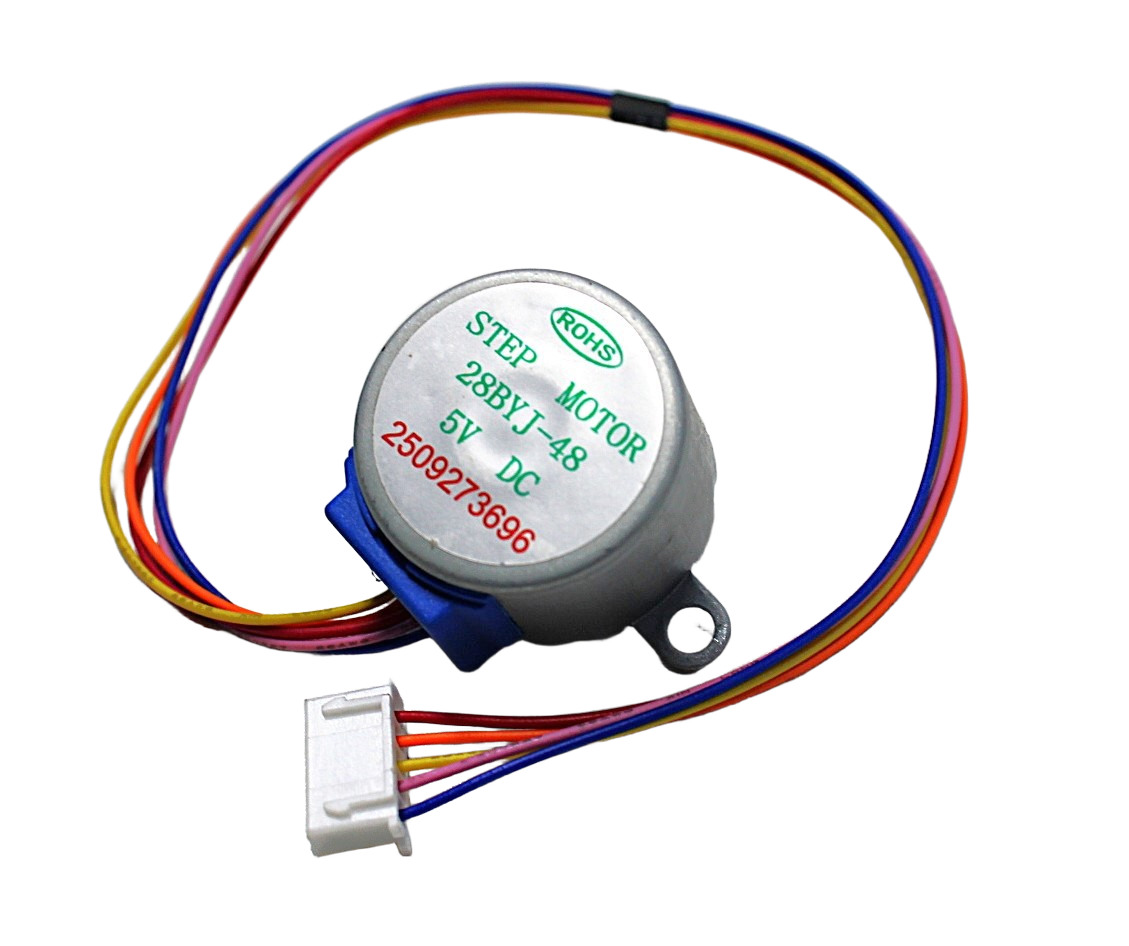
28BYJ-48 5V Stepper Motor
Popular 5V stepper motor — pairs perfectly with ULN2003 driver (included with most kits) for precise position control on a tight budget.

NEMA17 5.6 kg-cm Stepper Motor
High-torque NEMA17 stepper for CNC machines, 3D printers, and automation — pair with the A4988 driver above for best results.
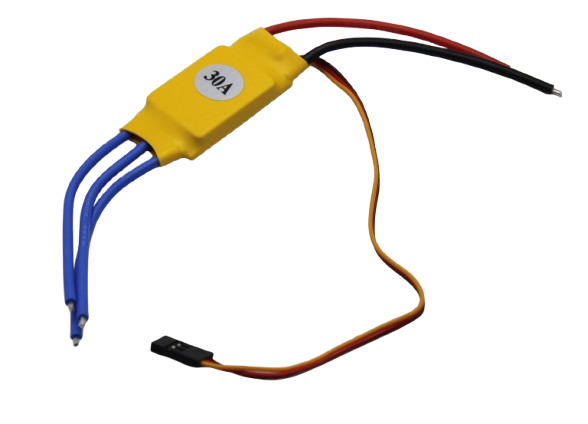
30A BLDC ESC Brushless Electronic Speed Controller
The motor driver for brushless motors — when you’ve outgrown DC motor drivers entirely and need high-efficiency speed control for drones or e-boards.
FAQ
Can I directly replace L298N with TB6612FNG without changing my code?
Almost. The pin functions (IN1, IN2, PWM per channel) are functionally identical, so your motor direction and speed control code works without changes. The only difference: TB6612FNG has a STBY (standby) pin that must be pulled HIGH to enable the outputs. Add one digitalWrite(STBY_PIN, HIGH) in your setup() and you’re done.
Why does my L298N run hot even with small motors?
The L298N has ~2V drop per side, meaning even at 500mA it dissipates 1W per channel as heat. At 1A it’s 2W — enough to get uncomfortably hot. MOSFET-based drivers (TB6612FNG, MX1508) dissipate less than 0.3W at the same current because their on-resistance is 20× lower.
Is MX1508 good for a 2-wheel robot chassis?
Yes, if your robot uses 5V or 3.7V motors (like small yellow TT gear motors) and your battery is a single or dual LiPo cell (3.7V or 7.4V). The 10V limit means you must not use it with 12V motors or a 3S LiPo (11.1V).
Do I need flyback diodes with TB6612FNG?
No. The TB6612FNG has internal flyback protection diodes. The L298N module typically includes them externally, but bare L298N ICs need external diodes. This is one of many reasons the TB6612FNG is safer and simpler to wire.
Can I use an A4988 for a DC motor?
Technically the A4988 is two H-bridges internally, but it’s designed for stepper motor control (alternating coil current) and its step/direction interface doesn’t translate cleanly to DC motor use. Use a proper DC motor driver (TB6612FNG, MX1508) for DC motors.
What is the best motor driver for ESP32 or Raspberry Pi (3.3V logic)?
TB6612FNG, DRV8833, or MX1508 — all support 3.3V logic inputs natively. Avoid L293D and L298N with 3.3V MCUs unless you add a 3.3V-to-5V level shifter for the input signals.
Need a motor driver for your next build? Browse Zbotic’s full selection of motor drivers and stepper controllers — fast shipping across India. Shop Motor Drivers at Zbotic







Add comment