
Resin 3D printing (SLA, DLP, MSLA) produces parts with extraordinary surface detail and smoothness that FDM printing simply cannot match. But the workflow doesn’t end when the print bed rises from the vat — in fact, what happens after the print is equally important for getting parts that are safe, strong, and beautiful. A poorly post-processed resin print is sticky, brittle, potentially toxic, and structurally weak compared to a properly finished one.
This comprehensive guide covers the complete resin post-processing workflow, with specific attention to the challenges and resources available to Indian makers — including monsoon season safety considerations, locally available washing solvents, and how to cure effectively using India’s abundant sunlight.
Why Resin Prints Need Post-Processing
When a resin print comes off the build plate, it is in a partially cured state. The UV light from the printer has solidified the outer layers and the internal structure, but several things are still incomplete:
- Uncured resin on the surface: A thin film of liquid resin coats every surface of the print. This is sticky, skin-sensitising, and must be removed before further handling without gloves.
- Supports still attached: Auto-generated supports are part of the printed structure and need removal.
- Incomplete polymerisation: The internal crosslinking of the polymer chains is not complete. The print is softer and more brittle than it will be after full cure.
- Layer visibility: Even with resin’s fine 0.025–0.05mm layers, a completely unfinished resin print will still show layer lines when light hits at a shallow angle. Post-processing eliminates these.
Skip washing and you have a toxic, sticky surface. Skip curing and your print chips and breaks easily. Skip surface preparation and your paint will peel. Each step serves a specific purpose.
Safety First: Resin in India
Photopolymer resin is one of the more hazardous materials used in desktop making. Unlike PLA or PETG filament, uncured resin is a known skin sensitiser — repeated skin contact can cause chemical sensitisation leading to allergic reactions that worsen with each exposure. In India, where safety supply chains are sometimes inconsistent, it is worth being deliberate about this.
Minimum Personal Protective Equipment (PPE)
- Nitrile gloves (not latex): Always when handling uncured prints, resin, or IPA wash. Latex gloves are inadequate — resin permeates them. Nitrile gloves (100-pack boxes available on Amazon India and industrial suppliers for ₹400–800) are mandatory.
- Eye protection: Safety glasses or goggles when handling liquid resin, opening the vat, or using IPA wash spray. Resin splash or IPA mist in eyes is serious.
- Ventilation: Resin fumes (from the printer during printing and from liquid resin during washing) are irritants. Print and post-process in a well-ventilated space. In India’s climate, an outdoor workspace or an open balcony with a fan is ideal.
- Resin disposal: Never pour uncured resin or IPA contaminated with resin down the drain. Cure the liquid resin (expose to sunlight until solid), then dispose of solid cured resin in solid waste. IPA with resin: cure in sun to solidify the resin, then the IPA can be evaporated outdoors.
Monsoon Season Extra Care
During India’s monsoon (June–September), humidity is very high. Resin is somewhat hygroscopic and absorbs moisture from the air during printing, causing print failures. Post-processing with IPA in very humid conditions also takes longer to dry. Keep resin bottles sealed and use silica gel in your resin storage area.
Step 1: Support Removal
Supports should be removed from freshly printed parts, not after curing. There are two schools of thought here, and both have valid arguments:
Remove Supports Before Washing (Wet Removal)
While still wet with uncured resin, supports are slightly more flexible and the print marks are easier to cut cleanly. Use flush cutters (side cutters) as close to the support base as possible. The resin surface is still somewhat soft, so any nub left can be smoother afterwards. Wear gloves — you are handling uncured resin directly.
Best for: Large support nubs, parts with many supports in accessible locations.
Remove Supports After Washing, Before Curing
After the IPA wash removes surface resin, the print is still green-state (uncured bulk) — more flexible than fully cured. Supports break away cleanly at their base, and the support marks are visible for trimming. This is the approach preferred for delicate parts (miniatures, thin walls).
Best for: Detailed figurines, parts with thin supports that would break the print if forced when wet.
Support Mark Cleanup
Support bases always leave small marks. After curing, these can be sanded with 400-grit paper. If the mark is a raised nub, use a sharp hobby knife (X-Acto or equivalent) to pare it flat, then sand. For deep craters from ripped supports, fill with a drop of fresh resin and cure with a UV torch.
Step 2: Washing the Print
Washing removes the liquid resin film from all print surfaces. The most common solvents:
Isopropyl Alcohol (IPA) — Standard Method
IPA (90%+ concentration — not the 70% medicinal grade which contains too much water) dissolves and lifts uncured resin from surfaces. Available in India as:
- Industrial IPA 99% from chemical suppliers (most economical — 1 litre from ₹200–400)
- Electronic contact cleaner sprays (small quantities, higher cost per litre, but available at electronics shops in most cities)
Washing Procedure
- Initial dip: Submerge the print (still on build plate or removed, with gloves on) in a container of IPA. Gently agitate or use an ultrasonic cleaner if available. 2–3 minutes for simple shapes, 5 minutes for complex geometries.
- Secondary rinse: Transfer to a second container of clean IPA for a 60-second rinse. This removes IPA contaminated with resin from step 1 and ensures surfaces are clean.
- Shake off: Remove from IPA and gently shake off excess. Do not wipe — wiping can redeposit dissolved resin.
- Air dry: Allow to air dry completely before UV curing. In India’s warm climate, IPA evaporates quickly — typically 3–5 minutes at 30°C ambient. In monsoon conditions, use a gentle fan to speed evaporation.
Alternative: Resin Wash & Cure Machines
Dedicated washing machines (like Anycubic Wash & Cure, Elegoo Mercury Plus) use motorised agitation for thorough and consistent washing. These are worth the investment (₹3,000–6,000 on Amazon India) if you print regularly — they reduce IPA waste and improve washing consistency.
Recycling Wash IPA
Used IPA can be recycled. Leave it in a wide container in direct sunlight — the UV cures all dissolved resin into solid particles. Filter through a coffee filter to remove the solid resin, and the IPA can be reused for initial washes. This significantly reduces IPA running costs over time.
Step 3: UV Curing
After washing and drying, the print must be UV-cured to complete the polymerisation and achieve full mechanical properties. Under-cured prints are brittle, soft, and may continue off-gassing sensitising compounds.
UV Curing Station
Commercial UV curing stations use 405nm LEDs (same wavelength as most resin printers) in a mirrored chamber with a rotating turntable for even exposure. Common options available in India (Amazon India): Elegoo Mercury Plus, Anycubic Cure. Cost: ₹2,500–5,000.
Using India’s Sunlight
This is an underutilised advantage for Indian makers. India’s sunlight contains abundant UV, particularly between 10AM and 2PM. A print placed in direct sunlight for 15–30 minutes (depending on geometry) can achieve full cure without any equipment. For larger prints or complex geometries where inside surfaces may be shadowed, rotate the part halfway through. This free curing method is entirely practical for non-production use.
Sunlight curing tip: Summer sun in India (April–June) is very intense — 10–15 minutes may be sufficient. Monsoon sun through cloud cover may need 45–60 minutes. UV penetration through glass is limited — place parts outside, not behind a window.
UV Torch Curing
A 395–405nm UV torch (LED flashlight, available on Amazon India for ₹300–800) can cure small areas and is extremely useful for:
- Spot-curing support mark fill-ins (drop of resin → UV torch → instant cure)
- Curing inside channels or cavities the station can’t reach
- Emergency curing when your station is unavailable
Curing Duration Guidelines
| Resin Type | UV Station (405nm) | Indian Sunlight (direct) |
|---|---|---|
| Standard resin (Elegoo, Anycubic) | 2–3 min per side | 10–20 min (rotate) |
| ABS-like resin | 4–6 min per side | 20–30 min (rotate) |
| Flexible (TPU-like) resin | 3–5 min per side | 15–25 min (rotate) |
| Plant-based / Water-washable | 2–4 min per side | 10–20 min (rotate) |
Important: Over-curing resin makes it brittle. If your print becomes yellow, develops surface cracks, or becomes fragile after UV exposure, you have over-cured. Darker resins absorb UV and heat faster — reduce curing time.
Step 4: Sanding and Surface Preparation
Even after a perfect wash and cure, resin prints have visible layer lines at shallow light angles and support marks. Sanding removes these before painting and also removes any surface tackiness that indicates surface resin that resisted the wash.
Wet Sanding Progression
Wet sanding (with water as lubricant) produces significantly better results than dry sanding for resin — it prevents the paper from clogging with resin dust and creates a smoother cut.
- 120–220 grit: Only if significant support marks or print artifacts need flattening. Aggressive — removes material quickly.
- 400 grit: Primary smoothing pass. Removes all visible layer lines and coarsens the surface for primer adhesion.
- 800 grit: Secondary smoothing. Removes 400-grit scratches, prepares for filler primer.
- 1500 grit: Between paint coats or after filler primer. Very fine — creates a nearly glass-smooth base for final colour coat.
- 2000–3000 grit: Only for high-gloss work, scale models, and jewellery. Beyond this, polishing compounds take over.
All grades of wet-and-dry sandpaper are available at Indian hardware shops and automobile accessories shops (for automotive bodywork use) at very low cost.
Sanding Safety
Resin sanding dust is toxic. Always wet sand (water eliminates airborne dust) or wear an N95 mask if dry sanding small areas. Wet sanding slurry should be disposed of as solid waste — do not pour down the drain.
Step 5: Priming and Painting
Resin prints take paint extremely well after surface preparation. The smooth, non-porous surface (after sanding) accepts fine detail painting that FDM prints cannot.
Primer
Always prime before painting. A good primer serves two purposes: it reveals surface defects (scratches, pores, support marks) that need fixing before painting, and it creates a uniform base that paint adheres to consistently. Use:
- Filler primer (automotive): Motip, Rust-Oleum, or local brand rattle cans. Grey or black. Apply 2–3 light coats, sanding with 800–1000 grit between coats. Available at automobile accessories shops throughout India.
- Airbrush primer: Mr. Surfacer 500/1000/1200 (available from modelling hobby suppliers online in India) for fine-detail miniatures and scale models where brush marks are unacceptable.
Painting Methods
Spray can (rattle can): Best for large, uniform surfaces. Widely available in India. Apply thin coats from 25–30cm distance. Build up colour in 2–3 coats.
Airbrush: Essential for scale models, miniatures, and multi-colour work. Requires a compressor (available in India from ₹3,000–8,000 for hobby-grade) and practice. Produces professional-quality gradients and detail.
Hand brush: Appropriate for detail work (eyes, small features, drybrushing texture). Use good-quality synthetic brushes and thin paint properly.
Clear Coat
Always finish with a clear protective coat. Available in matte, satin, and gloss finishes. Protects the paint from wear and UV fading. In India’s climate, UV-resistant clear coats (automotive grade) are worthwhile for any display piece that will be in a sunny location.
Different Resins, Different Approaches
Standard Resin
Most beginner-friendly. Washes easily in IPA, cures quickly, prints with fine detail. Brittle compared to engineering resins — not suitable for parts under mechanical stress. Post-process as described above. Best for miniatures, display models, dental models, jewellery waxes.
ABS-Like / Tough Resin
Formulated to be tougher and more impact-resistant than standard resin. Slightly more difficult to wash (may need longer IPA soak) and needs more curing time. The stiffer formula also makes support marks slightly harder to remove cleanly. For functional parts requiring mechanical strength.
Water-Washable Resin
Washes with plain water instead of IPA. Major advantage in India: water is universally available and cheap; high-concentration IPA can be harder to source in smaller cities. However, water-washable resins must be handled carefully — do not let uncured resin enter your water supply. Wash in a bucket, let resin cure in the wash water via sunlight, then discard the solids. Water-washable resin also tends to be slightly more brittle than IPA-wash standard resins.
Flexible / Castable / Dental Resins
Speciality resins with specific post-processing needs. Flexible resins may require longer wash times (IPA doesn’t dissolve these as quickly), castable resins (for lost-wax casting) should not be IPA washed — they require dedicated casting wax wash procedures. Dental resins are biocompatible only after complete post-processing per the manufacturer protocol — cut no corners here.
India-Specific Tips and Sourcing
IPA Availability in India
99% IPA (isopropyl alcohol) is available from:
- Industrial chemical suppliers in major cities (contact via IndiaMART)
- Electronic component shops (smaller quantities)
- Amazon India (1–5 litre quantities, brands like SRL, Merck)
The 70% medicinal grade IPA from pharmacies is too dilute for effective resin washing — the water content leaves resin residue. Always source 90%+ concentration for printing use.
Gloves in India
Nitrile gloves (blue examination gloves) are available from medical equipment suppliers, pharmacy distributors, and Amazon India. A box of 100 gloves costs ₹400–800 and is a worthwhile investment. Do not compromise — repeated skin contact with uncured resin without gloves will eventually cause sensitisation.
Resin Disposal in Indian Context
India’s waste management infrastructure is evolving. For now, the safest approach for individual makers: cure all liquid resin waste solid via sunlight, then dispose in general solid waste. Do not pour liquid resin or heavily resin-contaminated IPA into municipal sewage — the photosensitive monomers are aquatic toxins.
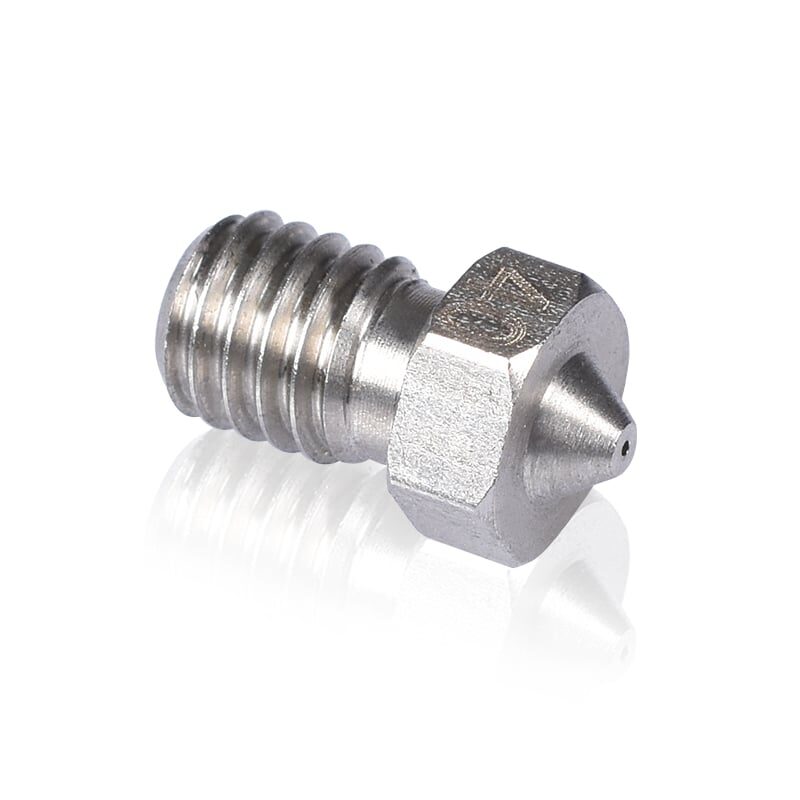
3D Printers Stainless Steel Nozzle 0.4mm
If you also do FDM printing alongside resin, keep your hotend in perfect condition with a quality stainless steel nozzle for clean, consistent extrusion.
View on ZboticCommon Mistakes to Avoid
Curing Too Long or Too Short
Under-curing: prints snap easily, feel soft, may have a slight tackiness even after washing. Fix: cure longer, check your UV source is actually 405nm.
Over-curing: prints become yellow, develop surface cracks, are brittle. Fix: reduce curing time, particularly in intense Indian sunlight.
Using IPA Below 90% Concentration
The water in low-concentration IPA prevents proper resin dissolution, leaving a milky residue on the print that causes paint adhesion failure and maintains surface tackiness. Always use 90%+ for washing.
Handling Parts Without Gloves
The most common mistake, especially when a print looks dry after washing. Uncured resin can still be present in pores and internal channels. The sensitisation risk from repeated exposure is real and cumulative — always wear nitrile gloves when handling any print that has not been UV-cured.
Priming Directly on Uncleaned Prints
Remaining resin contamination or IPA on the surface causes primer fisheyes and adhesion failure. Always ensure the print is completely dry (minimum 10 minutes air dry after washing in warm Indian conditions) before priming.
Printing in Monsoon Without Filament/Resin Drying
Moisture-absorbed resin produces cloudy, bubbled prints. Store resin in sealed bottles with desiccant, and allow the printer chamber to warm up before printing (some makers use a 5-minute heat gun pass over the FEP sheet to remove surface moisture before pouring new resin).
Frequently Asked Questions
Can I use rubbing alcohol instead of IPA for washing resin?
Standard Indian rubbing alcohol (surgical spirit) is typically 70% IPA or denatured ethanol — too dilute for effective resin washing. You will get a cloudy, partially cleaned print. Use 90%+ concentration IPA specifically labelled for industrial or electronic use.
How long do I leave resin prints in the sun for curing?
In India’s direct summer sunlight (10AM–2PM), 15–20 minutes for standard resin is typically sufficient. Rotate the part at the halfway point to ensure all surfaces receive UV exposure. In overcast monsoon conditions, extend to 45–60 minutes. Check cure by pressing with a fingernail — a properly cured print leaves no mark.
Can I paint resin prints without priming?
Technically yes, but it is not recommended. Without primer, paint adhesion is unpredictable — some paints adhere well to resin, others peel within days. Primer also reveals surface defects that need fixing before painting. The 10-minute priming step dramatically improves the quality and durability of the final paint job.
My resin prints crack after a few days. What is wrong?
This is almost always an over-curing issue, either from too long in a UV station or from being left in direct Indian summer sunlight for extended periods. It can also indicate printing at too high UV intensity (over-exposure during printing itself). Reduce curing time and store finished prints away from direct sunlight. Some resins also degrade faster than others — ABS-like resins generally have better UV stability for long-term use.
Is water-washable resin better for beginners in India?
For Indian beginners, water-washable resin has real advantages: no need to source 99% IPA, simpler washing procedure, and lower running cost. The trade-offs are slightly less mechanical strength and a more complex waste water disposal process (the wash water contains uncured resin and must be cured in sunlight before disposal). Overall, for hobby printing and non-structural parts, water-washable resin is a very practical choice for India.
Get the Most from Your Resin Printer
Proper post-processing transforms a resin print from a rough, potentially dangerous object into a finished, professional-quality part. The process takes 30–60 minutes but makes an enormous difference in the final result. Invest in nitrile gloves, quality IPA, and take advantage of India’s free and abundant UV sunlight for curing.
For all your 3D printing needs — filaments, spare parts, hotends, and maker accessories — visit Zbotic.in with pan-India delivery.





Add comment