
Nano drones have exploded in popularity across India, and for good reason. Whether you are a hobbyist wanting to practise indoors before upgrading to a full-size build, a content creator hunting for ultra-portable aerial shots, or a student exploring robotics, these palm-sized machines punch well above their weight. In 2026, the market offers a dizzying array of options — brushed toy-grade quads, brushless micro-FPV rigs, and even open-source nano builds you can assemble yourself.
This guide cuts through the noise. We compare the most popular nano drone categories available to Indian buyers, explain the key specs you should care about, and point you toward the components and accessories you need if you decide to build or upgrade your own nano quad.
What Is a Nano Drone?
Under India’s DGCA UAS Rules 2021, a nano drone is an unmanned aircraft with an all-up weight of 250 grams or less. This is the same threshold used by the FAA in the US and EASA in Europe, making it a globally recognised category. Nano drones typically have a wheelbase (motor-to-motor diagonal) of under 100 mm and are powered by small 1S or 2S LiPo batteries.
Do not confuse nano drones with micro drones (250 g – 2 kg) or mini drones (2 – 25 kg). The nano category is the smallest and most regulation-friendly class of drone you can own and fly in India today.
Why Choose a Nano Drone in India?
There are several compelling reasons to start with or invest in a nano drone, especially for Indian buyers:
- DGCA Green Zone Exemption: Nano drones below 250 g are exempt from many restrictions in the Digital Sky platform. You do not need a UIN (Unique Identification Number) or a drone pilot certificate to fly one in most uncontrolled areas.
- Affordable Entry Point: Toy-grade nano quads start at ₹1,000–₹3,000, while a capable brushless nano FPV build can be done for ₹4,000–₹8,000 using components from Indian suppliers.
- Indoor Practice: India’s summer heat and monsoon season mean outdoor flying is impractical for months. Nano drones let you keep your stick skills sharp indoors year-round.
- Portability: Fits in your pocket or a small pouch — ideal for travel, college labs, and on-site demos.
- Community: India’s FPV community (Drone Enthusiasts India, FPV India groups) is growing fast, and nano quads are the most discussed beginner platform.
Key Specs to Evaluate
Before buying or building a nano drone, understand what each specification actually means for real-world performance:
1. All-Up Weight (AUW)
AUW includes the frame, motors, ESC, flight controller, battery, camera, and all accessories. For nano class, this must be under 250 g. Every gram saved extends flight time and improves agility.
2. Motor KV and Size
Nano drones typically use 0802–1103 size motors. KV (RPM per volt) determines how fast the motor spins per volt applied. Higher KV (8,000–12,000) suits 2-blade propellers on 1S builds; lower KV (4,000–6,000) works with 3-blade props on 2S builds. Brushless motors in this size range offer dramatically better efficiency and longevity than brushed equivalents.
3. Flight Controller and Stack
A good flight controller running Betaflight, Cleanflight, or iNav transforms a twitchy nano into a precise machine. Look for an F4 or F7 processor with an onboard gyro (MPU-6000 or ICM-42688-P). All-in-one (AIO) stacks that combine FC + ESC + VTX save weight on nano builds.
4. ESC and Current Rating
For nano FPV builds, 4-in-1 ESCs rated at 5–10 A per channel are the norm. Ensure the ESC supports BLHeli_S or BLHeli_32 firmware for smooth motor control and D-shot protocol.
5. Flight Time
Expect 3–6 minutes on a 1S 300 mAh LiPo and 5–8 minutes on a 2S 450 mAh pack. Flight time drops significantly if you hover at high throttle, fly fast, or add a heavy camera.
6. FPV Camera and Video Transmitter
Entry-level: analogue 600TVL or 700TVL cameras with a 25 mW VTX. Mid-range: 1000–1500TVL cameras with switchable 25/100 mW VTX. Beginner pilots often underestimate how much image quality affects the flying experience — blurry or laggy FPV feeds cause crashes.
7. Range and Radio System
Toy-grade quads use proprietary 2.4 GHz protocols with 30–80 m range — fine for LOS indoor flying. Serious nano FPV builds use ExpressLRS (ELRS) on 2.4 GHz for 1–2 km line-of-sight range with sub-1 ms latency. FrSky D8/D16 is an older but still-common alternative.
Nano Drone Categories Compared
Category 1: Toy-Grade Brushed Nano Quads (₹1,000–₹3,500)
These are the classic gift-shop quads — Eachine E010, Syma X20, and similar clones. They use brushed coreless motors, proprietary radio protocols, and simple flight controllers with altitude hold.
| Feature | Typical Spec |
|---|---|
| AUW | 20–80 g |
| Motor Type | Brushed coreless |
| Flight Time | 4–7 min |
| Range | 30–80 m |
| Camera | None / Low-res HD |
| FPV | No |
| Repairable | Limited |
Best for: Children, complete beginners wanting risk-free practice, corporate gifting.
Limitations: Brushed motors wear out in 3–6 hours. No standardised parts. Cannot fly outdoors in any wind. No real FPV capability.
Category 2: Brushless Nano FPV Quads (₹4,000–₹10,000 to build)
This is where things get serious. Sub-65mm and 75mm class whoops (like Mobula6, BetaFPV Meteor65) use brushless motors on 1S–2S power, Betaflight FC, and analogue or digital FPV. In India, you typically build these from components rather than buying RTF, which keeps costs manageable.
| Feature | Typical Spec |
|---|---|
| AUW | 25–90 g |
| Motor Type | Brushless (0802–1103) |
| Flight Time | 3–7 min |
| Range (ELRS) | 500 m – 2 km LOS |
| FPV | Analogue / DJI O3 lite |
| Repairable | Yes — standard parts |
Best for: FPV pilots wanting indoor/micro-outdoor freestyle, skill building, gate racing at home.
Category 3: Open-Source Nano Builds (₹6,000–₹15,000)
Platforms like the Crazyflie 2.1 (open hardware, open firmware) are popular in Indian engineering colleges for robotics research, swarm experiments, and autonomous flight. These are not FPV racers — they are programmable research platforms.
Best for: B.Tech/M.Tech research projects, computer vision experiments, swarm robotics demonstrations.
Category 4: Micro Camera Drones with GPS (₹8,000–₹20,000)
Drones like the DJI Mini 4K or FIMI X8 Mini hit right at the 249 g limit. They have GPS-stabilised hover, 4K cameras, and decent wind resistance. These are not open for hardware modification but offer plug-and-play aerial photography for Indian consumers.
Best for: Content creators, real estate agents, travel vloggers wanting legal, portable aerial footage.
Build Your Own Nano Quad
Building a nano drone from scratch is one of the most rewarding electronics projects you can undertake. Here is a minimal component list for a 65mm brushless whoop:
- Frame: 65mm brushless whoop frame (polycarbonate, ~5 g)
- Motors: 0802 25,000 KV brushless x 4
- AIO FC+ESC: Happymodel Crazybeebee X or similar F4 AIO (5A ESC, 25 mW VTX, ELRS receiver)
- Camera: Runcam Nano3 or Foxeer Razer Nano (1/3″ CMOS)
- Battery: 1S 300 mAh HV LiPo (Tattu, GNB, or BetaFPV)
- Propellers: 31mm 3-blade bi-blade (comes with motor or separately)
Total AUW with battery: approximately 28–35 g — comfortably under the 250 g limit.
For slightly larger 75mm or 85mm builds approaching the 250 g limit, you will want a power distribution board to manage wiring cleanly.

35A V2.1 2-5S 4-in-1 Brushless ESC for RC Drone FPV Racing
A compact 4-in-1 ESC stack supporting BLHeli_S and D-shot protocol — ideal for lightweight FPV builds where individual ESCs would add unnecessary weight and wiring complexity.
View on Zbotic
1/3 CMOS 700TVL Mini FPV Camera 2.1mm Lens PAL/NTSC
A lightweight mini FPV camera with 700TVL resolution and a 2.1mm wide-angle lens. Supports both PAL and NTSC output — fits nano and micro FPV drone builds perfectly.
View on Zbotic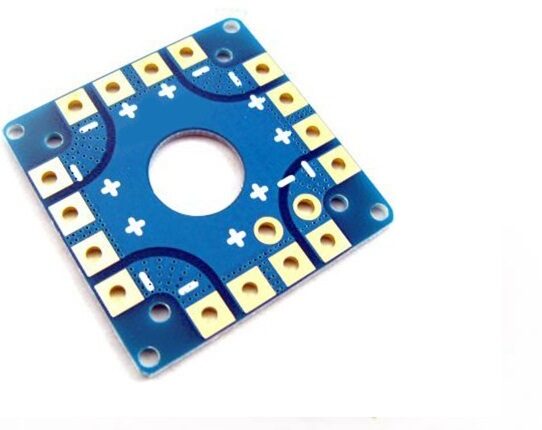
100A Multirotor ESC Power Distribution Battery Board For Quadcopter
A robust PDB for quadcopter builds — routes power cleanly from battery to ESCs and FC. Useful when building larger nano-to-micro class drones with individual ESCs.
View on ZboticRecommended Products from Zbotic
Zbotic stocks a curated range of FPV and drone components suited to nano and micro builds. If you are building or upgrading, here are two more products worth checking out:
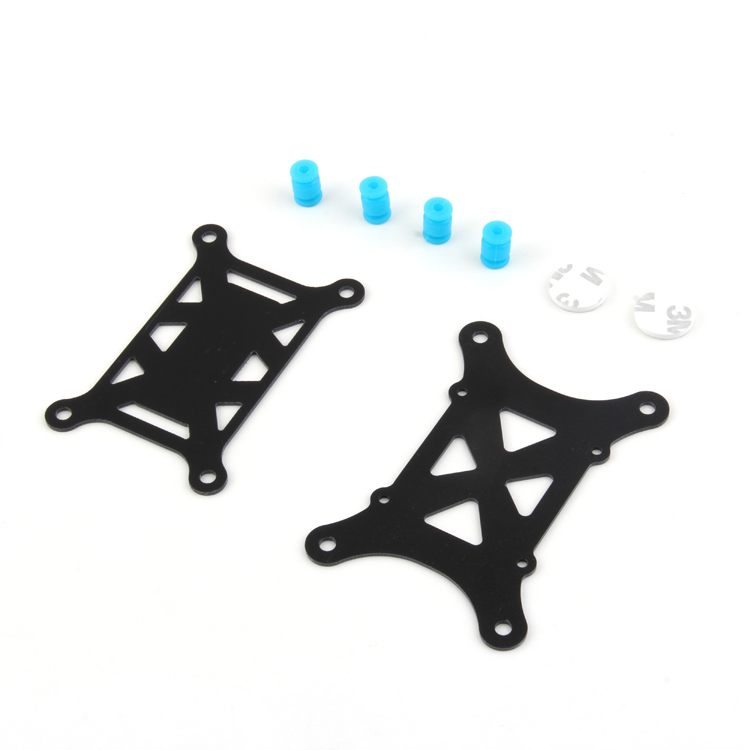
Anti-Vibration Shock Absorber for APM/KK/MWC/PixHawk
Damping balls and plates that isolate your flight controller from motor vibrations — essential for clean gyro data and stable flight, even on nano builds with resonant frames.
View on Zbotic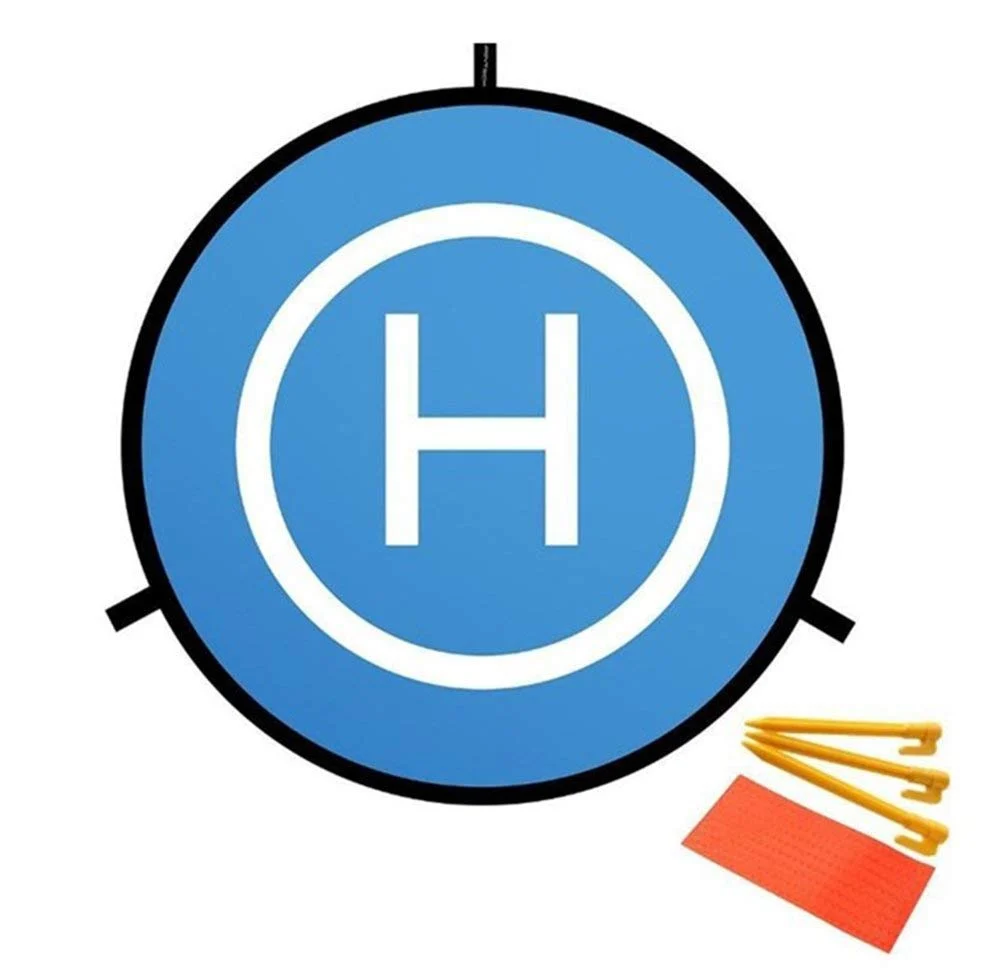
110cm Diameter Fast-fold Landing Pad / Helipad for RC Drone
A bright, fast-folding landing pad that protects your drone’s props on uneven or dusty surfaces. Equally useful for nano and full-size drones.
View on ZboticDGCA Regulations for Nano Drones in India (2026)
India’s drone regulatory framework has matured significantly. Here is what you need to know if you own or want to buy a nano drone:
- No UIN required: Nano UAS (below 250 g) are exempt from Unique Identification Number registration under Rule 12 of UAS Rules 2021.
- No RPTO certification required: You do not need a Remote Pilot Certificate to fly a nano drone.
- Green Zone flying: Nano drones may be flown in DGCA-designated Green Zones without prior permission. Check the Digital Sky app before flying.
- Yellow/Red Zones: Even nano drones require permission in Yellow Zones (near airports, military areas) and are prohibited in Red Zones.
- Night flying: Not permitted for any class without specific approval.
- Altitude limit: Maximum 400 feet (120 m) AGL for nano drones outside controlled airspace.
- BVLOS: Beyond visual line of sight is not permitted for nano drones without a specific DGCA waiver.
Always check the latest notifications on the DGCA website and the Digital Sky platform, as rules are updated periodically.
Tips for Flying Nano Drones Safely
- Start in Horizon (self-level) mode: Acro/rate mode feels intuitive to experienced FPV pilots but will crash instantly for beginners. Master self-level first.
- Use a simulator: Liftoff, Velocidrone, or FPV Freerider on PC with a cheap USB gamepad will save you hundreds of rupees in crashed props and motors.
- Always pre-arm check: Confirm props are secure, battery is fully charged, and no people are in the immediate vicinity before arming.
- Fly in rate mode only after sim practice: Freestyle tricks require acro mode — do not attempt without at least 10 hours on a simulator.
- Keep spare props: Propeller strikes are the #1 cause of flyable-but-grounded nano drones. Always carry 4–8 spares.
- Charge LiPo safely: Never charge unattended, use a LiPo bag, and never discharge below 3.5 V/cell.
- Mind the temperature: LiPo batteries lose capacity significantly below 15°C (relevant for North Indian winters). Warm them in your pocket before flying.
Frequently Asked Questions
No. Nano drones under 250 g are exempt from UIN registration and remote pilot licensing under DGCA UAS Rules 2021. However, you must still avoid Red and Yellow Zones and comply with altitude limits.
A 65mm or 75mm brushless whoop build using an AIO FC with an integrated ELRS receiver is the sweet spot. You get repair-friendly hardware, good performance, and a total build cost of ₹4,000–₹7,000. Pair it with goggles (Skyzone Cobra X or even a cheap box goggle set) to experience real FPV.
Yes — this is one of the best use cases. 65mm whoops are safe enough for hallway or living room flying. Propeller guards on whoops protect furniture and fingers. Turn off ceiling fans and close windows first.
Toy drones are fine for a child’s first exposure or for occasional novelty use. If you have any interest in actually learning to fly or progressing to FPV, invest the extra ₹2,000–₹3,000 in a brushless build. The performance gap is enormous and brushless motors last far longer.
Zbotic.in stocks a growing range of FPV components including cameras, ESCs, and power distribution boards, with domestic shipping. This avoids the 4–6 week international shipping times and GST import complications that come with ordering from AliExpress.
Any analogue 5.8 GHz goggles work with most nano FPV setups (Eachine EV800D, Fatshark Attitude, Skyzone Cobra). If you choose a drone with a digital FPV system (DJI O3, Walksnail), you need compatible digital goggles — but these systems rarely fit under the 250 g limit.
Conclusion
Nano drones in India offer an exciting entry point into the world of FPV and autonomous flight — legally, affordably, and with genuine performance if you choose the right platform. Toy-grade quads serve their purpose, but for anyone serious about the hobby, a brushless whoop build with Betaflight and ELRS is the way forward in 2026.
The DGCA’s nano-friendly regulations make this the perfect time to start. You do not need registrations, certifications, or complex airspace permissions for most flying scenarios. Just pick your components, build carefully, spend a few hours on a simulator, and take flight.
Ready to start your nano drone journey? Browse FPV components, cameras, ESCs, and accessories at Zbotic — India’s trusted source for drone building parts.
Build Your Nano Drone with Zbotic
Shop FPV cameras, ESCs, power distribution boards, and more — domestic shipping, genuine parts, no import hassles.
Shop Drone Components






Add comment