
If you are stepping into the world of FPV (First Person View) drone flying, one of the most important pieces of gear you will buy is your goggles. The immersive experience of seeing exactly what your drone sees — in real time — is what separates FPV from regular drone flying. But with so many options flooding the market in India, choosing the right pair of budget FPV goggles can be overwhelming.
In this comprehensive buying guide, we compare three of the most popular budget-to-mid-range FPV goggle brands available in India: Skyzone, BetaFPV, and Eachine. Whether you are a beginner who just bought your first whoop or an intermediate pilot upgrading from a DVR-less box goggle, this guide will help you make the right call without burning a hole in your pocket.
1. Why FPV Goggles Matter More Than You Think
Many newcomers to FPV make the mistake of spending all their budget on the drone and treating goggles as an afterthought. This is a serious error. Your goggles are your window into the flight — poor latency, bad image quality, or an uncomfortable fit will ruin the experience no matter how good your quad is.
Good FPV goggles impact:
- Latency: Lower latency means your brain gets the video signal faster, which is critical for fast-paced racing or freestyle flying.
- Image clarity: A sharper screen means you can spot obstacles, trees, and gates more easily.
- Comfort: Long flying sessions are exhausting with poorly padded or heavy goggles.
- DVR capability: Built-in DVR lets you record your flights for review or sharing on social media.
- Receiver compatibility: Your goggles must be compatible with the video transmitter (VTX) on your drone.
In India, the FPV scene is growing rapidly. Cities like Bangalore, Hyderabad, Pune, and Delhi now have active FPV communities and flying clubs. The demand for affordable, quality goggles has never been higher — and that is exactly what this guide addresses.
2. What to Look for in Budget FPV Goggles
Before diving into brand comparisons, let us establish a clear framework for evaluation. When shopping for budget FPV goggles in India, consider these key factors:
Display Type and Resolution
FPV goggles typically use either LCD or OLED displays. At the budget end, most use LCD panels. Resolution ranges from 480×272 pixels (basic) to 1280×960 pixels (excellent for budget tier). Higher resolution means crisper visuals, especially useful when flying faster speeds.
Field of View (FOV)
FOV determines how wide the virtual screen feels. Budget goggles typically offer 30°–42° FOV. Wider is generally better for immersion, but if you wear glasses, check the diopter adjustment range as well.
Video Receiver
Most analog FPV systems operate on 5.8GHz. Your goggles need a built-in receiver that covers all standard 48 channels (Raceband, Boscam, Fatshark, etc.). Some budget goggles come with a basic receiver module, while others support modular receivers for easy upgrades.
DVR (Digital Video Recording)
Built-in DVR is invaluable for reviewing flights and diagnosing crashes. Look for goggles with at least 720×480 DVR recording capability.
Battery and Power
Some goggles have internal batteries, others run on external 2S LiPo batteries. Internal batteries are convenient for beginners; external ones give flexibility for longer sessions.
Form Factor: Box vs Compact
Box goggles (like most Eachine models) have a box-shaped body with screens placed farther from your eyes, requiring no diopter lens. Compact goggles (like Skyzone) place screens close to your eyes and typically require IPD adjustment. Box goggles are generally more comfortable for glasses wearers.
3. Skyzone Goggles: Premium Feel at Mid-Range Price
Skyzone is a Chinese FPV accessory brand that has earned serious respect in the global FPV community. Their goggles are known for excellent build quality, OLED displays, and well-thought-out ergonomics — all at prices that undercut Western brands significantly.
Skyzone SKY04X Pro
The SKY04X Pro is considered by many Indian FPV pilots as the best value premium goggle under ₹30,000. Key specs include:
- Display: Dual 1280×960 OLED panels
- FOV: 46° (one of the widest in its class)
- Receiver: Steady View analog receiver (modular bay available)
- DVR: 1080p60 H.264 DVR (one of the best on any analog goggle)
- Battery: Built-in 1800mAh Li-ion + DC jack for external power
- Head tracking: Optional head tracker for fixed-wing FPV
The OLED display is where Skyzone truly shines. Compared to the LCD panels in Eachine or BetaFPV goggles, the OLED offers deeper blacks, better contrast, and superior color reproduction. For freestyle flying through trees and urban environments, this translates to better situational awareness.
Skyzone SKY02X
A step down from the 04X Pro, the SKY02X is a great entry into Skyzone’s ecosystem at a lower price. It uses an LCD display (800×480 per eye) and includes a built-in 5.8GHz 48-channel receiver with DVR. A solid choice if you are coming from a basic box goggle and want to move to a more compact form factor.
Who Should Buy Skyzone?
Skyzone goggles are best suited for intermediate to advanced FPV pilots who want the best possible image quality without paying the premium for a Fatshark or DJI goggle. If you are serious about freestyle, racing, or long-range FPV and plan to stick with the hobby for years, investing in a Skyzone makes strong financial sense.
4. BetaFPV Goggles: Best for Beginners and Tiny Whoops
BetaFPV is famous in India for their tiny whoop drones — compact, indoor-friendly micro quads that are perfect for learning FPV in a small space. Their goggles are designed with the same beginner-friendly philosophy: simple setup, affordable price, and good enough performance to get you flying FPV confidently.
BetaFPV VR01 FPV Goggles
The VR01 is BetaFPV’s most popular goggle model targeted squarely at beginners. Specs:
- Display: 4.3-inch 480×272 LCD screen (single large screen, box-style viewing)
- FOV: 42°
- Receiver: 5.8GHz 40-channel receiver built-in
- DVR: Supports microSD card DVR recording
- Battery: Built-in 1200mAh battery (~3.5 hours)
- Weight: ~220g (very lightweight)
The VR01’s biggest advantage is its simplicity. The single-screen box design means no IPD adjustment headaches, making it comfortable for beginners of all face shapes. The 42° FOV is adequate for learning, though it feels smaller compared to Skyzone’s 46°.
BetaFPV Goggles 2
The Goggles 2 is a more capable successor with a 5.8GHz 48-channel receiver, improved DVR, and a slightly larger screen. It also comes with a micro USB charging port, which is convenient given how common these chargers are in India. At around ₹8,000–10,000, it represents excellent value for someone who wants to try FPV without over-committing financially.
Who Should Buy BetaFPV?
BetaFPV goggles are ideal for absolute beginners, younger pilots, or anyone building a starter FPV kit on a tight budget. If you are buying your first whoop drone (like the BetaFPV Cetus or Meteor75), pairing it with BetaFPV’s own goggles is the path of least resistance — everything is pre-configured to work together out of the box.
5. Eachine Goggles: The Entry-Level Champion
Eachine is synonymous with budget FPV gear in India. Their products are often the first FPV hardware many Indian hobbyists ever buy, and for good reason — they offer remarkable value per rupee spent. Eachine goggles are widely available through online platforms in India.
Eachine EV800D
The EV800D is arguably the best-selling budget FPV goggle in India. It is a box goggle with a 5-inch 800×480 LCD screen and an integrated diversity receiver. Key specs:
- Display: 5-inch 800×480 LCD
- FOV: 40°
- Receiver: 5.8GHz 40-channel diversity receiver (dual antennas)
- DVR: Built-in DVR with microSD slot
- Split screen: Can display two video feeds simultaneously
- Battery: Built-in 7.4V 1200mAh (replaceable)
The EV800D’s diversity receiver is a genuine standout feature at this price point. Diversity reception means the goggle uses two antennas and automatically selects the stronger signal, reducing video breakup during flight. This is especially important in India where flying environments often include concrete buildings and metal structures that cause multipath interference.
Eachine EV300O
For those willing to spend a bit more within the Eachine ecosystem, the EV300O is a compact goggle with a proper OLED display and a built-in Steadyview receiver. At around ₹18,000–22,000, it bridges the gap between entry-level and mid-range, offering image quality close to Skyzone’s SKY02X.
Eachine EV100
The EV100 is a compact goggle (not box-style) at around ₹6,000–8,000. It features a 3-inch 854×480 display per eye, 5.8GHz 40-channel receiver, and head tracking support. It is significantly smaller and lighter than box goggles, making it more portable — a genuine advantage for Indian pilots who commute to flying spots.
Who Should Buy Eachine?
Eachine is for the budget-conscious pilot who wants to get into FPV with the lowest possible financial risk. If you are not yet sure whether FPV is the right hobby for you, an Eachine EV800D is the safest entry point. The build quality is not as refined as Skyzone, but the core function — delivering a usable FPV video feed — is well-executed.
6. Head-to-Head Comparison Table
| Feature | Skyzone SKY04X Pro | BetaFPV VR01 | Eachine EV800D |
|---|---|---|---|
| Display Type | Dual OLED | LCD (single) | LCD (single) |
| Resolution | 1280×960 | 480×272 | 800×480 |
| FOV | 46° | 42° | 40° |
| Receiver | Steadyview + modular | 40ch built-in | 40ch diversity |
| DVR | 1080p60 | Yes (microSD) | Yes (microSD) |
| Form Factor | Compact | Box | Box |
| Approx. Price (India) | ₹25,000–32,000 | ₹6,000–9,000 | ₹7,000–10,000 |
| Best For | Intermediate/Advanced | Beginners/Whoops | Beginners/Budget |
7. India-Specific Considerations
Buying FPV goggles in India comes with some unique challenges that are not discussed in most Western reviews:
Import Duties and GST
Most premium FPV goggles are imported. Factor in 18% GST plus any applicable customs duty when calculating the actual cost. Ordering from international sellers may seem cheaper upfront but can result in customs delays and unexpected charges at Indian ports. Buying from an Indian retailer like Zbotic ensures you pay a transparent, GST-inclusive price with no customs surprises.
After-Sales Support
If your goggles develop a display issue or the receiver module fails, getting warranty support from overseas is a painful process. Indian retailers who stock these products can often facilitate returns, exchanges, or help you source replacement parts faster.
Power Supply Compatibility
Indian power outlets are 230V/50Hz. Most FPV goggle chargers support 100-240V, so this is rarely a problem. However, always verify before plugging in to avoid damage.
Summer Heat
Indian summers can push ambient temperatures above 40°C in many regions. OLED displays in Skyzone goggles can get warm during extended use. While not a safety issue, it is worth noting if you fly in Rajasthan, Gujarat, or other hot-climate states.
5.8GHz Interference
India’s 5.8GHz spectrum is crowded with Wi-Fi routers, especially in urban areas. Always fly in open areas away from apartment complexes for the best video signal quality. Consider upgrading to a higher-gain antenna (like a pagoda or cloverleaf) for better penetration.
8. Recommended Products from Zbotic
While you choose your goggles, make sure your FPV drone has the right ESC and components to complete the build. Here are some top picks from Zbotic:

35A V2.1 2-5S 4-in-1 Brushless ESC for RC Drone FPV Racing
A compact 4-in-1 ESC perfect for FPV racing builds. Supports 2S–5S LiPo and handles 35A continuous current per motor — ideal for freestyle and racing quads.

1/3″ CMOS 700TVL Mini FPV Camera 2.1mm Lens PAL / NTSC
A reliable mini FPV camera compatible with standard analog video systems. Supports both PAL and NTSC output, fits in most mini quad camera mounts.
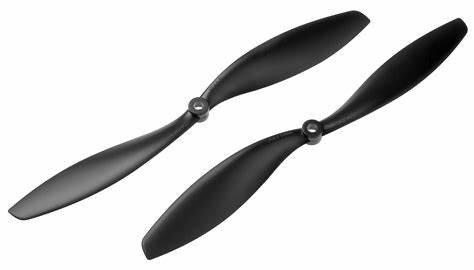
1045 2 Blades Carbon Fiber Propeller CW&CCW
Lightweight and stiff carbon fiber propellers perfect for 10-inch class freestyle and racing builds. Sold as a matched CW/CCW pair for balanced flight.
9. Frequently Asked Questions
Can I use FPV goggles with a DJI drone in India?
Standard analog FPV goggles (Skyzone, BetaFPV, Eachine) are NOT compatible with DJI’s digital FPV system (DJI O3/O4 Air Unit) unless you specifically buy DJI FPV goggles. DJI consumer drones like the Mini 4 Pro use their own proprietary video link and are controlled via the DJI RC, not through FPV goggles. Standard FPV goggles are used with custom-built drones using analog or digital FPV systems.
Do I need a license to fly FPV in India?
Yes. Under DGCA regulations, all drones above 250g require registration on the Digital Sky portal. FPV flying (where the pilot relies on the video feed rather than visual line of sight) is technically classified as BVLOS (Beyond Visual Line of Sight) in many interpretations, which requires special clearances. Flying micro-category drones (under 250g) in green zones is permitted without prior permission but registration is still required. Always check the latest DGCA notifications and use the Digital Sky mobile app to verify your flying zone status.
Can I wear glasses with FPV goggles?
Box-style goggles (Eachine EV800D, BetaFPV VR01) are generally more glasses-friendly as the screens are farther from your eyes. Compact goggles require adjusting the IPD (interpupillary distance) and diopter settings. Most compact goggles (including Skyzone) support diopter inserts that correct for common prescriptions — these are sold separately. If you have a strong prescription (above ±6 diopter), box goggles are usually more comfortable.
What is the difference between analog and digital FPV?
Analog FPV uses traditional composite video signal transmitted over 5.8GHz. It has very low latency (under 10ms) but lower image quality with characteristic grain and color bleeding. Digital FPV systems (DJI, Walksnail, HDZero) transmit a digital video stream with much higher resolution but slightly higher latency (10–40ms). For beginners and racers, analog remains popular due to its lower cost and simplicity. The goggles compared in this article are all analog-compatible.
How far can I fly with FPV goggles?
Legal range is limited by DGCA regulations (drones must generally stay within visual line of sight unless special permission is obtained). Technically, a 25–200mW VTX with a good receiver like the Steadyview can deliver clean video at 500m–1km line-of-sight range. Using a high-gain directional antenna (like a Yagi or patch antenna) on the goggle can extend range further, but always fly within legal limits.
What is diversity reception and why does it matter?
A diversity receiver uses two antennas (typically one omnidirectional and one directional) and automatically selects the antenna receiving the stronger signal on a frame-by-frame basis. This dramatically reduces video breakup when flying around obstacles or at range. In dense urban areas common across India, diversity reception makes a real practical difference to flight quality.
10. Final Verdict
Choosing the right budget FPV goggles in India ultimately comes down to where you are in your FPV journey and what you want to achieve:
- Just starting out, under ₹10,000 budget: Eachine EV800D or BetaFPV VR01. Both offer reliable analog video reception with DVR at a price that will not hurt if you decide FPV is not for you.
- Committed beginner, ₹10,000–18,000 budget: Look at the Eachine EV300O or BetaFPV Goggles 2. Better image quality, more channels, improved ergonomics.
- Serious pilot, ₹20,000+ budget: Skyzone SKY04X Pro is the clear winner. The OLED display, 1080p DVR, and Steadyview receiver provide a premium experience that will grow with your skills.
No matter which brand you choose, pair your goggles with quality drone components from Zbotic for the complete FPV experience. India’s FPV community is vibrant and growing — jump in, fly safe, and enjoy the incredible experience of first-person flight.
Ready to Build Your FPV Setup?
Zbotic stocks a wide range of drone components, ESCs, cameras, and FPV accessories for Indian hobbyists and professionals. Fast shipping across India with GST invoices.

Add comment