
Choosing the correct LiPo battery voltage is one of the most important decisions when building any RC vehicle, drone, or DIY electronics project. A wrong voltage choice can damage your ESC, motor, or microcontroller in seconds. This LiPo battery voltage selection guide explains the differences between 3.7V (1S), 7.4V (2S), and 11.1V (3S) packs, and helps you pick the right one for your specific application.
Understanding LiPo Cell Voltage
LiPo (Lithium Polymer) batteries are made up of individual cells, each with a nominal voltage of 3.7V. When fully charged, a single cell reaches 4.2V, and the safe discharge cutoff is around 3.0V–3.3V. The “S” number in LiPo terminology tells you how many cells are connected in series:
- 1S = 1 cell = 3.7V nominal (4.2V fully charged)
- 2S = 2 cells = 7.4V nominal (8.4V fully charged)
- 3S = 3 cells = 11.1V nominal (12.6V fully charged)
- 4S = 4 cells = 14.8V nominal (16.8V fully charged)
The capacity (measured in mAh) stays the same regardless of the series count — it is the voltage that multiplies. Understanding this is the foundation of any LiPo battery voltage selection guide.
3.7V (1S) LiPo – When to Use It
The 1S LiPo is the simplest and safest option for beginners. At 3.7V nominal, it is compatible with most low-power microcontrollers, small brushed motors, and wearable electronics. It is the standard battery in small RC toys, micro FPV drones (like the popular Tiny Whoop class), and IoT sensor nodes.
Ideal Use Cases for 1S LiPo:
- Micro brushed RC cars and indoor drones (65mm–85mm frame)
- Arduino/ESP32 portable projects needing 3.3V–5V after a boost converter
- Wireless sensor nodes and wearables
- Small flashlights, FM transmitters, and handheld gadgets
The main limitation is low energy capacity. Most 1S packs range from 100mAh to 1000mAh, giving short run times for power-hungry loads. You will also need either a small boost converter (to reach 5V) or a TP4056-based charging circuit for reliable use.
7.4V (2S) LiPo – The Sweet Spot
The 2S LiPo at 7.4V is arguably the most versatile voltage for Indian hobbyists. It provides enough voltage to run 7.4V brushless motors efficiently, powers most mid-range ESCs, and delivers better performance than 1S without the heat and complexity of 3S systems.
Ideal Use Cases for 2S LiPo:
- Mini-quad FPV drones (100mm–150mm frames)
- RC boats and buggies (1/18 to 1/14 scale)
- Brushless motor projects with 2204–2205 motors
- DIY power banks and medium-draw robotics
- LED lighting rigs requiring stable 7–8V supply
In India, 2S LiPo packs with XT30 or JST connectors are widely available. Capacity typically ranges from 300mAh (micro quads) to 5000mAh (RC cars). For most school and college robotics projects that need more punch than a 1S, a 2S pack with a 15C–25C rating is a great starting point.
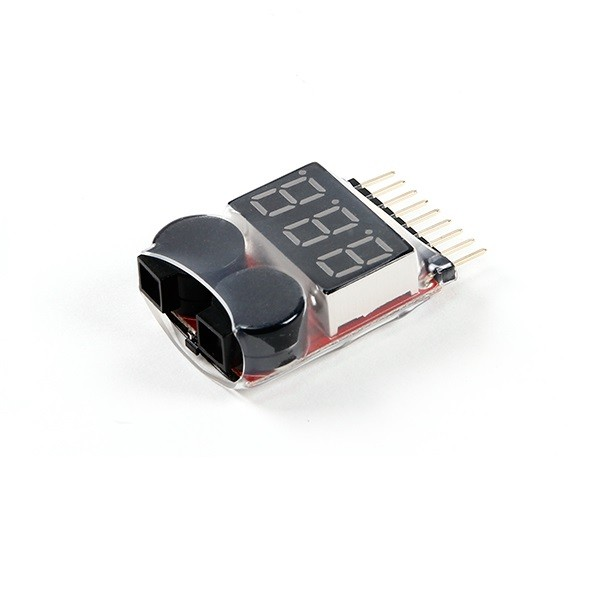
1-8S LiPo Battery Voltage Tester (Without Alarm)
Check per-cell voltage on any 1S–8S LiPo pack instantly. Essential tool before every flight or run to avoid over-discharge and cell damage.
11.1V (3S) LiPo – High Performance
The 3S LiPo at 11.1V is the go-to choice for performance-oriented builds. Larger brushless motors (2306, 2207, and above), high-speed RC cars, and aerial photography drones typically run on 3S or higher. The increased voltage means higher RPM from the same motor, delivering significantly more thrust or torque.
Ideal Use Cases for 3S LiPo:
- 5-inch FPV racing and freestyle drones
- RC cars in the 1/10 scale category
- Brushless motors in the 2206–2306 range
- DIY electric scooters and e-bike auxiliary packs
- High-powered servo and actuator systems
However, 3S packs demand more respect. All components — ESC, motor, capacitors — must be rated for at least 12.6V peak. The weight is also higher. For a beginner, jumping straight to 3S without understanding your ESC’s voltage limits is a common and expensive mistake.
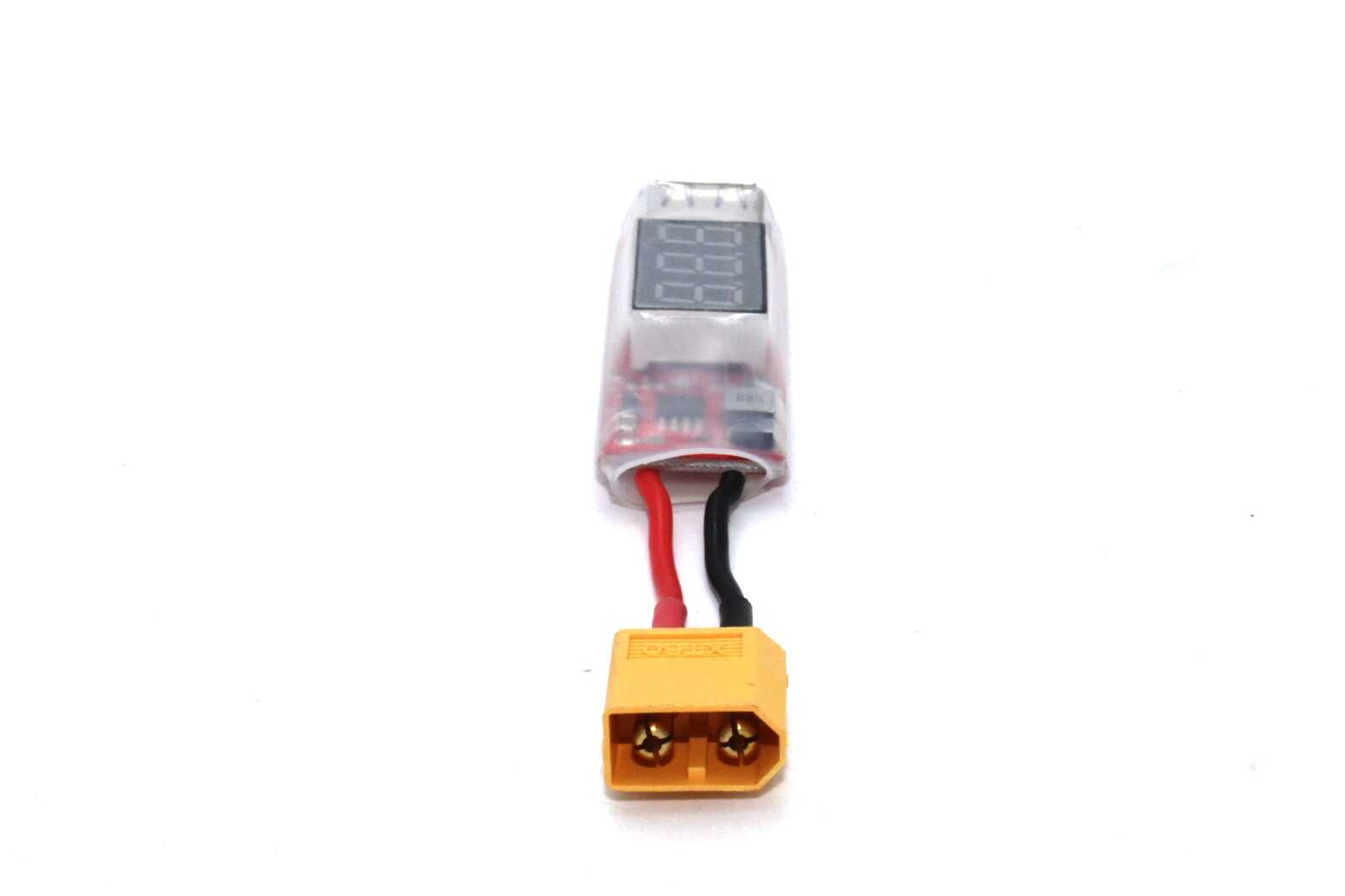
2S-6S LiPo XT60 to USB Adapter with Voltage Display
Power your phone or USB devices directly from your 2S–6S LiPo pack in the field. Displays real-time battery voltage so you never over-discharge.
Voltage Selection by Application
Here is a quick reference table for matching LiPo voltage to common Indian hobby and DIY applications:
| Application | Recommended Voltage | Typical Capacity |
|---|---|---|
| Micro FPV / Tiny Whoop | 1S (3.7V) | 150–450mAh |
| Arduino/ESP32 portable | 1S (3.7V) | 500–2000mAh |
| Mini-quad (100–150mm) | 2S (7.4V) | 300–650mAh |
| RC Car (1/18–1/14 scale) | 2S (7.4V) | 1000–2200mAh |
| 5-inch FPV Racing Drone | 3S or 4S | 1300–1800mAh |
| RC Car (1/10 scale) | 3S (11.1V) | 3000–5000mAh |
| DIY Robotics (medium) | 2S–3S | 2000–4000mAh |
C-Rating and Capacity Explained
Voltage is only half the equation. The C-rating of a LiPo pack determines how much current it can safely deliver. A 1000mAh pack rated at 25C can supply a maximum of 25,000mA (25A) continuously. For most hobby applications, a 25C–50C rating is sufficient.
Key formula: Max Current (A) = Capacity (Ah) × C-Rating
For example, a 1500mAh 30C pack: 1.5Ah × 30 = 45A maximum continuous discharge. Exceeding this rating causes cell damage, dangerous swelling (puffing), and in extreme cases, fire. Always check your ESC or motor’s peak current draw against your LiPo’s C-rating before plugging in.
In India, temperatures can get quite high, especially in summer. High ambient temperatures reduce effective C-rating and cause cells to swell faster. Store your LiPo packs in a cool, dry place — never in a car parked in the sun.
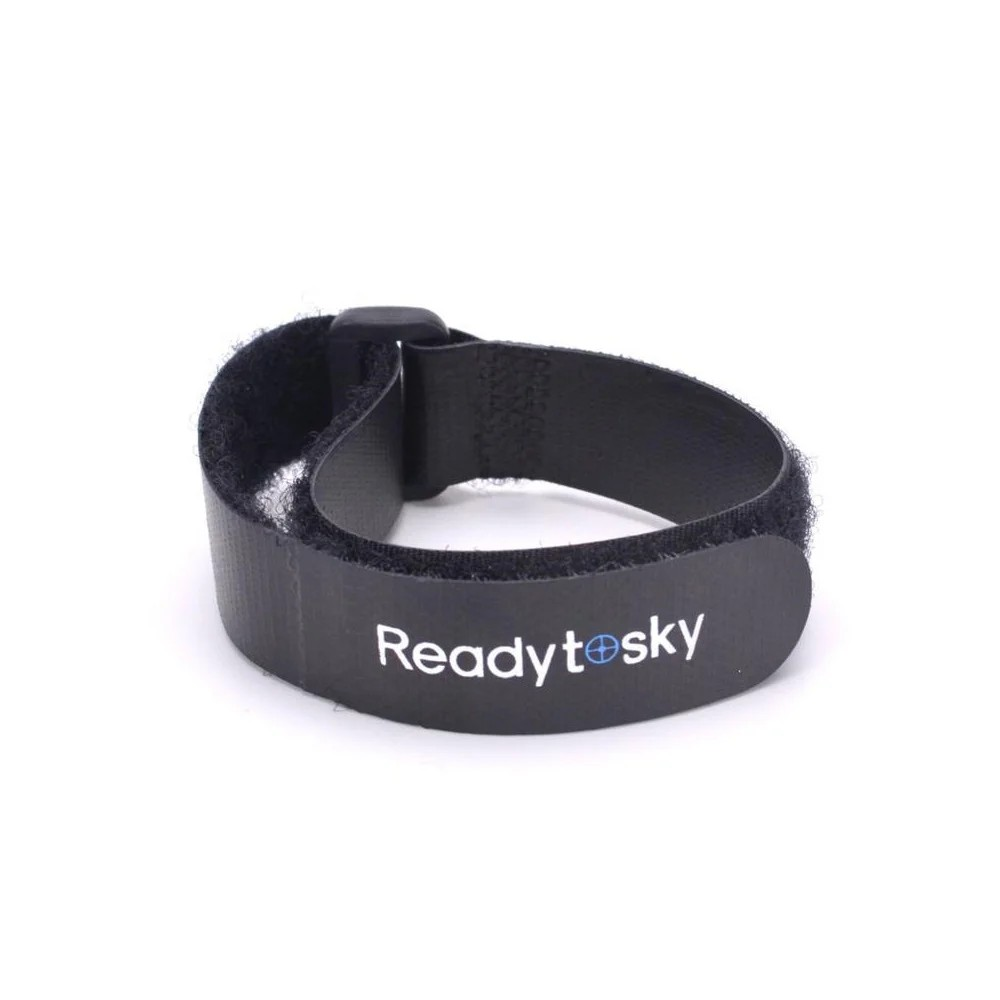
25cm LiPo Battery Strap Belt – Reusable Cable Tie Wrap
Secure LiPo packs firmly to drone frames or RC car chassis with these durable, reusable straps. Prevents pack movement that causes connector stress and shorts.
LiPo Safety Tips for Indian Hobbyists
LiPo batteries offer excellent energy density, but they demand careful handling. Here are essential safety rules every Indian maker should follow:
- Never over-discharge: Cut off at 3.5V per cell (use a voltage alarm or ESC low-voltage cutoff). Dropping below 3.0V permanently damages cells.
- Use a proper balance charger: Never charge with a simple 5V USB charger. Use a dedicated LiPo charger like the ISDT range that balances individual cells.
- Charge at 1C: For a 1500mAh pack, charge at 1.5A max for longevity. Most packs support 2C–5C fast charging, but this reduces lifespan.
- Store at storage voltage (3.85V/cell): If you are not using the pack for more than a week, charge it to storage voltage. Most good chargers have a storage charge mode.
- Never leave unattended while charging: Charge in a fireproof LiPo bag or metal container. LiPo fires are extremely fast and hot.
- Inspect before every use: Any puffed, punctured, or deformed pack should be safely discharged and disposed of — never fly or run it.
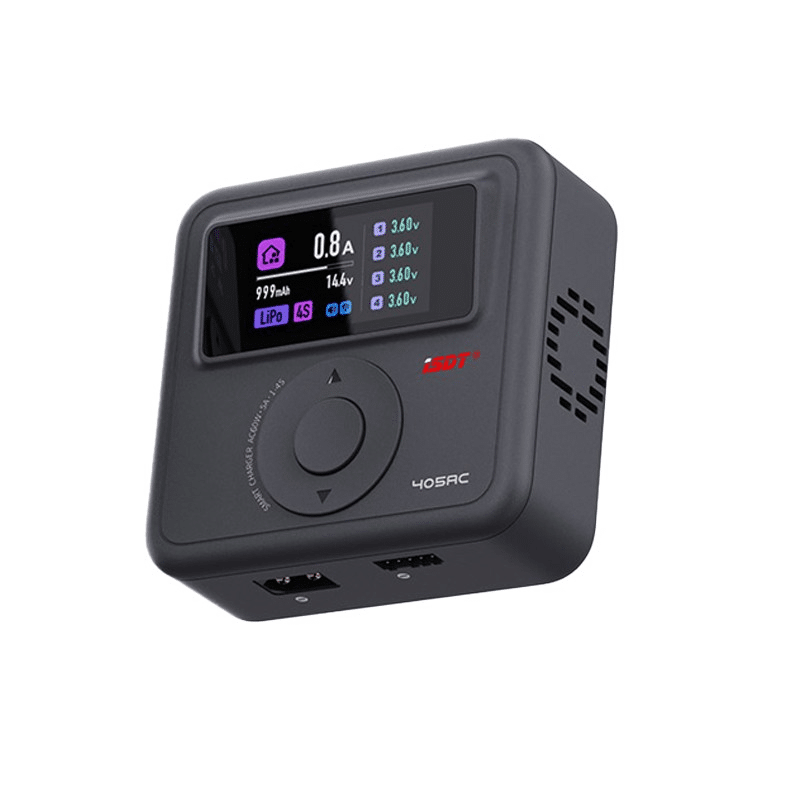
ISDT 405AC 60W AC GaN Smart Charger – 1–4S LiPo/LiHv/LiFe
Compact GaN-powered smart charger with 0.1–5A adjustable current, supports LiPo, LiHv and LiFe chemistries. Plug directly into AC mains — no power supply needed.
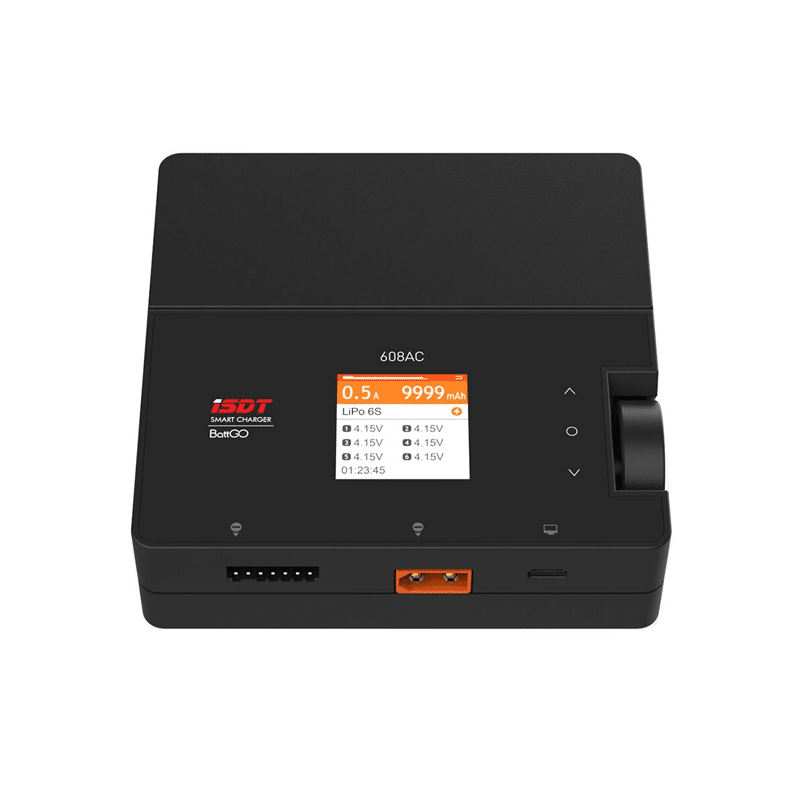
ISDT 608AC LiPo Charger – AC 50W / DC 200W Dual Mode
Professional dual-mode RC charger/discharger. Use on AC mains at home or from DC source in the field. Handles 1–6S LiPo packs with full balance charging.
Recommended Products from Zbotic
Zbotic stocks a curated range of LiPo accessories, chargers, and test equipment for Indian makers and RC hobbyists. The products listed in this guide are all available with fast shipping across India.
Frequently Asked Questions
Can I use a 3S LiPo on a 2S ESC?
No — this is a dangerous mistake. A 3S pack at 12.6V fully charged will instantly burn out an ESC rated for 2S (8.4V maximum). Always verify your ESC’s voltage rating in the product specification before connecting any battery.
What does “balance charging” mean and why is it important?
Balance charging means the charger monitors and charges each individual cell to the same voltage (4.2V). Without balance charging, one cell may be overcharged while another remains undercharged, causing poor performance, swelling, and safety hazards.
How long does a LiPo battery last in Indian summer conditions?
A well-maintained LiPo pack typically lasts 200–400 charge cycles. In India’s hot summers, always store packs indoors at storage voltage (3.85V/cell) and avoid charging immediately after use when the pack is still hot from the previous run.
Is it safe to take LiPo batteries on domestic flights in India?
DGCA regulations restrict LiPo batteries to carry-on luggage only — they cannot go in checked baggage. Packs above 100Wh require airline approval. Calculate Wh = Voltage × Capacity(Ah). A 3S 1800mAh pack = 11.1V × 1.8Ah ≈ 20Wh — well within limits.
What is the difference between LiPo and LiHv batteries?
LiHv (High Voltage) LiPo cells charge to 4.35V per cell instead of the standard 4.2V, giving roughly 4% more capacity in the same size. They require a charger that supports LiHv mode. Popular in micro FPV quads where every milliamp-hour counts.
Browse Zbotic’s full range of LiPo chargers, voltage testers, and battery accessories — all tested for quality and available with fast shipping across India.






Add comment