
A rain gauge tipping bucket Arduino setup lets you accurately measure rainfall in your garden, rooftop farm, or weather station. The tipping bucket mechanism is the gold standard in meteorological measurement — every time a measured volume of rain tips the balanced bucket, it generates a digital pulse that your Arduino can count. This tutorial walks you through everything from understanding the mechanism to logging real-time rainfall data on your computer or SD card.
How a Tipping Bucket Rain Gauge Works
The tipping bucket rain gauge is elegantly simple. A funnel collects rainwater and directs it into a small, see-saw balanced container divided into two compartments. When one compartment fills to a precisely calibrated volume (commonly 0.2 mm, 0.5 mm, or 1 mm of rainfall), the container tips, emptying that compartment and placing the other under the funnel. Each tip triggers a reed switch or Hall-effect sensor, producing a brief electrical pulse.
By counting pulses over time, you can calculate:
- Total rainfall (mm) = pulse count × calibration factor
- Rainfall rate (mm/hour) = pulses per minute × calibration factor × 60
Most hobbyist tipping bucket modules available online are calibrated at 0.2794 mm or 0.5 mm per tip. Always check your module’s datasheet or label for the specific calibration value — this is the single most important number for accuracy.
Components Required
- Tipping bucket rain gauge module (with reed switch output)
- Arduino Uno, Nano, or compatible board
- 10 kΩ resistor (pull-up for reed switch)
- Jumper wires
- Optional: RTC module (DS3231) for timestamped logging
- Optional: microSD card module for standalone logging
- Optional: DHT11 or BME280 for combined weather station
Most commercial rain gauge modules come with a 2-wire cable terminated in a 3.5 mm audio jack or bare wire leads. The output is a simple normally-open contact that closes briefly on each tip — identical to a pushbutton from the Arduino’s perspective.
Wiring the Rain Gauge to Arduino
Connect the rain gauge output to a digital interrupt-capable pin on the Arduino:
| Rain Gauge Wire | Arduino Pin | Notes |
|---|---|---|
| Signal (one end) | D2 (INT0) | Hardware interrupt pin |
| Return (other end) | GND | Common ground |
Add a 10 kΩ pull-up resistor between D2 and the 5V rail, or simply enable the Arduino’s internal pull-up in software with pinMode(2, INPUT_PULLUP). The reed switch contact shorts D2 to GND on each tip, creating a falling-edge pulse.
On Arduino Uno and Nano, pins 2 and 3 support hardware interrupts. Using an interrupt-based approach is far superior to polling — it ensures no tip is ever missed, even if the main loop is busy with other tasks like display updates or serial communication.
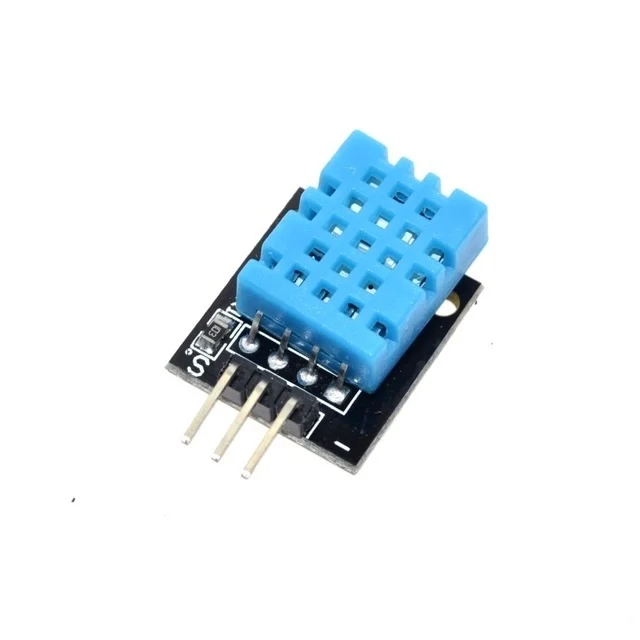
DHT11 Digital Relative Humidity and Temperature Sensor Module
Add temperature and humidity readings to your rain gauge station with the DHT11. Together they give you a multi-parameter outdoor weather monitor on a single Arduino.
Interrupt-Based Pulse Counting Code
Hardware interrupts are the correct way to count rain gauge tips. Here is a complete sketch:
const int RAIN_PIN = 2;          // Interrupt pin
const float MM_PER_TIP = 0.2794; // Calibration: mm of rain per bucket tip

volatile unsigned long tipCount = 0;
unsigned long lastTipTime = 0;

void IRAM_ATTR countTip() {
  // Basic debounce: ignore pulses within 100ms
  if (millis() - lastTipTime > 100) {
    tipCount++;
    lastTipTime = millis();
  }
}

void setup() {
  Serial.begin(9600);
  pinMode(RAIN_PIN, INPUT_PULLUP);
  attachInterrupt(digitalPinToInterrupt(RAIN_PIN), countTip, FALLING);
  Serial.println("Rain gauge ready. Waiting for rain...");
}

void loop() {
  noInterrupts();
  unsigned long tips = tipCount;
  interrupts();

  float rainfall_mm = tips * MM_PER_TIP;

  Serial.print("Tips: "); Serial.print(tips);
  Serial.print(" | Rainfall: "); Serial.print(rainfall_mm);
  Serial.println(" mm");

  delay(5000); // Print every 5 seconds
}
The volatile keyword on tipCount is essential — it tells the compiler not to optimise away reads of this variable since it can change inside an interrupt service routine (ISR). The noInterrupts() / interrupts() pair around the read ensures atomic access to the 32-bit counter on 8-bit AVR chips.
Calculating Rainfall in mm
The calibration factor (mm per tip) depends on the funnel diameter and bucket volume of your specific gauge. Common values:
- 0.2794 mm/tip — standard for many Chinese-market modules
- 0.5 mm/tip — common for weather station kits
- 1.0 mm/tip — some larger professional gauges
To verify your calibration, pour a known volume of water through the funnel and count the tips. For example, if your funnel has a 140 mm diameter, the area is π × 70² ≈ 15,394 mm². One mm of rain over this area equals 15,394 mm³ = 15.4 mL of water. Pour 15.4 mL and count tips — if you get approximately one tip, your calibration factor is correct at 1 mm/tip. Adjust accordingly.
For hourly rainfall rate, calculate tips accumulated in the past 60 minutes rather than total count since boot. Reset a per-hour counter at the top of each new minute block using a millis()-based timer.
Logging Rainfall Data to Serial or SD Card
For standalone operation without a PC, add a microSD card module and DS3231 real-time clock. The SD library is built into Arduino IDE. Here is the logging pattern:
#include <SD.h>
#include <SPI.h>
// ... rain gauge variables from above

File logFile;
const int CS_PIN = 10;

void logData(float rainfall) {
  logFile = SD.open("rain_log.csv", FILE_WRITE);
  if (logFile) {
    // Prepend RTC timestamp in real project
    logFile.print(millis() / 1000);
    logFile.print(",");
    logFile.println(rainfall);
    logFile.close();
  }
}

void setup() {
  SD.begin(CS_PIN);
  // Write CSV header
  logFile = SD.open("rain_log.csv", FILE_WRITE);
  logFile.println("seconds_since_boot,rainfall_mm");
  logFile.close();
  // ... rest of rain gauge setup
}
The resulting CSV file can be opened in Excel or Google Sheets to chart daily, weekly, or monthly rainfall patterns. Add a DS3231 RTC module for proper date/time timestamps.
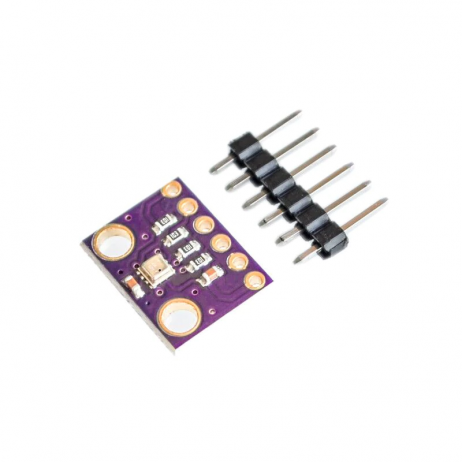
GY-BME280-3.3 Precision Altimeter Atmospheric Pressure Sensor Module
Expand your rain gauge station with the BME280 to also capture temperature, humidity, and barometric pressure. Falling pressure often predicts incoming rain — perfect for a self-forecasting station.
Combining with Temperature and Humidity Sensors
A rain gauge alone gives rainfall totals, but pairing it with temperature and humidity sensors transforms your setup into a fully capable weather station. Consider this sensor combination:
- Rain gauge — precipitation in mm
- BME280 — temperature, humidity, barometric pressure (rain prediction)
- Anemometer — wind speed during storms
- DS18B20 — outdoor soil or water temperature
All of these can run simultaneously on an Arduino Mega (more digital pins and interrupts) or an ESP32 (Wi-Fi for cloud logging). Assign different interrupt pins for the rain gauge and anemometer pulse outputs. Use I2C for the BME280 and 1-Wire for DS18B20.
Outdoor Installation Tips
Proper physical installation determines measurement accuracy more than any code tweak:
- Level mounting: The bucket must be perfectly level. Even a 2° tilt causes the bucket to favour one side, leading to systematic under or over-counting.
- Unobstructed location: Mount at least 2× the height of any nearby obstacle away from that obstacle. A tree or wall creates wind shadows that reduce catch efficiency.
- Anti-bird measures: Birds love to sit on rain gauges. Add a ring of thin spikes around the funnel rim to discourage perching without affecting rain collection.
- Regular cleaning: Leaf debris, spider webs, and dust accumulate inside the funnel and bucket. Clean monthly or before rainy season.
- Cable sealing: Use self-amalgamating tape or a cable gland to prevent water ingress along the cable entering your enclosure.
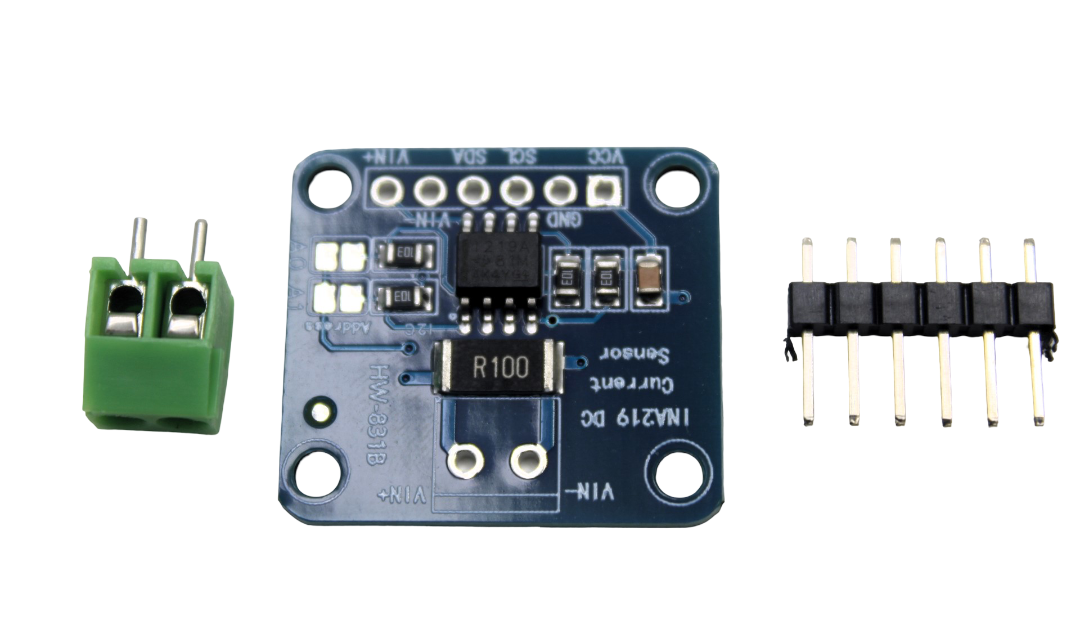
DS18B20 Temperature Sensor Module
The DS18B20 is a waterproof 1-Wire temperature sensor ideal for outdoor use alongside your rain gauge. Multiple sensors can share a single Arduino pin using the 1-Wire bus.
Frequently Asked Questions
- How accurate is a tipping bucket rain gauge?
- Well-maintained tipping bucket gauges achieve ±2–5% accuracy under normal conditions. Accuracy degrades during very heavy rain (>50 mm/hour) because the bucket takes a finite time to tip, missing some water during the tip event.
- Can I use any Arduino pin for the rain gauge?
- You can use polling on any digital pin, but you risk missing tips during long blocking operations. Always prefer hardware interrupt pins (D2 and D3 on Uno/Nano) for reliable counting.
- How do I reset the rainfall counter daily?
- Add an RTC module and in your loop, check if the current hour is 00:00. When midnight passes, save the daily total to EEPROM or SD card, then reset
tipCount = 0. - My gauge counts tips without rain — what is wrong?
- Reed switches can bounce, producing multiple pulses per tip. Add a 100 ms debounce in your ISR (as shown in the code above). Mechanical vibration from wind can also trigger the switch — mount securely on a vibration-dampened post.
- Can I use this with an ESP8266 or ESP32?
- Yes. Both ESP8266 and ESP32 support hardware interrupts on most GPIO pins. Use
IRAM_ATTRdecorator for your ISR on ESP32 to ensure it runs from IRAM, not flash cache.
Start Measuring Rainfall Today
Get all the sensors and modules you need for your rain gauge weather station from Zbotic — India’s trusted source for Arduino components. Fast delivery across India, genuine parts, and expert support.






Add comment