
If you’ve been building drones for more than a few years, you’ve likely encountered both OpenPilot and ArduCopter. Both are open-source flight controller firmware stacks that once competed head-to-head for the drone builder community’s attention. Today, one is effectively legacy software while the other dominates the autonomous drone world. This guide provides an honest, technical comparison — covering their history, architecture, features, hardware support, and importantly, which one you should use for your Indian drone build in 2025.
History and Background
The drone firmware landscape has changed dramatically over the past 15 years. Understanding where OpenPilot and ArduCopter came from helps explain where they are today.
The early 2010s saw an explosion of open-source drone projects as the DIY drone community grew around platforms like DIYDrones.com (founded by Chris Anderson). Multiple competing firmware projects emerged, each with different philosophies about architecture, ease of use, and target applications.
Two projects stood out: OpenPilot, born from a community-first development model, and ArduCopter (part of the broader ArduPilot project), which benefited from DARPA research involvement and professional engineering contributions. By 2016, the drone firmware war was largely decided — but understanding why requires examining both projects in detail.
OpenPilot and Its Successors
The OpenPilot Project (2010–2015)
OpenPilot was founded in 2010 as a purely community-driven open-source project. Its flagship hardware was the CopterControl and later the CC3D (CopterControl 3D) — a 36×36mm flight controller that was remarkable for its time and became a staple of the early FPV community.
OpenPilot’s key innovations:
- GCS-based configuration: A powerful, visual Ground Control Station called OpenPilot GCS that made PID tuning accessible without diving into parameter lists
- UAVObjects: A unified data abstraction layer that made firmware portable across hardware platforms
- CC3D hardware: One of the first mass-market affordable flight controllers, widely adopted by FPV builders
- Auto-tune: An early implementation of automated PID tuning
The Fork: LibrePilot (2015–present)
In 2015, internal conflicts led to the OpenPilot community forking the project into LibrePilot. The original OpenPilot project effectively shut down, and LibrePilot became the continuation. LibrePilot has received sporadic updates since — the last significant release was 16.09 in 2016, with minor maintenance since. It is widely considered legacy/unmaintained software today.
The Fork: Tau Labs / dRonin
Another fork from the OpenPilot codebase produced Tau Labs and subsequently dRonin. dRonin was innovative — particularly its autotune system and support for game controller input — but development slowed significantly after 2018. It remains a niche option used by some racing communities.
The Commercial Fork: Cleanflight/Betaflight
Arguably the most successful descendant of the OpenPilot lineage is indirectly through Cleanflight and its fork Betaflight. While technically not a direct OpenPilot fork (Betaflight descends from the Cleanflight/MultiWii lineage), the influence of OpenPilot’s community-driven development model permeates the FPV firmware world. Betaflight is now the dominant FPV racing firmware — but this is a separate story from the OpenPilot-to-ArduCopter comparison.
ArduCopter and the ArduPilot Ecosystem
Origins
ArduPilot began as an Arduino-based autopilot project for fixed-wing aircraft. ArduCopter was added as the multirotor extension. The project gained enormous momentum in 2012–2013 when 3D Robotics (3DR) commercially supported development and produced the APM (ArduPilot Mega) and later the Pixhawk flight controllers in partnership with ETH Zurich’s PX4 project.
The ArduPilot Foundation
Today, ArduPilot is managed by the non-profit ArduPilot Development Team, with active contributions from companies like mRo, Hex, CubePilot, Ardupilot.org, Intel, and numerous individual developers. It supports not just copters but planes (ArduPlane), rovers (ArduRover), submarines (ArduSub), VTOL aircraft, and more — a unified autopilot ecosystem.
Scale of Development
ArduCopter receives hundreds of commits per month from dozens of active developers. Contrast this with LibrePilot’s essentially frozen codebase. The difference in active development is not a matter of preference — it’s a matter of fact.
Architecture Comparison
| Feature | OpenPilot/LibrePilot | ArduCopter |
|---|---|---|
| RTOS | FreeRTOS | ChibiOS / FreeRTOS (board-dependent) |
| Config abstraction | UAVObjects (unified) | Parameter system (key-value) |
| Communication protocol | UAVTalk (proprietary) | MAVLink (open standard) |
| Hardware abstraction | Module-based | AP_HAL (Hardware Abstraction Layer) |
| Simulation support | Basic HIL | SITL (Software In The Loop) — excellent |
| VTOL support | Limited | Excellent (QuadPlane, Tiltrotor, etc.) |
The UAVTalk vs MAVLink difference is particularly significant. MAVLink is an open standard used by virtually every major drone platform, GCS, and companion computer library (DroneKit, MAVSDK, ROS, etc.). UAVTalk is proprietary to the OpenPilot family — meaning none of the vast MAVLink ecosystem works with it out of the box.
Supported Hardware
OpenPilot / LibrePilot Hardware
LibrePilot officially supports only the original OpenPilot hardware lineup:
- CC3D (CopterControl 3D) — the classic, now 10+ years old design
- Revolution (Revo) — more capable, STM32F4-based
- Sparky2 — compact Revolution-class board
- OPLink modem — the proprietary telemetry solution
None of these boards have received new production runs in years. Finding genuine CC3D or Revo boards in India in 2025 is difficult; clones exist but quality is variable. The hardware is effectively end-of-life.
ArduCopter Hardware
ArduCopter runs on the AP_HAL abstraction layer, supporting a huge range of hardware:
- Pixhawk family: Pixhawk 1, 2 (Cube), 3 Pro, 4 Mini, 6C, 6X
- CubePilot: Cube Orange, Cube Orange+, Cube Black
- Matek: H743-Wing, H743-Slim, F765-Wing
- Holybro: Pixhawk 4, 5X, 6X
- mRo: mRo Pixhawk, Control Zero
- SpeedyBee: F405 Wing, F765 Wing
- And dozens more — most of these are available in India through importers and sometimes directly.
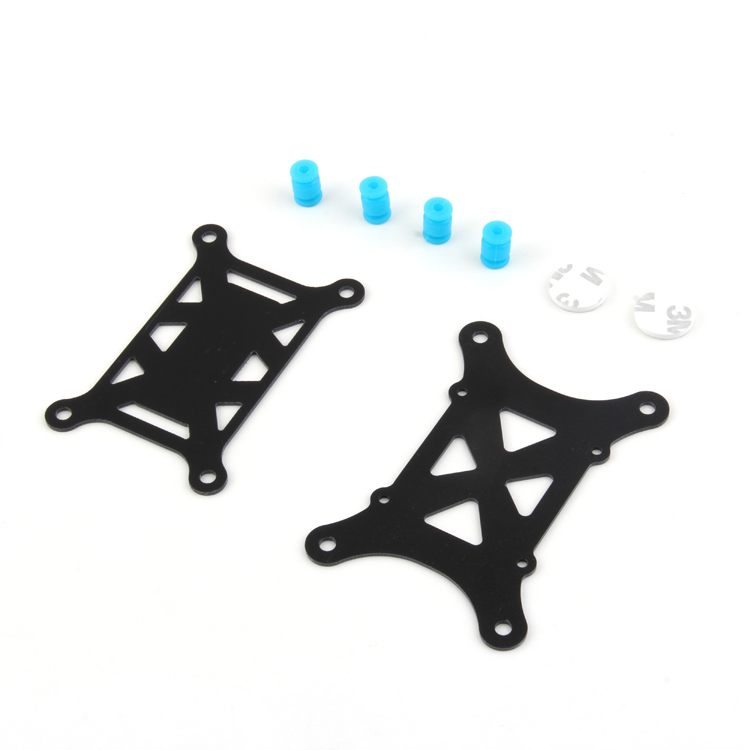
Anti-Vibration Shock Absorber for APM/KK/MWC/PixHawk
A vibration isolation mount for Pixhawk and APM flight controllers — essential for clean IMU readings and good ArduCopter performance on any drone build.
Flight Modes and Features
OpenPilot / LibrePilot Flight Modes
- Manual, Stabilized (Rate/Attitude), VirtualBar (for helicopters)
- Position Hold (with GPS) — basic
- Return to Base (basic GPS RTH)
- Pathplanner (basic waypoint missions)
ArduCopter Flight Modes (partial list)
- Stabilize, Acro, AltHold, Loiter
- Auto (full autonomous missions), GUIDED, RTL
- Circle, Drift, Sport, Land
- PosHold, Brake, Throw, Avoid_ADSB
- FlowHold (optical flow position hold), Follow
- ZigZag, SysID (system identification for auto-tuning)
- Autorotate (helicopter)
- Smart_RTL (returns via the outward path, avoids obstacles)
The gap in flight mode count and sophistication between the two is enormous. ArduCopter has received 15 years of continuous feature additions; LibrePilot has been largely frozen since 2016.
Autonomous Capabilities
This is perhaps the most decisive category for professional and research drone builders in India:
OpenPilot / LibrePilot Autonomous
- Basic waypoint missions via Pathplanner
- Limited autonomous capabilities — no complex mission features
- No terrain following, no geofencing, no rally points
- No companion computer integration (no MAVLink = no DroneKit/MAVSDK)
ArduCopter Autonomous
- Full waypoint missions with dozens of command types (DO_CHANGE_SPEED, DO_LAND_START, CONDITION_CHANGE_ALT, etc.)
- Terrain following (via SRTM data or rangefinder)
- Geofencing with exclusion and inclusion zones
- Rally points for safe RTL locations
- MAVLink-based companion computer integration (DroneKit, MAVSDK, ROS)
- Precision landing with beacon or IR lock
- Object avoidance via proximity sensors
- Follow mode for GPS follow-me
- Swarm coordination research (multi-vehicle)
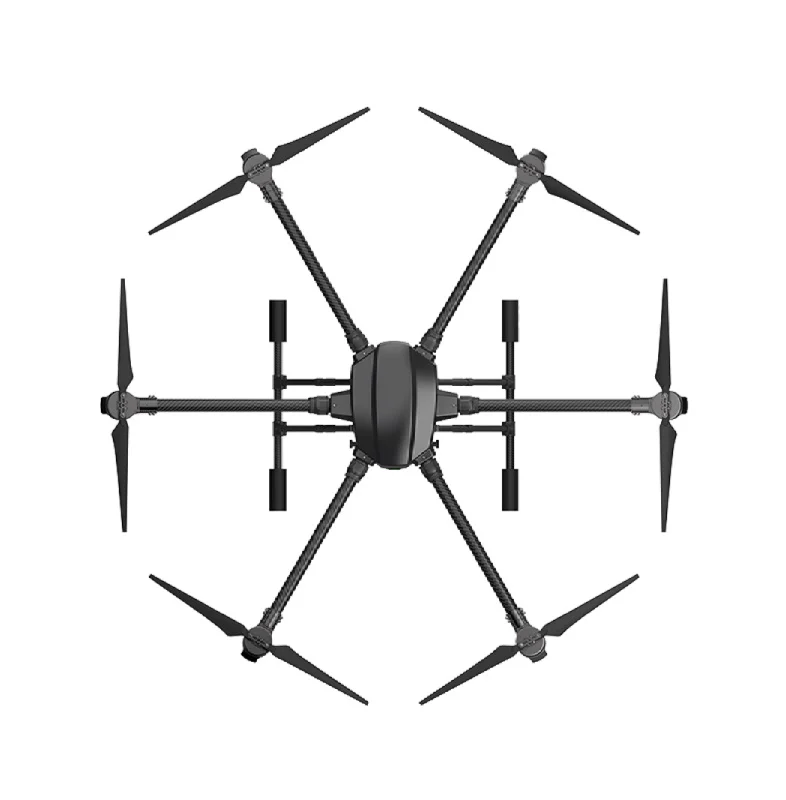
EFT 6120 Multifunction Surveillance Drone Frame
A professional-grade hexacopter frame designed for surveillance and payload missions — pairs perfectly with a Pixhawk running ArduCopter for fully autonomous operations.
Ground Control Station Tools
OpenPilot GCS
OpenPilot’s GCS was genuinely innovative for its time — a polished Qt-based desktop application with visual PID tuning widgets, 3D attitude visualization, and a map-based Pathplanner. The interface was more approachable than early Mission Planner. However, development has stopped and it’s not maintained for modern operating systems. Running it on Windows 11 or macOS Monterey+ requires workarounds.
ArduCopter GCS Options
- Mission Planner: The primary Windows-based GCS. Comprehensive but complex. Updated frequently.
- QGroundControl: Cross-platform (Windows, macOS, Linux, Android, iOS). Cleaner UI. Excellent for field use on Android tablets.
- MAVProxy: Command-line GCS for Linux/automation/companion computers
- APM Planner 2: Cross-platform alternative to Mission Planner
The MAVLink ecosystem means ArduCopter works with dozens of third-party GCS tools — anything that speaks MAVLink can connect to an ArduCopter drone. OpenPilot’s UAVTalk lock-in means you’re limited to the OpenPilot GCS or LibrePilot GCS, both of which are effectively abandoned.
Community and Support
| Metric | LibrePilot | ArduCopter |
|---|---|---|
| GitHub stars | ~1,000 | ~11,000+ |
| Last commit | Years ago | Daily |
| Forum activity | Very low | Very high (discuss.ardupilot.org) |
| Documentation | Outdated | Comprehensive, current |
| Indian community | Minimal | Growing (multiple Indian drone cos use ArduPilot) |
| Security updates | None | Regular |
Which to Choose for Indian Builds?
The answer is unambiguous: for any new drone build in India in 2025, use ArduCopter. OpenPilot and its descendants are legacy platforms that haven’t kept pace with the evolving drone ecosystem. Here’s why ArduCopter wins for every Indian use case:
For FPV and Sport Flying
Actually, neither. For pure FPV racing and freestyle, Betaflight is the dominant choice — it’s specifically optimised for fast, responsive FPV flight with sub-millisecond loop times. Both OpenPilot and ArduCopter are overkill for pure FPV applications.
For Autonomous / Research Builds
ArduCopter, without question. The MAVLink ecosystem, companion computer integration (DroneKit, MAVSDK, ROS2), excellent SITL simulator, and active development make it the professional standard. Indian drone startups building autonomous platforms — Garuda Aerospace, ideaForge, Skylark Drones — all use ArduPilot-based systems or PX4 (which shares the same MAVLink ecosystem).
For Agricultural Drones
ArduCopter. The precision agriculture features (terrain following, precision waypoints, spray control via servo outputs, mission planning) are purpose-built for this application. LibrePilot has nothing comparable.
For Photography / Mapping Drones
ArduCopter. Camera triggering commands (DO_DIGICAM_CONTROL, DO_CAMERA_TRIGGER_DISTANCE), gimbal control (MAVLink MOUNT), and mission planning for photogrammetry surveys are all natively supported.
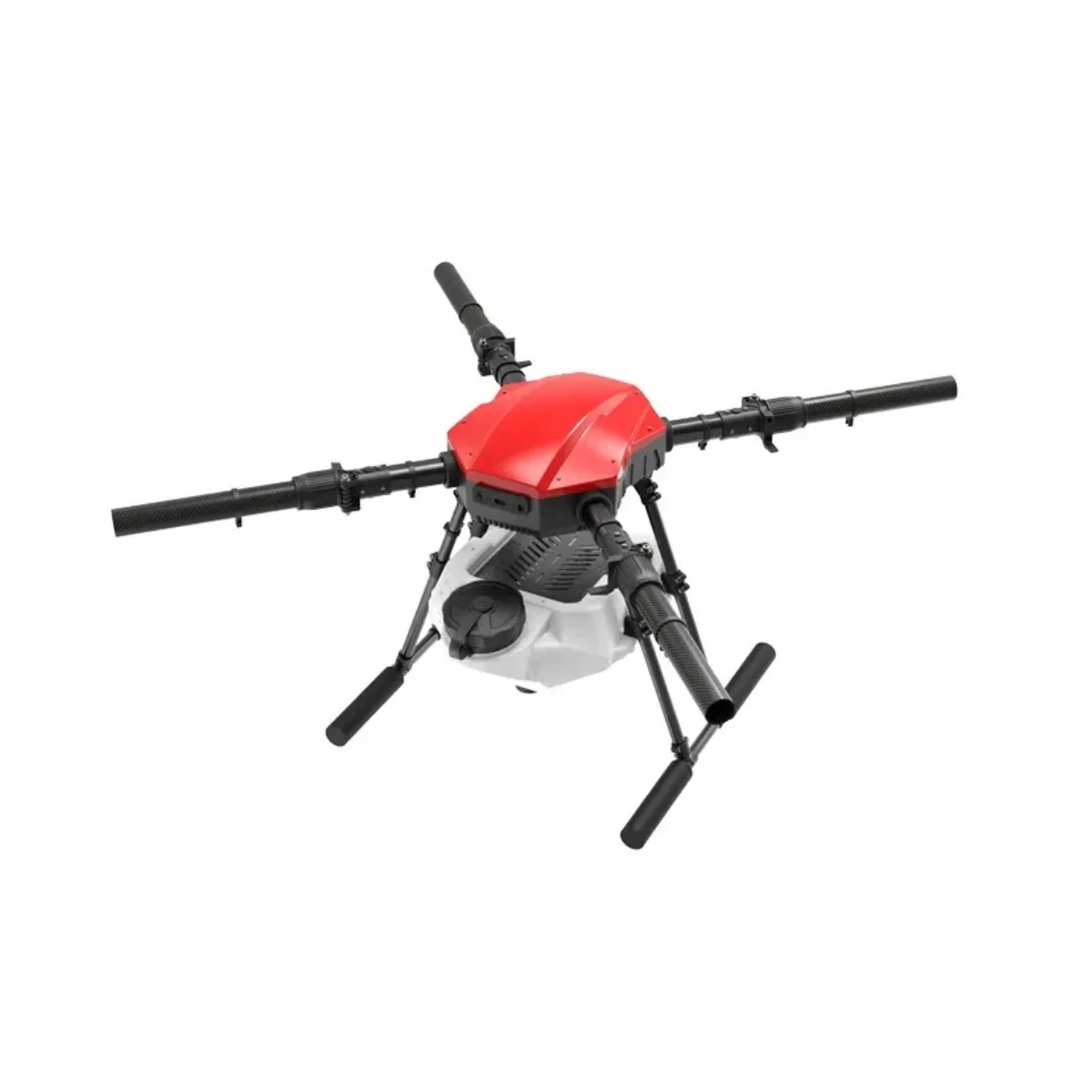
EFT E410P 10L 4-Axis Agricultural Drone Frame
A 10-litre agricultural spray drone frame perfectly suited for ArduCopter-based autonomous missions — runs precision waypoint spraying with terrain following and variable rate control.
Modern Alternatives to Consider
Beyond the ArduCopter vs OpenPilot comparison, Indian builders should also know about:
PX4 Autopilot
PX4 is ArduCopter’s primary competitor in the professional/research space. Both use MAVLink; both support Pixhawk hardware. PX4 is generally considered more suitable for research and fixed-wing applications; ArduCopter tends to be better for complex multirotor missions and has a larger community. For new builds, either is a valid choice — choose based on your specific application and which community has better answers to your questions.
Betaflight / INAV
Betaflight is the dominant FPV racing and freestyle firmware. INAV (inertial navigation) extends the Betaflight codebase with GPS navigation features, making it suitable for FPV long-range builds that also need basic autonomous capabilities. It’s lighter-weight than ArduCopter and has a large FPV community.
Cleanflight (Legacy)
Cleanflight is the predecessor to Betaflight — largely unmaintained in the same way LibrePilot is unmaintained. Don’t use it for new builds.
Frequently Asked Questions
Q: I have an old CC3D board. Can I still use it in 2025?
Technically yes — LibrePilot still works on CC3D hardware. For a basic stabilisation-only build where you need no GPS features, it will function. However, you’ll have no security updates, no bug fixes, and very limited community support if something goes wrong. For any serious build, retire the CC3D and replace it with a modern Matek or Pixhawk-based FC running ArduCopter or Betaflight.
Q: Is ArduCopter harder to set up than OpenPilot was?
ArduCopter has a steeper initial learning curve than the original OpenPilot GCS — Mission Planner has hundreds of parameters and requires understanding concepts like EKF, notch filters, and pre-arm checks. However, the ArduCopter documentation (ardupilot.org/copter) is exceptionally comprehensive. With modern Pixhawk hardware and the Mission Planner setup wizard, a basic flying build is achievable in an afternoon even for beginners.
Q: Can ArduCopter run on FPV racing FC hardware?
Some FPV racing FCs based on STM32F4/F7 chips are supported by ArduCopter (Matek F405, F765, SpeedyBee F405 Wing). However, ArduCopter is not designed for the ultra-fast (8kHz) loop rates that Betaflight targets — it runs at 400Hz. For pure FPV racing, Betaflight is the right tool. For a drone that needs both freestyle flight and GPS autonomous features, INAV is often the best compromise.
Q: Does ArduCopter work with ELRS (ExpressLRS)?
Yes. ELRS transmits RC signals via CRSF protocol, which is natively supported by ArduCopter (SERIAL_PROTOCOL = RCIN or CRSF). Many ArduCopter builds in India now use ELRS for its long range (3–30km), low latency, and open-source nature. This combination — ELRS for RC + ArduCopter for autonomous — is increasingly the standard for Indian long-range builds.
Q: What’s the difference between ArduCopter and ArduPilot?
ArduPilot is the umbrella project and development framework. ArduCopter is the specific firmware for multirotor aircraft within that framework. The same HAL and libraries also power ArduPlane (fixed-wing), ArduRover (ground vehicles), ArduSub (underwater), and Blimp (airships). When people say “ArduPilot” in the context of drones, they usually mean ArduCopter.
Conclusion
The OpenPilot vs ArduCopter comparison had a clear winner years ago. OpenPilot was a pioneering project that introduced many ideas that influenced the entire drone firmware ecosystem — but its fork into LibrePilot resulted in a project that has been essentially frozen since 2016. ArduCopter, meanwhile, has grown into the most capable, most supported, and most widely deployed open-source multirotor firmware in the world.
For Indian drone builders in 2025:
- Use ArduCopter for any autonomous, research, agricultural, or professional drone
- Use Betaflight for FPV racing and pure freestyle builds
- Use INAV for FPV builds that also need basic GPS autonomy
- Consider PX4 as an alternative to ArduCopter if you have specific research needs (PX4 has better ROS2 integration out of the box)
- Do not use LibrePilot or OpenPilot for new builds — the hardware is end-of-life and the software is unmaintained
The open-source drone ecosystem in India is maturing rapidly. Builders who invest time in learning ArduCopter — its parameters, its mission planning, its companion computer integration — will be equipped to work on the same platforms used by professional Indian drone companies and research institutions.
Build Your ArduCopter Drone Today
From agricultural frames and T-Motor propulsion systems to telemetry radios and vibration dampers — Zbotic stocks everything you need to build a professional ArduCopter-based drone in India.







Add comment