
Matek Flight Controller Buying Guide: F405 vs F722 vs H743
Matek Systems has become one of the most trusted names in the flight controller (FC) market among serious drone builders in India and globally. Known for combining exceptional build quality, abundant UARTs, integrated ESC telemetry, and comprehensive ArduPilot / Betaflight support — all at prices far more accessible than Holybro or Hex — Matek FCs have found their way into everything from budget freestyle FPV quads to professional agricultural survey drones.
But with three main processor families — the F405, F722, and H743 — spread across dozens of board variants, choosing the right Matek flight controller for your specific build can be confusing. This buying guide cuts through the noise and tells you exactly which Matek FC to pick based on your build type, budget, and experience level.
1. Understanding Flight Controller Processors: What the Numbers Mean
Matek names their flight controllers after the STMicroelectronics microcontroller (MCU) family they use. The three main families are:
- STM32F405 — 168 MHz Cortex-M4 with FPU, 1MB Flash, 192KB RAM
- STM32F722 — 216 MHz Cortex-M7 with FPU + DSP, 512KB Flash, 256KB RAM
- STM32H743 — 480 MHz Cortex-M7 with FPU + DSP, 2MB Flash, 1MB RAM
These processors run either Betaflight (primary focus on FPV racing and freestyle) or ArduPilot (primary focus on GPS navigation, autonomous missions, and professional applications). The MCU speed and RAM directly determine:
- How many UARTs (serial ports) are available for GPS, telemetry, ESC telemetry, VTX, RC receivers etc.
- Maximum loop rate for PID calculations (higher = smoother flight in Betaflight)
- Ability to run complex ArduPilot features simultaneously (terrain following, advanced logging, etc.)
- Future firmware support (newer features often require H7-class hardware)
2. Matek F405 Series: The Reliable Workhorse
The F405 family is Matek’s most mature and battle-tested line. Boards like the F405-WMN, F405-STD, and F405-WTE have been running ArduPilot copter, plane, and rover builds since 2018. The F405 is not obsolete — it is a proven performer for the vast majority of builds.
Key Specifications (F405-WMN as reference)
- MCU: STM32F405RGT6 @ 168 MHz
- IMU: ICM42688-P (excellent noise characteristics)
- Barometer: DPS310
- OSD: AT7456E (ArduPilot only)
- UARTs: 6 (enough for GPS, telemetry, RC, ESC telem, VTX)
- I2C: 1 (for external compass, rangefinder)
- PWM outputs: 8
- Voltage input: 2–8S
- Onboard BEC: 5V/2A + 9V/2A
- Blackbox: MicroSD card
Best Use Cases for F405
- GPS-assisted multirotors and fixed-wing running ArduPilot
- Agricultural survey drones with moderate sensor loads
- Budget builds where H7 processing power is not needed
- Builds where proven, stable firmware is prioritised over cutting-edge features
- Betaflight builds at 4KHz/4KHz loop rates (sufficient for most freestyle pilots)
Limitations of F405
- Cannot reliably run Betaflight at 8KHz gyro rates (F7/H7 needed for that)
- Limited RAM can cause issues with very complex ArduPilot parameter sets or high-frequency logging
- Fewer UARTs than H743 — tight if you need GPS + telemetry + RC receiver + ESC telem + VTX + camera control simultaneously
- Older architecture; some new Betaflight features are being developed primarily for H7 targets
3. Matek F722 Series: The Mid-Range Sweet Spot
The F722 family — including the popular F722-WPX, F722-SE, and F722-MINI — hits the sweet spot between the F405’s maturity and the H743’s full feature set. Running at 216 MHz with a Cortex-M7 core, F722 boards handle 8KHz Betaflight operation comfortably and support most ArduPilot features without breaking a sweat.
Key Specifications (F722-WPX as reference)
- MCU: STM32F722RET6 @ 216 MHz
- IMU: ICM42688-P or MPU6000 depending on variant
- Barometer: DPS310
- OSD: AT7456E
- UARTs: 7
- I2C: 1
- PWM outputs: 9–11 depending on variant
- Voltage input: 2–8S
- Onboard BEC: 5V/2A + 9V/2A
- Blackbox: MicroSD or onboard flash (variant-dependent)
Best Use Cases for F722
- FPV freestyle builds wanting 8KHz gyro loop rate
- Betaflight racing quads where every millisecond counts
- Mid-tier ArduPilot builds with full GPS, telemetry, and optical flow
- Long-range FPV builds with GPS rescue, VTX, and RX all connected
- Builders who want modern performance without paying H743 prices
Limitations of F722
- Flash memory (512KB) can be tight for ArduPilot with full feature set — some features may need to be compiled out
- Not ideal for very complex ArduPilot setups (dual GPS, terrain following, lidar, multiple sensors simultaneously)
- Slightly more expensive than F405 equivalents without always offering meaningful real-world flight improvement for ArduPilot users
4. Matek H743 Series: The Powerhouse
The H743 family represents Matek’s flagship processor tier. Boards like the H743-WLITE, H743-SLIM, and H743-MINI run at 480 MHz with 1MB RAM and 2MB Flash — a dramatic leap over both F405 and F722. This opens the door to ArduPilot’s full feature set, including features that simply cannot run on lower-tier hardware.
Key Specifications (H743-WLITE as reference)
- MCU: STM32H743VIT6 @ 480 MHz
- IMU: ICM42688-P (primary) + ICM42688-P (secondary, redundant)
- Barometer: DPS310 (x2, redundant)
- OSD: AT7456E
- UARTs: 8
- I2C: 2
- CAN: 2 (DroneCAN/UAVCAN support)
- PWM outputs: 13
- Voltage input: 2–8S
- Onboard BEC: 5V/2A + 9V/2A
- Blackbox: MicroSD
Best Use Cases for H743
- Professional ArduPilot builds requiring all features (terrain following, advanced failsafes, Lua scripting)
- Agricultural drones with dual GPS, lidar altimeter, flow sensor, and RTK
- Builds requiring DroneCAN/UAVCAN for peripherals (smart ESCs, GPS, power modules)
- Research and development platforms where maximum computational headroom is essential
- FPV racing where absolute maximum loop rates and Blackbox resolution are required
- Any build that will run ArduPilot Lua scripting
Limitations of H743
- Higher price than F405/F722 boards
- Larger physical footprint on most variants — may not fit in compact 3-inch or micro builds
- More complex setup — the additional features require more configuration
- Overkill for simple FPV builds and non-GPS applications
5. F405 vs F722 vs H743: Full Comparison Table
| Feature | F405 | F722 | H743 |
|---|---|---|---|
| MCU Speed | 168 MHz | 216 MHz | 480 MHz |
| RAM | 192 KB | 256 KB | 1 MB |
| Flash | 1 MB | 512 KB | 2 MB |
| Typical UARTs | 5–6 | 6–7 | 7–8 |
| DroneCAN | No | No | Yes (2 ports) |
| Betaflight Max Gyro Rate | 4 KHz | 8 KHz | 8 KHz |
| ArduPilot Lua Scripting | Limited | Partial | Full |
| Dual IMU (redundancy) | Some variants | Some variants | Most variants |
| Price (approx. India) | ₹3,000–5,000 | ₹4,000–7,000 | ₹6,000–12,000 |
| Best For | ArduPilot GPS builds, budget FPV | High-rate FPV, GPS long-range | Pro/commercial builds |
6. Which Matek FC Should You Choose?
Choose F405 if:
- You are building a GPS-assisted multirotor or fixed-wing with ArduPilot and do not need Lua scripting or DroneCAN
- Budget is a primary concern and you do not need 8KHz Betaflight performance
- This is your first ArduPilot build and you want the most community support and documentation available
- You are building a craft that will be flying stable GPS missions rather than acrobatic FPV
Choose F722 if:
- You are building an FPV freestyle or racing quad and want 8KHz gyro loop rate
- You need more UARTs than F405 provides but cannot justify H743 prices
- You want a future-proof option for Betaflight without the H743 price premium
- Building a long-range FPV drone with GPS rescue, VTX control, and multiple peripherals
Choose H743 if:
- Building a professional agricultural, surveillance, or survey drone that must run ArduPilot’s complete feature set
- You need DroneCAN for smart peripherals
- Your build requires Lua scripting for custom automation logic
- You need dual GPS, lidar, flow sensor, and telemetry all running simultaneously
- This is a commercial drone and reliability is paramount — redundant sensors matter
- You are running EFT or large agricultural frames (see products below) that justify professional-grade electronics
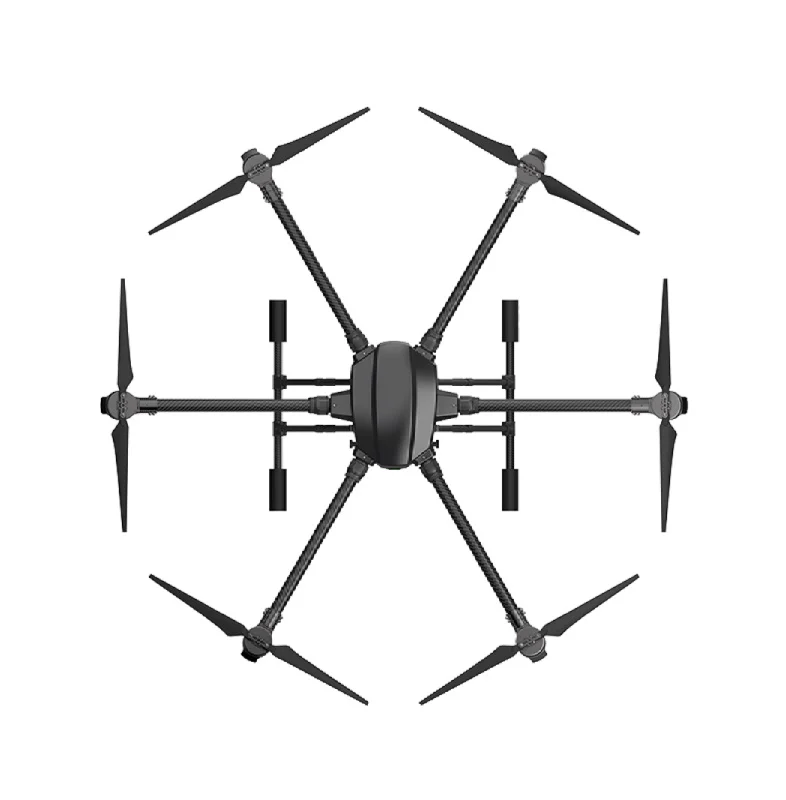
EFT 6120 Multifunction Surveillance Drone Frame
Heavy-duty hexacopter frame from EFT designed for surveillance and inspection payloads. Pairs perfectly with a Matek H743 for full ArduPilot autonomous mission capability.
7. ArduPilot vs Betaflight on Matek Boards
One of Matek’s great strengths is that their boards are well-supported by both Betaflight and ArduPilot. Understanding which firmware to run is as important as choosing the right hardware:
Run Betaflight if:
- Primary use is FPV racing or freestyle (Acro/Air mode flight)
- You want the most responsive, low-latency flight feel
- GPS rescue (emergency return home) is all you need from GPS
- You have no need for waypoint missions or autonomous operations
Run ArduPilot if:
- You need true autonomous waypoint missions (ArduCopter, ArduPlane)
- Building an agricultural, surveying, or inspection drone
- You want advanced failsafe behaviours, terrain following, or geofencing
- You need RTK GPS integration for centimetre-level precision
- You require comprehensive Blackbox logging for data analysis and DGCA compliance documentation
Note: ArduPilot on F722 can sometimes be RAM-limited if you enable every feature simultaneously. The H743’s 1MB RAM largely eliminates this concern. For F405, stick to ArduPilot builds that do not need the most memory-intensive features like terrain databases.
8. India-Specific Buying Considerations
DGCA Type Approval and Commercial Operations
If you are operating commercially under DGCA UAS Rules 2021, your drone must be type-approved. Matek FCs are components — they are certified as part of the complete drone type approval, not individually. For commercial operations, source from a DGCA-approved manufacturer or integrator. However, for R&D, prototype, and personal use under the Research category, Matek FCs are fully usable.
Heat Management in Indian Summer
Ambient temperatures in Indian summers can reach 45°C+. MCUs running at high clock speeds (especially H743 at 480 MHz) generate heat. Ensure adequate airflow in your build and consider a small heat sink on the H743 MCU for continuous high-CPU operations like full logging + active GPS + telemetry.
Import and Availability
Matek boards come into India primarily through specialist drone component retailers. Zbotic stocks a wide range of drone components and accessories to support your Matek-based build.
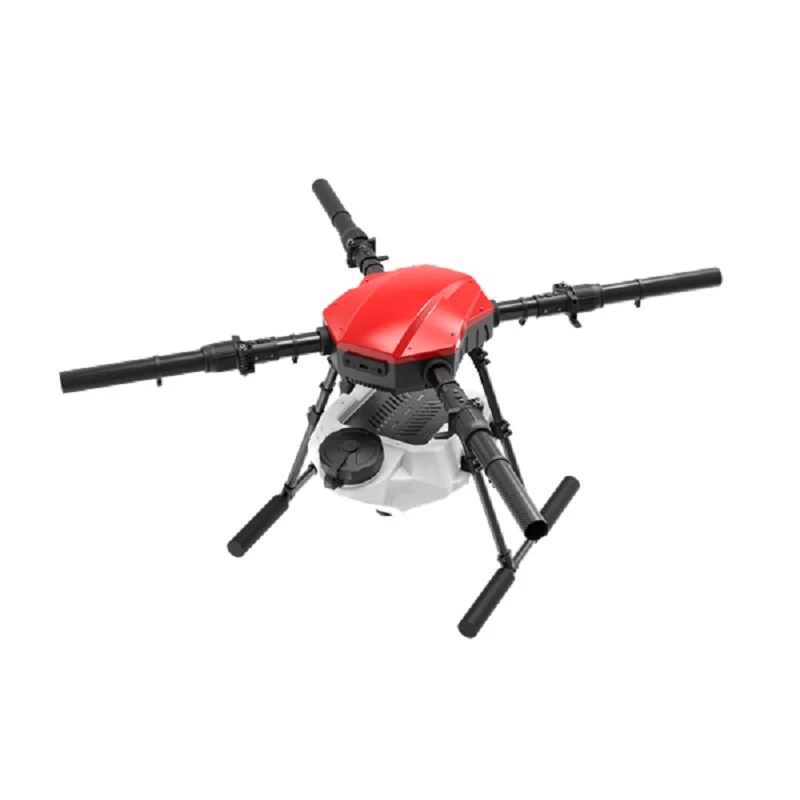
EFT E416P 16L 4-Axis Agricultural Drone Frame
Professional agricultural sprayer frame for 16-litre tank capacity. A Matek H743 FC is the ideal brain for this frame, handling autonomous mission planning and precision spray patterns.
9. Recommended Supporting Components
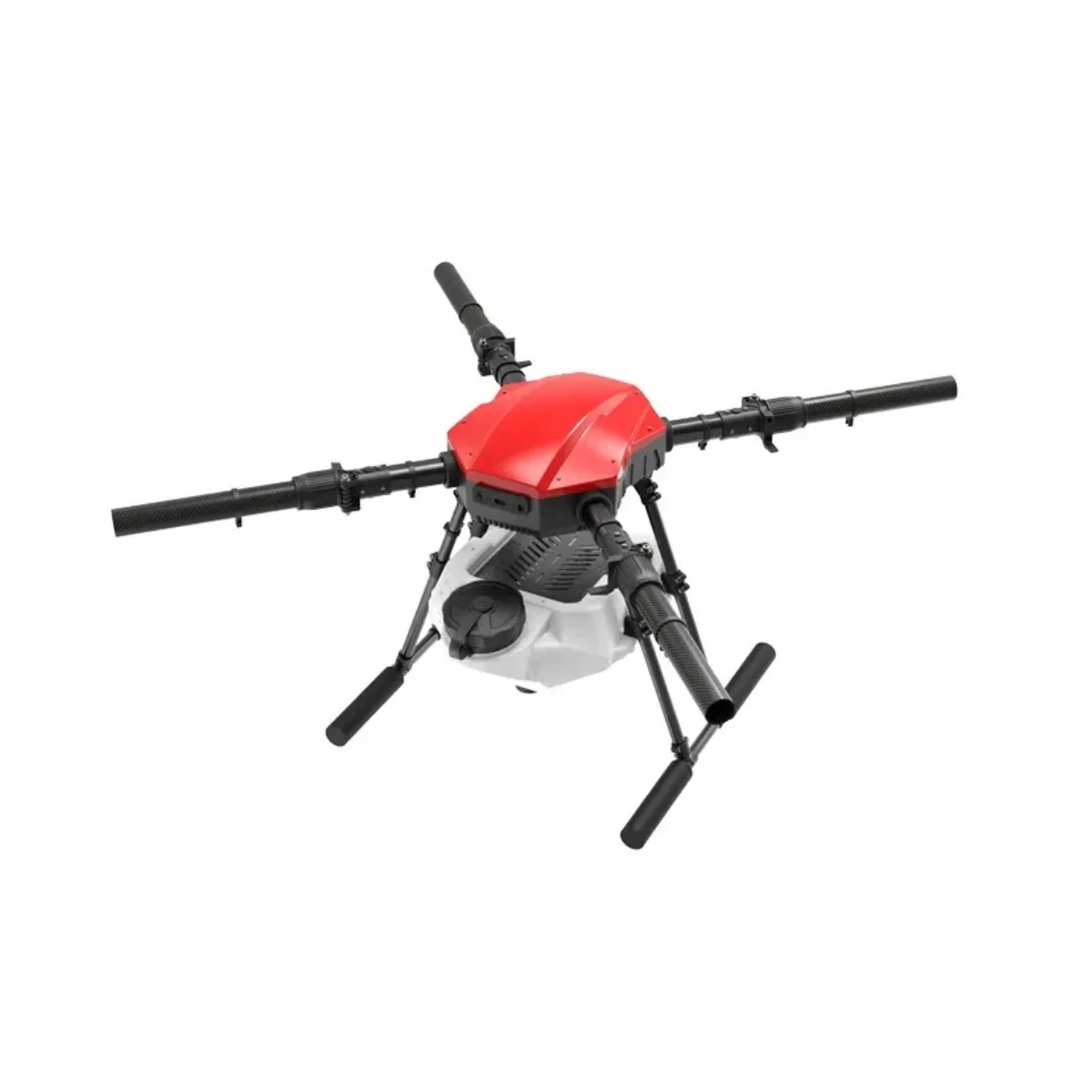
EFT E410P 10L 4-Axis Agricultural Drone Frame
10-litre agricultural sprayer frame — a popular choice for small farm operators across India. The Matek F405 or F722 handles all mission requirements on this lighter platform.
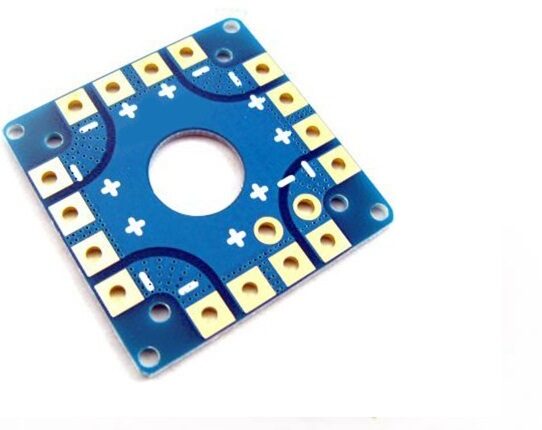
100A Multirotor ESC Power Distribution Battery Board
Clean power distribution for heavy-lift multirotors. A quality PDB paired with your Matek FC ensures clean power rails and reduces electromagnetic interference on the compass.
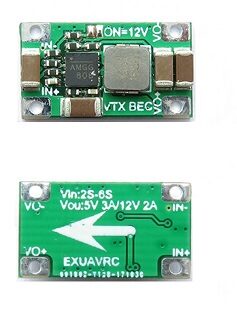
2-6S 5V 5A BEC for Quadcopter Drone
External BEC for stable 5V supply to your Matek FC and peripherals. When adding multiple GPS, telemetry, and VTX modules, the FC’s onboard BEC may be insufficient — an external BEC ensures stable operation.
10. Frequently Asked Questions
Q: Can I run ArduPilot on a Matek F405 board?
A: Yes — ArduPilot has excellent, mature support for Matek F405 boards. The F405 handles most ArduPilot copter, plane, and rover applications well. The only limitation is RAM for the most memory-intensive features. Check the ArduPilot hardware page for your specific board variant to confirm support.
Q: Is Matek H743 worth the extra cost for FPV freestyle?
A: For pure FPV freestyle, the F722 and H743 both run 8KHz Betaflight without issue. The real-world flight feel difference between F722 and H743 in Betaflight is negligible. Save the H743 premium for ArduPilot builds where its extra RAM and DroneCAN actually matter.
Q: What is the difference between Matek H743-WLITE and H743-SLIM?
A: The H743-WLITE is the workhorse — it has more UARTs (8), dual IMU, dual baro, and full DroneCAN support, making it ideal for complex ArduPilot builds. The H743-SLIM is a more compact option with a slightly reduced feature set, aimed at builds where space is constrained. Both run the same MCU at the same speed.
Q: My Matek F405 shows high CPU load in ArduPilot logging. What can I do?
A: Reduce the logging bitmask (LOG_BITMASK) to only log essential data. Disable unused features (EKF2 if using EKF3, optical flow if not installed). Consider reducing GPS polling rate from 10Hz to 5Hz on a busy F405. If CPU load stays above 85%, consider upgrading to H743 for that build.
Q: Is there a Matek board suitable for building a DGCA-registered agricultural drone in India?
A: DGCA type approval is required at the complete drone level, not for individual components. The Matek H743 is the most capable option for agricultural drones as it supports the full ArduPilot feature set including RTK GPS, terrain following, and advanced spray pattern programming. However, the complete drone system must go through DGCA’s type certification process through an approved manufacturer.
Q: How do I choose between Matek F722-WPX and F722-SE?
A: The F722-WPX has more PWM outputs (11 vs 8) and supports a wider input voltage range, making it better for larger multi-motor builds. The F722-SE is more compact and suited to smaller frames. Both share the same MCU performance.
Build Your Matek-Powered Drone with Components from Zbotic
Zbotic stocks drone frames, ESCs, motors, propellers, power distribution boards, and accessories to complete your Matek-based build. All orders ship fast across India with reliable courier partners.







Add comment