
Choosing the right display for a battery-powered IoT project can be the difference between a gadget that lasts a week and one that runs for a year on a coin cell. The debate of LCD vs OLED vs E-Ink for battery IoT projects comes down to three factors: power consumption, visibility, and update speed. In this in-depth comparison guide aimed at Indian makers and engineers, we break down each technology so you can pick the right display for your next build — whether it is a remote sensor node, a smart meter, a field instrument, or a wearable device.
How Each Display Technology Works
LCD (Liquid Crystal Display)
An LCD uses liquid crystals sandwiched between polarising filters. A cold-white backlight (LED strip) shines through the crystals, which twist to block or pass light on a per-pixel basis. The backlight is always on — even when showing a black screen. The popular 16×2 character LCD (HD44780) and graphical LCDs with ST7735/ILI9341 controllers fall in this category. The backlight typically consumes 20–80mA regardless of content shown.
OLED (Organic Light-Emitting Diode)
In an OLED display, every pixel is its own tiny LED. When a pixel is black (off), it draws zero current. When displaying white or bright content, it draws more. Power consumption is directly proportional to how many pixels are lit and how bright they are. The beloved 0.96-inch SSD1306 is a prime example — showing a simple temperature reading (mostly black background) may draw only 5–12mA total.
E-Ink / E-Paper (Electrophoretic Display)
E-Ink displays use charged black and white particles suspended in microcapsules. An electric field drives particles to the top or bottom to create the image. Once the image is set, zero current is needed to maintain it — the display is bistable. Power is only consumed during a refresh. A typical 2.9-inch e-paper module draws 15–30mA for 1–2 seconds during a full refresh, then drops to under 1µA in static hold mode. Perfect for slow-updating sensor dashboards.
Power Consumption: The Battery-Life Test
Let us compare numbers for a typical IoT use case: showing temperature and humidity readings that update every 10 minutes, running on a 2000mAh LiPo battery.
| Display | Idle Current | Active Current | Est. Battery Life (2000mAh) |
|---|---|---|---|
| 16×2 LCD (backlight on) | 40–80mA | 40–80mA | ~25–50 hours |
| SSD1306 OLED (0.96″) | 5–20mA | 5–20mA | ~100–400 hours |
| E-Ink 2.9″ (deep sleep MCU) | <1µA (static) | 20mA for 2s/10min | Several months to years |
The winner for ultra-low power is clear: E-Ink. But the story is more nuanced — the MCU itself also consumes power, and if your ESP32 is not in deep sleep between updates, the display choice matters less.
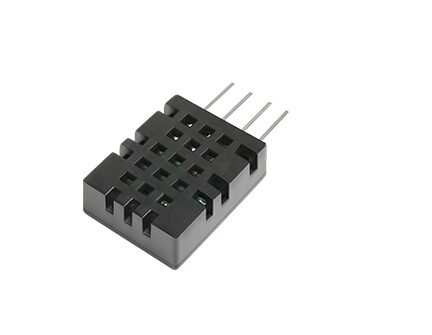
DHT20 SIP Packaged Temperature and Humidity Sensor
Low-power I2C temperature and humidity sensor — ideal for battery-powered IoT display nodes. Pairs well with any of the three display types discussed here.
Visibility: Indoor, Outdoor, and Sunlight
LCD
LCDs with their backlight perform well indoors but wash out in direct sunlight — a real problem in India’s bright outdoor environment. Transflective LCDs (like those on older Nokia phones) handle sunlight better but are not commonly available as hobby modules.
OLED
OLED displays are very readable indoors and look spectacular in dimly lit rooms due to their high contrast ratio (near-infinite, as black pixels are truly dark). However, in direct outdoor sunlight, OLEDs can also appear washed out because their maximum brightness (300–600 cd/m²) is lower than sunlight intensity. Better than LCD but still not ideal for outdoor installations.
E-Ink
E-Ink displays are reflective — they use ambient light just like paper. In bright sunlight, they actually become more readable, not less. This makes them the best choice for outdoor battery-powered nodes like solar-powered agricultural sensors, outdoor name badges, or field instruments. The trade-off is a narrow viewing angle compared to LCD, but for most IoT dashboards this is acceptable.
Update Speed and Refresh Rate
LCD: Fast (up to 60fps)
LCDs update essentially instantaneously. If your IoT project needs a real-time graph, live serial monitor output, or animation, an LCD or TFT display is your only practical option among these three. The ILI9341 2.8-inch TFT can push 30–60fps easily.
OLED: Fast (up to 30fps practical)
OLEDs also update quickly. The SSD1306 can refresh its full 128×64 buffer over I2C at ~10fps (limited by I2C speed); using SPI variants pushes this to 25fps or more. Fine for most sensor displays, clocks, and even simple games.
E-Ink: Slow (1–30 seconds per full refresh)
This is E-Ink’s biggest limitation. A full black-and-white refresh on a 2.9-inch display takes 2–5 seconds. During this time the display flashes black-and-white, which can be distracting. Partial refresh mode (supported by some controllers like the Waveshare 2.13-inch) can update a small region in ~0.3 seconds without flashing, but partial refresh leaves ghosting over time and still isn’t suitable for live data streams. E-Ink is strictly for slow-updating data: temperature readings, labels, menu items, QR codes.
Cost and Availability in India
| Display Type | Common Module | Approx. Price (₹) | Availability |
|---|---|---|---|
| LCD Character | 16×2 HD44780 + I2C | ₹80–₹180 | Excellent |
| LCD TFT | 2.8″ ILI9341 SPI | ₹350–₹700 | Good |
| OLED | 0.96″ SSD1306 I2C | ₹80–₹150 | Excellent |
| E-Ink | 2.9″ Waveshare SPI | ₹700–₹1800 | Limited |
In India, LCDs and OLEDs are easy to source locally (including from Zbotic with fast delivery). E-Ink modules are less common and often imported, making them more expensive and harder to replace if one fails.
Which Display for Which IoT Use Case?
Remote Weather Station / Agricultural Sensor
Use E-Ink. Updates every 10–30 minutes, runs on solar + small LiPo, and must be readable in outdoor Indian sunlight. The near-zero static power draw means a 3000mAh battery can last months even without solar charging.
Indoor Temperature / Humidity Display
OLED is perfect. It looks great on a desk, draws minimal power, and is cheap. If running on mains power (USB), even LCD is fine. If battery-powered, choose OLED over LCD by a large margin.
Real-Time Data Logger Dashboard
Use a TFT LCD (ILI9341 or ST7789). You need colour, fast refresh, and a larger screen area to display multiple sensor channels as graphs. Power efficiency is secondary when connected to mains.
Smart Name Badge or Asset Tag
E-Ink, without question. Once the information is written, zero power is consumed. A single CR2032 coin cell can keep the display showing content indefinitely (years, theoretically).
Wearable Fitness Tracker
OLED wins for wearables that need always-on or frequent-on display. OLED displays with ambient light adjustment can auto-dim for battery savings. E-Ink’s slow refresh makes it unsuitable for step count or heart rate displays.
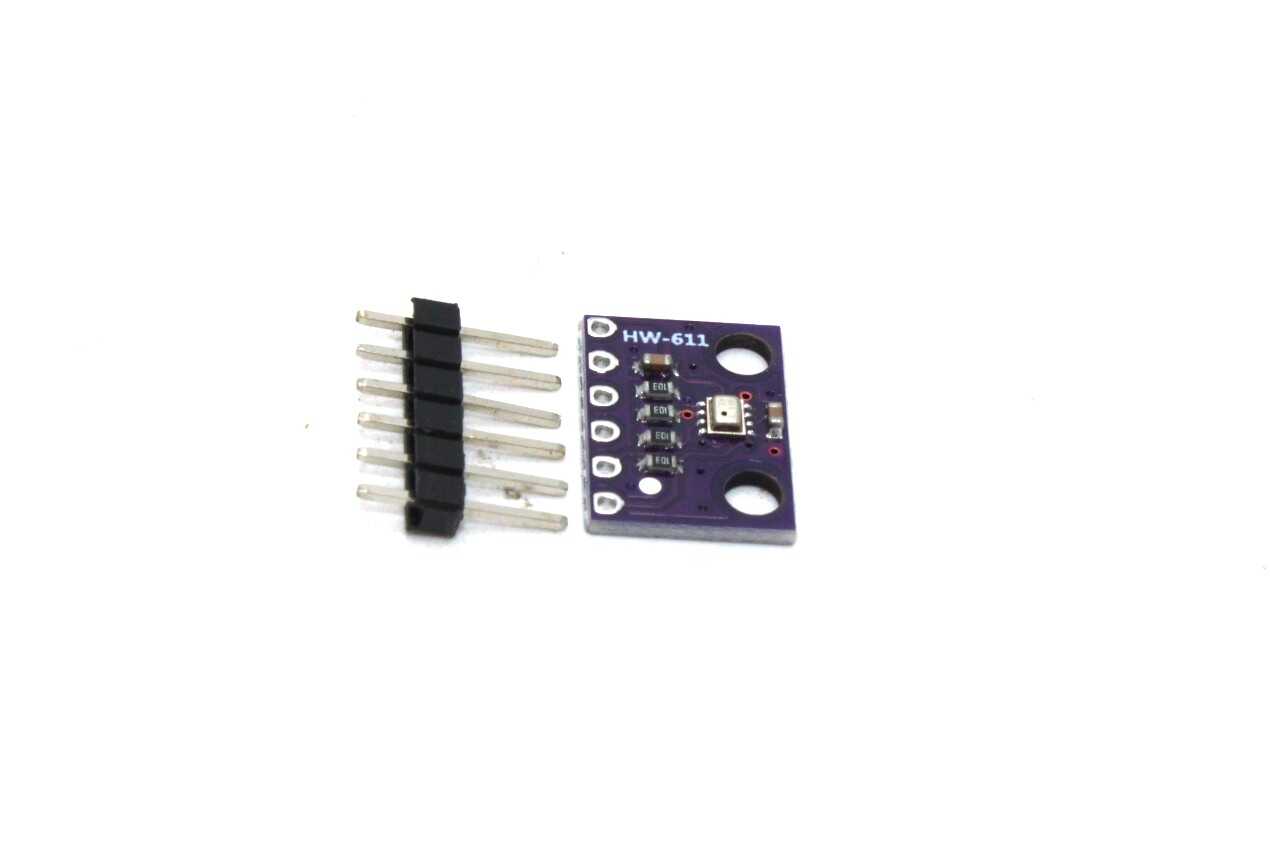
BMP280 Barometric Pressure and Altitude Sensor I2C/SPI
Ultra-low power pressure and altitude sensor — perfect for battery IoT weather nodes paired with OLED or E-Ink displays. Also supports forced/sleep modes.
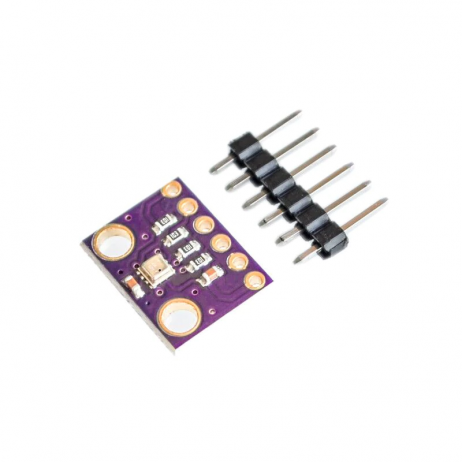
GY-BME280 3.3V Precision Altimeter, Pressure and Humidity Sensor
All-in-one environmental sensor combining temperature, humidity, and pressure. An ideal data source for a low-power IoT display project.
Our Recommendations by Project Type
- Best for beginners on battery: OLED (SSD1306) — cheap, easy library, good battery life, great contrast.
- Best for ultra-long battery life (>6 months): E-Ink — especially if updates are infrequent and outdoor readability matters.
- Best for mains-powered dashboards: TFT LCD — colour, size, and speed at a reasonable price.
- Best for outdoor IoT sensors in India: E-Ink or transflective LCD — both handle sunlight; E-Ink needs no backlight power.
- Best value for money in India: OLED — the ₹100–₹150 SSD1306 is unbeatable for its feature set per rupee.
Frequently Asked Questions
Does an OLED display consume more power with a white background?
Yes. OLED power consumption is directly proportional to the number of lit pixels and their brightness. A full white screen draws maximum current (~20–30mA for a 0.96″ SSD1306). Always design your OLED UI with a dark/black background to minimise power draw in battery projects.
Can I turn off an LCD backlight to save power?
Yes, if you connect the backlight pin to a microcontroller GPIO or a transistor. When the backlight is off, the LCD panel itself draws almost no power (just a few µA for the logic). This is an effective low-power trick: keep the backlight off most of the time and only turn it on when a button is pressed.
How long does an E-Ink display last without power?
The image on an E-Ink display is retained indefinitely without power — theoretically years. The display is truly bistable. However, prolonged exposure to intense UV light (direct sunlight over many months) can degrade the electrophoretic particles and reduce contrast over time.
Is E-Ink available with Arduino libraries in India?
Yes. Waveshare provides Arduino, ESP32, and Raspberry Pi libraries for all their E-Ink modules. The GxEPD2 library on GitHub is a widely used Arduino library that supports dozens of E-Ink panel models. Setup requires SPI wiring and the correct pin definitions for your panel.
Which display is best for a soil moisture sensor node in an Indian farm?
E-Ink is ideal — it is readable in full sunlight, retains the last reading even if the node goes into deep sleep, and the node can run for months on a small solar + battery setup. Use a capacitive soil moisture sensor, ESP32 in deep sleep waking every 30 minutes, and a 2.9-inch E-Ink display for the readout.
Browse our full range of display modules and sensors for your battery-powered IoT project. Fast shipping across India — Pune, Mumbai, Delhi, Hyderabad, and beyond.




Add comment