
iNAV vs Betaflight: Best Firmware for Fixed Wing & Planes
If you’ve spent any time in the FPV or drone-building hobby, you’ve likely encountered the debate: iNAV vs Betaflight. Both are open-source flight controller firmware derived from the same Cleanflight codebase, yet they have diverged substantially in their goals and capabilities. Choosing the wrong firmware for your aircraft type can mean the difference between a rock-solid autopilot and hours of frustrated tuning.
This guide breaks down both firmware options in depth — covering multirotor quadcopters, fixed-wing planes, and everything in between — so you can make an informed decision for your next build.
1. Overview: What Are iNAV and Betaflight?
Both iNAV and Betaflight are open-source flight controller firmware designed to run on STM32-based flight control boards. They share a common ancestor — Cleanflight — but have pursued very different development paths since forking.
Betaflight
Betaflight was forked from Cleanflight in 2015 with a laser focus on quadcopter racing performance. Over eight years of development, it has become the undisputed king of FPV racing and freestyle flight. The Betaflight team prioritizes:
- Minimal loop time (fastest possible PID loop)
- Advanced gyro filtering (RPM filter, notch filters)
- Precise throttle response and motor control
- DSHOT motor protocol support
- Integration with OSD chips for FPV telemetry overlay
Betaflight’s GPS support exists (GPS rescue mode) but is intentionally basic — it’s a safety net, not a navigation system.
iNAV
iNAV (Inertial Navigation) forked from Cleanflight in 2015 with the opposite goal: build a comprehensive autopilot system for both multirotors and fixed-wing aircraft. iNAV stands for Inertial Navigation, reflecting its emphasis on sensor fusion and navigation. It prioritizes:
- Full GPS navigation (waypoints, return-to-home, position hold)
- Fixed-wing aircraft support (with proper servo mixing, stabilization modes)
- Autonomous mission planning (via Missionplanner or iNAV-configurator)
- Barometer and magnetometer integration for 3D navigation
- Long-range FPV plane support
2. Betaflight: Strengths and Best Use Cases
Where Betaflight Excels
FPV Racing Quads: Betaflight is the unchallenged choice. Every competitive FPV racer in India and worldwide runs Betaflight. The RPM filtering system (requiring bidirectional DSHOT and BLHeli_32 ESCs) is a game-changer — it dramatically reduces gyro noise by using real-time motor RPM data to place dynamic notch filters exactly where motor harmonics appear.
Freestyle Flying: Betaflight’s tight, responsive control feel is perfect for freestyle tricks. With 8kHz PID loop rates on F7 boards and 4kHz on F4, it samples the gyro fast enough to make the quad feel like an extension of your hands.
Prop Wash Handling: Betaflight’s D-term and anti-gravity algorithms handle prop wash (the turbulent airflow that hits props during quick throttle drops) better than any other firmware in aggressive quadcopter maneuvers.
Betaflight Limitations
- GPS features are minimal — GPS Rescue is a failsafe only, not a navigation system
- No waypoint mission support
- No fixed-wing aircraft support (cannot drive servos the way a plane needs)
- No barometer-based altitude hold (some builds use it, but Betaflight doesn’t fuse it into position estimation)
- Not suitable for autonomous operations
3. iNAV: Strengths and Best Use Cases
Where iNAV Excels
Fixed-Wing Aircraft: iNAV was designed from the ground up to support fixed-wing planes. It handles:
- Servo mixing for aileron, elevator, rudder, and flaps
- Gyro-stabilized flight modes (Angle, Horizon, Manual)
- Return-to-home for planes (graceful orbit around home point until pilot takes over)
- Pitot tube (airspeed sensor) integration
- Cruise mode for hands-off level flight
GPS Navigation for Multirotors: iNAV’s GPS implementation is full-featured:
- Position Hold (GPS-locked hover)
- Altitude Hold (baro-assisted)
- Return to Home (automatic on signal loss)
- Waypoint missions (fly predefined GPS coordinates autonomously)
- Follow Me mode (via companion app)
Long-Range FPV Wings: The Indian long-range FPV community (flying planes or flying wings over 10+ km) almost exclusively uses iNAV. RTH on signal loss at 15km is a real lifesaver.
iNAV Limitations
- PID loop performance is slower than Betaflight (typically runs at 1kHz for GPS-dependent builds)
- Not suitable for high-performance FPV racing
- Configuration is more complex — more parameters to understand
- Less community documentation for racing-specific tuning
- RPM filtering is not as mature as Betaflight’s implementation
4. Fixed Wing: Why iNAV Wins Every Time
This is the most clear-cut part of the comparison. Betaflight does not support fixed-wing aircraft. Full stop. If you’re building a fixed-wing FPV plane, flying wing, or VTOL aircraft, your options are iNAV, ArduPlane, or Paparazzi — and for the hobbyist and FPV community, iNAV is the most popular choice by far.
Why iNAV for Fixed-Wing?
- Servo mixing: Fixed-wing aircraft need different servo outputs for different control surfaces. iNAV’s mixer system handles V-tail, flying wing (elevon), delta wing, and conventional tail configurations natively.
- Stabilization modes that make sense for planes: Angle mode keeps wings level; Manual mode passes through your stick inputs directly for manual flying. Unlike Acro mode in a quad, fixed-wing manual control requires different stick feel and response — iNAV accounts for this.
- GPS-based navigation: A fixed-wing flying BVLOS (for surveys or long-range FPV) needs GPS navigation. iNAV’s waypoint system + RTH is what makes this possible.
- Airspeed sensor support: Pitot tubes measure forward airspeed — critical for planes (stall speed awareness) but irrelevant for quads. Only iNAV (and ArduPlane) support pitot integration.
- Auto-launch and auto-land: For autonomous planes, iNAV supports automatic launch detection (throttle up and throw the plane) and glide-slope landing.
Popular Fixed-Wing Platforms in India Running iNAV
- Zohd Dart / Nano Talon flying wings (long-range FPV)
- Reptile S800 / Skywalker X8 (survey and mapping)
- Sonicmodell AR Wing (ultra-efficient cross-country FPV)
- Custom balsa/foam builds for sport flying
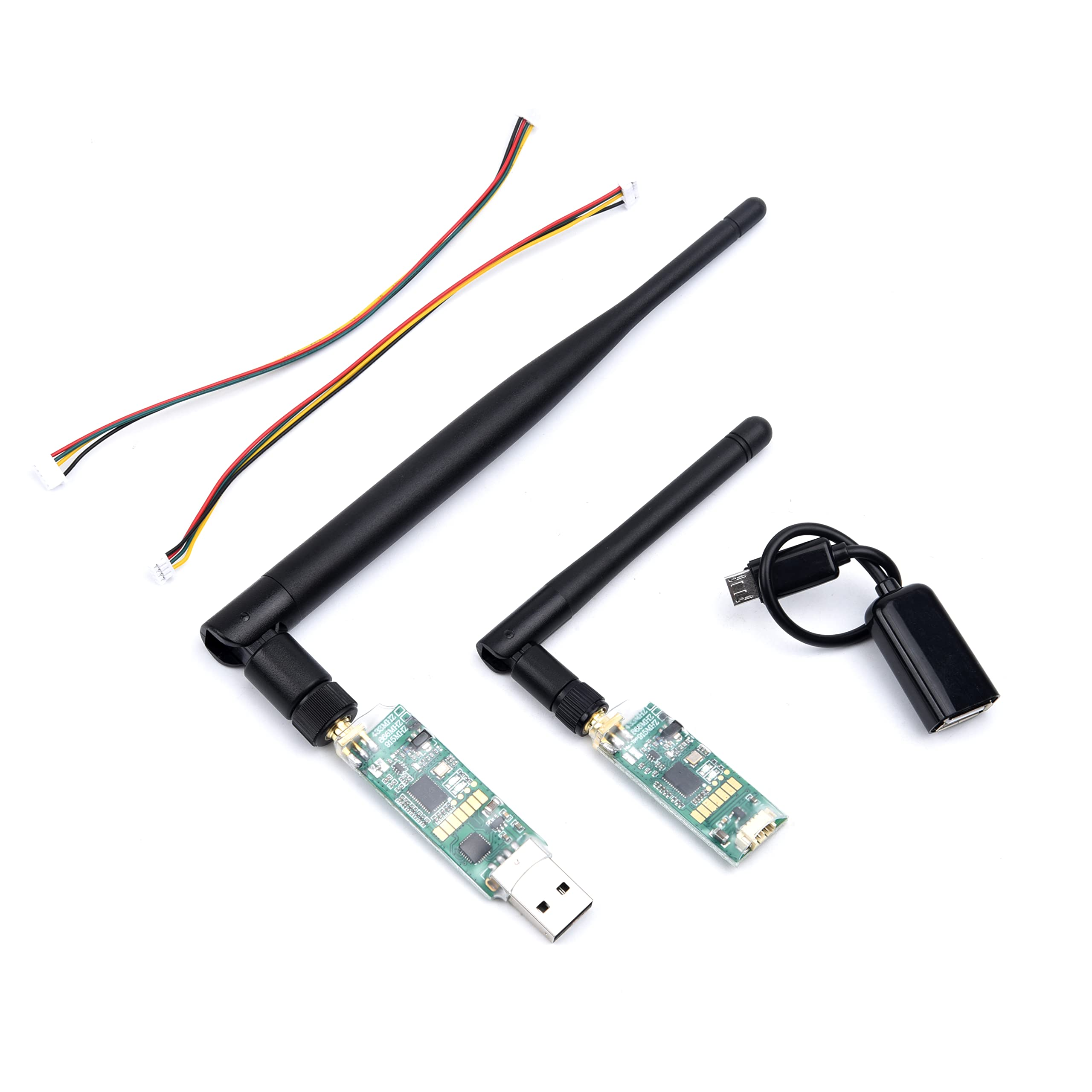
3DR Mini Radio Telemetry 433MHz 500mW for Pixhawk/APM
433MHz telemetry module for long-range GCS communication. Ideal for iNAV fixed-wing and plane builds requiring extended range data link.
5. Multirotor Comparison: Racing vs GPS Navigation
For multirotors, the choice between iNAV and Betaflight depends entirely on what you want the drone to do:
| Feature | Betaflight | iNAV |
|---|---|---|
| FPV Racing Performance | Excellent | Poor |
| Freestyle Flying | Excellent | Fair |
| GPS Position Hold | None | Excellent |
| Waypoint Missions | None | Excellent |
| Return to Home | Basic (GPS Rescue) | Full featured |
| Fixed-Wing Support | No | Full |
| PID Loop Rate | Up to 8kHz | Typically 1kHz |
| RPM Filtering | Best in class | Available |
| Agricultural Drone | Not recommended | Good (ArduCopter better) |
| Configuration Complexity | Moderate | High |
| Community Size | Very Large | Medium |
6. GPS Features Deep Dive
iNAV GPS Navigation
iNAV uses a full inertial navigation system (INS) that fuses GPS, barometer, accelerometer, and gyroscope data to estimate position and velocity. This enables:
- PosHold: The drone locks to a GPS coordinate. Even in light wind, it maintains position within 1–2 meters using GPS + baro + gyro fusion.
- AltHold: Altitude maintained via barometer. Hands-free hover at a set height.
- RTH (Return to Home): Three modes: (1) Climb, then fly home. (2) Direct RTH. (3) Cone (for fixed-wing, orbiting home). RTH triggers automatically on failsafe.
- Waypoint Missions: Program up to 60 waypoints (or more on some builds) via iNAV Configurator or external tools like Mission Planner. The drone flies autonomously from point to point at a set altitude and speed.
- SAFEHOME: A secondary home point (e.g., your car) that takes over if the primary GPS home wasn’t set before takeoff.
Betaflight GPS Rescue
Betaflight’s GPS Rescue is a simpler system:
- Activates when signal is lost or battery voltage drops critically
- Climbs to a set altitude, flies toward home, and descends on arrival
- Accuracy can vary (±10–30m) — don’t rely on it for precision landings
- Not intended for regular use as a navigation feature
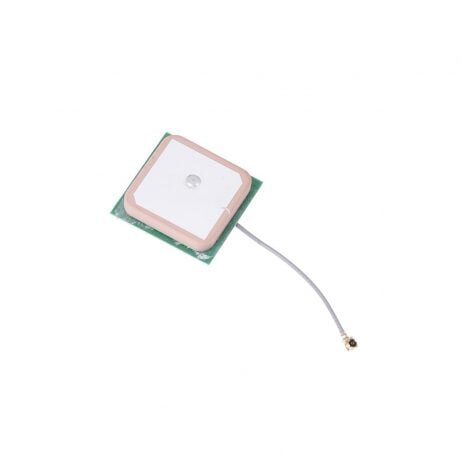
28dB High Gain Ceramic Active GPS Antenna (NEO-6M/7M/8M)
High-performance ceramic patch GPS antenna for reliable lock in iNAV and ArduPilot builds. Supports NEO-6M, 7M, and 8M GPS modules.
7. Configuration Difficulty
Betaflight Configurator
Betaflight Configurator (desktop app) is mature, well-documented, and community-tested. For a standard racing quad setup:
- Flash firmware from within Configurator
- Configure ports (UART assignments)
- Set up receiver, modes, and motor protocol
- Run motor direction check
- Verify OSD layout
- First flight + PID tuning
A complete Betaflight setup from a blank board takes 30–60 minutes for an experienced builder.
iNAV Configurator
iNAV Configurator has more tabs and options. Fixed-wing configuration requires understanding:
- Mixer type (servo assignments for each control surface)
- Servo directions and limits
- GPS protocol and baud rate
- Sensor calibration (accelerometer, magnetometer)
- Flight modes mapped correctly to switches
- Failsafe configuration (critical for RTH to work correctly)
A complete iNAV fixed-wing setup takes 2–4 hours for a first-timer. The documentation has improved significantly in recent years — the iNAV wiki is comprehensive.
8. Supported Hardware
Both firmware run on STM32-based flight controllers. Key differences:
Betaflight Hardware
Any board with an F4, F7, or H7 MCU and a supported target. The Betaflight unified target system supports thousands of boards. Key requirements for full feature use:
- F4 minimum for 4kHz PID loop
- F7 recommended for RPM filtering + 8kHz loops
- BLHeli_32 ESCs for bidirectional DSHOT
iNAV Hardware
iNAV supports a similar range of boards but also specifically supports INAV-exclusive targets with additional UART ports for GPS, telemetry, and more sensor inputs. For fixed-wing builds, look for FCs with dedicated servo outputs (not just motor outputs). Popular choices include:
- Matek F405-Wing
- Matek F722-Wing
- SpeedyBee F405 Wing
These boards have 4–6 servo output channels specifically for fixed-wing builds.
9. OSD Differences
Both firmware support OSD (on-screen display) overlay for FPV feeds, but the information shown differs:
Betaflight OSD
Focused on racing telemetry: battery voltage, throttle percentage, RSSI, flight time, LQ (link quality), motor temperatures (via ESC telemetry), blackbox armed state.
iNAV OSD
Navigation-focused additions: GPS coordinates, home arrow and distance, heading, ground speed, altitude, waypoint number, autopilot mode indicator, crosshair. For long-range FPV, iNAV’s OSD information density is unmatched.
10. Decision Guide: Which Should You Use?
- You’re building an FPV racing or freestyle quad
- Low latency and fast response are your priorities
- You don’t need GPS navigation beyond basic rescue
- You’re using 5-inch or smaller props with BLHeli_32 ESCs
- You’re building any fixed-wing aircraft or flying wing
- You need GPS position hold, RTH, or waypoint missions
- You’re doing long-range FPV where signal loss is possible
- You’re building a mapping or survey drone (consider also ArduCopter/ArduPlane)
- You want autonomous capabilities on a multirotor
11. Recommended Hardware from Zbotic

3DR 100mW Radio Telemetry 915MHz for APM/PX4/Pixhawk
Perfect for iNAV and ArduPilot builds that need GCS telemetry. 915MHz for long-range link with Mission Planner or iNAV Configurator.

35A V2.1 2-5S 4-in-1 Brushless ESC for RC Drone FPV Racing
BLHeli_32-compatible 4-in-1 ESC for Betaflight racing builds. Supports bidirectional DSHOT for RPM filter integration — essential for top performance.
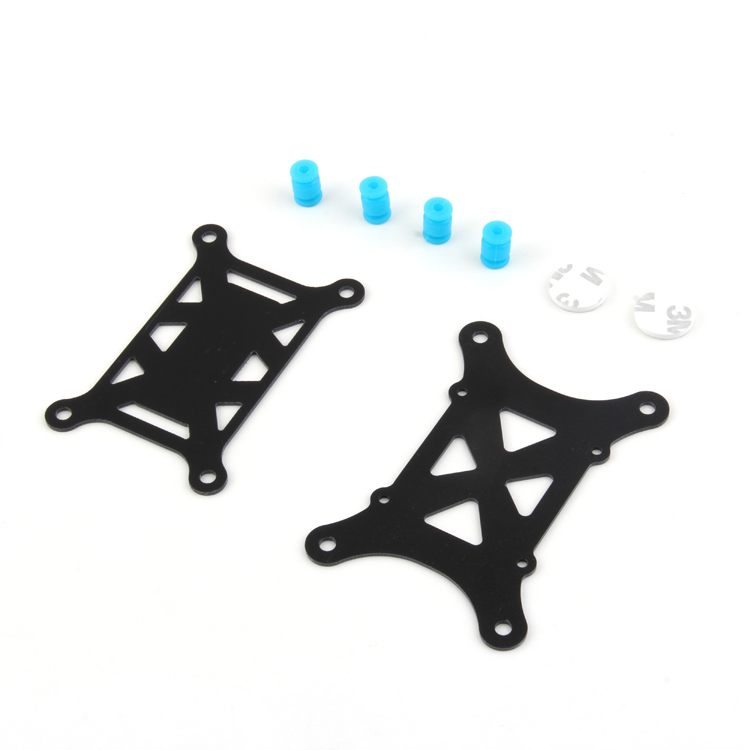
Anti-Vibration Shock Absorber for APM/KK/MWC/PixHawk
Silicone anti-vibration FC mount — critical for iNAV GPS builds where vibration-induced gyro noise causes GPS glitches and barometer drift.
3DR Single TTL MINI Radio Telemetry 433MHz 500mW
Compact 433MHz telemetry module at 500mW. Excellent range for fixed-wing iNAV builds and long-range multirotor survey platforms.
12. Frequently Asked Questions
Q: Can iNAV run on the same hardware as Betaflight?
Often yes — many F4 and F7 flight controller boards have targets for both Betaflight and iNAV. However, fixed-wing-specific features require hardware with multiple servo output pads. Always check the iNAV target list before purchasing hardware if you plan to run iNAV.
Q: Is iNAV better than ArduCopter/ArduPilot?
ArduPilot is more feature-rich and battle-tested for professional autonomous operations (agricultural spraying, survey mapping, BVLOS flights). iNAV is easier to configure and more popular in the hobbyist FPV community. For professional commercial work, ArduPilot (with Pixhawk hardware) is generally the better choice. For hobbyist long-range FPV and fixed-wing builds, iNAV is excellent.
Q: Can I switch from Betaflight to iNAV on the same quad?
Yes, if your hardware has an iNAV target. You’d flash the iNAV firmware and reconfigure from scratch. Your Betaflight config won’t transfer. However, for racing quads, there’s rarely a reason to switch to iNAV — it won’t perform as well for racing.
Q: Does iNAV work with ExpressLRS (ELRS) receivers?
Yes. iNAV supports CRSF protocol which is used by ExpressLRS. Set the UART with Serial RX to CRSF in iNAV Configurator and bind your ELRS receiver normally. ELRS is the recommended link system for both Betaflight and iNAV builds in 2026.
Q: Which firmware should I use for an agricultural spraying drone?
For agricultural drones, ArduCopter on Pixhawk hardware is the professional standard — it offers better support for precision waypoint spraying, A-B route planning, and integration with agricultural GCS software. iNAV can work for simpler applications but lacks some agricultural-specific features.
13. Conclusion
The iNAV vs Betaflight debate doesn’t have a winner — they serve fundamentally different purposes.
If you want to race through gates at 100 km/h or throw a freestyle quad through a power loop, Betaflight is your firmware. Its PID performance and community support are unmatched for that use case.
If you’re building a fixed-wing FPV plane, a long-range flying wing, or a GPS-capable multirotor that needs real navigation — iNAV is the clear choice. Its navigation stack is mature, its fixed-wing support is comprehensive, and the configurator has improved enormously.
And for either platform, you’ll need quality hardware. Zbotic stocks telemetry modules, GPS antennas, ESCs, FCs, and other components to support both Betaflight racing builds and iNAV navigation builds.
Shop Drone Components for Your Next Build
Telemetry, GPS, ESCs, and FCs for Betaflight and iNAV builds — all available at Zbotic with fast India shipping.







Add comment