
Table of Contents
- Introduction: Two Worlds Under One Hobby
- What Is FPV Freestyle?
- What Is FPV Racing?
- Frame Differences
- Motor and Prop Choices
- ESC and Electronics
- Camera and Video System
- Flight Controller and Tuning
- Cost Comparison for Indian Builders
- Which Should You Build First?
- Frequently Asked Questions
Introduction: Two Worlds Under One Hobby
FPV (First Person View) drone flying has exploded in popularity across India over the last few years. Young engineers, photographers, and adrenaline seekers are all getting into the hobby — and one of the first questions every newcomer faces is: Should I build a freestyle drone or a racing drone?
At first glance, they look similar — both are small, fast, agile quadcopters flown through FPV goggles. But the moment you fly one, you realise these two machines are tuned for fundamentally different purposes. A freestyle drone is a canvas for self-expression, tricks, and cinematic flying. A racing drone is a precision instrument optimised for one thing: crossing the finish line first.
In this guide, we compare every major aspect of FPV freestyle vs racing drone builds — from frame geometry and motor selection to camera systems and total cost — so you can make an informed decision before spending your rupees.
What Is FPV Freestyle?
FPV freestyle is the art of flying a drone expressively through the air. Freestyle pilots perform tricks like power loops, split-S manoeuvres, Immelmann turns, knife-edge passes, and inverted yaw spins. The goal is not speed — it is style, smoothness, and creativity. Freestyle videos, often set to music, are some of the most visually stunning content on drone YouTube channels worldwide.
Freestyle pilots care about:
- Crisp, predictable handling: The drone must respond exactly as commanded, with no lag or oscillation.
- Power-to-weight ratio: Enough punch to snap into tricks without wasting battery.
- Durability: Freestyle involves crashes. Lots of them. The drone must take a beating and come back for more.
- Smooth video: Many freestyle pilots attach a GoPro or Naked GoPro for cinematic footage.
Popular freestyle frame sizes range from 3-inch to 5-inch (measured diagonally between motor centres). The 5-inch is the most popular size for outdoor freestyle due to its power and efficiency balance.
What Is FPV Racing?
FPV racing is competitive drone flying around a course marked by gates, flags, and LED-lit obstacles, typically at speeds of 100–180 km/h. Races are timed, and pilots compete head-to-head through their FPV goggles. Organised events are held by MultiGP globally, and India has a growing racing community through clubs in cities like Bengaluru, Mumbai, and Hyderabad.
Racing pilots care about:
- Straight-line speed: More RPM, more thrust, better aerodynamics through tight gates.
- Throttle linearity: Precise control during tight turns at high speed.
- Low weight: Every gram saved is a fraction of a second gained.
- Agility: The ability to change direction instantly in a split second.
Racing drones are typically 5-inch or 4-inch builds, tuned for maximum speed and responsiveness — not for carrying cameras or withstanding heavy crashes.
Frame Differences
The frame is where the personality of each build lives.
Freestyle Frames
Freestyle frames are built to survive crashes. They are typically made from 4mm or 5mm thick carbon fibre arms, with a heavier, more beefy construction. Popular designs include the True-X layout (equal spacing on all axes), the Stretched-X (rear motors pushed back slightly for more forward speed), and the deadcat (rear motors further back for unobstructed camera view). The extra thickness adds weight but ensures the frame survives repeated impacts with concrete, trees, and other hard surfaces common in urban and outdoor freestyle locations across India.
Racing Frames
Racing frames prioritise aerodynamics and minimal weight. Arms are typically 3mm carbon, and the overall geometry is more compact. The True-X is common in racing too, but the Stretched-X dominates competitive racing as it reduces motor-to-motor interference in the airflow and improves high-speed stability. Racing frames are optimised for airflow — they often have lower profiles to cut through air more efficiently at race speeds.

35A V2.1 2-5S 4-in-1 Brushless ESC for RC Drone FPV Racing
A compact 4-in-1 ESC stack running up to 35A per motor on 2S–5S batteries. Perfect for both freestyle and racing 5-inch builds — saves weight compared to individual ESCs and simplifies wiring significantly.
Motor and Prop Choices
Freestyle Motors
Freestyle pilots typically choose motors in the 2207 to 2306 stator size range with KV ratings between 1750–2450 (for 4S batteries) or 1500–1900 (for 6S). Lower KV with higher voltage (6S) is the modern trend — it produces the same power with less current draw and less heat. Freestyle motors are wound for a balance of low-end torque (for slow tricks) and top-end power (for punch-outs). Popular prop choices are 5x4x3 or 5×4.3×3 tri-blades, which give a good mix of efficiency and response.
Racing Motors
Racing motors are typically in the 2207 to 2306 range as well, but tuned for higher RPM and throttle response rather than torque. KVs of 2400–2650 (on 4S) are common in racing as pilots want the highest possible top speed through long straightaways. Props are often 5×4.6×3 or similar high-pitch designs for maximum straight-line thrust. Racing builds sacrifice some low-end feel for outright speed.
ESC and Electronics
Both freestyle and racing builds have converged heavily on the 4-in-1 ESC stack format — a single PCB containing all four ESC circuits. This saves weight, reduces wiring complexity, and improves heat dissipation. For both build types, BlHeli_32 or AM32 firmware on 30A–45A rated ESCs is standard for 5-inch builds.
The key difference is in power distribution. Racing drones push ESCs harder more consistently (continuous high throttle through courses), so thermal performance matters more. Freestyle builds see more varied throttle inputs and occasional very high peaks during punch-outs, requiring ESCs with good burst current handling.
For the flight controller, both freestyle and racing builds use F7 or F4 processors running Betaflight firmware. The tuning is where they diverge — freestyle tunes emphasise propwash handling and stick feel, while racing tunes prioritise throttle linearity and high-RPM stability.
Camera and Video System
Freestyle Video Setup
Freestyle pilots often run a dual-camera setup: an FPV camera (for flying) plus an HD camera (for footage). The FPV camera is typically a CMOS-based unit with a wide field of view (145–170 degrees) to see as much of the environment as possible during tricks. The HD camera is a GoPro, Insta360 Go, or naked GoPro mounted on the front for cinematic content creation.
Racing Video Setup
Racers use only an FPV camera — no HD camera (too much weight). Racing cameras are often the same models as freestyle (popular brands: Runcam, Caddx, DJI O3), but the preference leans towards wide-angle, super low latency analogue cameras. Digital FPV systems (DJI, Walksnail, HDZero) are increasingly used in racing for their superior image clarity at high speeds.

1/3 CMOS 700TVL Mini FPV Camera 2.1mm Lens PAL/NTSC
Compact mini FPV camera with 700TVL resolution and 2.1mm wide-angle lens. Lightweight and compatible with standard 20mm or 30.5mm mounting patterns. A budget-friendly choice for first FPV builds in India.
Flight Controller and Tuning
Both builds use Betaflight, but the tuning philosophy differs significantly:
Freestyle Tuning Goals
- Propwash elimination: The throttle dip after a flip or roll that creates turbulence — freestyle pilots spend hours tuning this out.
- Stick feel: Smooth, predictable response across the full stick travel.
- RPM filter: Reduces motor noise in the gyro signal without adding delay.
- Lower D-term: To avoid a twitchy feel during slow, deliberate trick sequences.
Racing Tuning Goals
- Throttle linearity: Every click of throttle produces a proportional response — critical for precise gate passes.
- High P-term: Very tight, responsive attitude control.
- Minimal filtering: Low latency is king in racing; some pilots run little to no software filtering (at the cost of motor heat).
- Crash recovery: Features like angle snap or quick mode switching for race situations.
Cost Comparison for Indian Builders
Here is a rough cost breakdown for a mid-range 5-inch build in India (2025 prices, INR):
| Component | Freestyle | Racing |
|---|---|---|
| Frame | ₹2,000–4,000 | ₹1,500–3,500 |
| Motors (4x) | ₹4,000–8,000 | ₹4,000–8,000 |
| 4-in-1 ESC | ₹3,000–6,000 | ₹3,000–6,000 |
| Flight Controller | ₹2,500–5,000 | ₹2,500–5,000 |
| FPV Camera | ₹1,000–3,000 | ₹1,000–3,000 |
| VTX | ₹1,500–3,000 | ₹1,500–3,000 |
| HD Camera (freestyle) | ₹15,000–45,000 | N/A |
| Total (approx.) | ₹30,000–75,000 | ₹14,000–30,000 |
Racing drones are significantly cheaper to build as they skip the HD camera. However, racing costs add up in other ways — you will crash more often during practice (at high speed), meaning more frame, prop, and motor replacements.
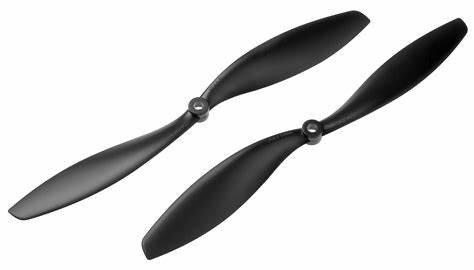
1045 2-Blade Carbon Fiber Propeller CW&CCW
High-quality 10×4.5 inch carbon fibre propellers in matched CW and CCW pairs. Lightweight and stiff for efficient thrust — suitable for larger freestyle and autonomous drone platforms.
Which Should You Build First?
Here is our honest recommendation for Indian beginners:
Build a Freestyle Drone First If:
- You want to create content — YouTube videos, Instagram reels, event coverage.
- You prefer flying alone at your own pace without a competitive structure.
- You want a more forgiving learning curve (freestyle can be flown slowly at first).
- You are interested in cinematography and want to attach a GoPro or action camera.
- You can find open spaces — fields, stadiums, open ground — to fly safely.
Build a Racing Drone First If:
- You have access to a local racing community or club (check Facebook groups for FPV racing in your city).
- You thrive in competitive environments and love the idea of head-to-head races.
- You have a budget constraint — racing builds are cheaper on average.
- You want to become a highly skilled, precise pilot quickly (racing forces discipline).
- You are okay with frequent crashes and repairs in the early stages.
The honest truth: Most experienced FPV pilots in India do both. They have one freestyle quad and one racing quad. But if you are choosing your first build, we recommend freestyle — the more relaxed environment lets you build skills at your own pace, and the reward of creating beautiful video content is immediately satisfying.
Frequently Asked Questions
Q: Can I use the same drone for both freestyle and racing?
A: A 5-inch True-X or Stretched-X can do both adequately, but it will be optimised for neither. Separate builds with different tuning profiles give better results for each discipline.
Q: Do I need a licence to fly FPV drones in India?
A: Drones under 250 grams are exempt from DGCA registration. Most 5-inch FPV drones weigh 400–700 grams and require DGCA UIN registration. Check the DGCA Digital Sky portal for current regulations.
Q: Is FPV drone flying legal in Indian cities?
A: Flying in urban areas is heavily restricted under DGCA rules. Most FPV flying in India happens in open agricultural land, designated flying clubs, or private property outside controlled airspace. Always check the Digital Sky app for your location.
Q: How long does a freestyle or racing flight last?
A: On a 4S 1300–1500mAh LiPo, a typical 5-inch freestyle flight lasts 4–6 minutes of active flying. Racing flights are shorter and more intense — often 2–3 minutes per heat. Always land before the battery reaches 3.5V per cell.
Q: What goggles should I buy for FPV flying?
A: For analogue video, box goggles like the Eachine EV800D are budget options. For digital FPV, the DJI Goggles 2 or Walksnail Avatar are the gold standard. Expect to spend ₹8,000–₹35,000 on goggles depending on the system.
Conclusion
FPV freestyle and racing are two passionate, community-driven sides of the same hobby. Freestyle rewards creativity, patience, and artistry. Racing rewards reflexes, discipline, and competitive spirit. Both require practice, mechanical skill, and a willingness to rebuild after crashes.
For most Indian beginners, freestyle is the more accessible and rewarding entry point. But whichever path you choose, the FPV community is welcoming, resourceful, and growing fast across Indian cities. Build smart, fly safe, and enjoy the journey.
Find all the components you need — ESCs, cameras, propellers, and more — at Zbotic, India’s trusted online store for drone parts.
Shop FPV cameras, ESCs, propellers, and drone frames at zbotic.in. We stock quality components for both freestyle and racing builds, with fast delivery across India.



Add comment